
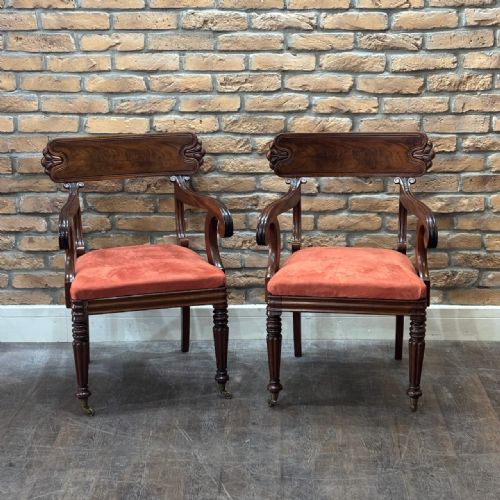


Regency Style Elbow Chair
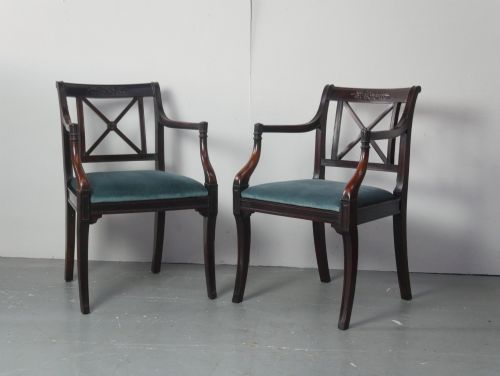
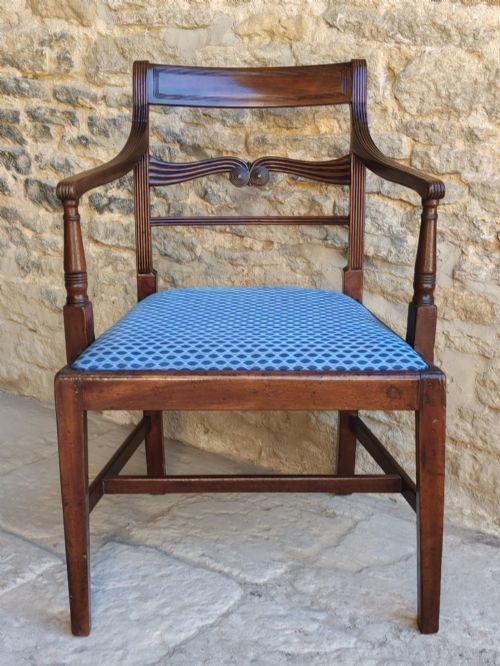
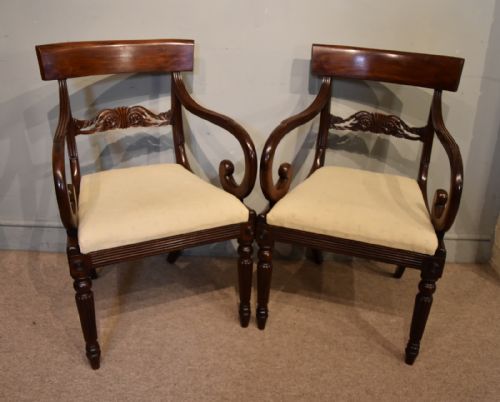
A regency style elbow chair brings classical proportion and upright elegance to a room, offering comfortable seating with distinct scroll arms.
Regency Style Elbow Chair
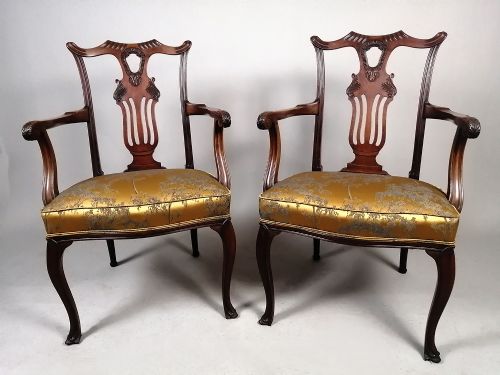
A regency style elbow chair is a seating form defined by its supportive armrests and classical lines, drawing on the design vocabulary of the early nineteenth century. You will encounter genuine period examples alongside later revivals from the nineteenth and twentieth centuries.
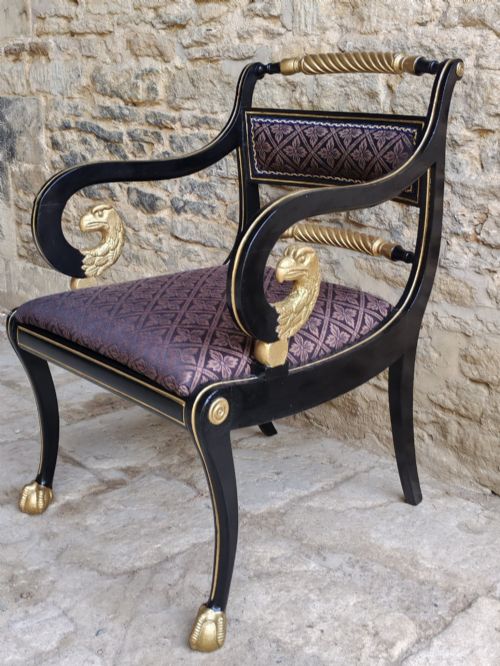
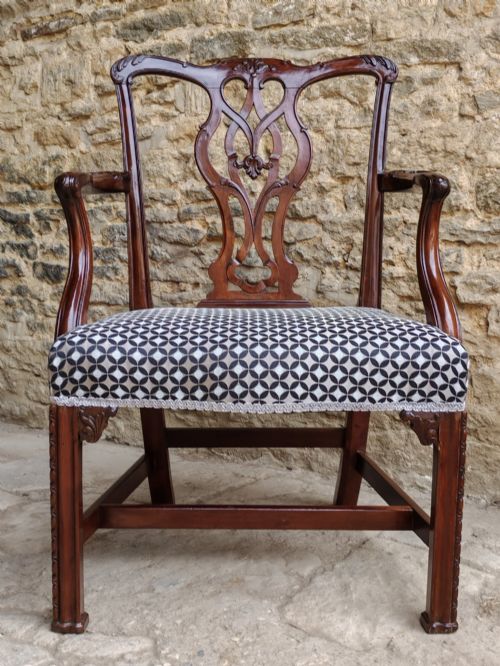
The material record shows these chairs primarily in mahogany and rosewood, often complemented by cane seats, fabric upholstery, or velvet. Makers frequently incorporated brass inlay, parcel gilt, or ebonised wood to achieve the desired decorative finish.
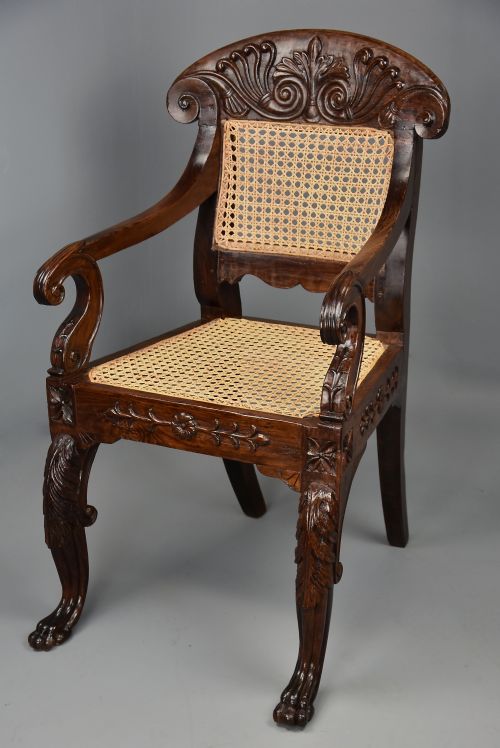
Forms range from library chairs and desk carvers to open armchairs and child variants. The styling spans standard Regency, Grand Regency, Regency Revival, and Anglo-Indian influences.
How they were made
Cabinet makers relied predominantly on solid mahogany and rosewood for the structural frame, utilising the timber's grain for both strength and visual depth. Ebonised wood and satinwood also appear as primary media for specific stylistic interpretations.
Surface enrichment involved delicate brass inlay, parcel gilding, and hand-painted floral or musical decorations on ebonised or painted frames. Seats were constructed using cane or webbed upholstery platforms finished in fabric, velvet, or leather.
Among the formal seating, an occasional child-sized version appears, offering miniature scroll arms for the most diminutive household members.
What varies in quality
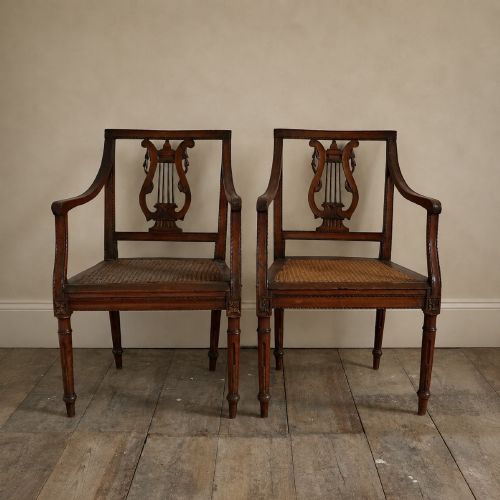
Quality rests in the crispness of the carving, particularly along the lyre backs, scroll arms, and curved structural members. Finer examples display meticulous joinery and seamless integration of brass inlay or gilding.
The choice of timber grain and the integrity of the secondary woods dictate the standing of a piece. Original surfaces and untouched patina distinguish the superior examples from later restorations or standard revivals.
Gillows·Bertram and Son
The Regency Style Elbow Chair Glossary
- Carver chair
- An armchair, typically designed as part of a dining set to sit at the head of the table. These feature open arms and sturdy upright supports.
- Elbow chair
- An alternative term for an armchair, referencing the supportive rests designed for the arms. The phrase often applies to dining and desk chairs with short armrests.
- Lyre back
- A chair backrest shaped in the form of an ancient Greek lyre instrument. This motif is central to many classical and revival designs.
- Parcel gilt
- A decorative technique where specific carved details or highlights are partially gilded with gold leaf. It contrasts sharply against dark woods or painted frames.
- Ebonised wood
- Timber treated with a stain or finish to imitate ebony. This dark, light-absorbing surface was popular in classical revival pieces.
Regency Style Elbow Chair: Frequently Asked Questions
How do I identify a true period chair?
Examine the timber construction, joinery methods, and wear patterns beneath the seat frame. Period pieces exhibit period-appropriate hand tools marks and construction techniques distinct from later revivals.
Compare the proportions and decorative motifs against documented examples from the early nineteenth century. Subtle details in the turning and carving often reveal the true manufacturing era.
Were these chairs used at dining tables?
Carvers and elbow chairs historically sat at the head and foot of a dining table. Their open arms allowed diners to sit close while offering additional support.
They also served as desk chairs or occasional seating in libraries and parlours. Their upright posture made them suitable for writing and reading tasks.
How should I care for mahogany frames?
Keep wooden frames away from direct sunlight and steady heat sources to prevent timber shrinkage and splitting. Dust regularly with a dry, soft cloth to maintain the finish.
Apply high-quality microcrystalline wax periodically to nourish the wood surface. Avoid silicone-based sprays that can penetrate the grain and damage the antique finish.
What is the difference between Regency and Regency Style?
Regency pieces date directly to the Regency period and the early nineteenth century. They embody the authentic design ethos and material constraints of that specific era.
Regency style refers to later revivals, such as pieces made during the Victorian era or the twentieth century. These later interpretations emulate the classical aesthetics using the manufacturing methods of their own time.