




Georgian Satinwood Armchair
These georgian satinwood armchair pieces combine striking figured timbers with classic seating forms, offering a sophisticated centrepiece for a traditional interior.
Georgian Satinwood Armchair
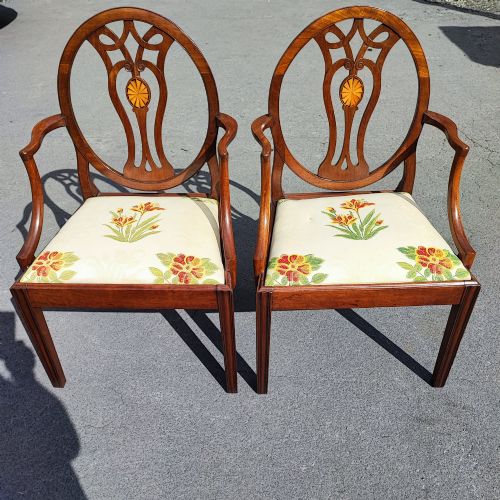
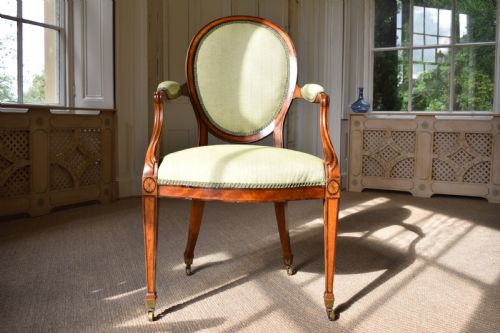
A georgian satinwood armchair brings together classical proportions and pale figured timber, appearing in forms ranging from open armchairs to library chairs and salon suites. Buyers seek these pieces for their refined aesthetic, often finished with delicate inlay or painted decoration that defines the seating styles of the period.
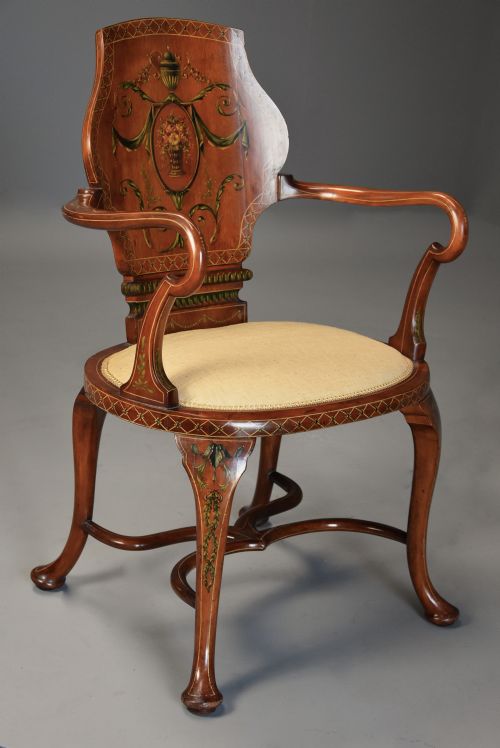
The selections available on this page most frequently showcase George III origins alongside later revivals from the nineteenth and early twentieth centuries. Alongside single chairs, pairs and larger sets emerge in Sheraton and Chinoiserie interpretations, offering versatility for decorative seating arrangements.
Materials and construction
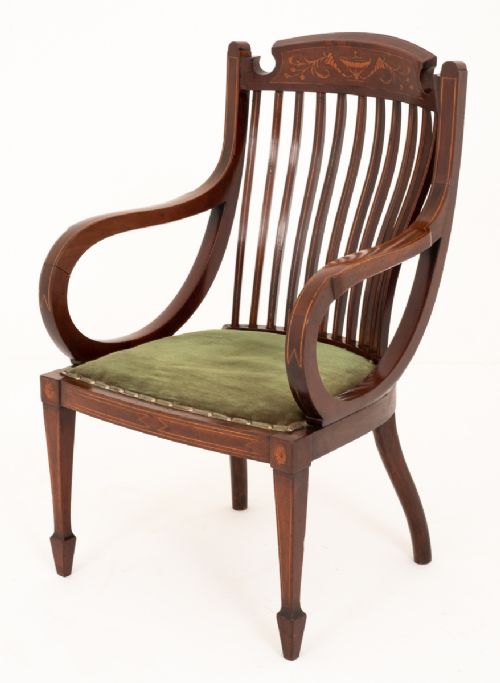
Construction relies heavily on satinwood combined with secondary hardwoods such as mahogany, frequently enhanced by contrasting stringing and intricate inlay work. Artisans utilised skilled cabinetmaking techniques to shape the open arms and supportive backrests characteristic of these traditional seats.
Surface finishes include fine painted details and gilt highlights, particularly on simulated satinwood library chairs and decorative salon seating. Upholstery and fabric elements complete the construction, supporting both comfort and visual elegance.
The listings span from the Georgian era through to the 1930s, incorporating Edwardian revivals and simulated finishes alongside solid satinwood.
Judging quality in satinwood seating
Quality rests primarily on the grain and figure of the satinwood veneer, where rich chatoyancy and precise matching elevate a piece above simpler alternatives. The crispness of the inlaid details and the delicacy of any painted motifs further separate standard production from superior craftsmanship.
Structural integrity and the retention of original decorative elements dictate the standing of each armchair. Pieces that maintain their early gilding, balanced proportions, and integrated upholstery schemes demonstrate the highest level of period execution.
The Georgian Satinwood Armchair Glossary
- Satinwood
- A dense, lustrous tropical timber prized for its pale yellow colour and chatoyant grain. It forms the primary visual surface for high-status eighteenth and nineteenth-century furniture.
- Sheraton
- A neoclassical design style associated with the late eighteenth century, characterised by geometric inlay, tapered legs, and rectilinear backrests. It heavily influences the revival pieces found in later eras.
- Bergere
- An enclosed upholstered armchair with wooden framing exposed around the sides and back. It provides a comfortable seating option often paired with fine wood veneers.
- Chinoiserie
- A decorative style reflecting European interpretations of Chinese artistic motifs. It appears on painted satinwood surfaces with distinctive scenic or floral details.
- Inlay
- A technique where contrasting materials are inserted into recessed cavities of a wooden base to create ornamental patterns. Stringing and banded borders are common expressions of this method.
Georgian Satinwood Armchair: Frequently Asked Questions
Were these chairs used at desks or tables?
Armchairs and elbow chairs served multiple domestic functions, functioning as library seating, salon furniture, or decorative accents in withdrawing rooms. Their open arm designs allowed for comfortable movement while wearing the voluminous fashions of the period.
Heavier library chairs were built for sustained reading, whereas lighter salon and painted examples prioritized decorative placement within reception spaces.
How should I clean satinwood furniture?
Maintenance requires gentle dusting with a soft, dry cloth to protect the delicate surface veneer and any painted or gilt details. Avoiding moisture and direct sunlight preserves the natural lustre and prevents the pale timber from darkening unduly.
Applying a microcrystalline wax occasionally helps nourish the polished finish without building up heavy residues that obscure the fine wood grain.
Are pairs and sets common?
Sets and pairs do appear, though single armchairs are frequently encountered given the dispersals of larger dining and salon suites over time. Matching pairs offer symmetry for fireplace settings or window bays.
Larger configurations, including three-piece suites, reflect more complete surviving groups from the nineteenth and early twentieth centuries.