


Regency Lyre Back Chair
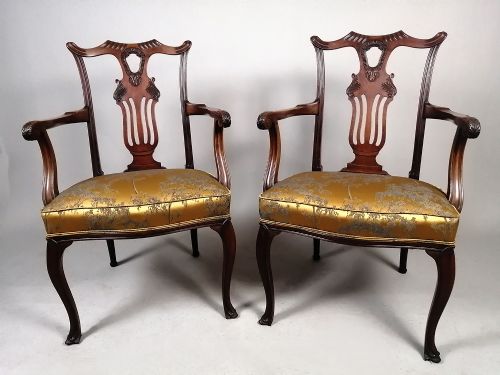
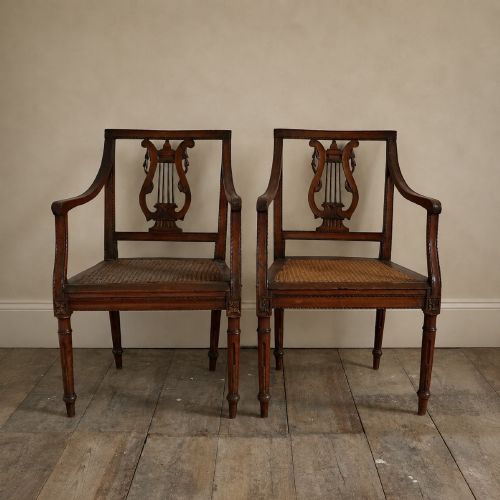
These regency lyre back chair examples bring classical proportion and striking scrollwork to a room, offering both sturdy seating and distinct historical character.
Regency Lyre Back Chair
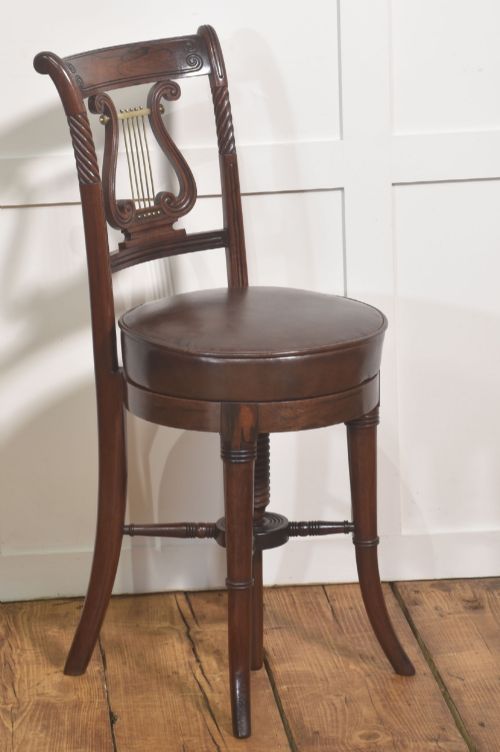
A regency lyre back chair is a form defined by a central splat shaped like an ancient stringed instrument, reflecting the neoclassical taste of the early nineteenth century and later revivals. Buyers searching this phrase will find a variety of forms including elbow chairs, side chairs, and specialised piano or harpist stools.
The selections span the Regency period itself alongside later nineteenth century interpretations, incorporating styles such as Grand Regency, William IV, and Late Victorian. These pieces appear in forms ranging from single dressing chairs to pairs and larger dining sets.
Originating within classic English seating traditions, these chairs often feature the characteristic open scrollwork backrest alongside supported arms in armchair formats. The presence of cane, upholstered fabric, leather, and velvet seats shows the diverse ways makers adapted the design for domestic use.
How they were made
Makers relied heavily on mahogany as the primary timber, working the dense wood to form the sweeping curves of the musical instrument motif. Ebonised wood and walnut also appear, sometimes accented with brass fittings or gilt details to highlight the classical lines.
Seating surfaces required varied craftsmanship, utilising woven cane, textured textiles, and fitted leather pads or velvet upholstery. Frames were joined using traditional woodworking techniques to support the architectural demands of the open-backed design.
Listings feature nineteen-century pieces alongside later revivals, utilising mahogany, walnut, and ebonised wood with cane, leather, and velvet.
What varies in quality
The distinction between standard and finer examples rests on the crispness of the carving within the lyre splat and the selection of the timber grain. Finer chairs display fluid, well-proportioned curves that integrate smoothly into the overall frame without stiffness.
Original seat construction, whether intricate cane work or traditional upholstery foundations, influences the integrity of the piece. Consistency across a set of dining chairs rather than individual variation also separates utilitarian workshop output from higher grade productions.
The Regency Lyre Back Chair Glossary
- Lyre back
- A chair back featuring an open splat carved or shaped in the outline of a Greek lyre. This motif became central to neoclassical furniture design.
- Ebonised wood
- Timber treated with a dark finish to resemble ebony. This technique creates a stark contrast against gilt highlights or light upholstery.
- Cane seat
- A seating surface woven from peeled rattan strips. It offers a light, resilient grid that was frequently used on nineteenth-century chairs.
- Elbow chair
- An armchair designed with low supports for the arms. These pieces were often used at the ends of dining tables or as desk chairs.
- Neoclassical manner
- A design style inspired by the classical art and architecture of ancient Greece and Rome. It prioritises symmetry, proportion, and restrained ornamentation.
Regency Lyre Back Chair: Frequently Asked Questions
What is a regency lyre back chair?
A regency lyre back chair is a nineteenth-century seating form distinguished by a central splat shaped like a musical lyre. These chairs draw heavily on classical Greek and Roman design principles.
They appear as side chairs, armchairs, and specialised music stools, combining architectural form with functional domestic utility.
Where were these chairs used?
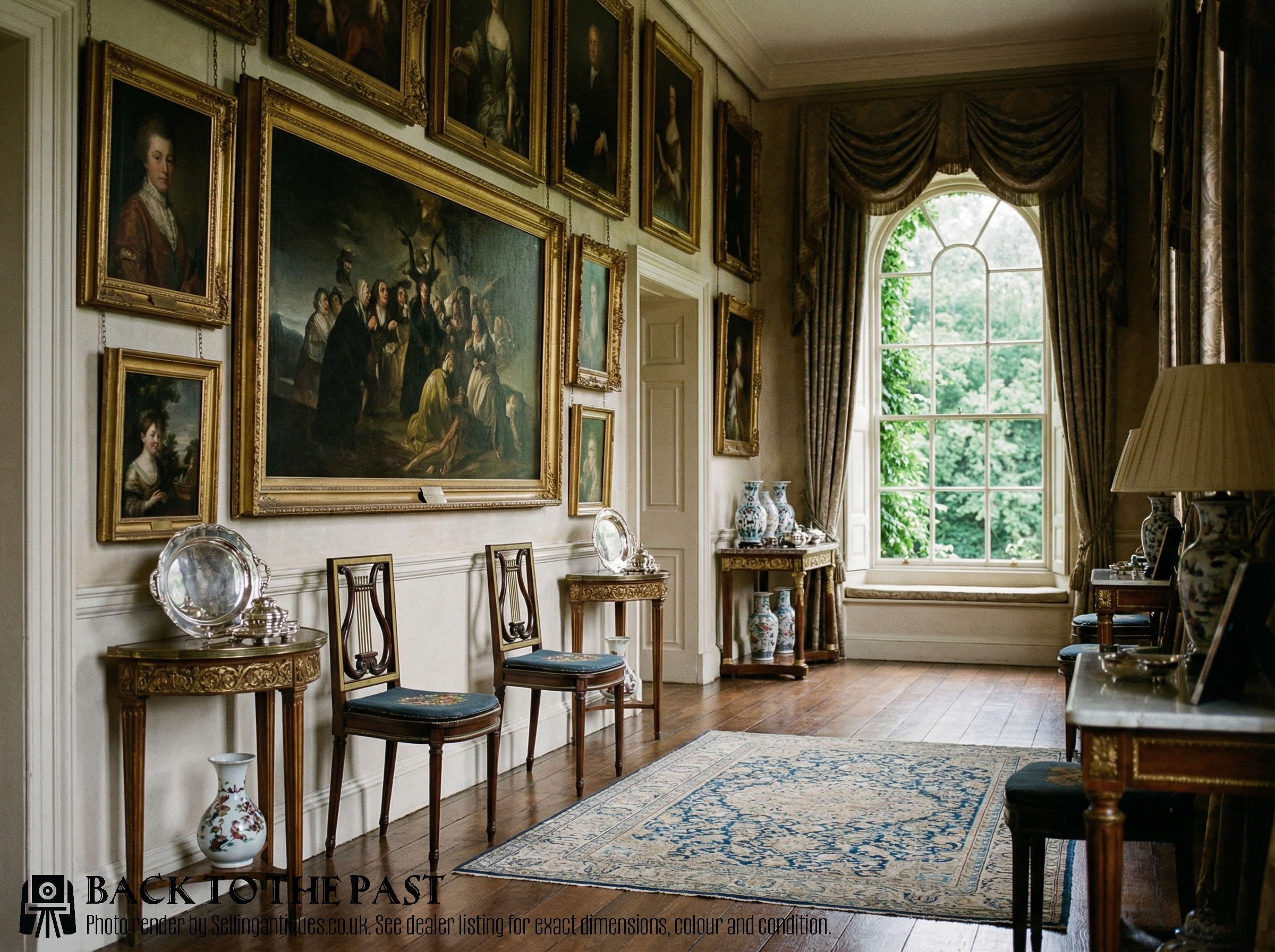
These chairs were placed in formal drawing rooms, libraries, and around dining tables in nineteenth-century homes. Specific variants like revolving piano stools served musical salons and parlours.
Their decorative backs made them suitable for placement where the rear of the chair remained visible within the room layout.
How do I care for a mahogany chair?
Mahogany furniture requires stable indoor humidity away from direct heat sources to prevent timber movement. Regular dusting with a soft, dry cloth preserves the polished surface.
Upholstered or cane seats need gentle cleaning appropriate to the specific textile or natural material used in the construction.
How can I tell the period?
Dating relies on examining the timber species, construction methods, and stylistic shifts between the Regency period and later Victorian revivals. Original surface patination and joinery details provide further clues to age.
Earlier pieces often display tighter proportions and hand-carved detailing associated with early nineteenth-century workshops.