
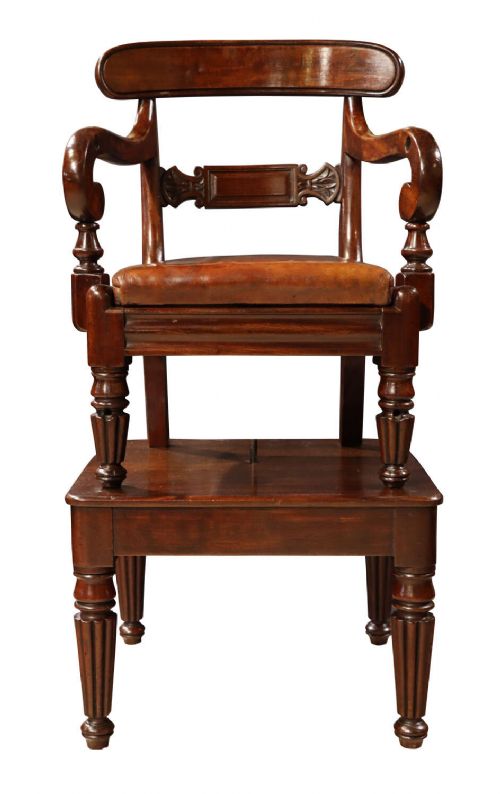


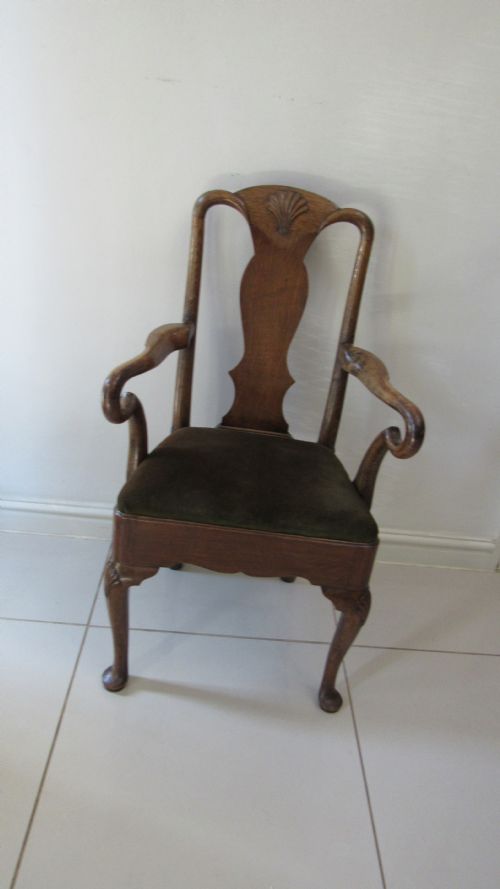


Mahogany Childs Armchair
A mahogany childs armchair is a scaled-down seating piece built for the young, bringing cabinet-maker precision to miniature domestic furniture.

Mahogany Childs Armchair
A mahogany childs armchair represents miniature domestic seating produced across several centuries, encompassing periods from the Georgian era through to the Edwardian period and the early twentieth century. These scaled forms include high chairs, commode chairs, chair and table combinations, and examples mounted on stands.
The material record for a mahogany childs armchair shows examples originating from the George III, Regency, William IV, and Victorian periods, alongside later revival styles such as Georgian Revival, Queen Anne Revival, and Art Nouveau. Formations range from standard armchairs and open carvers to caned bergere designs and metamorphic high chairs.
What varies in quality
Quality differences emerge in the execution of miniature proportion and the crispness of carved detail across the mahogany frame. Pieces displaying refined joinery and well-integrated stands sit apart from simpler utilitarian seating.
The standard of original or period-appropriate upholstery materials, such as caned panels, damask, leather, and tapestry, influences the integrity of individual examples. The presence of specialised mechanics in metamorphic high chairs or commode elements also alters the distinction of a piece.
Mahogany Childs Armchair Retail Price Guide 2026
Typical asking prices for mahogany childs armchair among the pieces listed under this phrase on Sellingantiques today, from the lower quarter to the upper quarter. They describe what is for sale here now, not the wider market.
Materials paired with mahogany across these listings include cane, leather, brass, tapestry, and damask upholstery.
The Mahogany Childs Armchair Glossary
- Bergere
- An enclosed upholstered armchair with wooden framing, often featuring cane work on the back and sides. Caned bergere examples provide a lighter visual weight in smaller seating forms.
- Metamorphic
- Describing furniture designed to transform into alternative configurations, such as a high chair converting into a low chair and table. This mechanism offers dual functionality within domestic spaces.
- Commode chair
- A seating piece incorporating an enclosed chamber pot compartment beneath the seat or removable pan. These items combine domestic seating with sanitation utility.
- Carver chair
- An open armchair, typically executed in a lighter scale to match a set of dining chairs. In child seating, the term describes an open armed miniature form.
- Apprentice piece
- A cabinet-maker item created to demonstrate skill and secure trade qualification. These objects replicate full-scale furniture in miniature proportions.
Mahogany Childs Armchair: Frequently Asked Questions
What is a metamorphic child high chair?
A metamorphic child high chair is a convertible piece of furniture designed to shift between an elevated seating position and a lower chair and table combination. This dual arrangement allowed a young child to sit securely at table height or play independently at floor level.
Such pieces rely on hinged frames or sliding mechanisms executed in solid mahogany. They demonstrate the ingenuity applied to miniature domestic furnishings during the nineteenth century.
Were these chairs meant for everyday use?
These miniature armchairs served practical functions in domestic settings for feeding, resting, and formal portraiture. Their sturdy mahogany construction ensured they could withstand regular use by children.
Over time, many transitioned from nursery furniture to decorative display items. Their durable build allows them to remain stable structural objects.
How should I clean mahogany furniture?
Cleaning mahogany requires gentle dusting with a soft, dry cloth to remove surface particles without disturbing the polished finish. Avoid harsh chemical sprays or excessive moisture that can damage the timber or degrade older upholstery.
Periodic application of traditional wax helps nourish the wood and maintain its natural lustre. Care should be taken around delicate cane panels or fabric elements.