


Edwardian Satinwood Chair
An edwardian satinwood chair brings lightness and polished refinement to a room through delicate wood selection and painted decoration.
Edwardian Satinwood Chair
When you search for an edwardian satinwood chair, you encounter a variety of seating forms produced around the turn of the twentieth century, primarily originating from the Edwardian era alongside late Victorian and early twentieth-century examples.
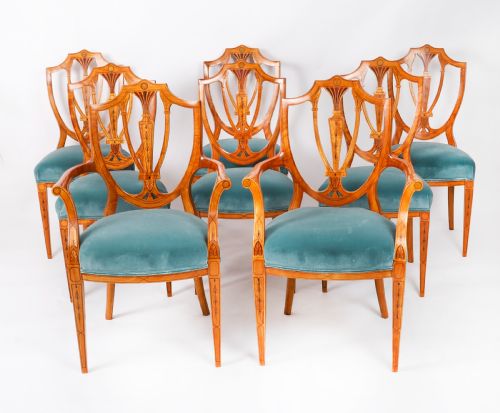
The pieces on this page span everyday functional seating and decorative salon furniture, including armchairs, side chairs, dining chairs, occasional chairs, bergere chairs, and settees.
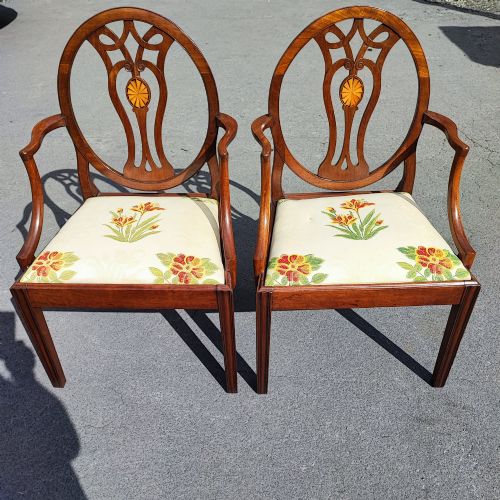
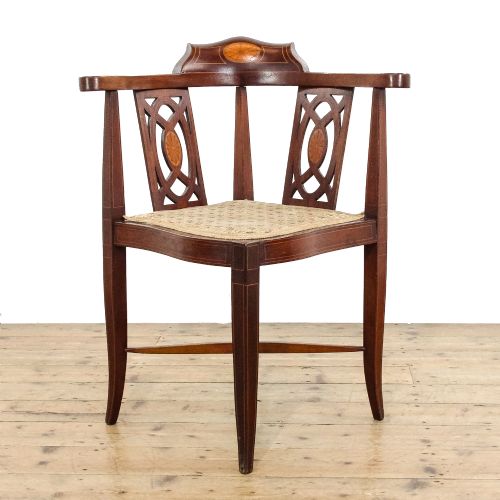
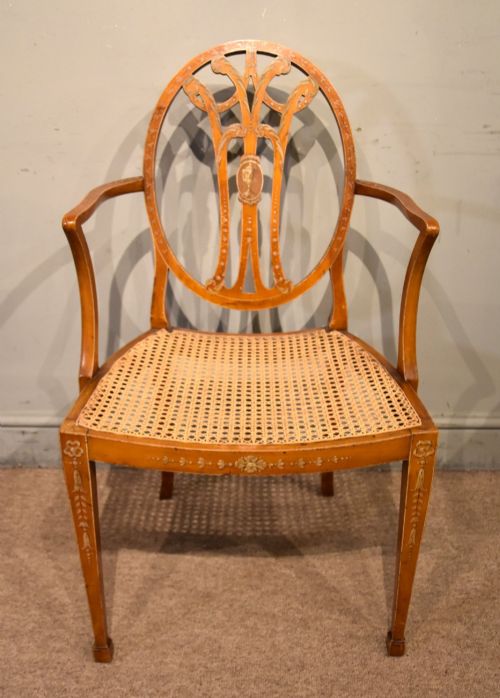
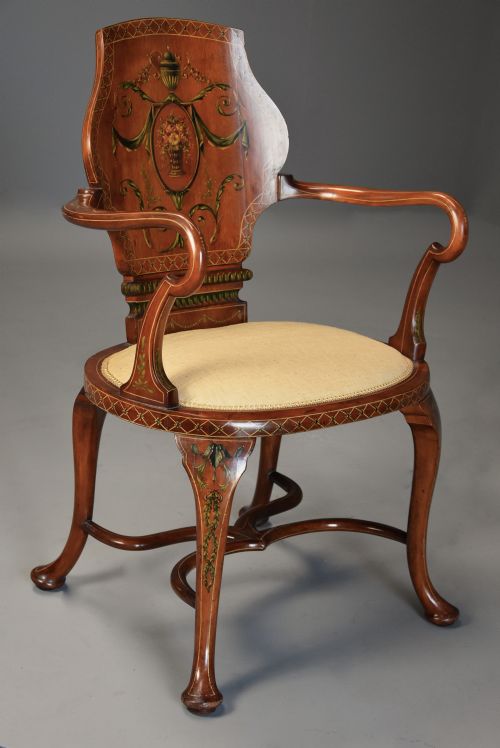
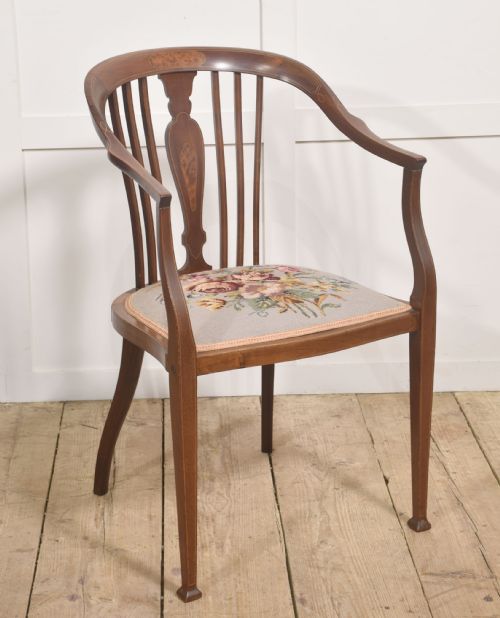
You are most likely to meet mahogany-framed chairs featuring satinwood inlay, alongside solid or painted satinwood frames that reflect Sheraton Revival and Neo-Classical tastes.
Materials and Technique
Cabinet makers utilised mahogany and satinwood as primary timbers, often combining the two woods to create strong structural frames accented by lighter, highly figured veneers.
Decorative surfaces frequently incorporate intricate wood inlay, marquetry, stringing, and hand-painted details, showcasing the revival of eighteenth-century neoclassical design motifs.
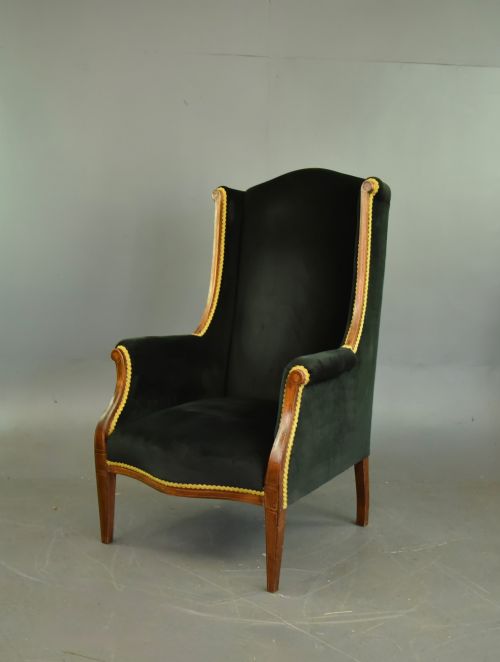
Seating portions utilise traditional materials including cane, silk upholstery, velvet, fabric, and leather, supported by structural elements like bone inlay and bergere weaving.
Several miniature child-sized armchairs prove that Victorians and Edwardians believed toddlers deserved proper drawing-room style too.
Craftsmanship and Execution
The standard of an edwardian satinwood chair rests on the crispness of its painted decoration and the precision of its marquetry and wood inlay, where finer examples display delicate, hand-rendered motifs rather than mass-produced transfers.
Structural integrity and choice of materials define the tier of a piece, distinguishing robust mahogany frames banded with flawless satinwood veneer from simpler construction.
The refinement of carved details, the quality of the cane or silk upholstery work, and the preservation of original hand-finished surfaces separate standard functional seating from exceptional salon pieces.
Cowtan And Sons·Shoolbred
The Edwardian Satinwood Chair Glossary
- Satinwood
- A dense, lustrous timber with a yellowish sheen used extensively for fine veneers and stringing during the late nineteenth and early twentieth centuries. It provides a bright contrast to darker woods like mahogany.
- Sheraton Revival
- A design movement inspired by the late eighteenth-century work of George Sheraton, characterised by classical proportions, painted decoration, and tapered legs. This style heavily influences Edwardian cabinet making.
- Bergere
- An enclosed upholstered armchair with a wooden frame where the sides are typically filled with cane work. It offers a comfortable lounging seat popular in period drawing rooms.
- Marquetry
- The art of applying pieces of veneer to a structure to form decorative patterns and pictures. Craftsmen use various tinted woods to create elaborate floral or neoclassical scenes.
- String Inlay
- A narrow line of contrasting wood inlaid flush into the surface of a furniture piece. It outlines panels and edges to add subtle geometric definition.
Edwardian Satinwood Chair: Frequently Asked Questions
How do I identify an Edwardian chair?
Edwardian chairs typically display lighter proportions and brighter wood tones than their heavy Victorian predecessors. They often combine mahogany frames with satinwood inlay and borrow heavily from earlier eighteenth-century revivals.
Look closely at the construction methods, secondary woods, and upholstery styles to confirm the period. Maker labels or stamps, when present, provide definitive confirmation of origin.
Where should I place an occasional chair?
Occasional chairs suit low-traffic areas like bedrooms, hallways, or corners of a drawing room where they function as decorative accents as much as seating. Their lighter frames make them easy to reposition as needed.
Avoid placing delicate painted or silk-upholstered pieces in direct sunlight or damp environments. Protecting the fine surfaces preserves the painted decoration and inlay.
What is a bergere chair?
A bergere is a traditional upholstered armchair featuring an exposed wooden frame and woven cane sides. This construction style originated in France and saw a major revival during the Edwardian period.
The woven cane panels provide a lighter visual weight compared to fully upholstered armchairs. They are typically paired with loose, down-filled seat cushions for comfort.
How do I care for satinwood furniture?
Satinwood requires gentle cleaning with a soft, dry cloth to remove dust without scratching the polished veneer. Avoid liquid polishes and silicone sprays, which can build up and damage the historic finish over time.
Keep the timber away from direct heat sources and extreme humidity fluctuations to prevent the veneer from lifting. Maintaining stable room conditions protects the delicate wood inlay.