


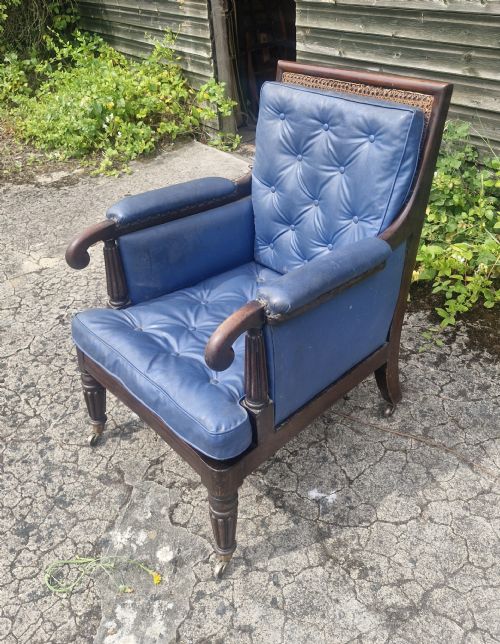
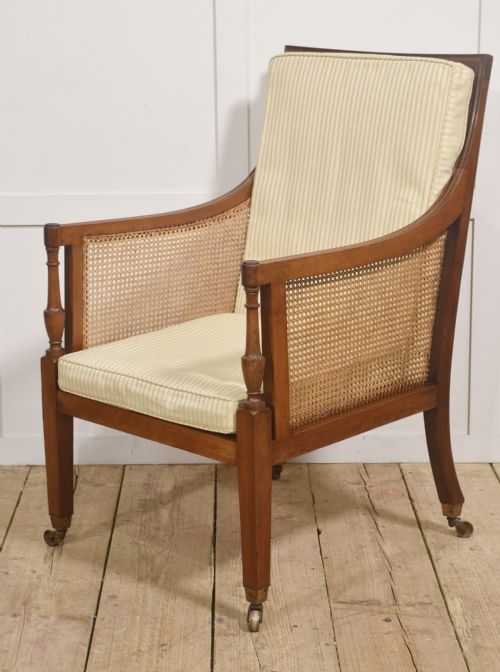
Caned Library Armchair
A caned library armchair is a deeply comfortable seat built for long hours of reading, combining sturdy timber frames with woven cane panels.
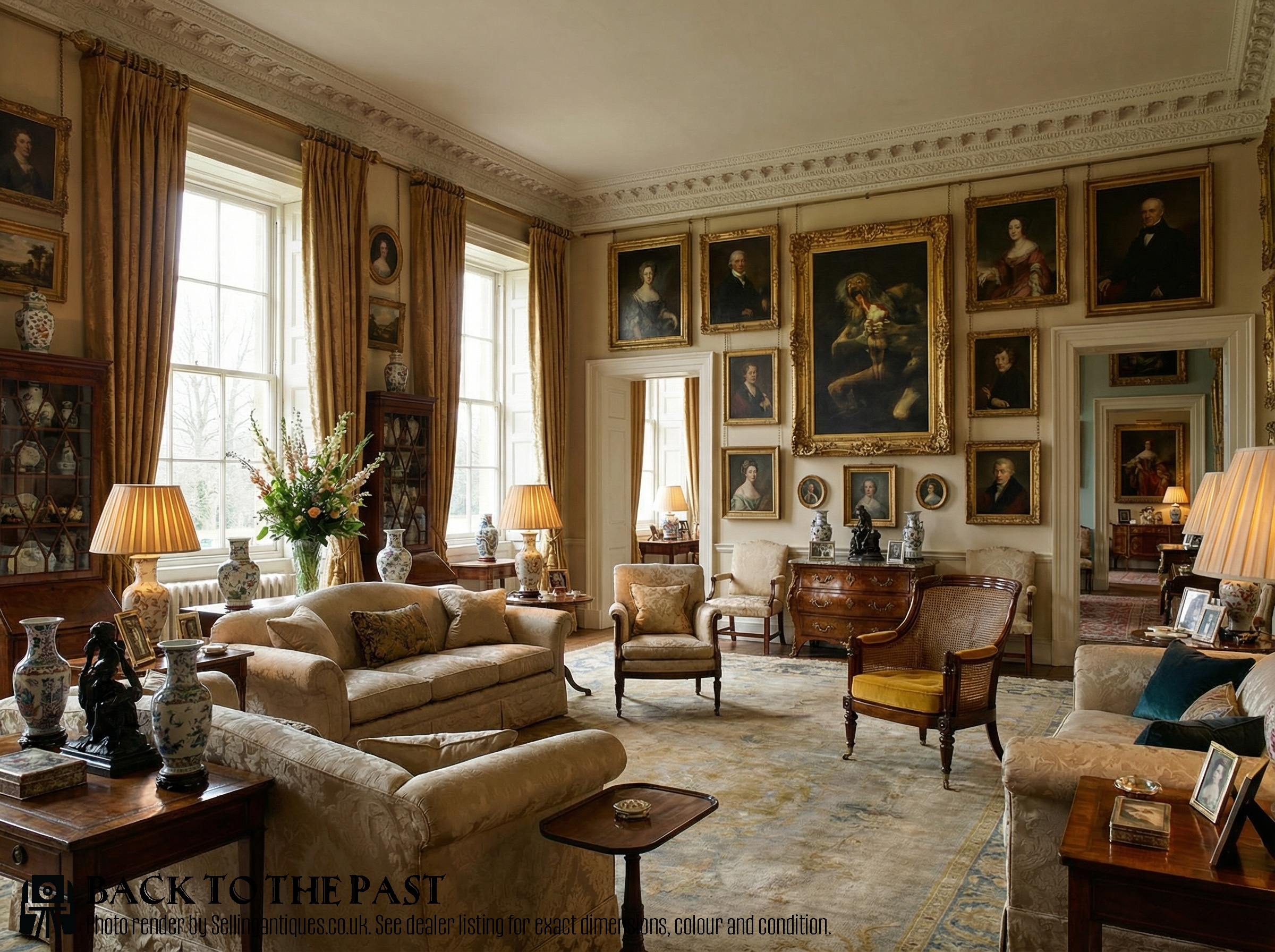
Defining the caned library armchair
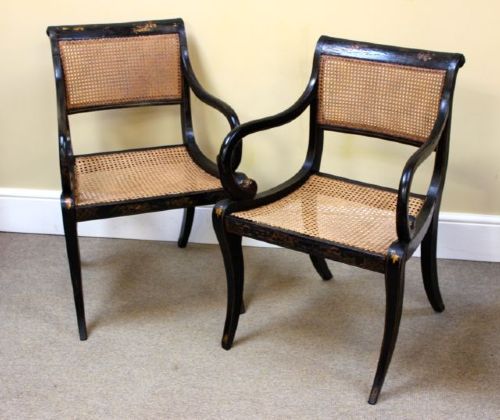
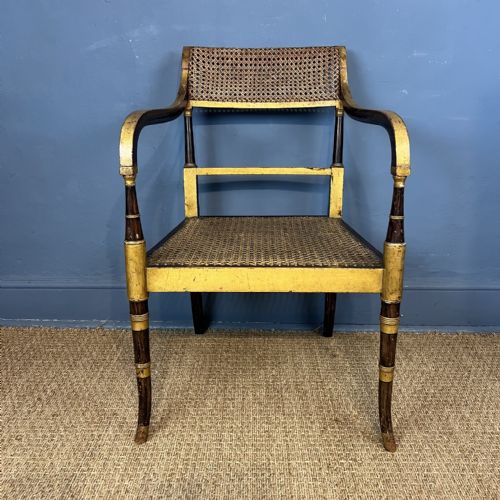
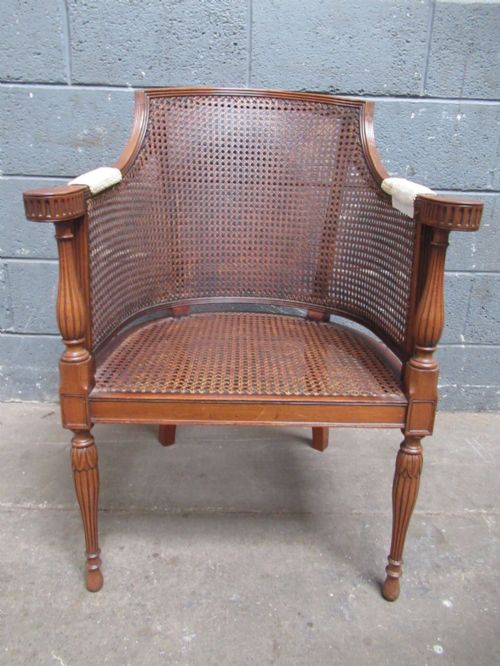
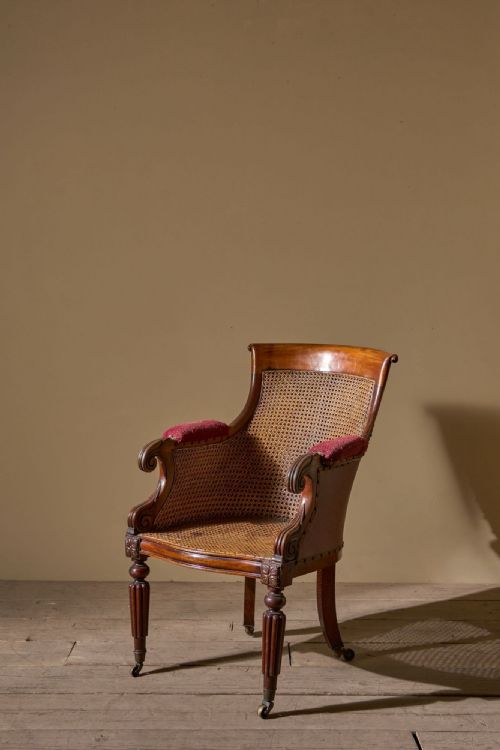
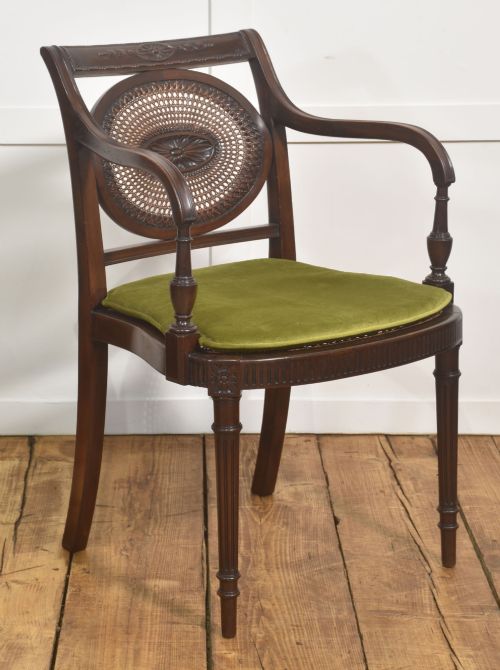
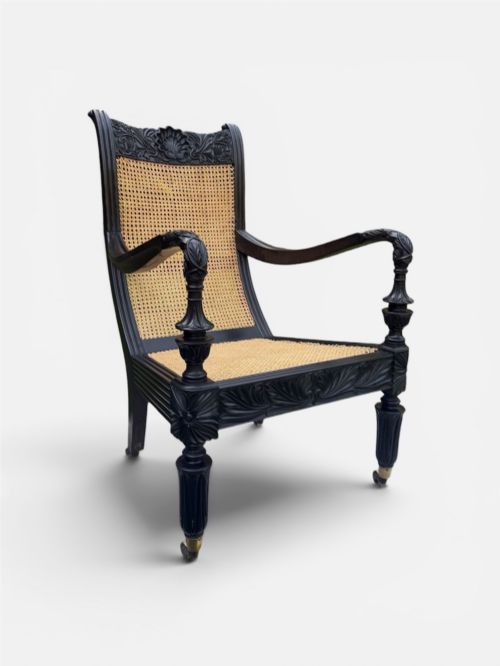
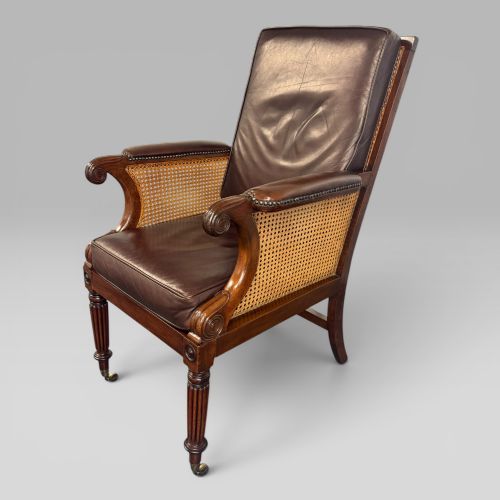
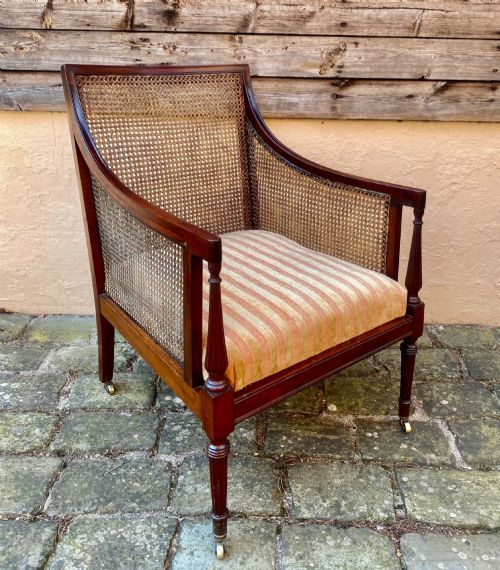
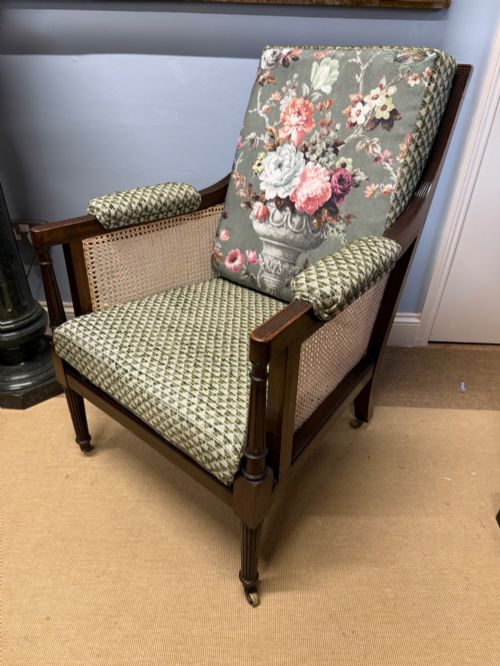
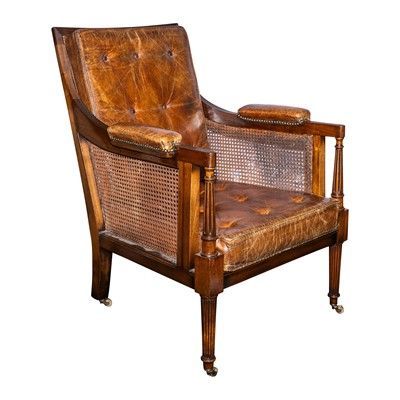
When you search for a caned library armchair, you are looking at substantial seating designed for studies and libraries, most frequently originating from the Regency period or carrying the hallmarks of Sheraton Revival style. These chairs provide a deep seat and supportive upright back, often known as a bergere, built to accommodate quiet hours of reading and writing.
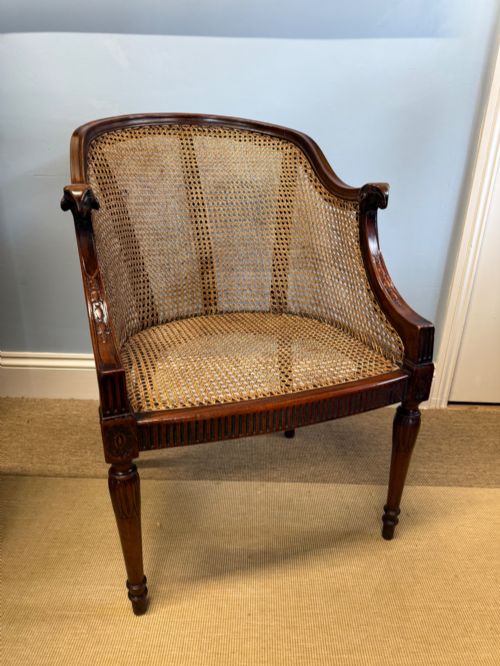
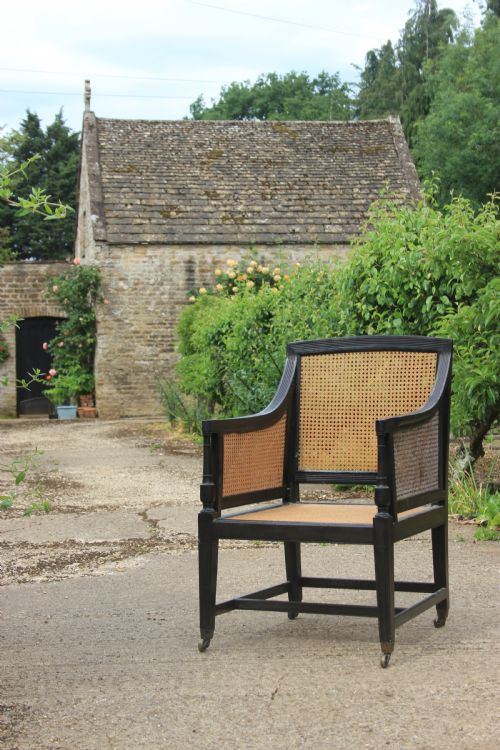
The pieces you are most likely to meet on this page span the nineteenth century and the Edwardian era, constructed predominantly from rich timbers like mahogany and satinwood. Many examples retain their original woven cane to the back and sides, whilst others have been adapted over time or paired with loose cushions in leather, velvet, or textile.
The forms range from standard library proportions to unusually large iterations, occasionally echoing the workshop style of Gillows. Each piece demonstrates the enduring appeal of traditional library seating, valued as much for its architectural timber frame as for its breathable woven panels.
Materials and construction
Makers constructed the primary frames of these armchairs from dense hardwoods, specifically solid mahogany and satinwood, which provided the structural strength needed for heavy daily use. Turnings, sabre legs, and arm supports were shaped by hand on the lathe or carved directly from the timber.
The defining characteristic is the use of rattan cane, meticulously hand-woven through pre-drilled holes in the frame to create a tight, supportive mesh. Brass mounts, castors, and upholstered squab cushions in leather, velvet, or textile were frequently added to complete the design and enhance comfort.
Retail Price Guide 2026
Typical UK retail prices for caned library armchair, calculated from the Sellingantiques database of over a million retail prices indexed since 2003. This retail price guide relies exclusively on Sellingantiques data; no external sources or auction records are used, so the figures do not describe the wider market.
Early nineteenth-century readers appreciated a chair that could hold a heavy volume whilst keeping the spine cool during long study sessions.
Judging quality and craftsmanship
The distinction between ordinary examples and the finest pieces lies in the crispness of the timber carving and the precision of the cane weaving. Superior chairs display evenly tensioned cane panels with uniform strands, paired with finely figured mahogany or satinwood frames that retain their original rich colour and depth of grain.
Proportion and structural harmony also separate the better examples from simpler ones, with superior pieces showing balanced architectural lines and refined details such as reeded arms or precise brass mounts. The integration of the frame with the woven panels demonstrates the highest level of cabinet-making skill.
Gillows
The Caned Library Armchair Glossary
- Bergere
- A French-style upholstered armchair with enclosed sides, where the space between the arms and seat is filled with cane or upholstery. This form became particularly popular in British libraries during the Regency period.
- Cane
- Material made from the peeled bark of the rattan palm, woven into a mesh pattern to form flexible yet strong panels for chair backs and sides. It allows for a light, breathable structure.
- Regency
- A period in British design spanning roughly from the late eighteenth century to the reign of George IV, characterised by classical revival motifs and elegant, restrained lines. Furniture from this era often utilises mahogany with subtle brass details.
- Sheraton Revival
- A late nineteenth-century movement, notably visible in Edwardian pieces, that drew inspiration from the delicate neoclassical designs of George Sheraton. These items frequently feature satinwood and refined inlay work.
Frequently Asked Questions
What is a caned library armchair?
A caned library armchair is a sturdy, traditional seat featuring a timber frame with woven rattan cane panels along the back and sides. These chairs were designed specifically for reading rooms and studies.
Most examples date from the Regency period or the Edwardian era and are prized for combining structural timber craftsmanship with breathable woven seating.
How do I date a caned armchair?
Dating relies on examining the timber species, overall proportions, and cabinet-making techniques used in the frame construction. Regency pieces typically feature heavy mahogany and classical lines, whilst Edwardian revivals often utilise satinwood.
Additionally, the tightness of the cane weave and the method of drilling the frame holes can offer clues regarding the period of manufacture.
Are these chairs comfortable for daily use?
These armchairs are remarkably comfortable, largely due to their deep seats and supportive upright backs designed for long hours of reading. Many are accompanied by loose squab cushions upholstered in leather, velvet, or textile.
The natural give of the woven cane also adds a resilient, springy quality to the backrest.
How should I care for the cane?
Cane requires moderate humidity to prevent it from drying out and becoming brittle over time. Regular dusting with a soft brush helps keep the weave free from trapped particles.
Avoiding placement near direct heat sources will ensure the natural rattan retains its flexibility and strength for years to come.