


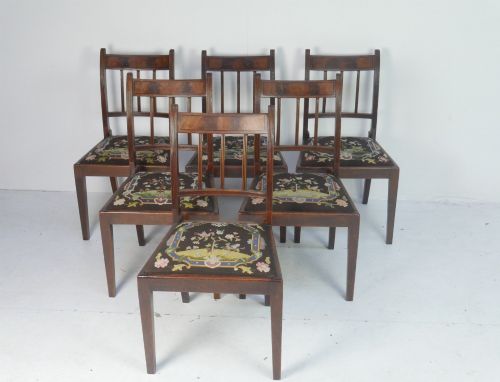
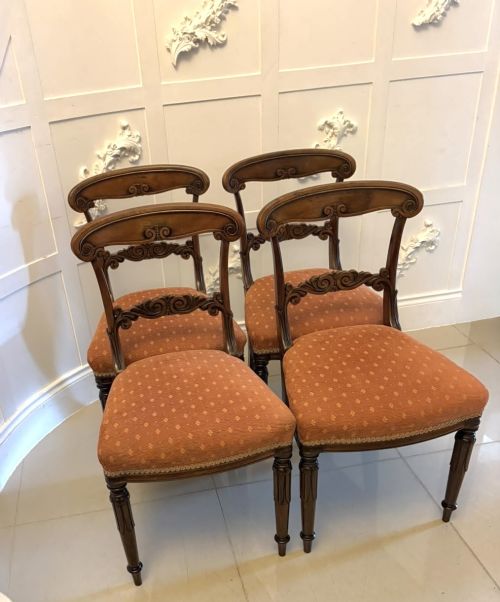
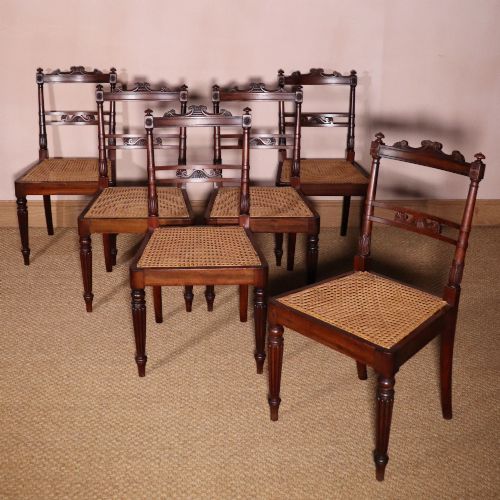
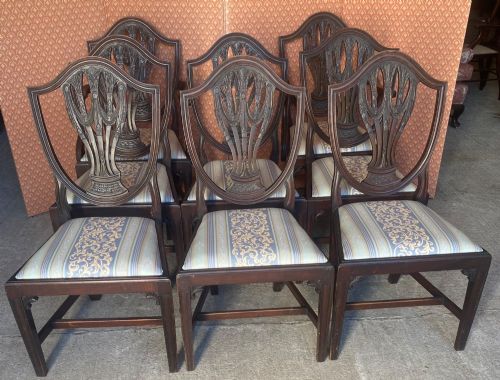
Regency Period Seating
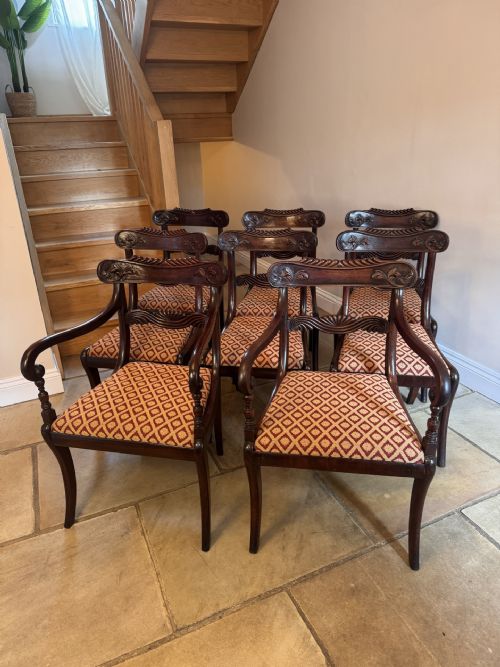
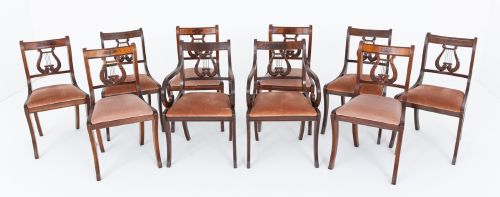
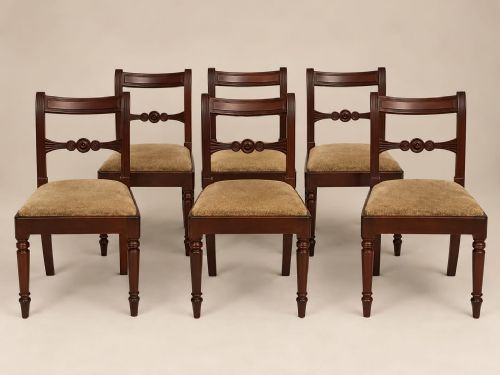
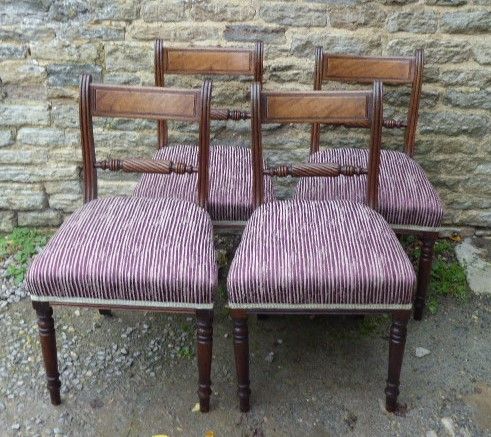
Regency period seating brings classical lines and dark woods into rooms through dining chairs, armchairs, and benches.
Regency Period Seating
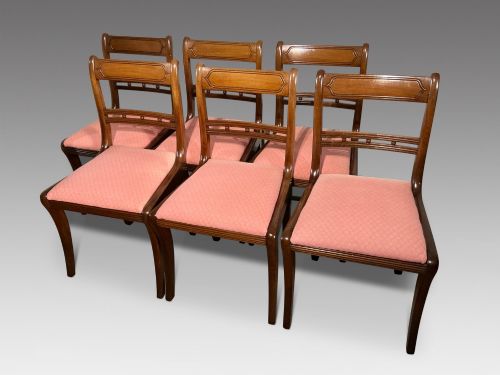
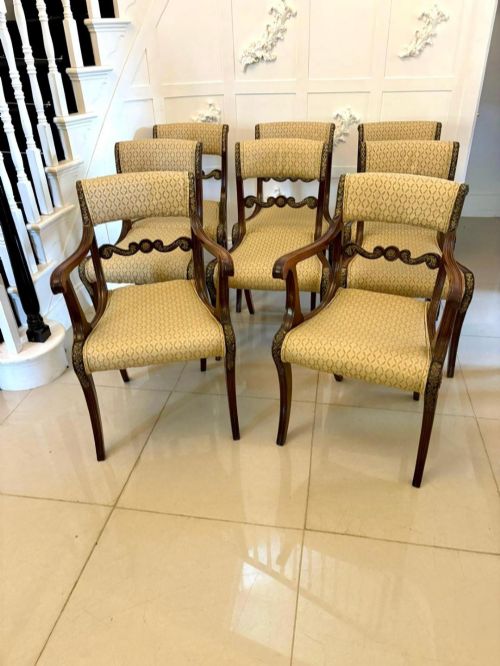
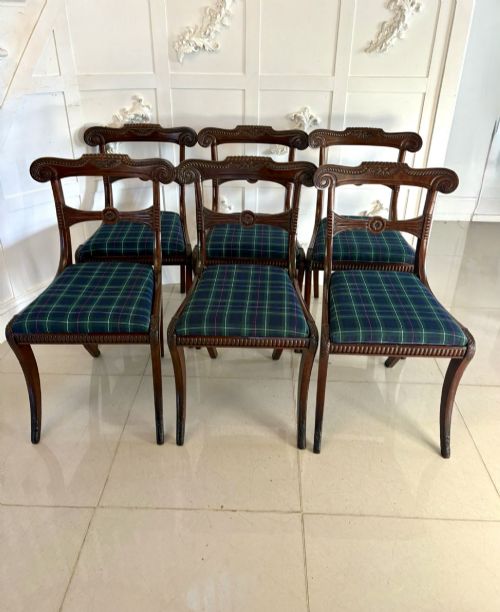
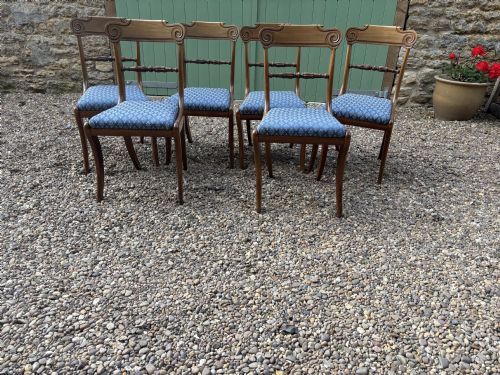
Regency period seating encompasses dining chairs, armchairs, side chairs, benches, stools, and sofas dating from the early nineteenth century. Buyers searching for regency period seating encounter dining sets ranging from four to twelve chairs, alongside individual library armchairs, window seats, and garden benches.
The material record spans the Regency period itself as well as the Georgian era, William IV, Victorian, Edwardian, and twentieth-century revivals. Mahogany and rosewood form the core of the timber selection, complemented by simulated rosewood and faux bird's eye maple.
Regional origins within the British Isles appear in specific entries, notably Scottish and Irish variants alongside standard English output. Styles extend from strict Regency and Grand Regency to William IV, George IV, Hepplewhite, and Anglo-Indian Regency designs.
Materials and Construction
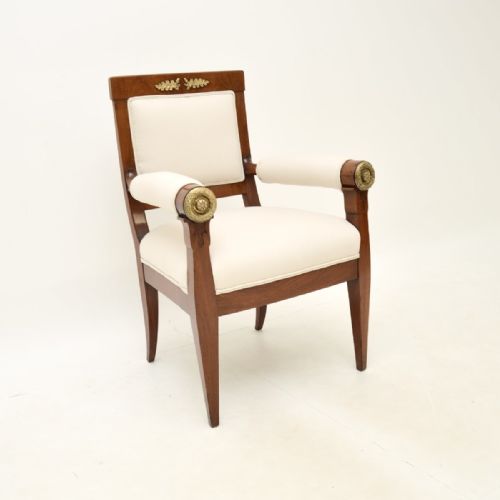
Makers utilised solid timbers like mahogany and rosewood, often enhanced with brass inlay, gilding, or ebonisation to create high-contrast decorative effects. Secondary treatments include simulated rosewood and faux bird's eye maple finishes applied to standard woods.
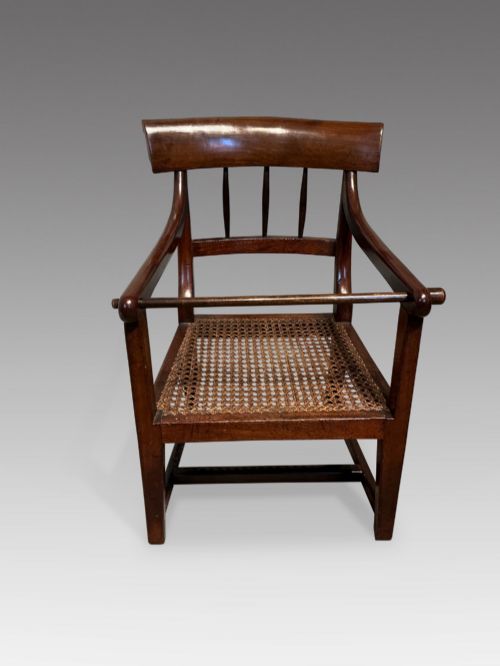
Seating surfaces rely on woven cane panels, leather upholstery, and various fabric coverings including velvet. Structural support incorporates wrought iron strapwork on outdoor garden benches and durable wood frames joined for domestic dining use.
Regency Period Seating Retail Price Guide 2026
Typical asking prices for regency period seating among the pieces listed under this phrase on Sellingantiques today, from the lower quarter to the upper quarter. They describe what is for sale here now, not the wider market.
Materials span solid mahogany and rosewood, complemented by brass inlay, leather, cane, and wrought iron.
Distinctions in Quality
Quality rests upon the crispness of carved details, the matching of timber grains across sets of dining chairs, and the survival of original surfaces. Sets that retain their full complement of matching carvers and single chairs without mismatched replacements hold greater integrity.
The sophistication of decorative elements, such as brass inlay, gilt accents, and sabre legs, distinguishes standard utility items from exhibition pieces. Original cane work and untouched timber finishes indicate superior preservation compared to later restorations.
The Regency Period Seating Glossary
- Carver
- An armchair designed to sit at the head of a dining table, usually matching the smaller single chairs in a set. These larger chairs often feature more elaborate arm supports.
- Sabre leg
- A curving, outwardly splayed chair leg that tapers toward the foot, characteristic of classical revival forms. This shape derives from ancient Greek and Roman furniture archetypes.
- Bar back
- A chair design featuring a horizontal wooden top rail resembling the shape of a yoke or bar. This style appears frequently on dining chairs from the Regency and William IV periods.
- Bergere
- An enclosed upholstered armchair with wooden framing and cane sides. The term describes seats where cane panels form the arms and backrest.
- Wrought iron strapwork
- Flat strips of iron shaped into geometric patterns, commonly utilised on outdoor garden benches from the early nineteenth century. This technique provides structural strength while maintaining an open visual design.
Regency Period Seating: Frequently Asked Questions
How do I spot a true Regency chair?
Examine the leg profiles and timber choices, looking for characteristic sabre legs and dense mahogany or rosewood surfaces. True period examples date from the early nineteenth century, aligning with classical design influences.
Check for construction methods appropriate to the era, such as hand-cut joinery and traditional finishes. Revivals from later periods often show subtle differences in proportion and wood selection.
What is a carver chair?
A carver is an armchair made to match a set of dining chairs, positioned traditionally at the table ends. These chairs provide armrests while maintaining the decorative scheme of the dining set.
Sets frequently include two carvers alongside six or eight single chairs. The term distinguishes the armed dining seat from its smaller, armless counterparts.
How should I care for cane seats?
Maintain caned panels by keeping them lightly dusted and occasionally moistened with a damp sponge to prevent brittleness. Avoid placing them in direct sunlight or near heat sources which dry out the natural plant material.
Weight distribution matters greatly with antique cane; heavy pressure can snap the woven strands. Professional caners can repair damaged panels using traditional weaving methods.
Can I use these chairs for daily dining?
Many sturdy mahogany and rosewood dining chairs remain fully functional for regular daily use. Checking the stability of the joints ensures the frame handles seating stresses safely.
Some fragile exhibition pieces or items with delicate cane work suit light use or display better. Assessing the structural integrity of each individual chair determines its everyday utility.