

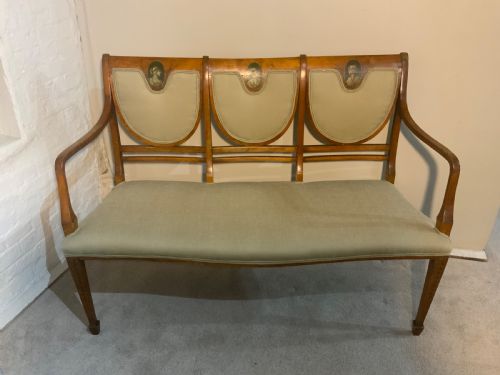
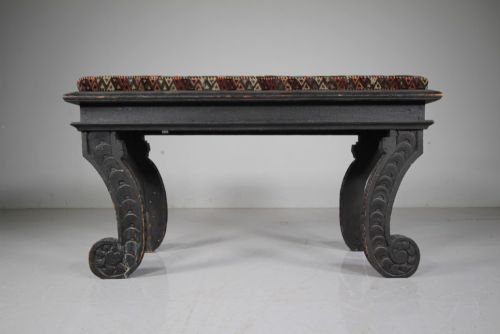
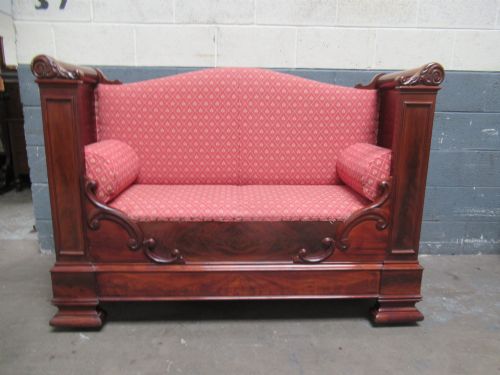
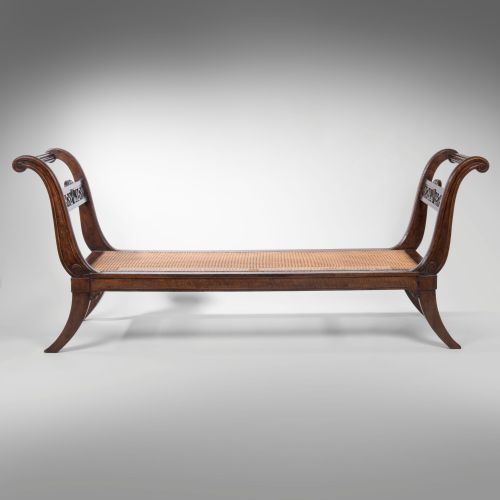
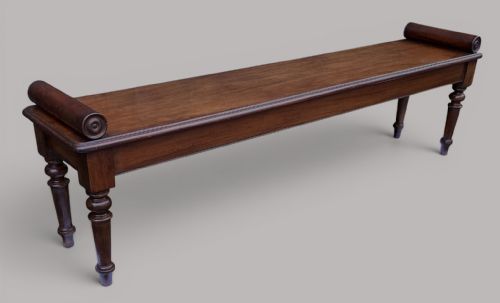


Regency Hall Bench
A regency hall bench is a substantial linear seat designed for grand circulation spaces, combining architectural presence with restrained classical elegance.
What these pieces are
A regency hall bench bridges the gap between architectural furniture and domestic seating, appearing primarily in long corridors, landings, and entrance spaces. These pieces take the form of benches, sofas, and window seats, often stretching to generous widths for large domestic interiors.
The material record is dominated by rich timbers, principally mahogany alongside occasional examples in oak, supplemented by structural details like fabric, cane, and brass. Pieces emerge from the Regency period, the broader nineteenth century, and around eighteen eighty.
Proportions vary from standard lengths to extra long formats, incorporating X frame supports or cylindrical roll-end elements. They function as both window seats and hall sofas, reflecting the flexible formal seating arrangements of period country houses.
How they were made
Joiners and cabinet makers constructed these benches using solid mahogany and oak, often achieving high polish finishes that accentuate the natural grain of the timber. Structural rigidity relied on traditional joinery methods suited to long spans and heavy daily use in busy circulation areas.
Detailing incorporated turned cylindrical roll-end supports and X frame bracing, requiring precise woodworking geometry to distribute weight effectively. Metal elements such as brass components appeared alongside woven cane panels and upholstered fabric sections to soften the rigid wooden frames.
Retail Price Guide 2026
Typical UK retail prices for regency hall bench, calculated from the Sellingantiques database of over a million retail prices indexed since 2003. This retail price guide relies exclusively on Sellingantiques data; no external sources or auction records are used, so the figures do not describe the wider market.
Some benches stretch to six feet wide, ensuring servants had plenty of room to wait or guests had ample space to drop their hats.
What varies in quality
Quality separates the ambitious architectural commissions from standard utility seating through the selection of timber and the ambition of the silhouette. Superior examples display carefully chosen mahogany grain, substantial proportions, and refined turnings on roll-end supports.
The integration of secondary materials like brass mounts and fine cane work distinguishes the top tier of craftsmanship. Finer pieces demonstrate resolution in X frame geometry and structural balance across extra long spans.
Marsh and Tatham·Gillows·Tatham and Marsh
The Regency Hall Bench Glossary
- Regency
- A stylistic period spanning the early nineteenth century defined by classical restraint and archaeological revival forms. This aesthetic draws heavily on Greek, Roman, and Egyptian precedents.
- X frame
- A structural and decorative base formed by intersecting diagonal timbers that cross to support the seat. This configuration offers both lateral stability and visual lightness.
- Roll end
- A cylindrical terminal support curving upward at the end of a bench or window seat. It provides a comfortable armrest while echoing classical scroll motifs.
- Cane
- Woven plant material used to form breathable seat panels or backrests. This technique lightens the visual weight of heavy timber frames.
Frequently Asked Questions
Where did these benches sit?
These benches were placed in wide entrance halls, grand corridors, and reception spaces where visitors waited or household members paused.
Their long linear forms suited the architectural proportions of large country houses and urban townhouses.
How do I use one today?
A long seat works effectively in a modern hallway, at the foot of a bed, or beneath a large window.
Positioning allows the piece to function as functional seating while displaying its timber grain and classical silhouette.
Are these benches comfortable?
Many examples were designed for formal or transient seating rather than long lounging periods.
Versions with upholstered fabric or supportive roll-end elements offer softer contact points than plain wooden frames.
What woods were used?
Mahogany forms the primary material across the majority of surviving examples, prized for its dark rich tone and dense grain. Cane, brass, and occasional pieces in oak appear as supplementary materials adding textural variety.