

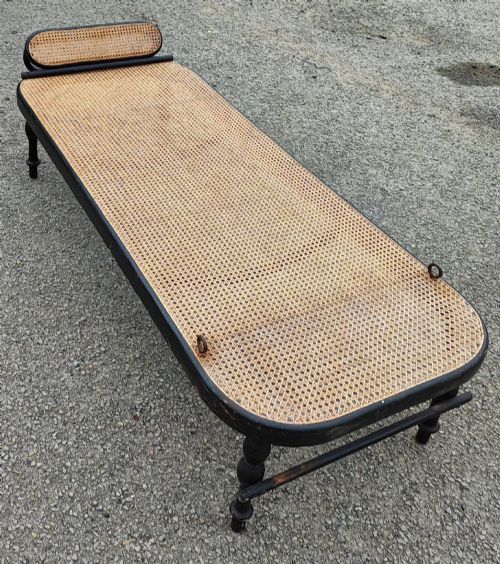
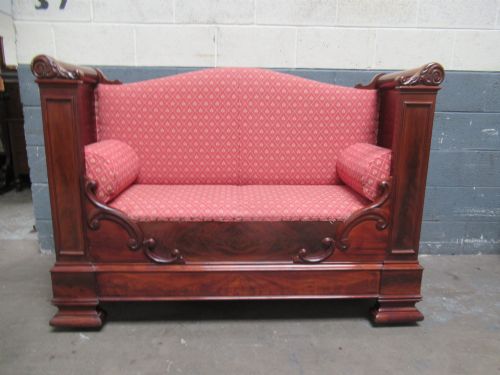
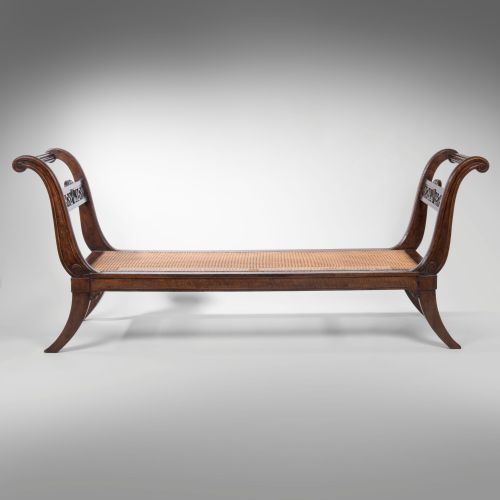
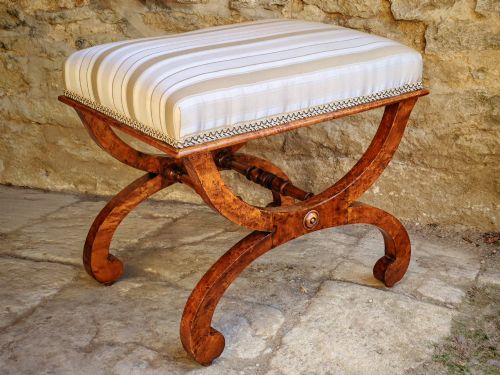
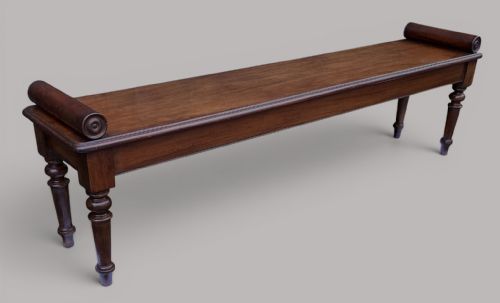


Regency Window Bench
A regency window bench is a long, low seat designed for alcoves and halls, offering clean classical lines that anchor a room.
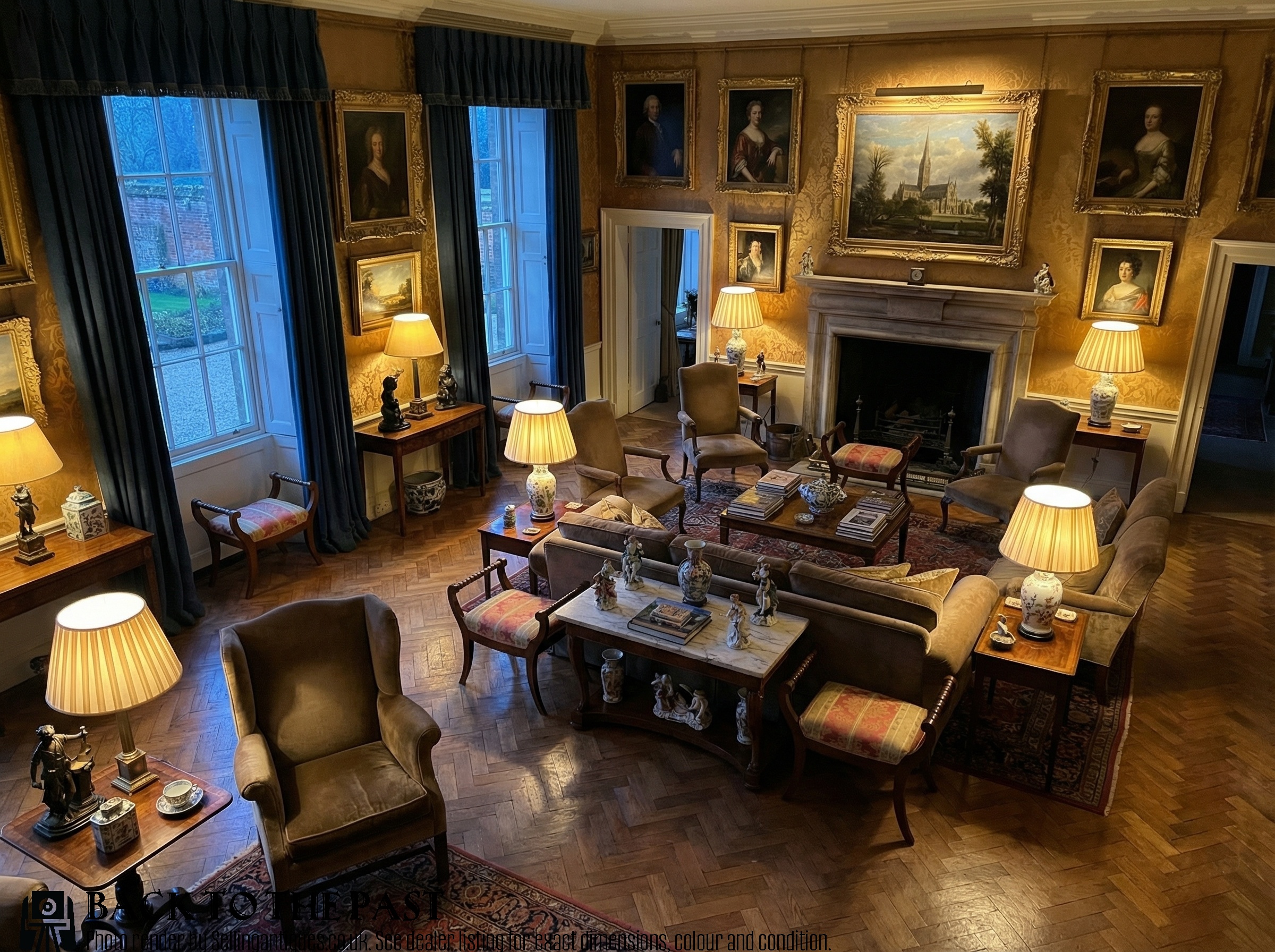
What a regency window bench is
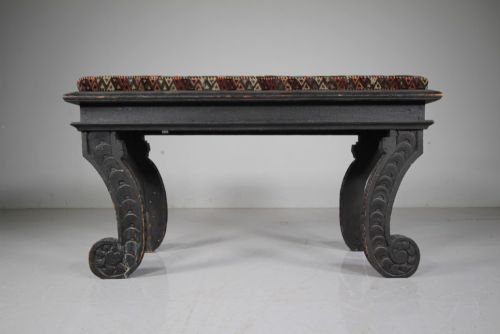
When you search for a regency window bench, you find long stools and low seats that bridge the gap between seating and architecture. These pieces appeared in the nineteenth century during the Regency period, serving dual purposes in halls, corridors, and beneath large windows.
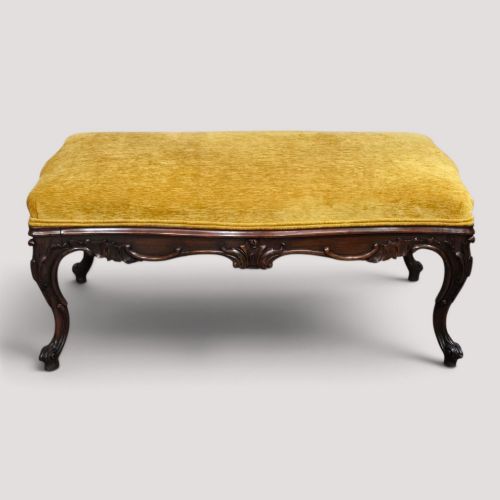
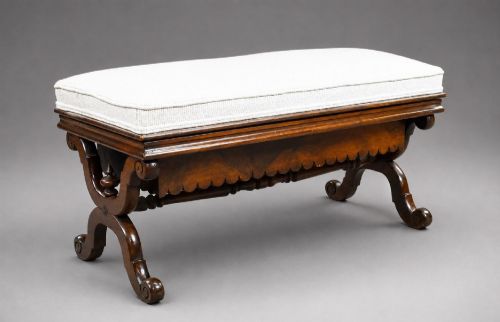
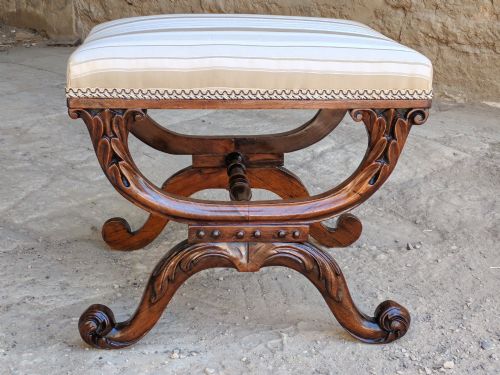
The versions you meet most often on this page take the form of mahogany window seats and dressing stools. They cross categories easily, appearing in records as hall benches, long stools, and window seats.
Makers of the period built these low benches using solid mahogany, often pairing the wood with upholstered surfaces in fabric or damask. Their proportions remain remarkably adaptable for modern rooms needing narrow, elegant seating.
How they were made
Joiners and cabinet makers constructed these benches using solid mahogany, selected for its rich grain and structural strength. Workshops relied on traditional joinery to support the long spans required for window seats and hall benches.
Upholstered elements used traditional stuffing and materials like fabric and damask to create firm, durable cushions. Detail work frequently incorporated brass elements to accent the timber frames and cabriole legs.
Retail Price Guide 2026
Typical UK retail prices for regency window bench, calculated from the Sellingantiques database of over a million retail prices indexed since 2003. This retail price guide relies exclusively on Sellingantiques data; no external sources or auction records are used, so the figures do not describe the wider market.
Early nineteenth-century makers could not decide if these were for resting boots in the hall or gazing at clouds.
What varies in quality
Quality in a regency window bench rests in the selection of the mahogany and the crispness of its turning or carving. Superior examples show thoughtful proportion in their length and height, avoiding any sagging in the long rails.
The finish of the wood and the integration of brass components distinguish finer workshop output from simpler utilitarian seating. Authenticity of the nineteenth-century period materials also dictates the standing of each piece.
The Regency Window Bench Glossary
- Regency
- A stylistic period spanning the early nineteenth century defined by classical restraint and archaeological influence. It follows the Georgian era and precedes Victorian design.
- Mahogany
- A dense tropical hardwood favoured for its deep reddish-brown colour and stability. It forms the primary structural material for these benches.
- Damask
- A reversible figured fabric traditionally woven on a loom with patterns visible on both sides. It appears frequently as upholstery on period seating.
- Cabriole leg
- A furniture leg that curves out and then in, resembling animal legs. This shape adds sculptural movement to the base of certain window seats.
Frequently Asked Questions
Where do you put a regency window bench?
These benches fit naturally beneath large windows, along narrow hallways, or at the foot of a bed. Their low profile ensures they do not block natural light.
They also function effectively as extra seating in a living room or study without dominating the floor space.
How do I care for mahogany?
Keep mahogany furniture away from direct sunlight and steady heat sources to prevent the wood from drying out. Dust the surface regularly with a soft, dry cloth.
Apply a traditional wax polish occasionally to nourish the timber and maintain its natural lustre.
Are these benches comfortable to sit on?
Most regency window benches feature firm, traditional upholstery designed for upright sitting rather than lounging. Their primary historical function was for brief resting periods in halls and bay windows.
Adding a loose cushion can adjust the comfort level to suit modern preferences.
How do I identify a nineteenth century piece?
Examine the timber for the deep patina and distinct grain patterns characteristic of nineteenth-century mahogany. Look at the construction methods, joint types, and wear patterns on the feet and frame.
Period pieces display hand-finished details and materials consistent with early nineteenth-century workshop practices.