


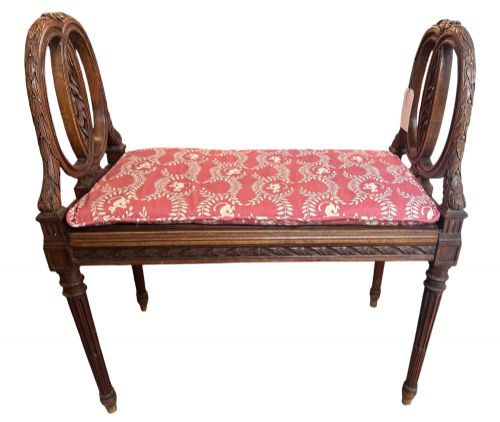


Pink Upholstered Bench
A pink upholstered bench brings warmth and practicality to any room, taking the form of an elegant window seat for daily use.
What a pink upholstered bench is
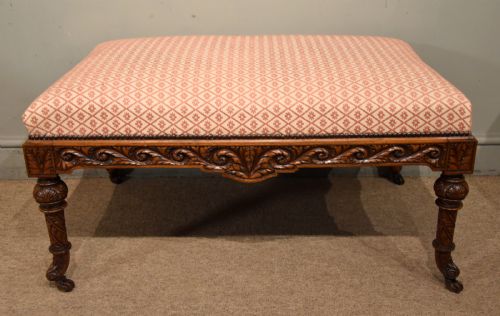
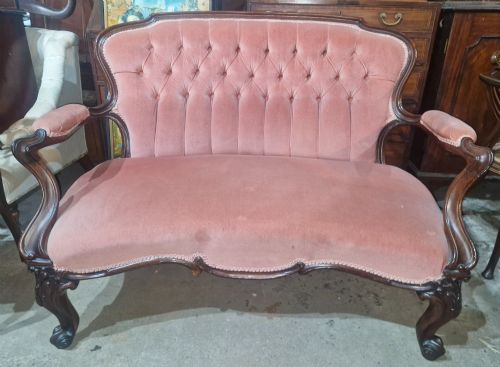
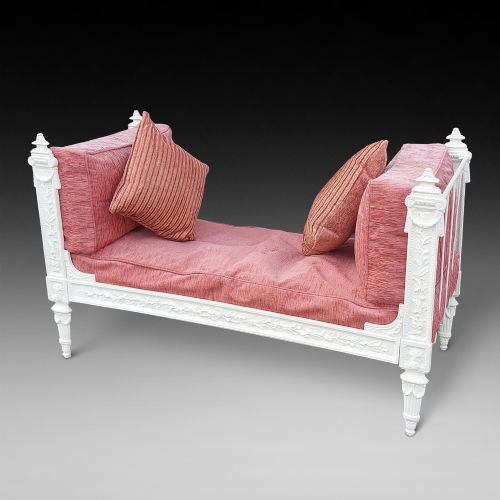
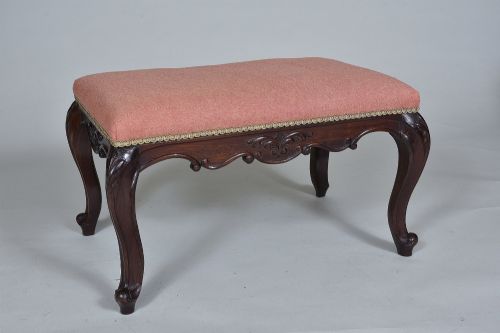
A pink upholstered bench typically appears in the form of a window seat designed for placement beneath casements or at the foot of a bed. These seating pieces combine supportive wooden framing with padded upholstery to provide both comfort and visual charm.
The selections available on this page span the nineteenth century and the Edwardian era, showing how makers adapted seating forms across different decades. Common classifications in the evidence include benches, stools, and window seats.
The nineteenth-century examples often embrace historic revival aesthetics, while Edwardian pieces reflect the lighter proportions favoured at the turn of the twentieth century.
How they were made
Makers constructed the timber frames of these benches using solid hardwoods such as mahogany and walnut, often applying hand-carved ornamentation to enrich the structural rails and legs. Woodworkers selected these dense timbers for their stability and capacity to hold detailed carving.
The visible woodwork was paired with padded fabric upholstery to create a comfortable surface for sitting. Brass details occasionally appeared as structural or decorative accents, complementing the dark tones of the timber frames.
Early window seats were thoughtfully measured so that Victorians could gaze out at passing horse-drawn carriages in absolute comfort.
What varies in quality
The distinction between standard examples and the finest pieces rests upon the crispness of the hand-carving on the walnut or mahogany frames. Skilled carvers achieved deep, clean lines that catch the light, whereas lesser work appears shallow and hesitant.
The harmony between the timber frame and the chosen fabric upholstery determines the visual success of the piece. Superior examples feature timber with rich grain patterns that complement the texture and tone of the covering.
The Pink Upholstered Bench Glossary
- Window seat
- A long, narrow form of seating specifically designed to fit into the recess of a window or against a wall. This type provides low-backed or backless seating suited for brief repose.
- Mahogany
- A durable tropical hardwood prized for its reddish-brown colour and fine grain. Makers utilised this timber extensively for high-quality nineteenth-century furniture framing.
- Walnut
- A heavy, dark timber valued for its rich figuring and responsiveness to carving. It frequently forms the primary structure of French-influenced seating.
- Regency
- A style period spanning the early nineteenth century characterised by classical restraint and archaeological revival motifs. Pieces from this era often display clean architectural lines.
Frequently Asked Questions
Where should I place a pink upholstered bench?
These pieces suit positions beneath low windows or along bedroom walls where extra seating is helpful. Their narrow proportions allow them to fit into hallways without obstructing movement.
They also function effectively at the foot of a bed, pairing practicality with a decorative accent of colour and carved wood.
How do I identify a 19th-century window seat?
Nineteenth-century examples rely on dense hardwoods like walnut or mahogany, often featuring hand-carved details influenced by French styles or Regency design. The weight and solidity of the timber frame distinguish them from later reproductions.
The integration of traditional joinery techniques further points to nineteenth-century construction methods.
What is the difference between a bench and a window seat?
A window seat is specifically proportioned to sit low and narrow, designed to occupy the space beneath a window frame. Benches generally offer broader proportions suitable for freestanding placement in rooms or hallways.
Both forms provide upholstered surfaces supported by wooden legs.
How do I care for the wooden frame?
Maintain the timber by dusting regularly with a soft cloth and avoiding direct exposure to strong sunlight or heat sources. This prevents the wood from drying out over time.
Apply occasional specialist wax if the finish requires nourishment, taking care to keep products away from the fabric upholstery.