


Mahogany Hall Stool
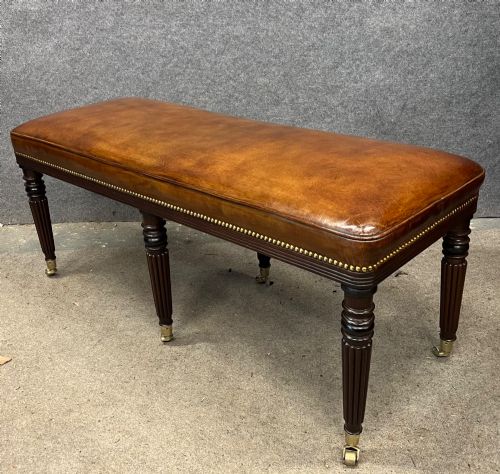
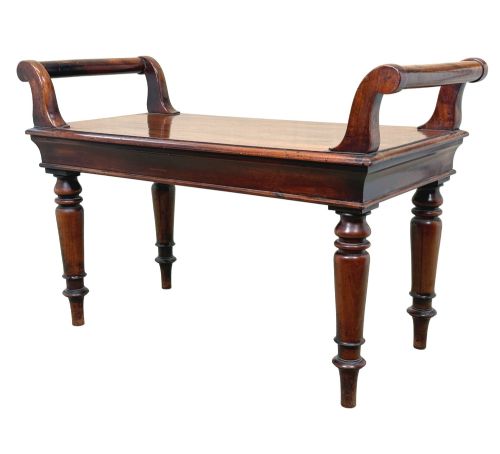
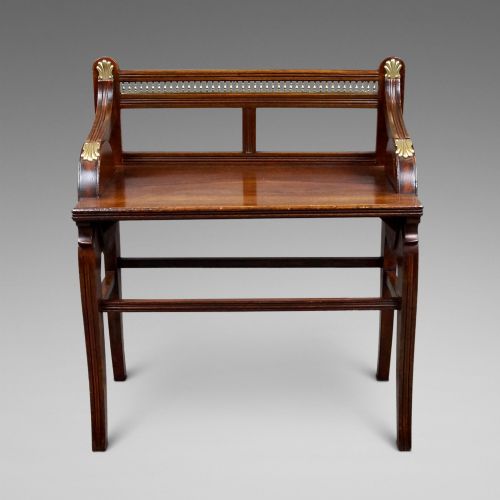
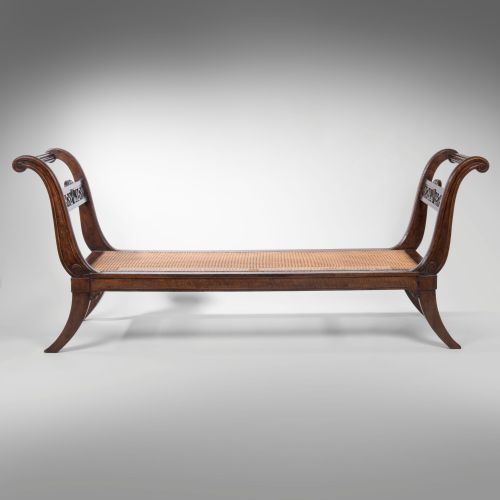
A mahogany hall stool brings substantial timber, classical restraint and useful seating into an entranceway.
Mahogany Hall Stool
A mahogany hall stool is typically encountered as a long bench, window seat or compact stool designed for an entrance hall or passage. The examples found here span the Georgian, Regency, Victorian and Edwardian periods, appearing in forms that include X-frame cross-stretcher supports, cabriole legs and fluted profiles.
Makers often adapted these versatile pieces for domestic utility, resulting in occasional crossover titles such as window seats, dressing stools and music chairs. The proportions vary from intimate single-seater designs to long benches intended for pairs or larger spaces.
Materials and construction
Construction relies heavily on dense mahogany timber, sometimes enriched with satinwood inlay or supported by brass details. Frames are joined to endure heavy use in domestic thoroughfares.
Upholstery forms an integral part of the structure, utilising fabrics such as leather, cane, damask and tapestry fabric to provide comfortable seating surfaces across different stylistic eras.
Mahogany Hall Stool Retail Price Guide 2026
Typical asking prices for mahogany hall stool among the pieces listed under this phrase on Sellingantiques today, from the lower quarter to the upper quarter. They describe what is for sale here now, not the wider market.
The listings on this page include mahogany, cane, leather and satinwood across furniture forms ranging from benches to music chairs.
Assessing quality and distinction
Quality rests in the crispness of carved detail, the choice of well-figured mahogany timber and the structural integrity of the frame. Pieces attributed to documented makers demonstrate superior handling of proportions and joinery.
The refinement of secondary elements, such as fluted legs, inlaid satinwood borders or well-executed X-frame supports, separates standard utility seating from finer examples.
Jas Shoolbred·Gillows·Richard Bridgens
The Mahogany Hall Stool Glossary
- Mahogany
- A durable tropical hardwood prized for its rich colour and stable grain, forming the primary structure of these seats.
- X-frame
- A structural support consisting of crossed members forming an X shape, often seen on Regency window seats.
- Cabriole leg
- A furniture leg that curves out and then in, mimicking an animal limb, frequently found on period seating.
- Damask
- A reversible figured fabric traditionally used for upholstery, adding texture and pattern to the seat.
- Fluted leg
- A column leg decorated with parallel vertical grooves, popular in classical furniture designs.
Mahogany Hall Stool: Frequently Asked Questions
Where should I place a mahogany hall stool?
These pieces suit entrance halls, corridors and wide landings where a sturdy seat is required. They also function well beneath tall windows as low seating.
Their narrow profile ensures they occupy minimal floor space while offering practical utility for putting on shoes or resting momentarily.
How do I care for mahogany and leather upholstery?
Maintain the timber by dusting regularly with a dry cloth and occasionally applying suitable wax to nourish the grain. Avoid placing the furniture in direct sunlight or near heat sources.
Leather surfaces benefit from gentle cleaning and conditioning to prevent cracking, while fabric upholstery should be vacuumed lightly with a soft brush attachment.
How can I tell a Regency period stool from a Victorian one?
Regency examples often display classical restraint, clean architectural lines, brass mounts and distinctive X-frame supports derived from ancient designs.
Victorian pieces tend to be heavier in construction, occasionally featuring more exuberant carving, buttoned upholstery or varied Revival styles.