

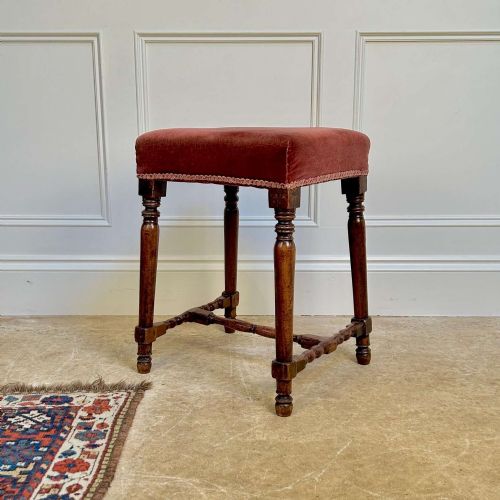


Vintage Mahogany Bedroom Stool
A vintage mahogany bedroom stool brings warmth and understated utility to a dressing area, offering a solid wood frame upholstered in period textiles.
Vintage Mahogany Bedroom Stool
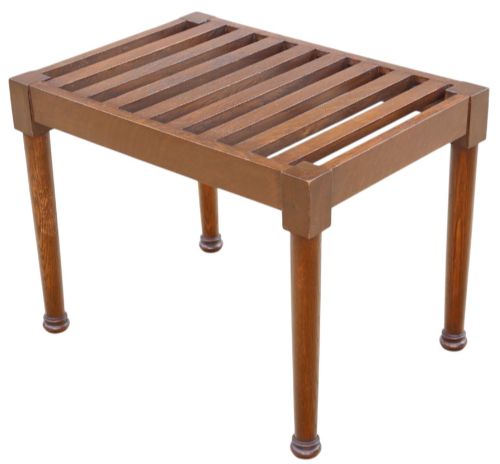
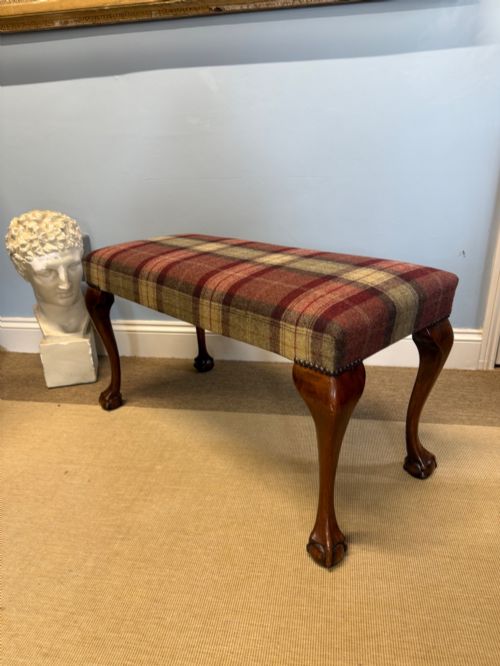
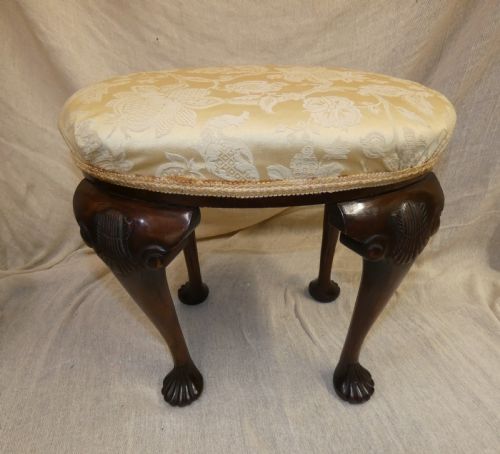
A vintage mahogany bedroom stool encompasses a range of low seating options built from dark tropical timber, often designed specifically for the dressing room or boudoir. The selection here spans compact dressing stools, window seats, duet music benches, and luggage racks.
Most examples originate from the nineteenth and early twentieth centuries, drawing on stylistic revivals like the Georgian and Edwardian periods. Pieces frequently integrate turned legs, cross stretchers, or carved details such as ball and claw feet.
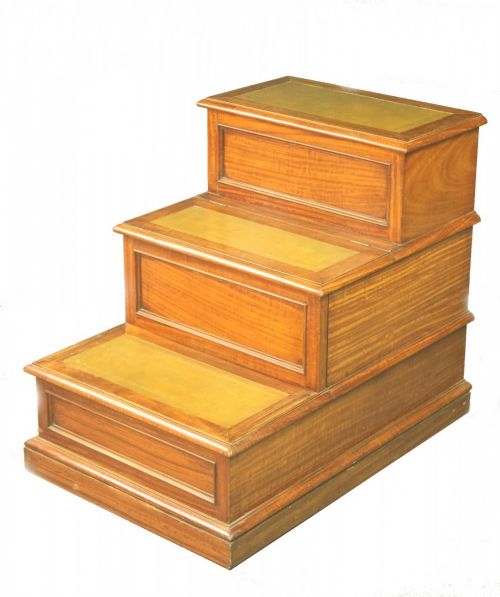
Beyond standard stools, the inventory includes related low furniture in mahogany, including bed steps and upholstered ottomans. These forms share the same dense timber construction and soft fabric tops.
How they were made
Carpenters constructed these frames primarily from solid mahogany, sometimes accenting surfaces with satinwood inlay or brass hardware. Timber joints relied on traditional methods like mortise and tenon to ensure stability under daily use.
Upholstery techniques varied by period, utilising supportive webbing, springs, and stuffing beneath top layers of velvet, damask, tapestry, or plain fabric. Textile covers were hand-tacked to the wooden frames, allowing for future reupholstery.
Listings feature mahogany, satinwood, and brass alongside upholstery fabrics including velvet, damask, and tapestry.
What varies in quality
The degree of hand-carving and timber selection distinguishes standard utility seating from finer workshop pieces. Dense grain and rich natural patination on the mahogany frame indicate superior material selection.
Structural integrity depends on the tightness of the joinery, particularly where legs meet the seat rails or cross stretchers. Additional refinement appears in sophisticated upholstery stuffing and the choice of durable antique textiles.
Whytock and Reid
The Vintage Mahogany Bedroom Stool Glossary
- Mahogany
- A durable tropical hardwood known for its deep reddish-brown colour and fine grain. It forms the structural foundation for nearly all pieces in this category.
- Cross stretcher
- Wooden bars connecting the lower legs of a stool for added stability. They often feature simple turnings or central finials.
- Damask fabric
- A reversible figured textile woven on a jacquard loom, frequently used for traditional upholstery. It provides a subtle pattern through contrasting matte and shiny threads.
- Bed steps
- A set of small staircase steps once used to reach high historical beds. They often incorporate hidden compartments or pull-out sections.
- Window seat
- An elongated stool designed to sit within the recess of a window. These pieces usually feature upholstered tops and low wooden frames.
Vintage Mahogany Bedroom Stool: Frequently Asked Questions
How do I date a mahogany stool?
Dating relies on stylistic clues, construction methods, and timber characteristics. Pieces from the nineteenth century often show hand-cut joinery and heavy Victorian proportions.
Later Edwardian and early twentieth-century examples lean towards lighter revival styles, such as Queen Anne or Georgian influences, with machine-finished internal components.
What is the difference between a dressing stool and a piano stool?
Dressing stools are generally stationary seats designed to sit neatly beneath a dressing table. They prioritise a compact footprint and match bedroom furniture.
Piano stools often accommodate single or duet players and sometimes include internal storage for sheet music or mechanical height adjustment.
Are these stools suitable for daily seating?
Most antique mahogany frames are structurally robust enough for regular use in a modern home. Solid timber construction provides reliable weight-bearing strength.
Upholstery comfort depends on the condition of the internal padding. Older webbing and stuffing may require professional renewal to achieve modern softness.
How should I clean a mahogany frame?
Maintenance requires gentle dusting with a soft, dry cloth to prevent grit accumulation on the polished surface. Avoid abrasive cleaners or excess moisture.
Occasional application of quality beeswax feeds the timber and enhances the natural lustre of the mahogany grain without harming the finish.