
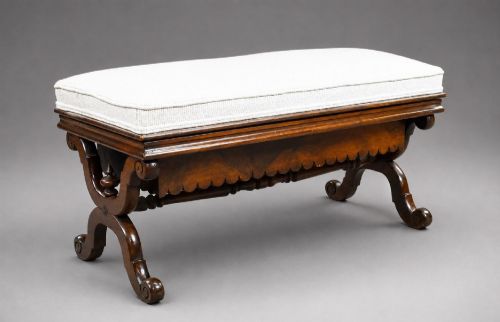
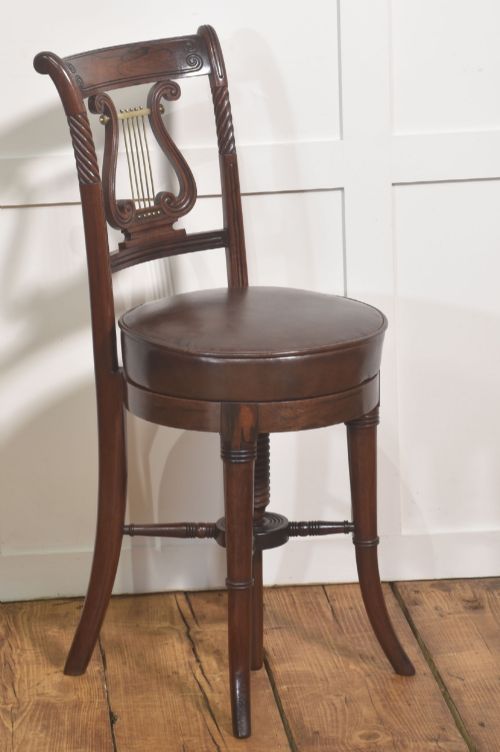
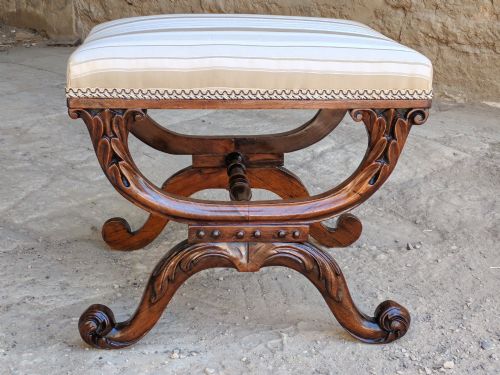
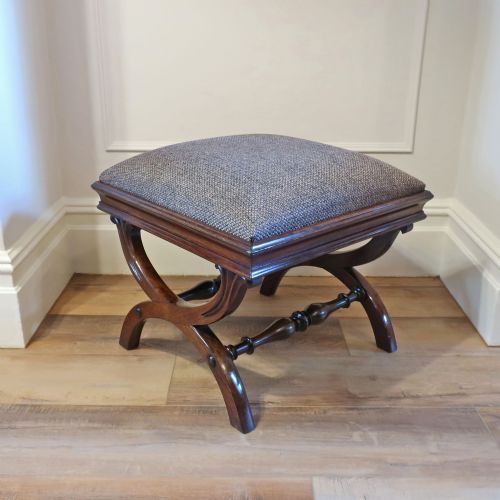
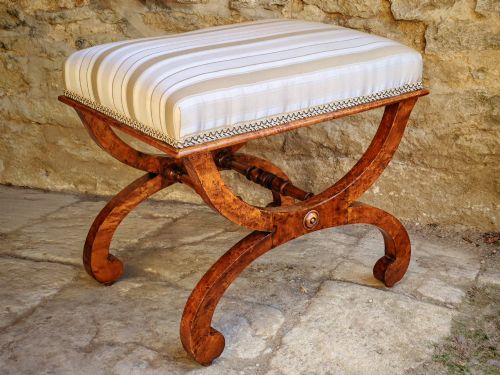


Regency Dressing Stool
A regency dressing stool is a low, upholstered seat placed before a vanity, combining practical utility with refined neoclassical lines.
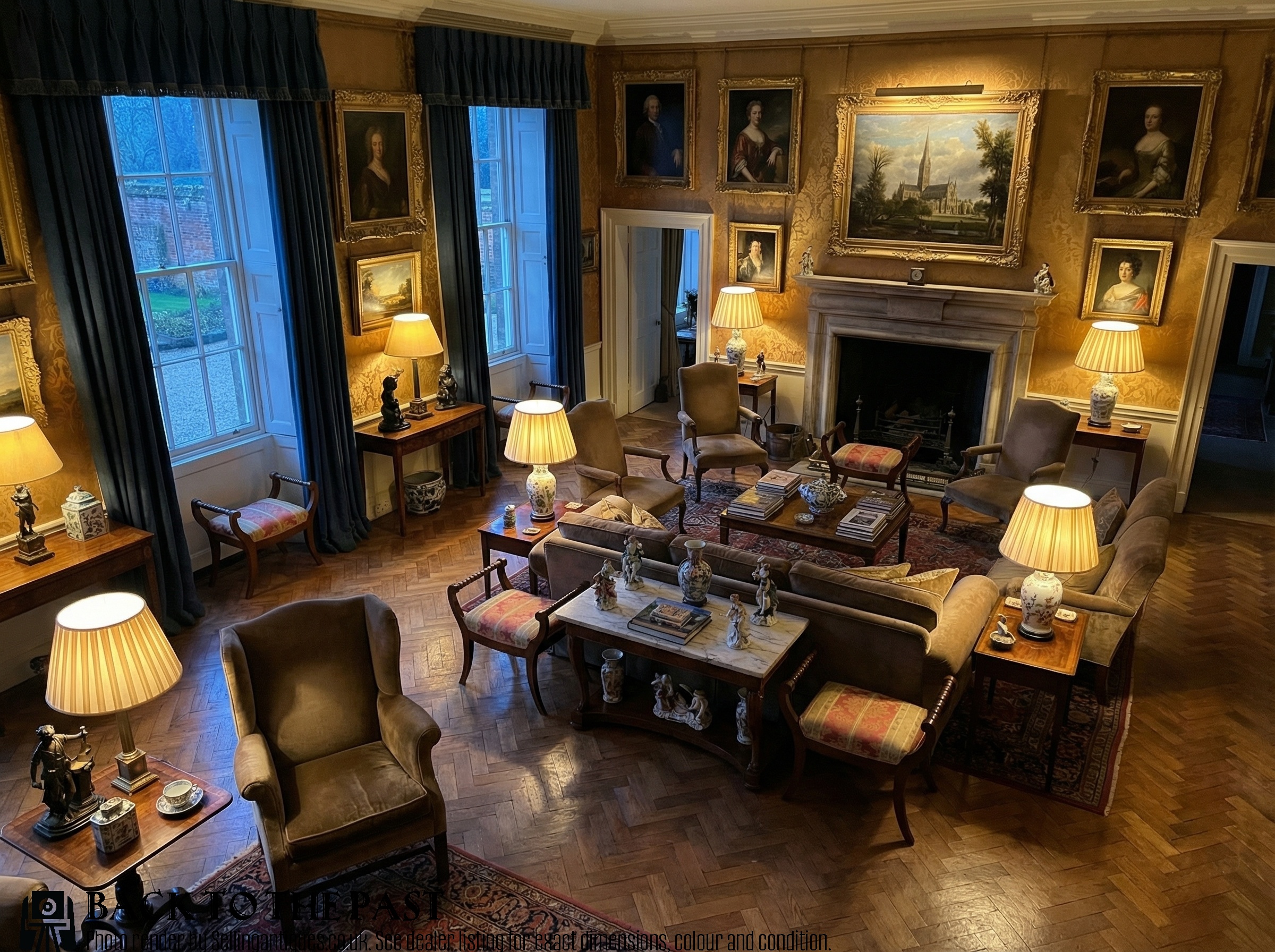
Regency Dressing Stool
When you search for a regency dressing stool, you encounter low seating designed for the bedroom or dressing room, frequently featuring architectural frames and upholstered tops. The pieces appearing on this page span the 19th Century, Georgian, and Victorian eras, often taking the form of footstools, window seats, and piano stools alongside dedicated dressing seats.
Mahogany and rosewood dominate the materials, supported by secondary timbers like burr maple and giltwood, while upholstery ranges from simple fabric and leather to chenille and olive green cloth. You find straightforward turned and tapered legs sitting alongside more ambitious X-framed and curule designs.
The prevailing styles stretch from strict Regency and Grand Regency through to William IV, George IV, and occasional Anglo-Indian or Edwardian Sheraton Revival interpretations. This variety ensures you can source a compact square stool for a corner or a larger ottoman suited to the foot of a bed.

What varies in quality
Original upholstery configurations and functioning mechanical height adjustments elevate certain pieces, whereas heavily altered frames or replaced structural components reduce historical cohesion. The presence of documented maker attributions further separates standard workshop production from the output of premier cabinetmakers.
Regency Dressing Stool Retail Price Guide 2026
Typical asking prices for regency dressing stool among the pieces listed under this phrase on Sellingantiques today, from the lower quarter to the upper quarter. They describe what is for sale here now, not the wider market.
Period styles span from 18th-century Georgian designs through the height of the Regency era into early Victorian and Edwardian Sheraton Revival interpretations.
Miles & Edwards·Gillows
The Regency Dressing Stool Glossary
- Curule
- An ancient X-shaped form of seating derived from Roman magistrate chairs, featuring crossing curved legs that support an upholstered seat.
- Window seat
- A long, narrow form of stool designed to fit within the architectural recess of a domestic window.
- Ottoman
- A fully upholstered seat or box without arms, often serving dual purposes as a footrest or storage compartment.
- Gesso
- A plaster-like material applied to wood surfaces as a smooth base for subsequent gilding or painting.
- Chenille
- A fuzzy, tufted fabric frequently utilised for traditional upholstery to add tactile warmth and texture.
Regency Dressing Stool: Frequently Asked Questions
What is a regency dressing stool used for?
These low seats were originally placed in bedrooms or dressing rooms to provide comfortable seating while attending to the hair or toilette. They also functioned easily as piano stools, window seats, or fireside footstools.
Today, they adapt readily to modern interiors as compact accent pieces or dressing table companions. Their modest proportions allow them to slide neatly beneath consoles when not in use.
How do I identify a genuine period piece?
Examine the timber closely for the rich patina, depth, and dry grain characteristic of 19th-century cabinetmaking rather than modern chemical finishes. Look for traditional hand- cut joinery and older fixings that indicate genuine age.
Check for design consistency matching the Regency or Georgian idioms, such as reeded legs, scroll ends, or X-frame supports. Maker stamps or labels, where present, offer definitive proof of origin.
Are these stools comfortable for daily seating?
Most surviving examples feature traditional stuffing and webbing that provides a firm, supportive perch rather than deep, sink-in domestic lounge comfort. Their primary historical function required an upright posture suited to grooming tasks.
Many pieces retain historical upholstery or have been sympathetically recovered using traditional materials. If you intend to use one constantly, ensure the internal webbing remains sound.
What is the difference between a dressing stool and a footstool?
Dressing stools typically stand slightly taller and feature stable upright legs or rigid frames designed specifically to support a seated person. Footstools are generally lower to the floor and built to elevate resting feet.
Despite this distinction, many period examples served overlapping functions depending on the room. Adjustable mechanisms often bridged this gap, allowing a single piece to serve multiple domestic roles.