
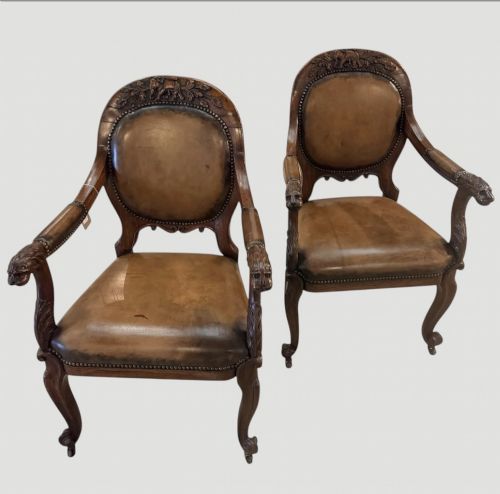
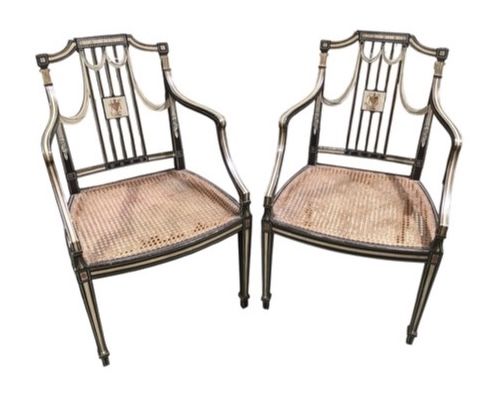
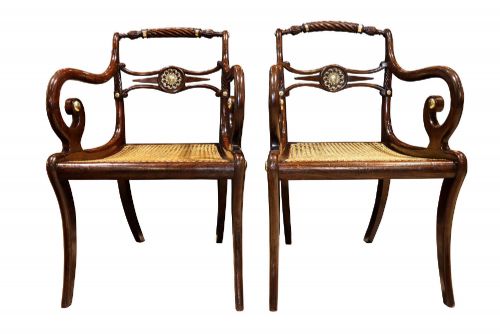

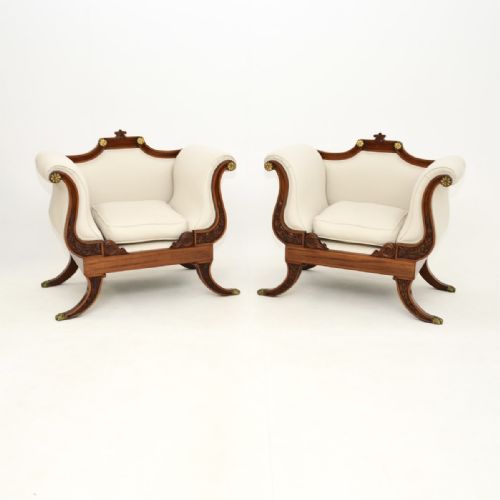
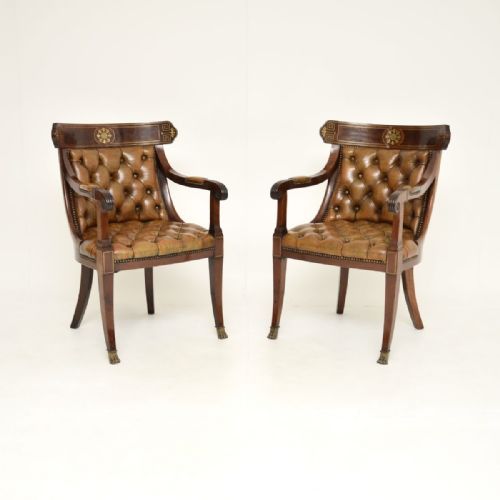
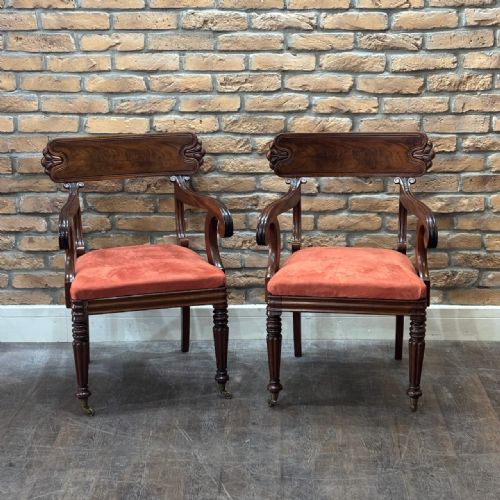

Pair Regency Armchairs
Pair regency armchairs bring balanced proportion and classical line to a room, offering enduring seating from the early nineteenth century.
What pair regency armchairs are
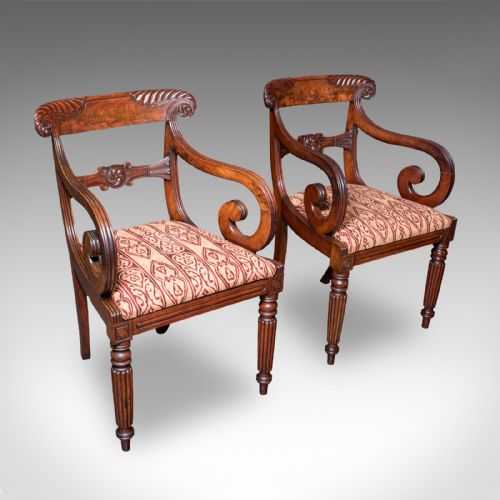
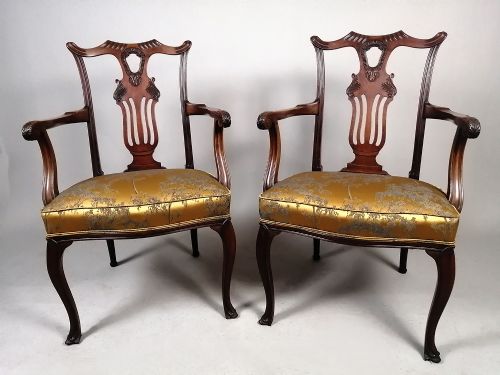
These matched seats date from the early nineteenth century, emerging during the Regency period and the broader nineteenth century. They function as library chairs, carvers, elbow chairs, and morning room seats, designed for specific rooms within a grand house.
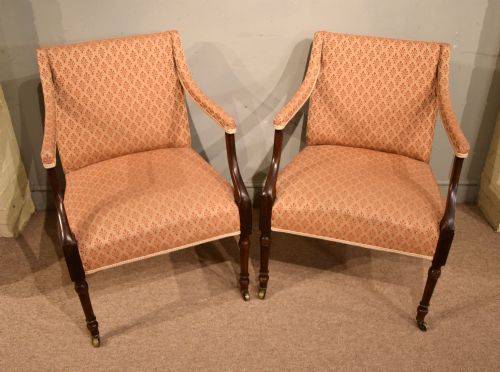
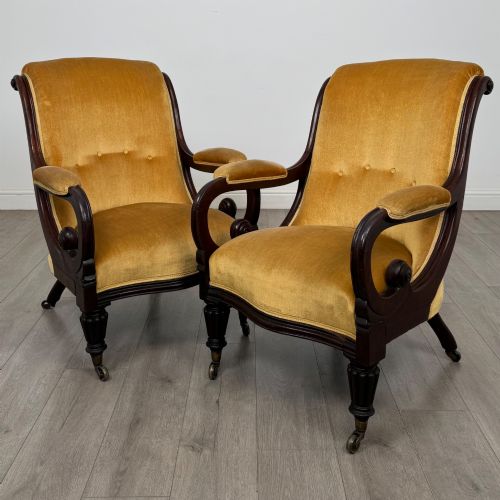
Mahogany forms the primary timber across the inventory, accompanied by rosewood, fruitwood, and painted finishes. Upholstery materials include leather, cane, wool, velvet, and needlepoint, paired with wooden frames.
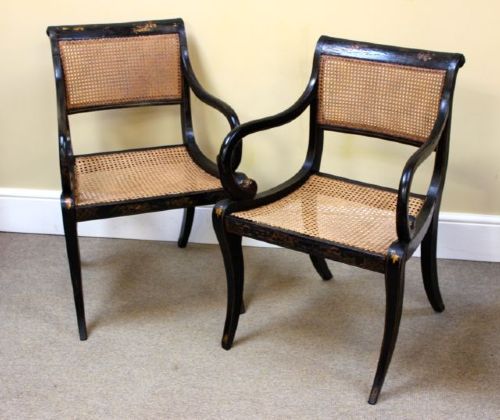
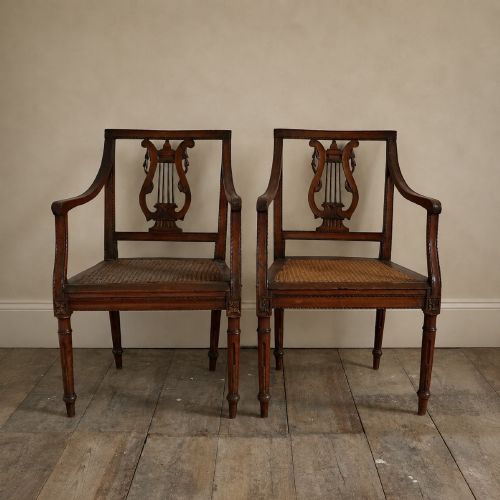
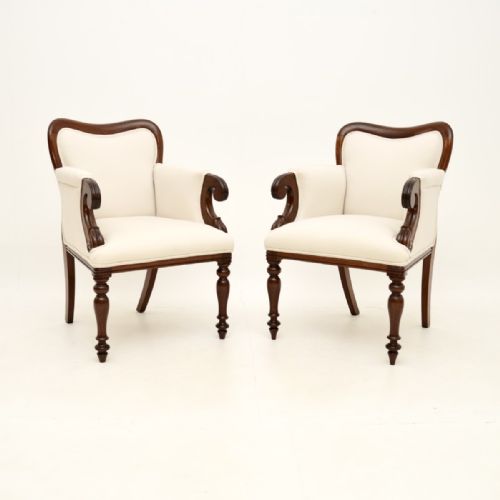
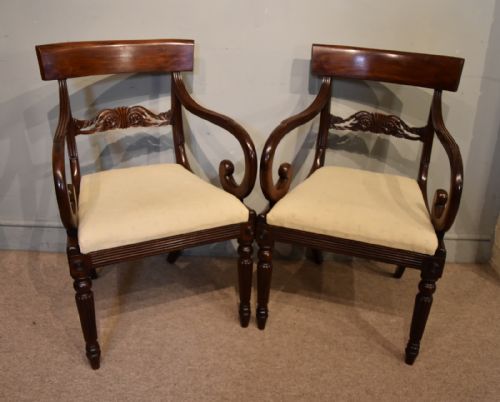
Makers shaped these armchairs with specific backs, including lyre, scroll, bar, cane, and open configurations. Frames rest on sabre legs or incorporate brass inlay, bronze, and giltwood details.
How they were made
Cabinetmakers worked primarily in solid mahogany, rosewood, and fruitwood, turning structural elements like bobbin turned legs or carving sweeping scroll arms. Timber frames were constructed with traditional joinery to support daily use in libraries and dining rooms.
Decoration involved contrasting inlays and surface finishes, utilising brass inlay, bronze mounts, and giltwood highlights against ebonised or painted wood. Caning was woven tightly into seat frames, while leather, velvet, and wool upholstery was nailed directly to the timber.
Retail Price Guide 2026
Typical UK retail prices for pair regency armchairs, calculated from the Sellingantiques database of over a million retail prices indexed since 2003. This retail price guide relies exclusively on Sellingantiques data; no external sources or auction records are used, so the figures do not describe the wider market.
Some chairs sport bobbin-turned frames that look remarkably like rows of giant wooden beads.
What varies in quality
The refinement of the carving and the choice of primary timber separate standard seating from exceptional library examples. Crisp execution in the scroll arms and precision in brass inlay distinguish workshop output.
Original surface patination and the survival of secondary elements such as cane seats or leather upholstery dictate the integrity of a pair. Integrated design where sabre legs and back rails share a unified classical vocabulary marks the upper tier.
John Gee
The Pair Regency Armchairs Glossary
- Carver
- An armchair, often designed to sit at the head of a dining table or function as an elbow chair in a reception room.
- Bergere
- An enclosed upholstered armchair with wooden sides and a cane or upholstered back.
- Sabre leg
- A concave tapering leg that curves outwards towards the floor, characteristic of Regency seating design.
- Lyre back
- A chair back featuring an open splat shaped in the outline of a classical musical instrument.
- Ebonised
- Wood treated with a dark stain or finish to imitate ebony.
- Bar-back
- A horizontal top rail across the back of a chair, often curved to fit the sitter.
Frequently Asked Questions
How were pair regency armchairs used?
These chairs served multiple domestic functions, operating as library seating for reading, carvers at dining tables, or elbow chairs in morning rooms.
Pairs were positioned symmetrically in formal spaces, often flanking a fireplace or writing desk.
What woods were used for regency armchairs?
Mahogany forms the dominant timber across the recorded pieces, providing a stable frame for intricate carving and brass inlay.
Alternative woods include rosewood, fruitwood, and ebonised timber finished with giltwood highlights or paint.
Are these chairs comfortable for daily seating?
The seating experience depends on the specific form, with upholstered leather library chairs offering deep padding and support.
Cane seat variants and open armchairs were designed for upright posture during formal daily activities.
How do I identify a genuine pair?
A true pair shares identical timber grain, turning details, and proportions, reflecting construction by the same workshop.
Matching decorative elements such as scroll arms, brass inlay, and leg styles confirm their unified origin.