
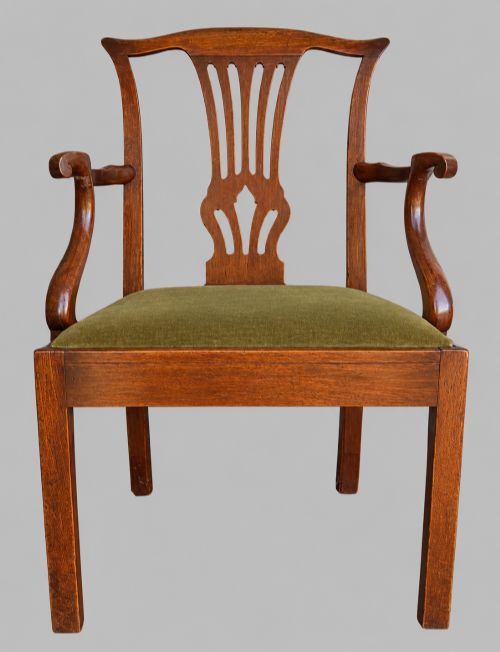
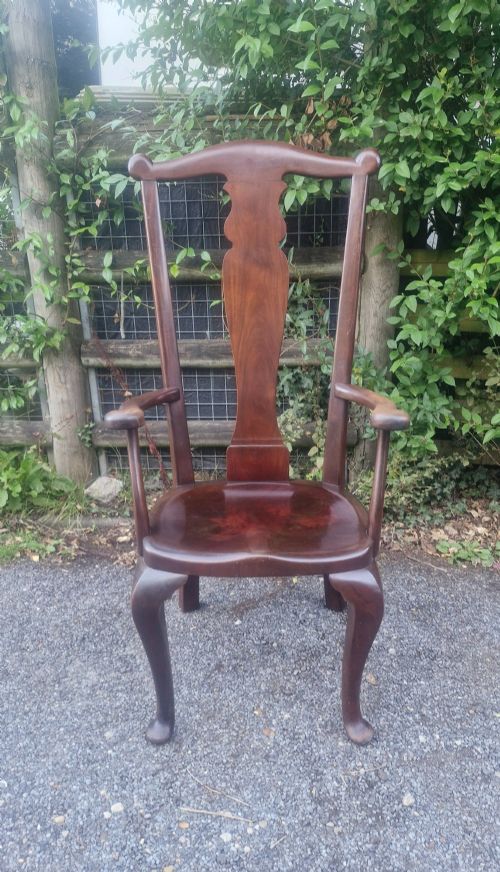
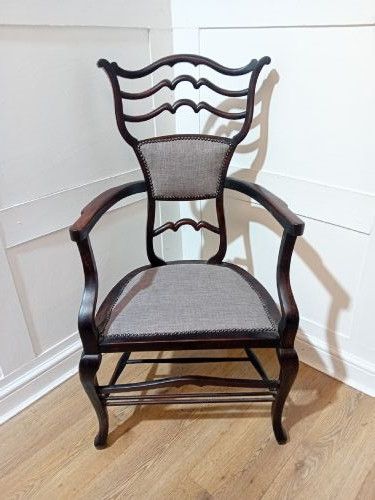
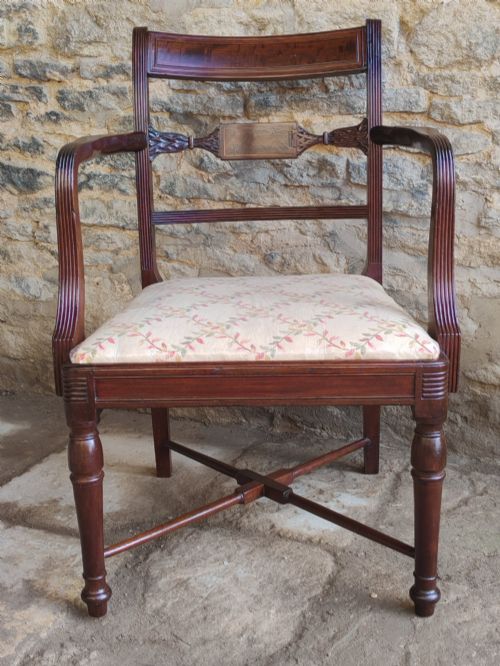
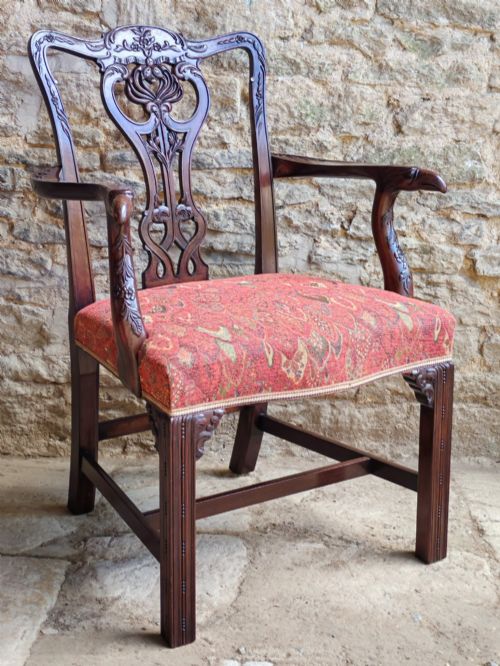
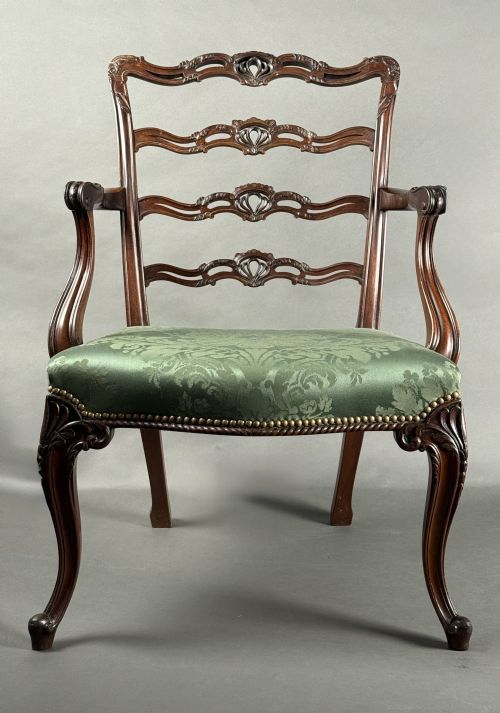
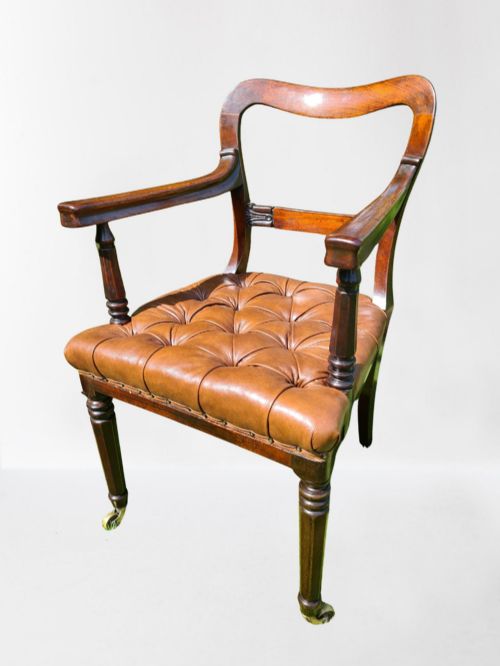
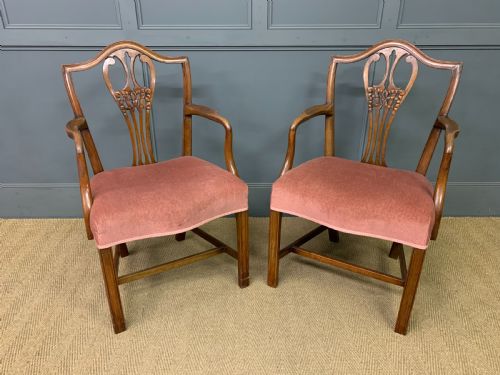
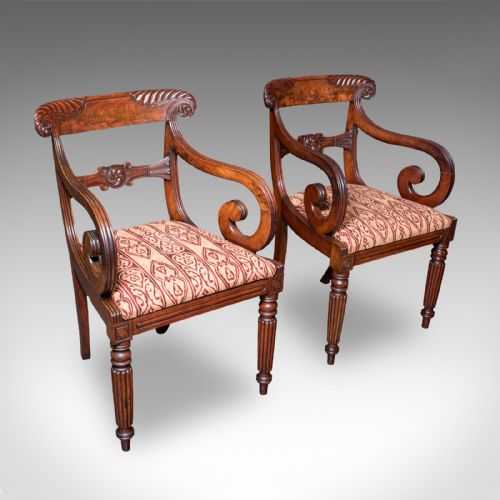
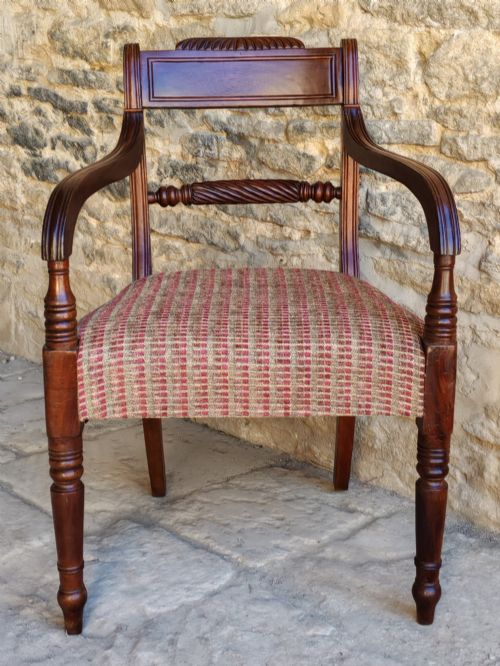
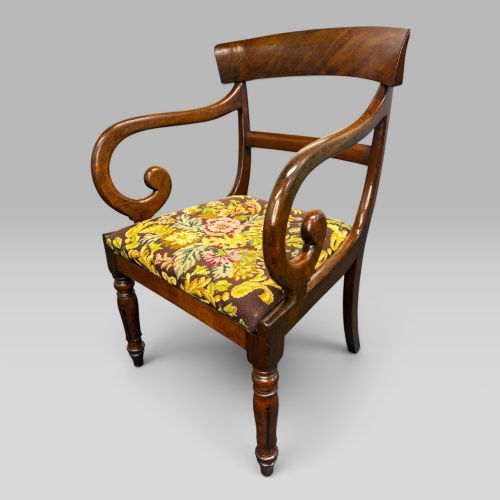
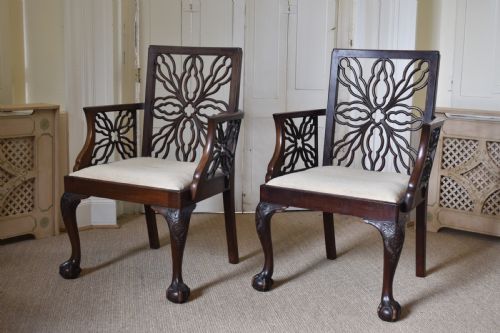
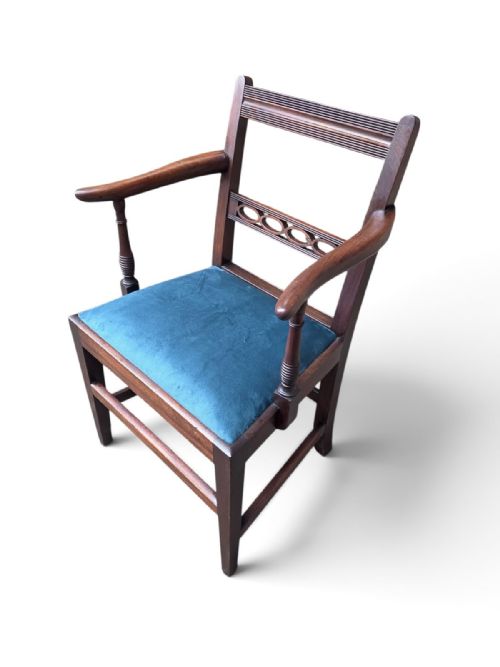
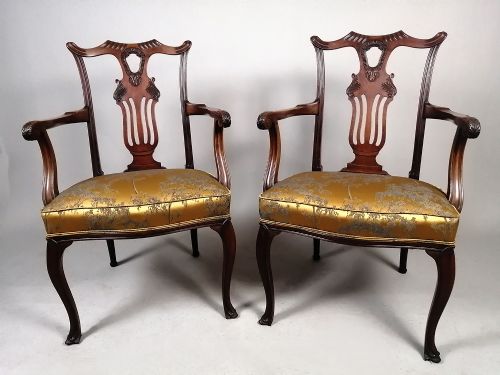
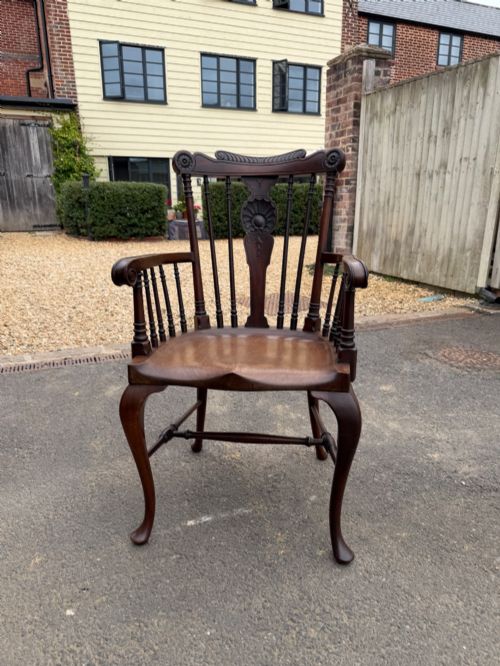
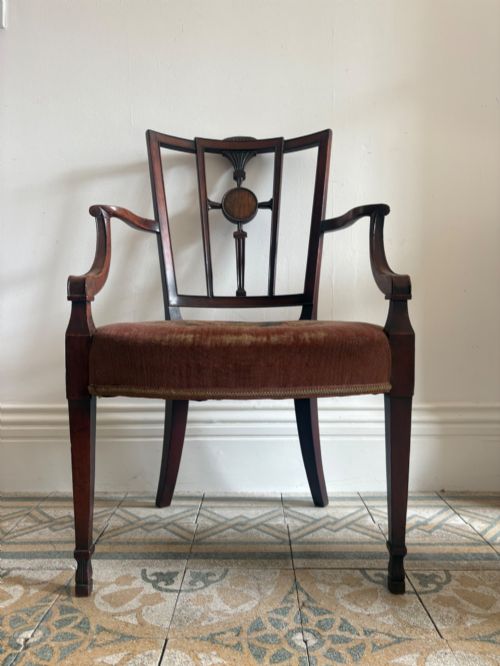
Antique Mahogany Elbow Chairs
These antique mahogany elbow chairs bring solid timber and period form to any room, offering the sturdy support that collectors seek.
What antique mahogany elbow chairs are
Buyers searching for antique mahogany elbow chairs encounter sturdy timber seating designed with armrests for added comfort at the desk, dining table or library. The evidence shows these chairs appearing in forms such as library armchairs, desk chairs and carver dining chairs.
The versions most commonly met on this page span the Regency, William IV, George IV and Victorian periods, alongside later Victorian and 1890s reinterpretations. These pieces frequently appear in pairs or sets, reflecting how formal seating was originally commissioned.
Makers shaped these armchairs using traditional wood alongside fabric and textile upholstery for the drop-in or padded seats. Regional variations include Scottish workshops producing distinctive interpretations of standard Regency and Victorian designs.
How they were made
Cabinetmakers built these elbow chairs using solid mahogany timber, sometimes incorporating wood inlay for decorative contrast on the backsplats and rails. The structural frame relies on traditional joinery to secure the arms and legs under daily weight.
Upholstered elements utilise textile and fabric materials fixed over stuffing to provide a cushioned seat. Selected chairs incorporate carved wooden details such as lyre backs or Chippendale style motifs applied directly to the mahogany framework.
Retail Price Guide 2026
Typical UK retail prices for mahogany elbow chairs, calculated from the Sellingantiques database of over a million retail prices indexed since 2003. This retail price guide relies exclusively on Sellingantiques data; no external sources or auction records are used, so the figures do not describe the wider market.
The available inventory spans Regency, William IV, George IV, and Victorian periods alongside late nineteenth-century styles.
What varies in quality
The distinction between standard examples and the top of the range rests on the depth of the mahogany grain and the crispness of any carved ornamentation. Superior pieces demonstrate deliberate proportion in the curve of the elbow rests and the taper of the legs.
Integrity of the timber frame and the retention of original structural timber define the better specimens. Chairs that maintain their original joinery without excessive stabilization represent the higher tier of surviving examples.
The Antique Mahogany Elbow Chairs Glossary
- Elbow chair
- An armchair designed with side supports for the arms, often used at a desk or as part of a dining suite.
- Carver
- A traditional term for an armchair, frequently produced alongside matching side chairs for the head of a dining table.
- Lyre back
- A chair backrest shaped to resemble the ancient musical instrument, popular during the Regency period.
- Regency
- An English design period spanning the early nineteenth century defined by classical restraint and Greco-Roman influence.
- William IV
- A transitional architectural and furniture style bridging the Regency era and the early Victorian period.
Frequently Asked Questions
Where were antique elbow chairs used?
These chairs served primarily in formal settings such as libraries, reception rooms and dining spaces.
Pairs or sets positioned at the head of a dining table or beside a partner desk provided designated seating for the host or reader.
How do I identify a Regency armchair?
Regency armchairs typically display classical motifs inspired by ancient Greece and Rome, utilising dark mahogany timber.
Look for restrained carved details, sabre legs and scroll-ended elbow rests that characterise the early nineteenth-century aesthetic.
Can I use these chairs daily?
Solid mahogany construction provides the structural integrity needed for regular daily seating in modern homes.
Checking the stability of the joints and ensuring the upholstered seat has adequate support will keep the chair functional.
What is a carver dining chair?
A carver dining chair is an armchair built to match a set of standard side chairs around a dining table.
These pieces were traditionally placed at the two ends of the table to accommodate the host and hostess.