

Gold Upholstered Armchairs
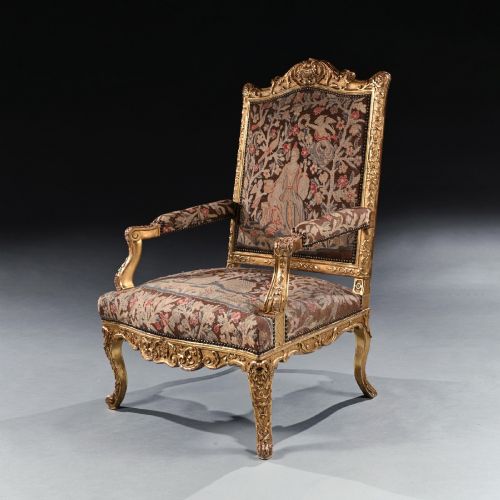
Gold upholstered armchairs bring instant presence to a room, offering nineteenth-century seating shaped by giltwood and fabric.
Identifying gold upholstered armchairs
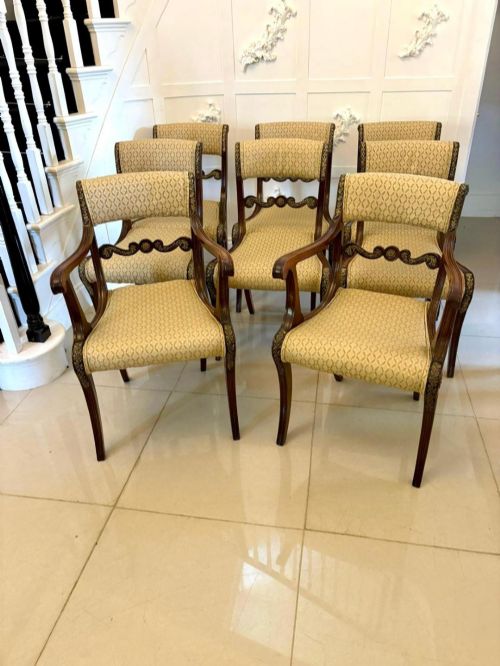
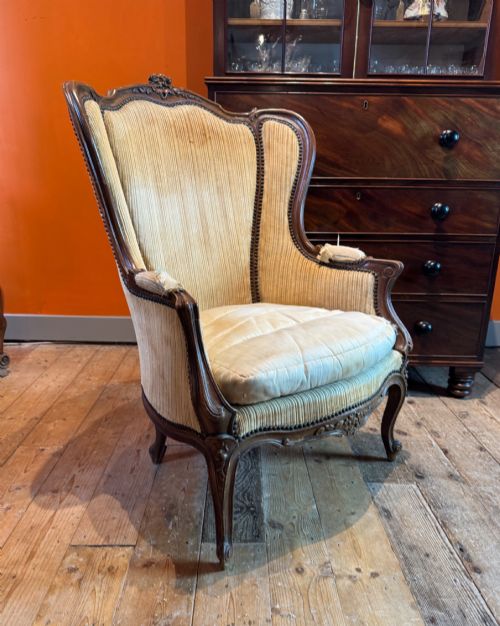
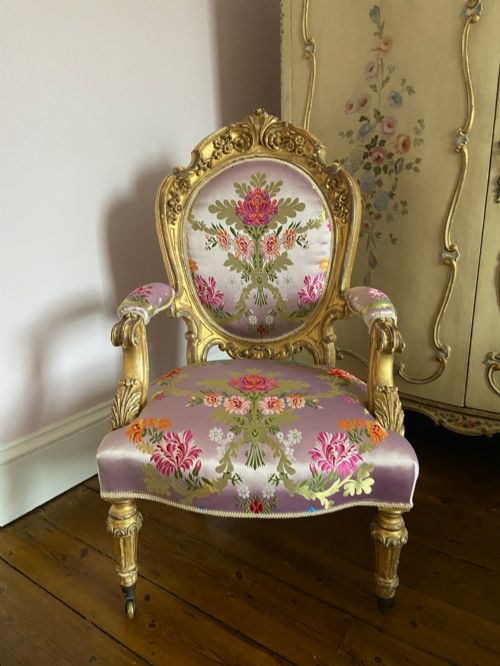
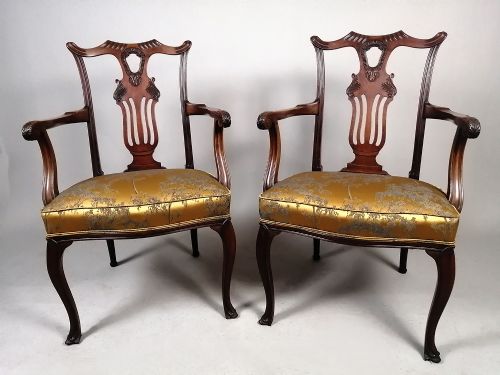
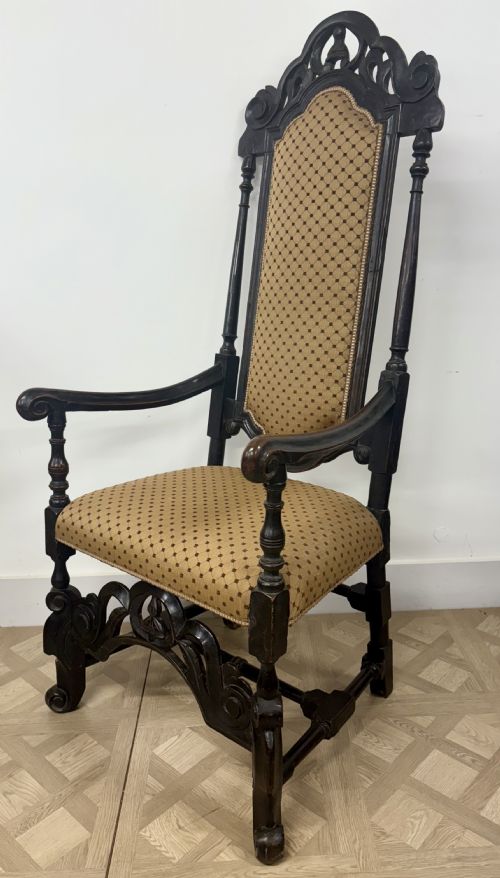
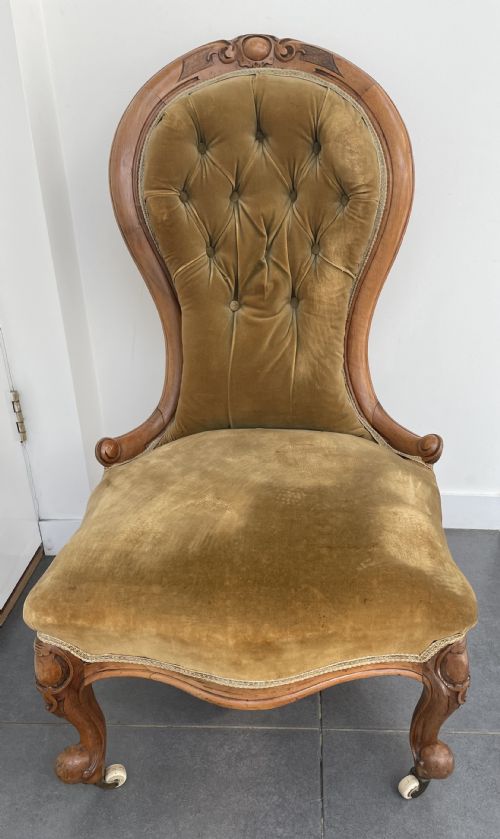
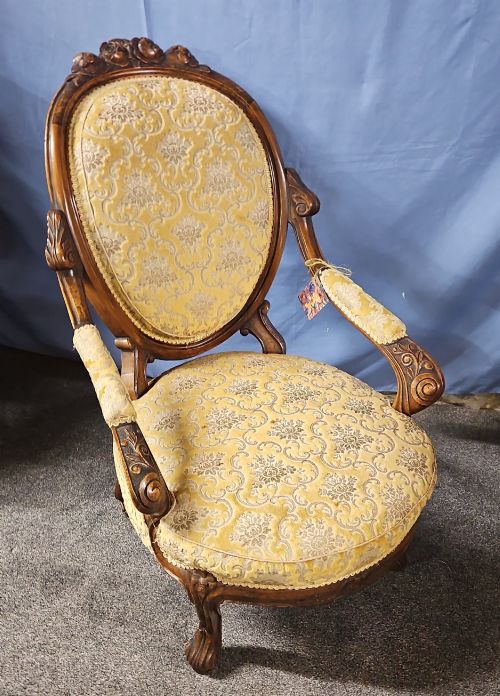
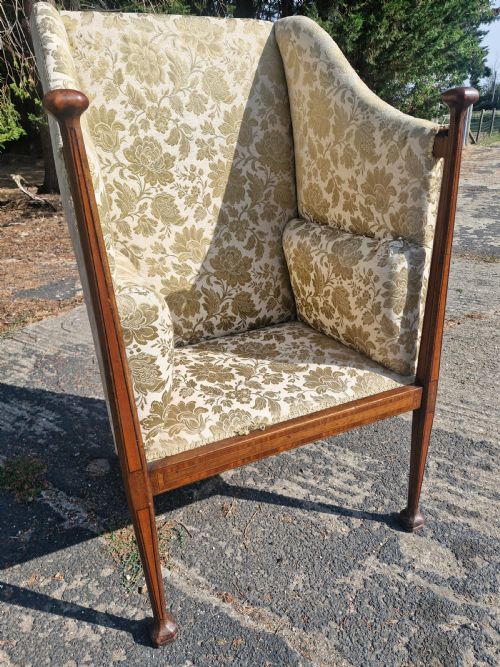
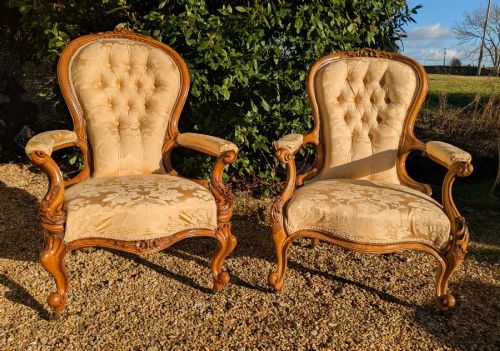
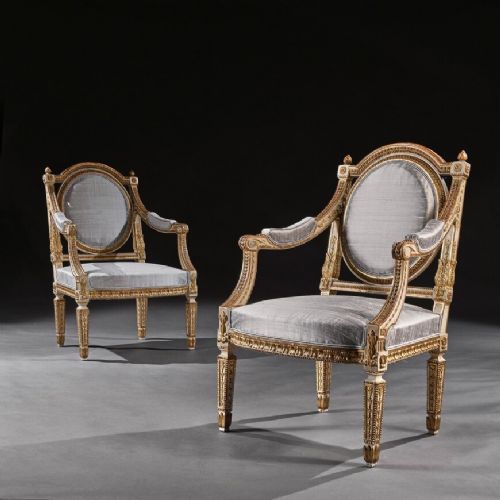
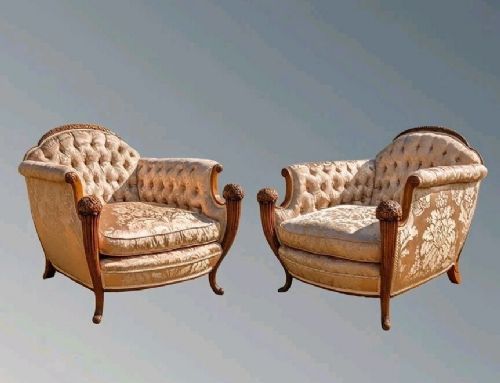
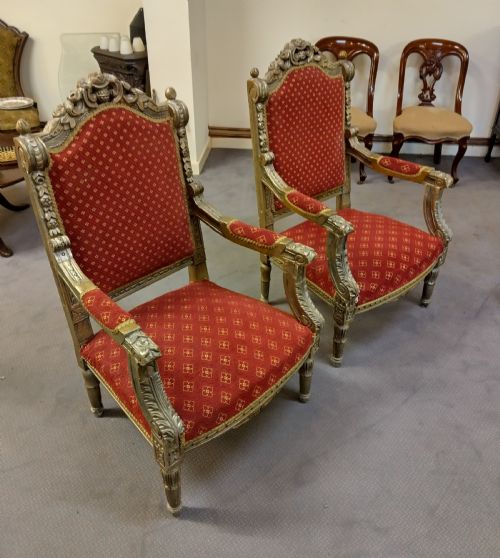
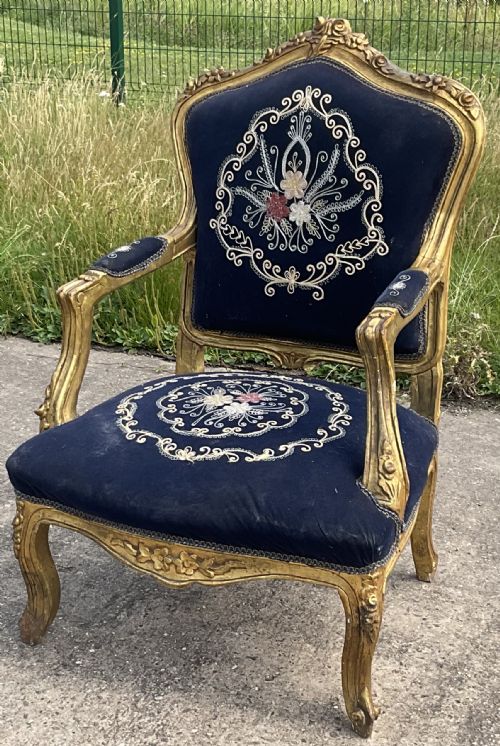
These gold upholstered armchairs span the nineteenth century, taking forms such as giltwood salon armchairs, lyre back elbow chairs, Savonarola chairs, and French chateau styles like Napoleon III and Louis XV. Buyers searching for gold upholstered armchairs encounter timber and mahogany frameworks dressed in velvet, upholstery fabric, and passementerie.
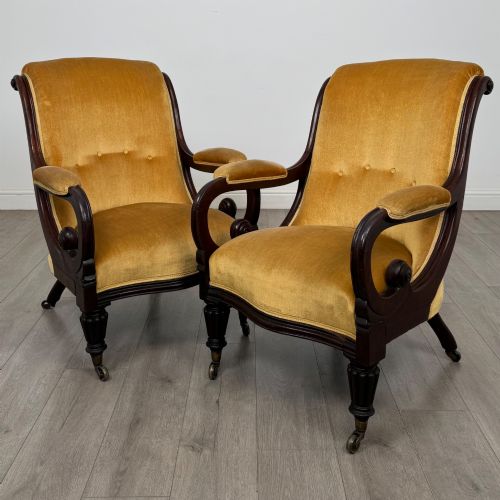
The nineteenth-century examples on this page include Swedish carved gilt armchairs, large giltwood Gainsborough armchairs, and pairs awaiting fresh upholstery. Each piece relies on historic nineteenth-century design vocabulary, uniting gilded timber with soft textile coverings.
Materials and construction
Construction relies on timber and mahogany foundations, shaped into specific nineteenth-century seating forms like lyre back elbow chairs and Savonarola frames. Artisans built these wooden skeletons to support heavy use while maintaining elaborate sculptural silhouettes.
Surface finishes involve applied paint and giltwood, paired with tactile textiles including velvet and standard upholstery fabric. Many pieces incorporate decorative passementerie trim to finish the edges where fabric meets the gilded frame.
Retail Price Guide 2026
Typical UK retail prices for gold upholstered armchairs, calculated from the Sellingantiques database of over a million retail prices indexed since 2003. This retail price guide relies exclusively on Sellingantiques data; no external sources or auction records are used, so the figures do not describe the wider market.
Some nineteenth-century frames wait patiently in their bare bones, simply asking for someone to pick out a bold new velvet.
Judging quality and execution
Quality rests in the depth of the nineteenth-century carving on the giltwood frame and the crispness of the applied gilding. Superior examples display confident hand-carved details across arms and rails rather than flat, mechanical moulding.
The integration of the fabric and passementerie dictates visual success, where well-chosen textiles complement the underlying timber form. Finer pieces maintain structural integrity in the joints of the mahogany or timber skeleton beneath the upholstery.
The Gold Upholstered Armchairs Glossary
- Giltwood
- Timber coated with gold leaf or gold paint to create a brilliant decorative surface. This finish defines the most ornate nineteenth-century salon seating.
- Passementerie
- Elaborate trimmings such as braids, cords, and fringes used to edge upholstery. It conceals tacks and adds a finished decorative border to textile edges.
- Gainsborough chair
- A wide nineteenth-century armchair with open arms, short cabriole or straight legs, and upholstered seat and back. It takes inspiration from eighteenth-century portraiture.
- Savonarola chair
- A folding armchair constructed from intersecting wooden slats to form an X-shaped frame. This historic form sees nineteenth-century revival interpretations.
Frequently Asked Questions
What periods do these armchairs come from?
These pieces date entirely from the nineteenth century, capturing various revival and regional interpretations of historic seating.
The listings reflect styles ranging from late Victorian and Napoleon III to Swedish Empire and Renaissance Revival.
Are these chairs sold as pairs?
Many of the listed options appear as matched pairs, including gilt salon chairs and large giltwood armchairs.
Single items also feature, such as individual lyre back elbow chairs and Savonarola designs.
What materials make up the frames?
The structural elements consist primarily of timber and mahogany, providing a sturdy base for the upholstered components.
Surfaces are finished with paint or giltwood to achieve the characteristic metallic appearance.
What kind of fabric covers the seats?
Upholstery materials include traditional velvet alongside standard upholstery fabric and decorative passementerie trims.
Some nineteenth-century frames are offered specifically for upholstery, allowing buyers to choose their own covering.