

Giltwood Accent Chairs
Giltwood accent chairs bring classical form and gilded warmth into a room, offering both decorative presence and functional seating.
Giltwood Accent Chairs
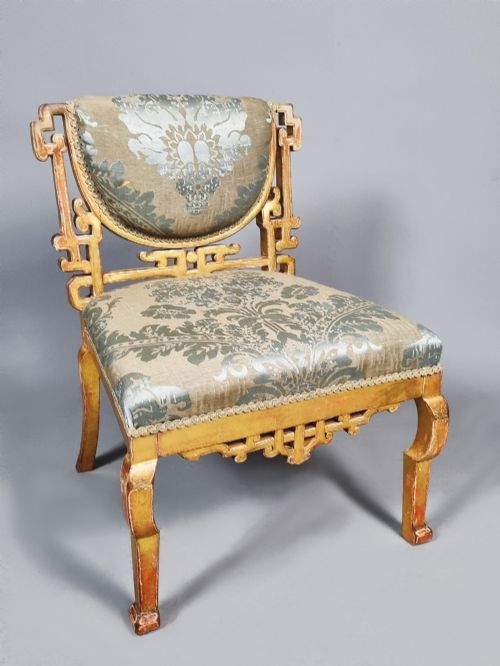
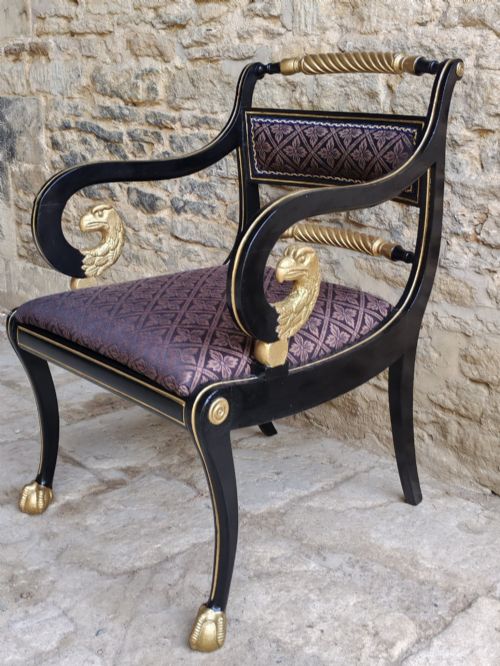
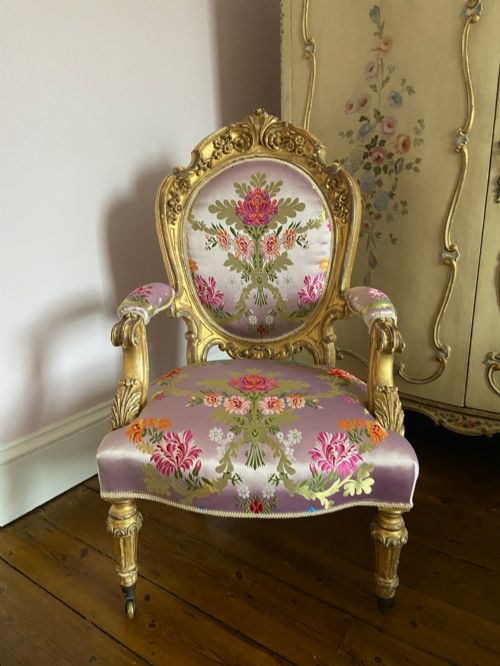
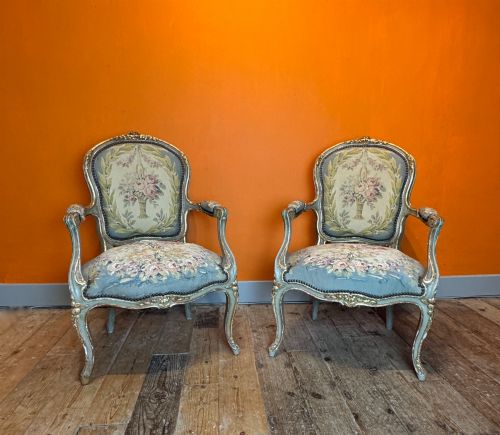
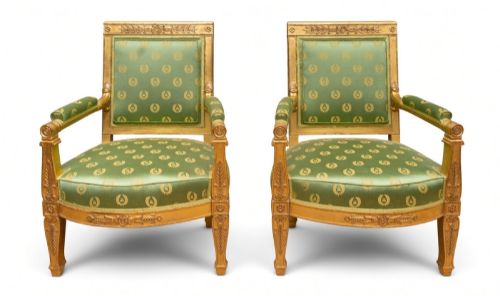
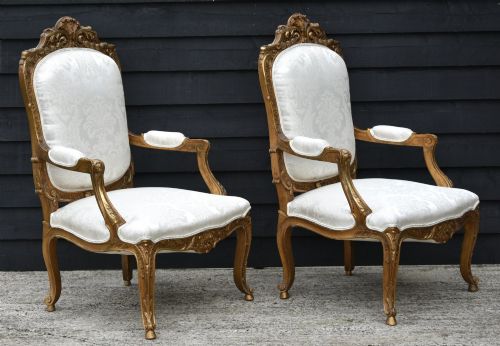
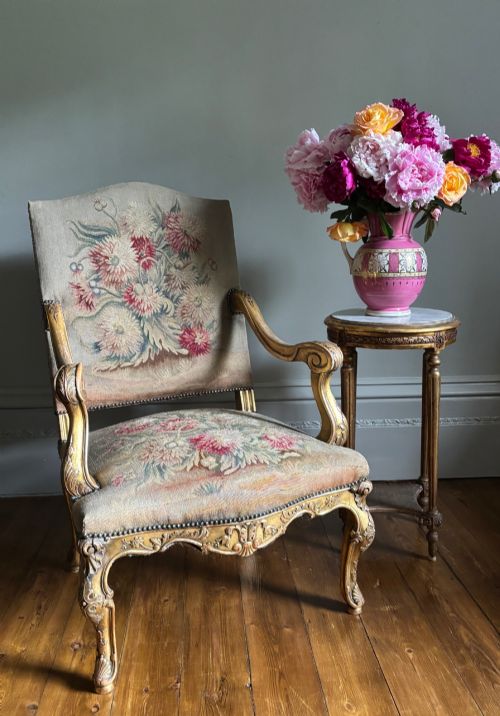
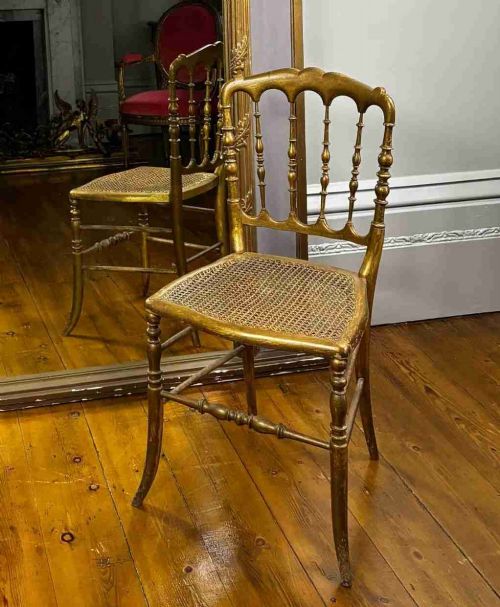
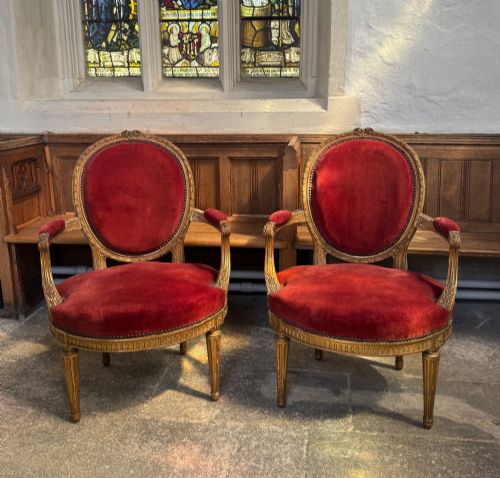
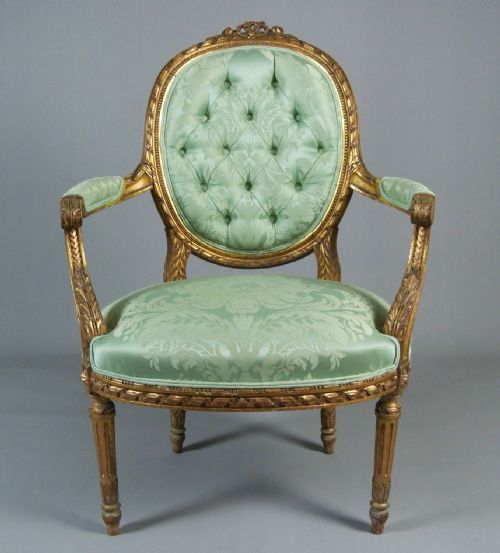
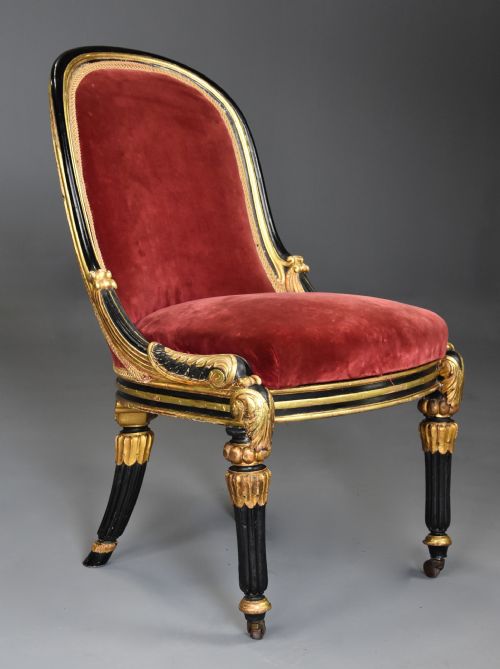
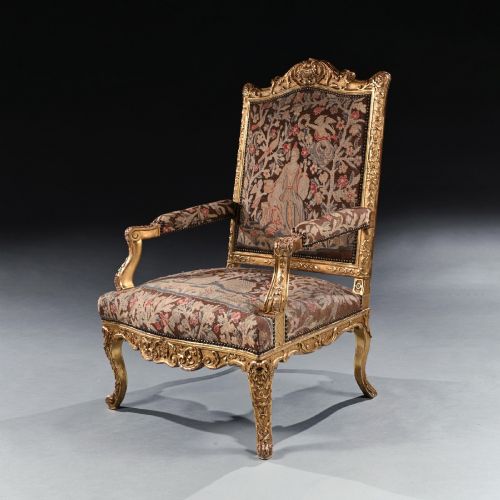
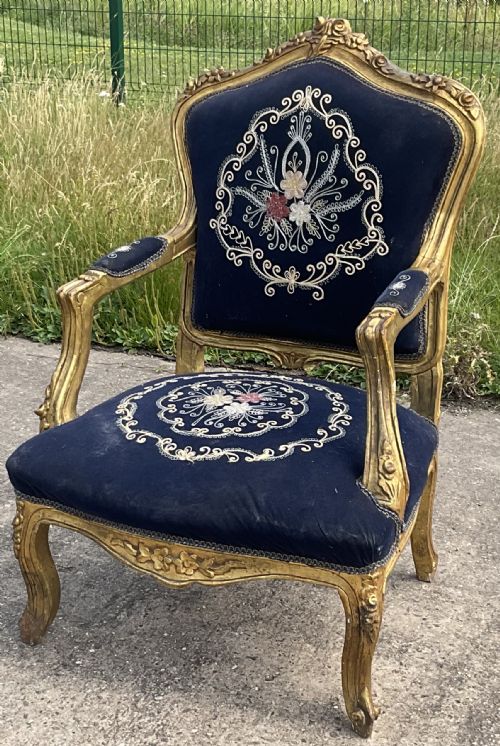
Giltwood accent chairs encompass armchairs, salon chairs, and occasional seating shaped by centuries of European design. The selection draws heavily from French tastes, particularly Louis XVI style and Rococo revival pieces, alongside English Regency and Italian Neoclassical examples.
Most pieces seen here originate from the nineteenth century, though eighteenth-century examples and twentieth-century revivals appear regularly. Forms range from large open armchairs and bergères to smaller side chairs, nursing chairs, and salon seats intended for formal and domestic interiors.
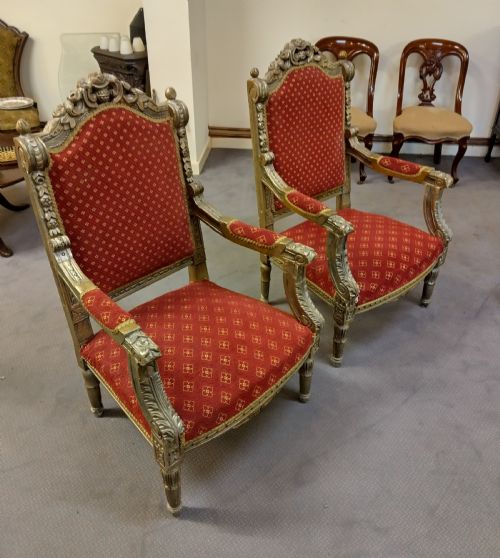
Makers and workshops across England, France, and Italy produced these seating options in varied scales, from intimate bedroom chairs to imposing throne chairs. Buyers encounter pairs and sets alongside individual pieces upholstered in silk, velvet, tapestry, or plain fabric.
How They Were Made
Makers fashioned the structural frames primarily from timber such as beech, walnut, and general wood stock, employing traditional joinery to ensure stability. Carvers then shaped floral motifs, scroll arms, and fluted legs directly into the solid material before applying the surface finish.
Gilding involved applying thin layers of gold leaf over a prepared base on the wood, complemented occasionally by parcel gilt or ebonised accents. Upholstery followed using materials like horsehair or stuffing covered in silk, velvet, or tapestry, secured with traditional tacking methods.
Giltwood Accent Chairs Retail Price Guide 2026
Typical asking prices for giltwood accent chairs among the pieces listed under this phrase on Sellingantiques today, from the lower quarter to the upper quarter. They describe what is for sale here now, not the wider market.
Listings span multiple design eras from the eighteenth century through to twentieth-century revivals, including Regency, Louis XVI, and Rococo styles.
What Varies in Quality
The crispness and depth of the carved ornamentation separate standard production from superior craftsmanship. Master carvers achieved clean lines and detailed botanical or classical motifs that retain their definition beneath the gold leaf.
The integrity of the underlying timber frame and the quality of the original gilding dictate the durability and visual impact of the chair. Heavier scaling, balanced proportions, and well-executed joinery indicate higher workshop standards during production.
Waugh and Son·Jacob Desmalter·Thomas Chippendale·Blaise Maucuy
The Giltwood Accent Chairs Glossary
- Giltwood
- Wood coated with gold leaf or gold paint to create a metallic surface finish. This technique defines the visual character of the seating.
- Fauteuil
- An open-armed upholstered armchair with exposed wooden framing, originating in France. These pieces typically feature padded armrests and a carved back.
- Bergère
- An enclosed upholstered armchair with solid upholstered sides resting on a wooden frame. They often include a loose seat cushion for added comfort.
- Caning
- Woven rattan or split cane used for seats or chair backs. This technique provides a lighter alternative to solid wood or heavy upholstery.
- Parcel Gilt
- A decorative treatment where only specific carved portions of the wooden frame are gilded while the rest remains painted or exposed.
Giltwood Accent Chairs: Frequently Asked Questions
How do I style a giltwood accent chair?
These chairs work effectively as standalone statement pieces in living rooms, bedrooms, or entrance halls. Pair them with neutral walls to let the gilded frame and upholstery stand out.
Avoid placing them in direct sunlight or damp areas to protect the delicate gold leaf finish and fabric over time.
Can I use these chairs for everyday seating?
Most antique accent chairs suit occasional use rather than heavy daily lounging. Their historic frames and traditional joinery require mindful handling.
Ensure guests sit gently, and check the stability of the legs and arm joints periodically if used regularly.
How do I clean and maintain giltwood furniture?
Dust the carved wooden frames gently with a soft, dry cloth to prevent dirt buildup. Avoid commercial polishes or water, which can damage the thin gold leaf.
Protect the upholstery according to its specific textile type, using professional cleaning methods for silk, velvet, or tapestry.
How can I tell the period of a chair?
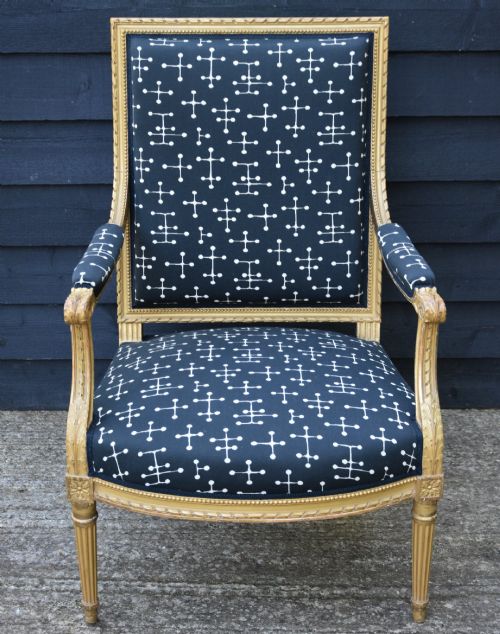
Examine the stylistic details, such as the straight fluted legs of Louis XVI designs versus the curved lines of Rococo revival pieces. Construction marks, tool traces, and wood ageing also offer clues to the date of manufacture.
Comparing the carving depth and timber choice with known period examples helps clarify the era.