


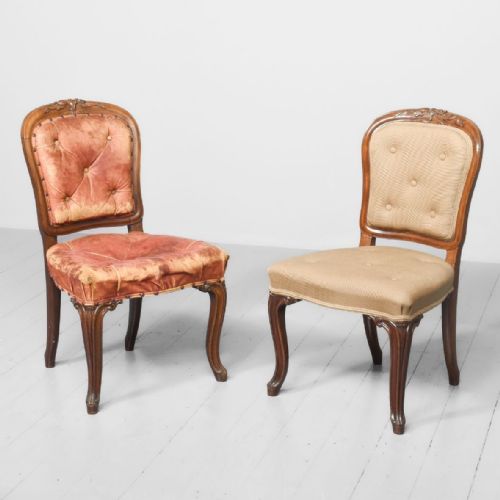


French Rococo Dining Chairs
French rococo dining chairs bring flamboyant carved curves and elaborate gilt finishes to the dining room.
French Rococo Dining Chairs
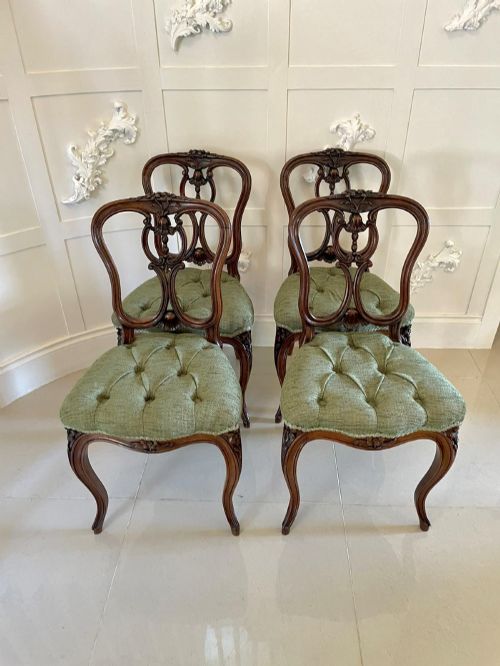
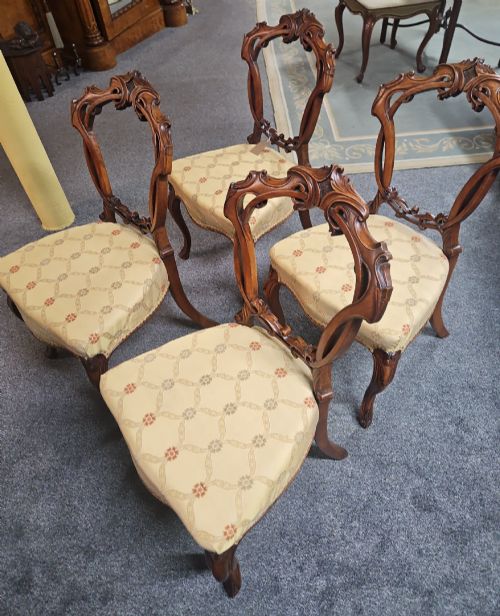
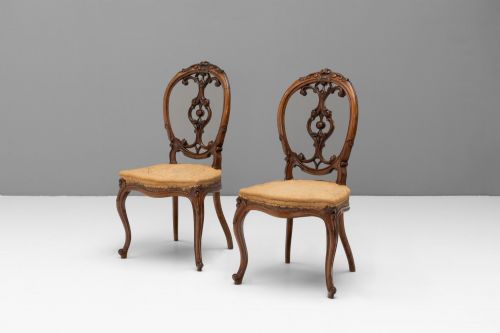
French rococo dining chairs encompass side chairs and armchairs shaped by revival styles across the nineteenth century, including Victorian interpretations and Louis XV influences. These seats display asymmetrical carved ornamentation, curving cabriole legs, and elaborate frames that mimic mid-eighteenth-century continental designs.
Buyers encountering this selection will find walnut, mahogany, and giltwood structures paired with diverse textile upholstery and cane seating. The offerings range from single occasional chairs to substantial sets suitable for formal dining spaces.
How they were made
Cabinetmakers utilised hardwoods such as walnut, mahogany, and kingwood to construct the structural frames of these seats. Timber was hand-carved to achieve the characteristic undulating contours, floral motifs, and scrollwork associated with the style.
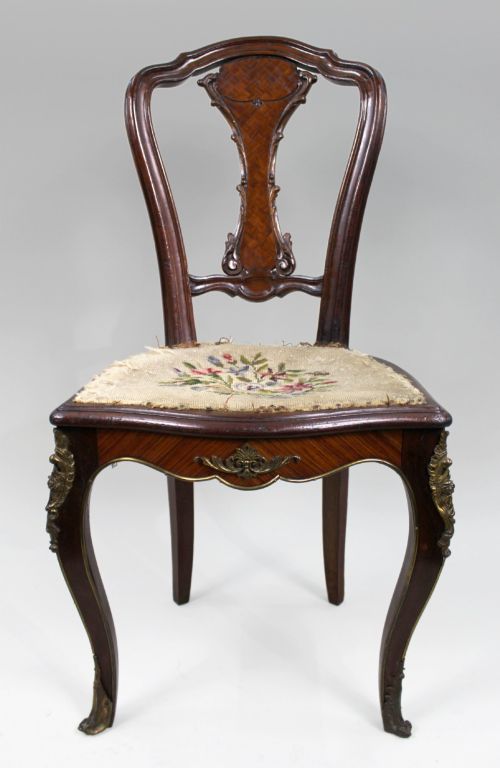
Surface finishes involved gold paint, gilding over gesso, or polished wood surfaces enhanced by ormolu mounts and parquetry veneers. Seat frames were then integrated with fabric upholstery, textile covers, or woven cane panels.
French Rococo Dining Chairs Retail Price Guide 2026
Typical asking prices for french rococo dining chairs among the pieces listed under this phrase on Sellingantiques today, from the lower quarter to the upper quarter. They describe what is for sale here now, not the wider market.
Current listings feature walnut, mahogany, and kingwood timbers, alongside painted finishes, cane panels, and textile upholstery across the nineteenth century.
What varies in quality
The refinement of the hand-carved wood ornamentation dictates much of the distinction between standard production and superior examples. Crisp, deeply undercut scrollwork and detailed floral carvings require advanced artisan skill compared to shallow or mechanical shaping.
Material selection and decorative enrichment also influence the standing of a piece. Frames utilising solid walnut, kingwood veneers with ormolu mounts, or genuine gilding represent higher standards of period craftsmanship than simpler painted softwood constructions.
Morison & Co of Edinburgh
The French Rococo Dining Chairs Glossary
- Rococo Revival
- A nineteenth-century design movement that re-interpreted the curving, ornate forms of the mid-eighteenth-century French court. This aesthetic dominates the carved frames and cabriole legs seen on these seats.
- Cabriole leg
- A furniture leg featuring a double curve, typically bowing outward at the knee and tapering inward toward the foot. It forms a defining structural element of Louis XV style seating.
- Ormolu
- Gilded bronze mounts applied as decorative ornaments to furniture surfaces. These metal additions enhance kingwood and walnut pieces.
- Parquetry
- Geometric wood veneer patterns arranged in mosaic-like designs across flat surfaces. It adds visual texture to the bodies of select chairs.
- Giltwood
- Timber coated with gold leaf or gold paint to create a brilliant metallic finish. This treatment highlights the carved scrolls of formal salon seating.
French Rococo Dining Chairs: Frequently Asked Questions
Are these chairs comfortable?
Most examples provide upright support suited for formal dining rather than lounging. Their padded seats and curved backs accommodate standard dining postures.
Upholstery padding varies significantly depending on whether the webbing and stuffing have been restored or remain in original condition.
How do I date these chairs?
Dating relies on timber choice, construction joints, and stylistic markers recorded across the nineteenth century. Victorian interpretations often combine local hardwoods with revived continental motifs.
Examining the underside and framing reveals hand-cut joinery methods that distinguish mid-nineteenth-century work from later reproductions.
Can I mix these with modern tables?
These seats pair effectively with contemporary dining tables to create a striking contrast between ornate woodwork and clean architectural lines. Their carved silhouettes introduce texture and historical depth to modern interiors.
Scale and seat height should be checked against modern table clearances to ensure comfortable knee room.
What is the difference between side chairs and armchairs?
Side chairs feature backrests and seats without armrests, designed to tuck neatly around the sides of a dining table. They offer a compact footprint for larger sets.
Armchairs include supporting arms framing the seat, traditionally placed at the heads of the dining table or utilised as occasional salon seating.