


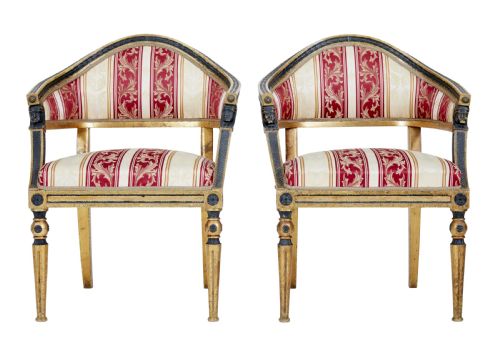


Swedish Neoclassical Armchairs
Swedish neoclassical armchairs combine clean lines with classical restraint, offering striking seating rooted in northern European design traditions.
Swedish Neoclassical Armchairs
Swedish neoclassical armchairs are elegant seating options that draw on classical motifs and northern European craftsmanship. When exploring this selection, buyers frequently encounter pieces from the nineteenth century alongside later revival periods such as the early twentieth century.
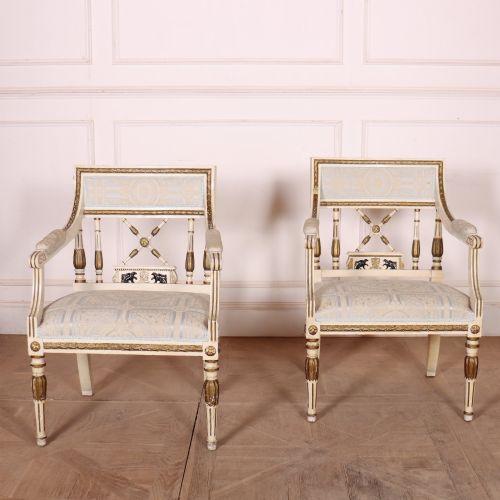
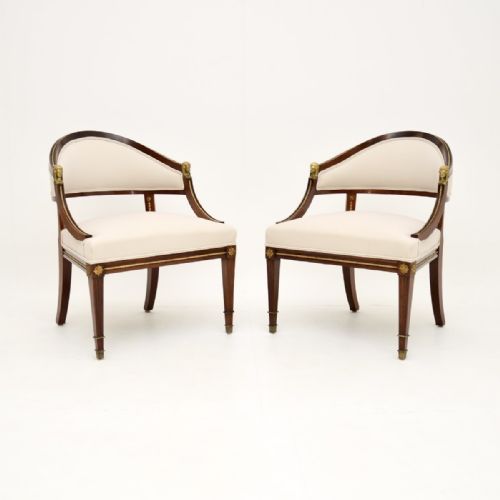
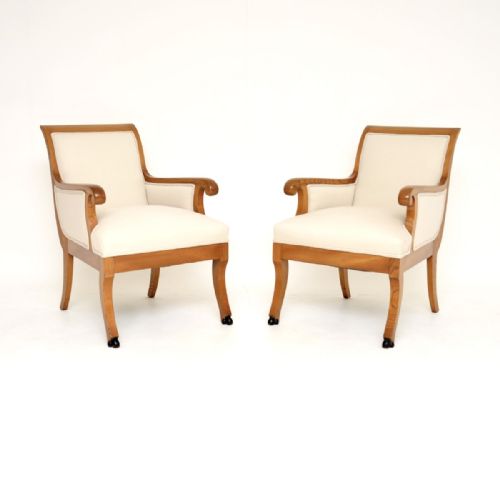
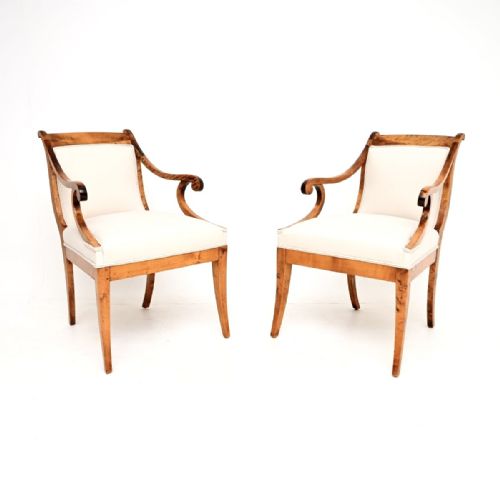
The inventory encompasses distinct variants including Swedish Empire, Biedermeier, and Karl Johan influenced designs. These pieces range from pairs of mahogany or birch chairs to larger lounge suites configured for formal rooms.
Originating from Swedish workshops, these armchairs display a refined balance of proportion and restraint. Buyers will find variations executed in solid woods, painted finishes, and gilded surfaces.
How they were made
Cabinetmakers constructed these frames using native and imported timbers such as birch, satin birch, mahogany, elm, and solid painted wood. Skilled artisans shaped the wood through careful joinery, often incorporating carved details and gilded highlights.
Upholstery techniques involved traditional stuffing methods finished in durable fabrics and rich textiles like velvet. Metal accents, including brass elements, were frequently added to enhance the structural and decorative appeal.
Some nineteenth-century makers cleverly ebonised ordinary birch to mimic expensive exotic hardwoods for discerning clients.
What varies in quality
The standard of execution depends heavily on the precision of the woodwork and the crispness of any carved ornamentation. Superior examples display harmonious proportions and seamless integration of materials like mahogany or satin birch.
The integrity of the original frame construction and the quality of surface treatments, whether ebonised, painted, or gilded, determine the distinction between average pieces and finer creations.
The Swedish Neoclassical Armchairs Glossary
- Neoclassical
- A style rooted in classical antiquity, featuring symmetrical forms, straight lines, and understated ornamentation. This aesthetic dominated late eighteenth and nineteenth-century European furniture design.
- Biedermeier
- A central and northern European style emphasising utility, clean lines, and warm wood grains without excessive ornamentation. It emerged during the first half of the nineteenth century.
- Karl Johan
- A Scandinavian design movement named after King Karl XIV Johan, bridging late Empire and early Victorian sensibilities with sturdy yet elegant forms. Pieces from this era often utilise birch and dark wood accents.
- Satin Birch
- A pale, highly figured timber prized for its lustrous grain pattern. Cabinetmakers utilised this material extensively in nineteenth-century Scandinavian furniture.
- Giltwood
- Wood that has been coated with a thin layer of gold leaf or powder. This finish appears on decorative frames and high-status seating.
Swedish Neoclassical Armchairs: Frequently Asked Questions
How do I identify a Biedermeier armchair?
Biedermeier armchairs focus on domestic comfort and clean geometric forms, stripping away unnecessary ornamentation to highlight the natural beauty of wood grain. Birch and satin birch are common materials in these designs.
They often feature ebonised details and curved structural elements that prioritize cozy utility while maintaining a formal presence.
Where were these armchairs made?
These pieces originated in Swedish workshops and cabinetmaker studios during the nineteenth and early twentieth centuries. Regional makers adapted broader European styles, such as the Empire movement, into distinct local interpretations.
Local materials like birch and elm frequently appeared alongside imported woods such as mahogany, reflecting Scandinavian trade and forestry.
How should I care for antique wood and upholstery?
Maintenance involves protecting polished wood surfaces from direct sunlight and extreme humidity fluctuations to prevent warping or fading. Regular dusting with a soft, dry cloth preserves the finish of mahogany, birch, and painted wood.
Upholstered components in velvet or fabric benefit from gentle professional cleaning suited to antique textiles. Avoid harsh chemical cleaners on gilded or ebonised surfaces.