


Ormolu Mounted Chairs
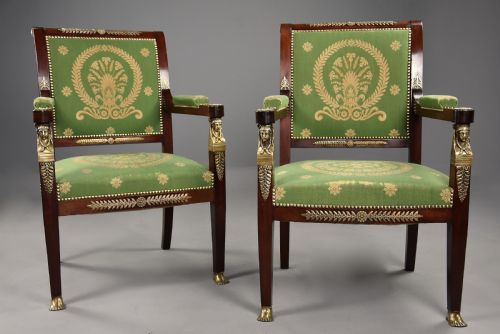
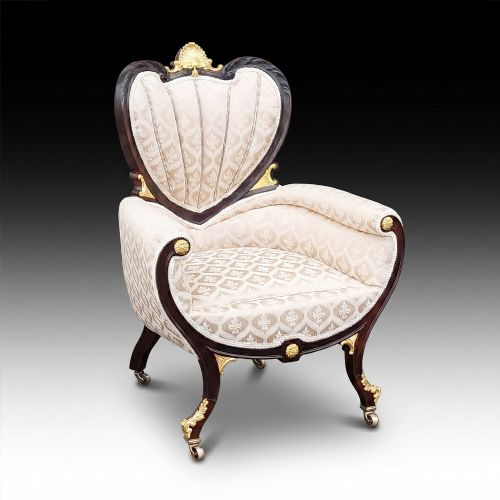
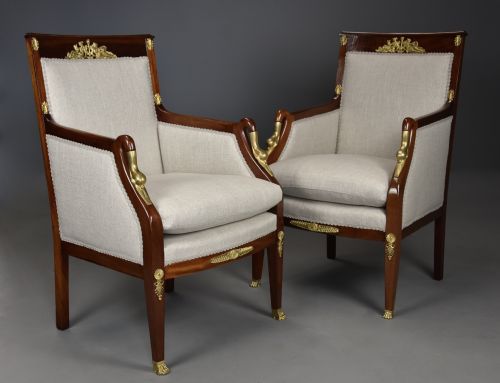
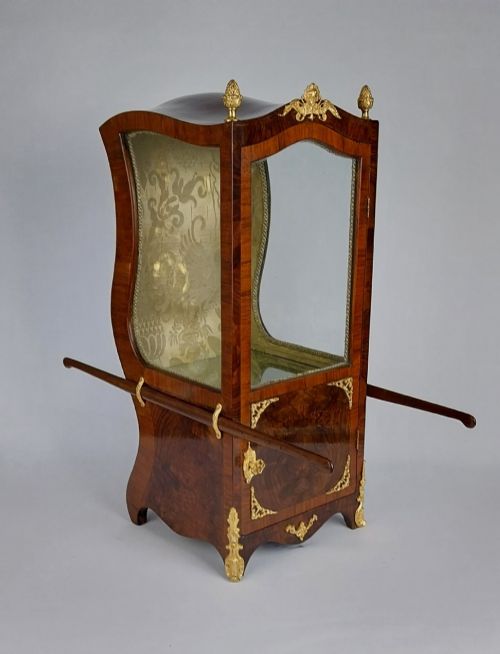
Ormolu mounted chairs combine structural timber with cast and gilded bronze mounts to create seating of undeniable presence.
Ormolu Mounted Chairs
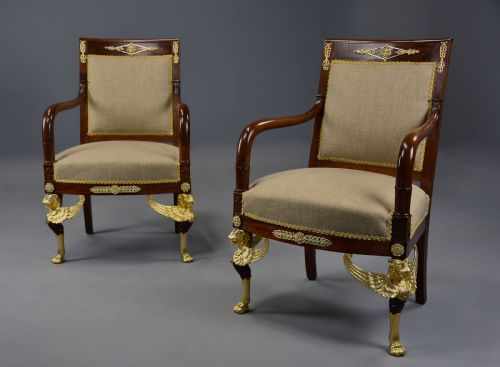
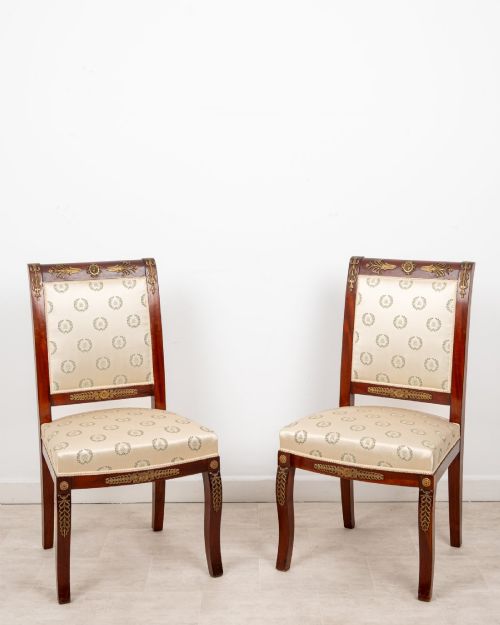
Most examples you meet combine mahogany or kingwood timber frames with brass and ormolu mounts. Makers frequently upholstered these frames in silk damask, fabric, linen, or leather to complete the seating.
How they were made
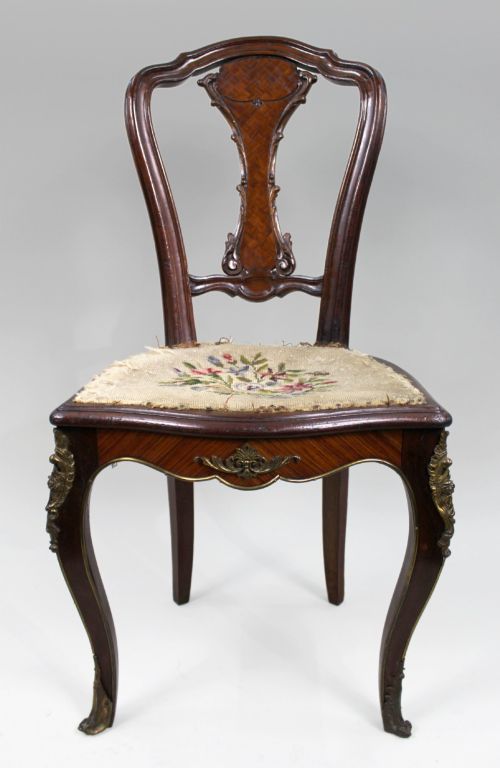
Craftsmen built the structural frames using dense hardwoods like mahogany and kingwood, often incorporating parquetry techniques for decorative surface patterns. These timber foundations received cast bronze mounts, finished with mercury gilding to produce the characteristic ormolu effect.
Upholsterers then applied traditional stuffing and springs before covering the chairs in textiles such as silk damask, linen, or leather. Brass elements occasionally supplemented the primary ormolu mounts to secure or accent the woodwork.
Several armchairs arrive with military aspirations cast straight into their bronze trousers.
What varies in quality
The refinement of the cast bronze mounts distinguishes finer examples from simpler production, particularly in the crispness of the chasing and the depth of the gilding. Timber selection also dictates grade, with figured mahogany and intricate kingwood parquetry marking out superior pieces.
Structural integrity of the joints and the preservation of original textiles or leather upholstery further differentiate the hierarchy of surviving seating. Pieces retaining their matching mounts and coherent nineteenth century styling command distinct attention.
The Ormolu Mounted Chairs Glossary
- Ormolu
- Gilded bronze, applied as a decorative mount to furniture frames. This technique involves coating a cast bronze object with a mercury and gold amalgam before heating.
- Fauteuil
- An open-armed upholstered armchair originating in France. These seats feature exposed wooden framing around the back and armrests.
- Parquetry
- Geometric wood mosaic work used for surface decoration on furniture. Craftsmen assemble small veneers of contrasting timbers like kingwood and mahogany.
- Empire Revival
- A nineteenth century design movement that reinterprets classical Roman and Greek motifs popular during the original French Empire period.
Ormolu Mounted Chairs: Frequently Asked Questions
Where did ormolu mounted chairs originate?
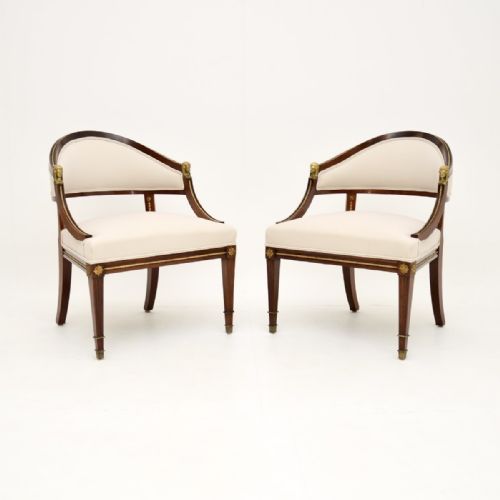
The primary design roots trace back to French workshops, though Swedish neoclassical makers also adopted the style. Nineteenth century revivals continued these continental traditions across various European centres.
Craftsmen in France and Sweden produced the majority of the surviving examples found in modern collections today.
How do I identify Empire style?
Empire style chairs typically display classical motifs, mahogany timbers, and symmetrical proportions. Ormolu mounts of military or floral subjects frequently accent the structural framing.
Revival pieces from the later nineteenth century emulate these characteristic imperial forms established decades earlier.
What materials are used in these chairs?
The primary frame materials consist of hardwoods such as mahogany and kingwood, occasionally decorated with parquetry. Ormolu and brass provide the metal mounts fixed to the wood.
Upholstery finishes include silk damask, linen, fabric, and leather depending on the original commission or subsequent restoration.
Are these chairs suitable for daily use?
Many examples function well for seating, provided the underlying mahogany or kingwood frame remains stable. Consideration must be given to the vintage textiles or leather covering the seat.
Gentle placement in domestic rooms preserves both the structural timber and the delicate ormolu mounts.