





Empire Revival Chairs
Empire revival chairs bring commanding neoclassical presence and structured seating into a room, offering grand classical lines adapted from earlier centuries.
Empire Revival Chairs
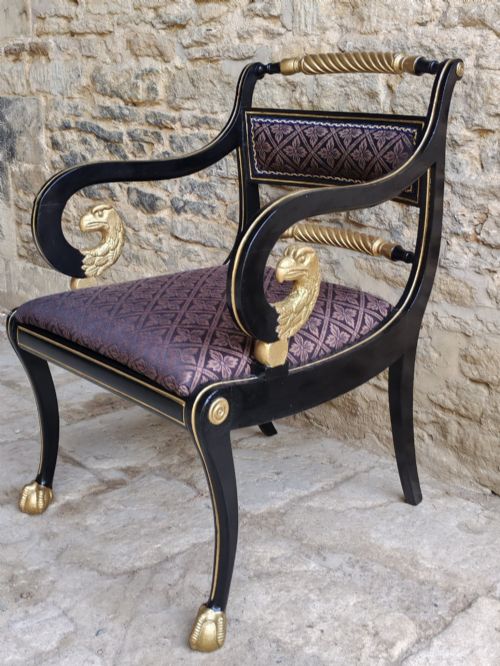
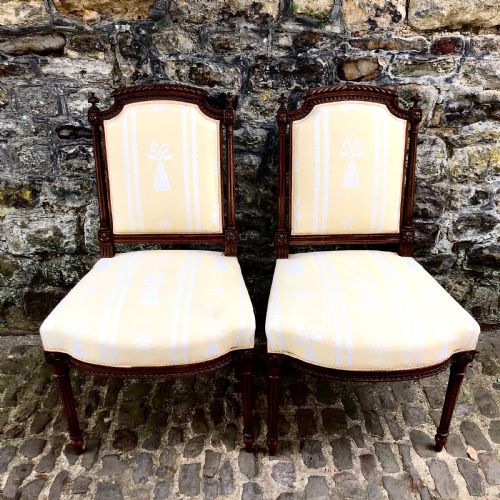
When you search for empire revival chairs, you are looking at substantial seating drawing directly from the monumental styles of the nineteenth century. These pieces appear frequently in nineteenth-century and early twentieth-century variations, spanning armchairs, side chairs, and larger parlour or lounge suites.
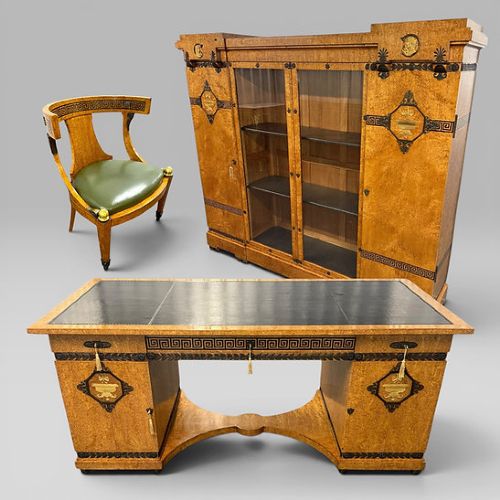
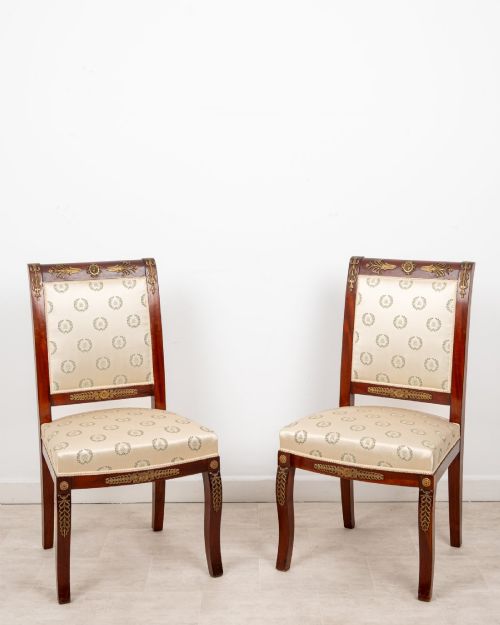
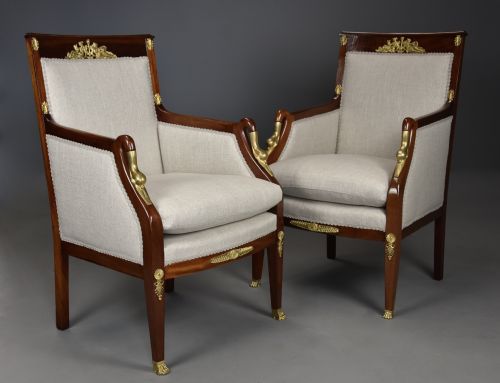
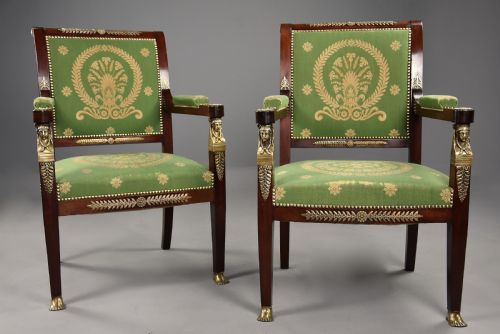
The version you are most likely to meet on this page is the French Empire revival armchair, constructed in mahogany or walnut and accented with striking cast brass or ormolu mounts. Alongside these single chairs and pairs, you will occasionally encounter larger office sets and coordinated suites bearing similar neoclassical design traits.
Originating primarily from French and continental workshops, these items mirror the ambition of grand regency and neoclassical aesthetics. Their forms rely on architectural discipline, offering solid proportions that anchor a library, drawing room, or hallway.
Materials and Construction Techniques
Cabinetmakers built these chairs using dense hardwoods like mahogany and walnut, frequently selecting wood grains that added visual weight to the frame. The structural integrity depends on traditional joinery, supporting upright backs and sweeping arm supports.
Gilded bronze ormolu mounts and brass details were cast and applied to accentuate key architectural points of the chair frame, such as the crest rail or front legs. Upholstery techniques incorporated durable fabrics, leather, and textiles secured over supportive springing or webbing.
Empire Revival Chairs Retail Price Guide 2026
Typical asking prices for empire revival chairs among the pieces listed under this phrase on Sellingantiques today, from the lower quarter to the upper quarter. They describe what is for sale here now, not the wider market.
Listings span the nineteenth and early twentieth centuries, featuring walnut and mahogany frames paired with brass, leather, and fabric.
Distinctions in Quality and Execution
The division between standard production and superior craftsmanship rests in the crispness of the wood carving and the precision of the metalwork. Finely chased ormolu mounts fit flush against the timber frame, whereas lesser examples rely on simpler cast elements with minimal hand-finishing.
The selection of veneer and timber grain significantly affects the visual impact of the piece, with matched mahogany or walnut surfaces indicating deliberate aesthetic planning by the maker. Structural solidity and the retention of original gilding or upholstery support further separate representative examples from exceptional ones.
Mercier Frères
The Empire Revival Chairs Glossary
- Ormolu
- Gilded bronze applied as a decorative mount to furniture frames. This technique provides sharp metallic contrast against dark hardwoods like mahogany and walnut.
- Neoclassical
- A style drawing inspiration from classical antiquity. It governs the symmetrical lines and architectural dignity seen across these pieces.
- Giltwood
- Wood that has been coated with gold leaf or a gold-coloured finish. It appears on revival frames to emulate court furniture of earlier eras.
- Side chair
- A chair without arms designed for dining or occasional use. These pieces mirror the primary stylistic motifs of larger matching armchairs.
Empire Revival Chairs: Frequently Asked Questions
What defines an empire revival chair?
These chairs draw on nineteenth-century neoclassical design, featuring formal silhouettes, dark woods, and classical mounts. They reflect historical revivals rather than original Napoleonic production.
Cabinetmakers utilised styles from French and continental traditions to create monumental seating suitable for formal interiors.
How do I identify ormolu mounts?
Ormolu refers to gilded bronze decorative elements fixed to the wooden structure. They highlight structural junctions and provide metallic contrast.
On quality pieces, these mounts are finely detailed and secured precisely into the timber grain.
Where should I place these chairs?
Their strong architectural presence suits studies, libraries, and formal drawing rooms. They function well as statement pieces or paired seating arrangements.
When grouping them, consider the scale of the room and the weight of the surrounding furniture.
Are these chairs comfortable for daily use?
Most designs prioritise upright posture and formal support over deep lounging. Upholstery varies from firm padding to textile-covered seats.
Their primary function historically was reception and display, though many suit modern sitting room use.