

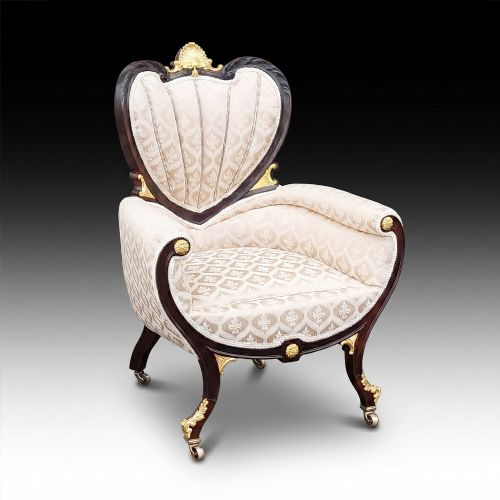


Gilt Mahogany Chairs
Gilt mahogany chairs are grand seating pieces combining dark timber and metallic flash, built for formal rooms and lasting impact.
Gilt Mahogany Chairs
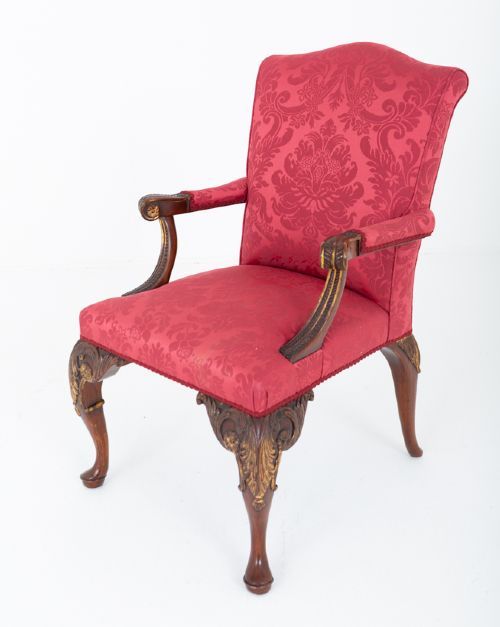
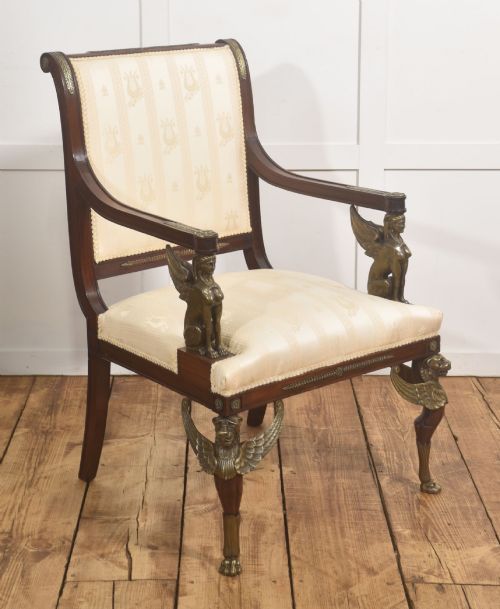
Gilt mahogany chairs bring together rich timber and metallic highlights, appearing frequently as armchairs, desk chairs, and side chairs from the nineteenth century onwards. Buyers searching for gilt mahogany chairs encounter French Empire, Regency, and Neoclassical designs spanning periods from eighteen-fifty to nineteen-twenty.
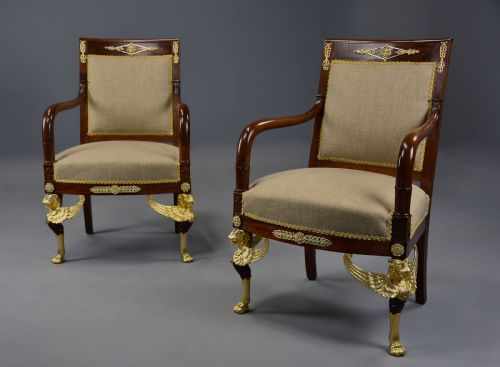
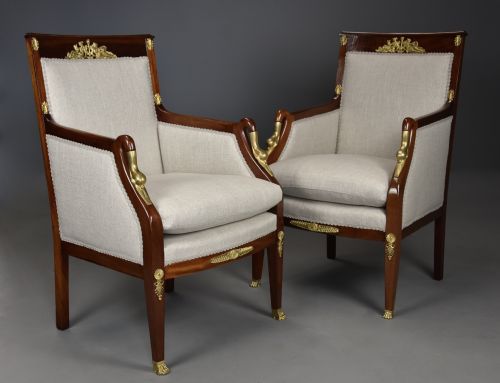
The selection ranges from pairs of French open armchairs to Swedish revival lounge suites and individual desk chairs. Most examples date from the nineteenth century and the early twentieth century, showing strong continental and British influences in their forms.
How they were made
Cabinetmakers constructed the frames primarily from mahogany, shaping the timber into classical forms such as open armchairs and side chairs. Ormolu, gilt bronze, and brass mounts were applied to accent the structural lines of the wood.
Upholstery materials included fabric, linen, leather, and velvet, secured to the seats and backs of the chairs. Gilding and parcel-gilt details were added to highlight carved elements and brass mounts.
Gilt Mahogany Chairs Retail Price Guide 2026
Typical asking prices for gilt mahogany chairs among the pieces listed under this phrase on Sellingantiques today, from the lower quarter to the upper quarter. They describe what is for sale here now, not the wider market.
Certain chairs demand absolute dignity from anyone sitting in them, lest the gilt bronze mounts object.
What varies in quality
The refinement of the carved mahogany frame and the crispness of the ormolu or gilt bronze mounts determine the standing of each piece. Superior examples display precise joinery and well-cast metal ornaments that integrate cleanly with the timber structure.
The integrity of the original gilt finish and the quality of the secondary materials, such as the specific choice of velvet or leather upholstery, separate standard production from exceptional work.
George Smith·J Kendell
The Gilt Mahogany Chairs Glossary
- Ormolu
- Gilded bronze used for decorative mounts on furniture. It provides a bright metallic contrast against dark mahogany surfaces.
- Fauteuil
- An open-armed upholstered chair with exposed wooden sides. This French form appears frequently in Empire and neoclassical designs.
- Parcel-gilt
- Partially gilded woodwork where gold leaf highlights specific carved details. This technique draws the eye to structural ornaments on the chair frame.
- Sabre legs
- Outward-curving rear and front legs with a flattened cross-section. These legs support many Regency period seating designs.
- Neoclassical
- A style drawing inspiration from classical antiquity. It influences the clean lines and symmetrical forms seen across these seating pieces.
Gilt Mahogany Chairs: Frequently Asked Questions
How do I identify French Empire chairs?
French Empire chairs typically feature classical architectural forms combined with prominent ormolu mounts and dark mahogany frames. They often incorporate sabre legs or scroll arms derived from ancient designs.
Look for symmetrical proportions and applied gilt bronze details that emphasise the structural lines of the timber.
Where should I place a library armchair?
Library armchairs suit studies, formal sitting rooms, or reading corners where their substantial frames can anchor the space. They work well paired beside a desk or positioned near bookshelves.
Ensure adequate room around the chair to display its carved mahogany details and gilt bronze mounts.
What is a gilt mahogany side chair?
A side chair is an armless seating piece designed for occasional use around a room or against a wall. The gilt mahogany version combines polished timber with metallic highlights for a decorative effect.
These chairs function well in pairs within hallways or drawing rooms.
How do Regency and neoclassical styles differ?
Regency designs often incorporate British interpretations of classical themes, including parcel-gilt surfaces and sabre legs. Neoclassical styles draw direct inspiration from Greek and Roman antiquities.
Both styles utilise mahogany and gilt details, but neoclassical pieces frequently display stricter symmetry and distinct bronze mounts.