


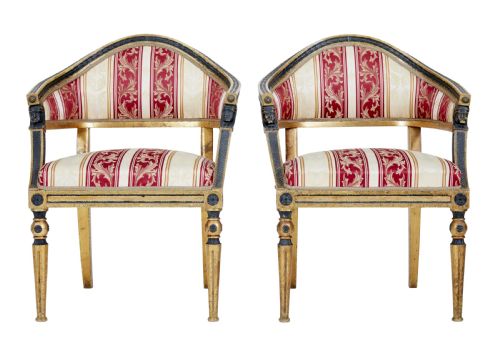


Swedish Empire Chairs
Swedish empire chairs bring architectural lines and rich timber tones into a room, offering classical seating that anchors any interior scheme.
Swedish Empire Chairs
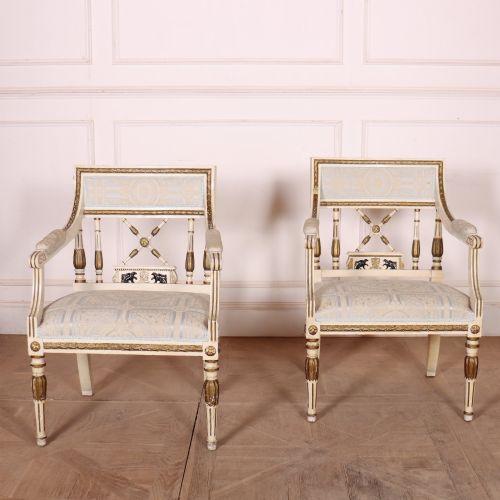
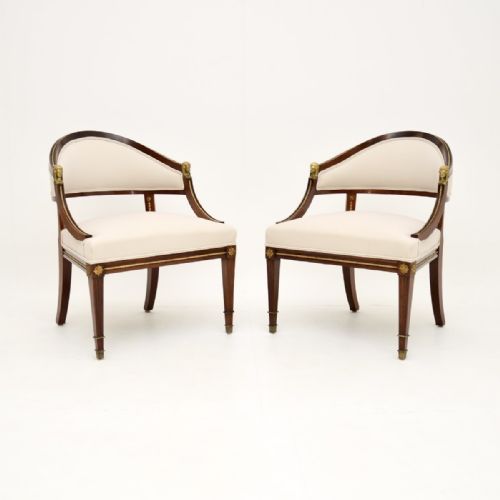
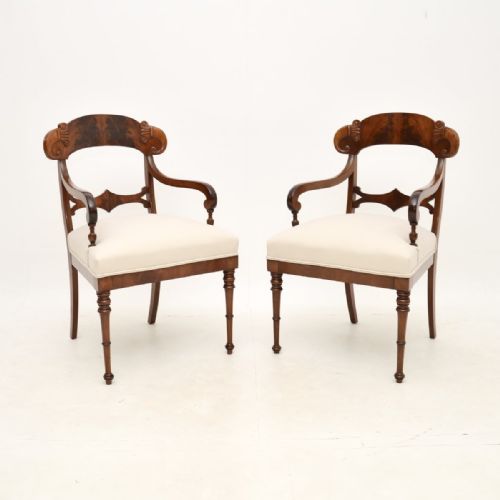
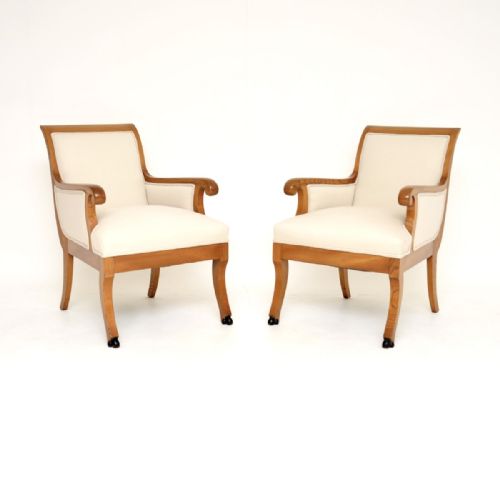
Swedish empire chairs encompass seating forms spanning the nineteenth and early twentieth centuries, drawing heavily upon classical design vocabularies. When searching for Swedish empire chairs, buyers encounter armchairs, settees and complete lounge suites shaped by Neoclassical and Karl Johan influences.
The pieces listed on this page range from nineteenth century originals to revival pieces from the early twentieth century. Armchairs dominate the selection, frequently appearing as matched pairs alongside occasional sofas.
Origins remain distinctly Swedish, utilising regional timbers and traditional craftsmanship to interpret broader European empire aesthetics. These pieces serve as both functional seating and sculptural elements within a period or modern room.
How they were made
Cabinetmakers constructed these frames using a variety of native and imported woods, notably mahogany, birch, elm and satin birch. Giltwood and painted finishes also appear, adding contrasting surface texture to the timber structures.
Upholstery forms an integral part of the construction, utilising traditional fabric coverings over sprung or padded seat bases. Brass mounts frequently accent the woodwork, introducing metallic detail aligned with empire design principles.
Swedish Empire Chairs Retail Price Guide 2026
Typical asking prices for swedish empire chairs among the pieces listed under this phrase on Sellingantiques today, from the lower quarter to the upper quarter. They describe what is for sale here now, not the wider market.
What varies in quality
The refinement of the carved details and the choice of timber grain dictate the distinction between standard examples and exceptional pieces. Figured woods like satin birch and richly polished mahogany elevate the visual weight of the frame.
Proportion and structural integrity separate workshop output, where balanced classical lines and crisp joinery denote superior craftsmanship. The application of giltwood or painted finishes also influences the overall sophistication of the construction.
The Swedish Empire Chairs Glossary
- Karl Johan
- A Scandinavian design style spanning the early nineteenth century, named after King Karl XIV Johan. It adapts French empire motifs into a more austere and rectilinear Nordic idiom.
- Giltwood
- Timber coated with a thin layer of gold leaf or gilt powder. This technique highlights carved ornament on nineteenth century frames.
- Satin Birch
- A pale hardwood displaying a characteristic shimmering chatoyant grain. It is frequently utilised in Scandinavian furniture to create bright, reflective surfaces.
- Neoclassical
- An artistic movement reviving classical Greek and Roman forms. It emphasises symmetry, proportion and restrained architectural ornamentation.
Swedish Empire Chairs: Frequently Asked Questions
How do I identify a true empire chair?
Look for architectural lines, classical proportions, and specific decorative motifs drawn from ancient Rome and Greece. These chairs often feature prominent show-wood frames and scrollwork.
Examine the secondary woods and construction methods to understand the period of manufacture, keeping in mind that revival pieces from the early twentieth century also emulate these classical traits.
Where should I place these chairs in a room?
These seating pieces work well as focal points in a drawing room, study, or hallway where their strong silhouettes can be appreciated. Pairs look effective placed opposite a fireplace or flanking a console table.
Ensure they have adequate breathing space around them so the timber frames and upholstery profiles remain visually distinct from surrounding furniture.
How do revival pieces differ from nineteenth century originals?
Revival pieces produced around nineteen hundred recreate the earlier aesthetic using contemporary workshop standards and machinery of that later era. They capture the classic silhouette while exhibiting slight differences in timber seasoning and joinery.
Comparing the internal framing and surface patination helps distinguish between nineteenth century production and subsequent revival interpretations.