




Antique Parlour Suite
An antique parlour suite brings matched seating to a formal room, offering coordinated walnut, mahogany or oak framing for comfortable hosting.
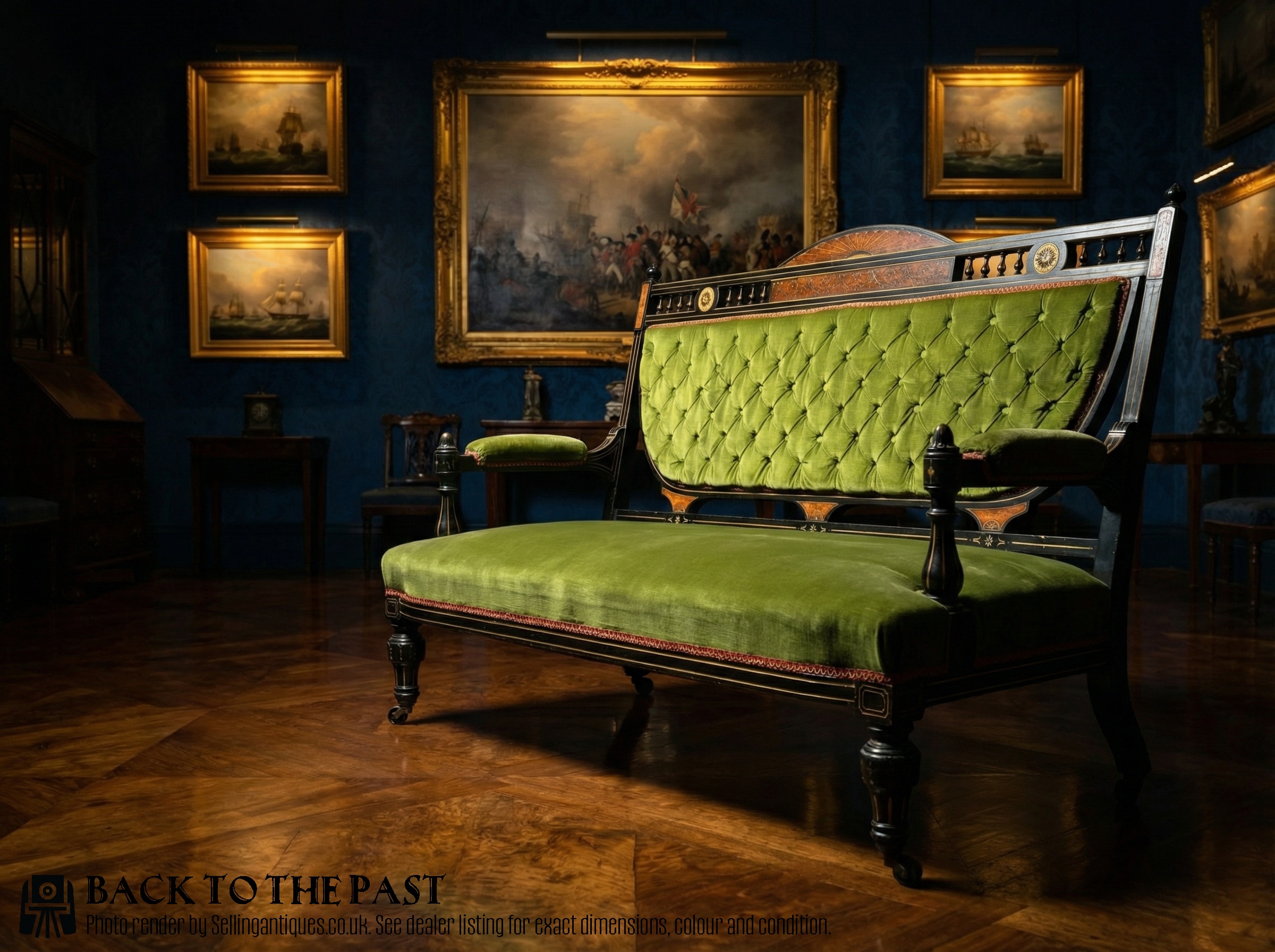
Antique Parlour Suite
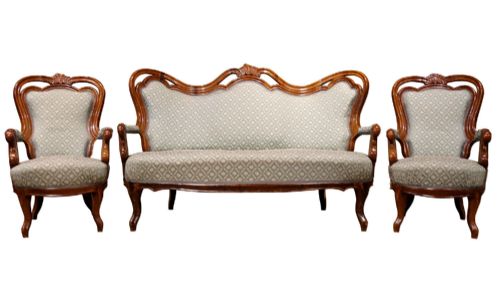
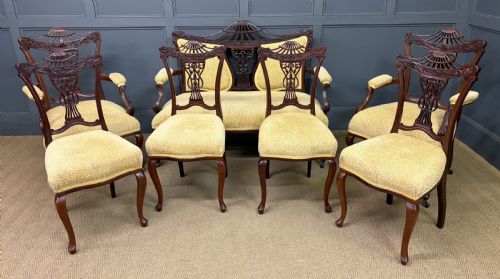
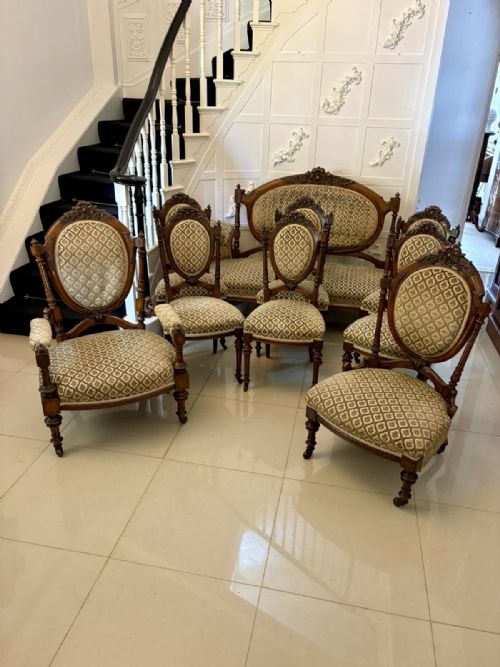
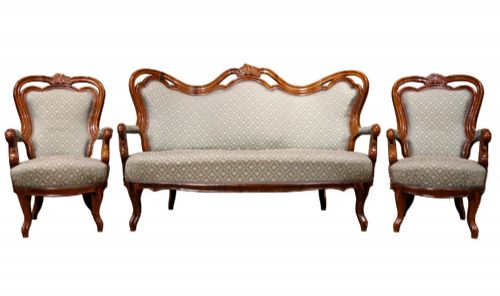
An antique parlour suite comprises matching chairs, settees and sofas designed to coordinate the social seating of a nineteenth or early twentieth-century reception room. These ensembles range from compact three-piece sets of a settee and two chairs up to large multi-piece configurations featuring numerous side chairs and armchairs.
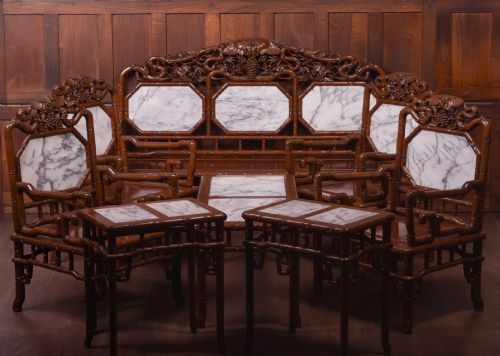
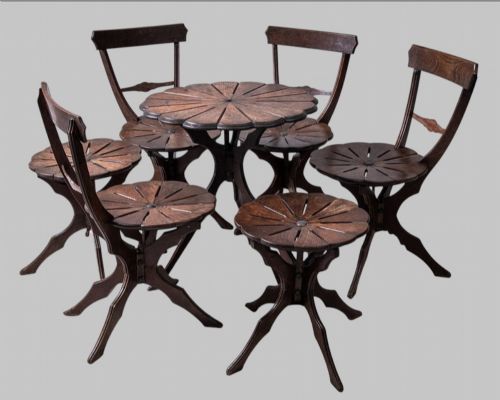
The pieces on this page span the Victorian and Edwardian eras, incorporating stylistic revivals from Rococo to French Empire and Arts and Crafts. Walnut and mahogany form the backbone of these matching groups, alongside occasional oak and exotic hardwoods.
Buyers encounter smaller three-piece arrangements most frequently, though larger drawing room suites appear with matching footstools and sofas. Each group provides a unified decorative scheme intended for formal entertaining.
Materials and construction
Cabinetmakers constructed these frames using solid timbers such as walnut, mahogany and oak, often shaped with elaborate carvings or delicate marquetry and inlay. Walnut frames frequently display deep relief carving, whereas Edwardian mahogany examples showcase linear inlay and satinwood banding.
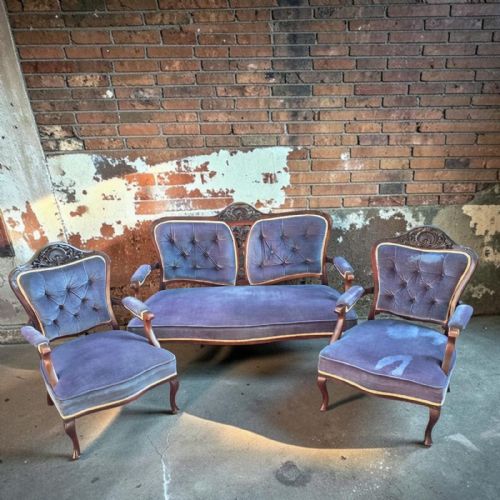
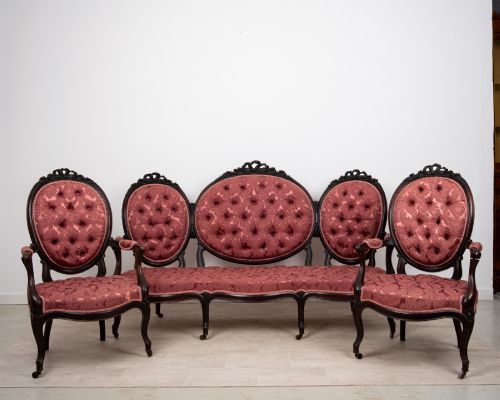
Upholstery techniques defined the comfort and profile of the seating, utilising deep buttoning, springs and horsehair stuffing beneath outer textiles. Fabrics recorded in the listings include damask, velvet and general upholstery fabric, stretched over sprung frames and secured with gimp and tacks.
Antique Parlour Suite Retail Price Guide 2026
Typical asking prices for parlour suite among the pieces listed under this phrase on Sellingantiques today, from the lower quarter to the upper quarter. They describe what is for sale here now, not the wider market.
Listings feature mahogany, walnut and oak frames paired with velvet, damask and traditional upholstery fabrics.
Judging quality and execution
Quality reveals itself in the crispness of the timber carving and the architectural proportion of the matching frames. Superior suites display hand-carved details and tightly jointed hardwoods that maintain structural rigidity across all matching items.
The integrity of the original timber framing and the sophistication of the veneer work separate standard productions from exhibition pieces. Matched sets that retain their complete complement of chairs and settees demonstrate higher preservation value.
Jas / James Shoolbred·Baumann
The Antique Parlour Suite Glossary
- Settee
- A long upholstered seat with a back and arms, designed for multiple people. This form anchors most parlour groupings.
- Salon suite
- A matched set of reception room seating originating from formal French-influenced drawing rooms. These collections coordinate upholstery and timber across multiple chairs and a sofa.
- Button back
- An upholstery style where depressions are formed in the padding by stitches or buttons pulled tight. This technique creates a tufted surface texture.
- Marquetry
- Decorative veneer work formed by fitting pieces of various woods into a glued design on a ground. It appears frequently on Edwardian and French revival pieces.
Antique Parlour Suite: Frequently Asked Questions
What pieces comprise a standard suite?
A standard matching ensemble typically includes a two-seater or three-seater settee accompanied by a matching pair of armchairs or side chairs.
Larger configurations can expand to include numerous chairs, footstools and specialised seating forms designed for formal drawing rooms.
How do I date an antique suite?
Dating relies upon the combination of timber choice, carving style and structural proportions visible across the framing. Victorian examples often feature heavy carved walnut or mahogany, while Edwardian pieces favour lighter inlaid mahogany.
Upholstery styles and revival motifs, such as French Empire or Arts and Crafts, also help pinpoint the exact period of manufacture.
Are these suites comfortable for daily use?
These historical seats were built for formal hosting rather than modern lounging, offering upright support and firm sprung construction. Many surviving examples retain their original padding, though comfort levels depend on whether the internal webbing and springs have been restored.
Buyers planning regular daily seating often check the interior stuffing and frame stability before purchase.
How should I care for the timber?
Maintenance requires keeping the wood away from direct heat sources and strong sunlight to prevent the polish and veneer from drying out. Occasional dusting with a soft, dry cloth preserves the finish without harming antique surfaces.
Harsh chemical polishes should be avoided in favour of traditional beeswax applied sparingly.