


Ebonised and Gilt Chairs
Ebonised and gilt chairs bring dark elegance and metallic contrast to a room, spanning Regency and Victorian periods.
Ebonised and Gilt Chairs
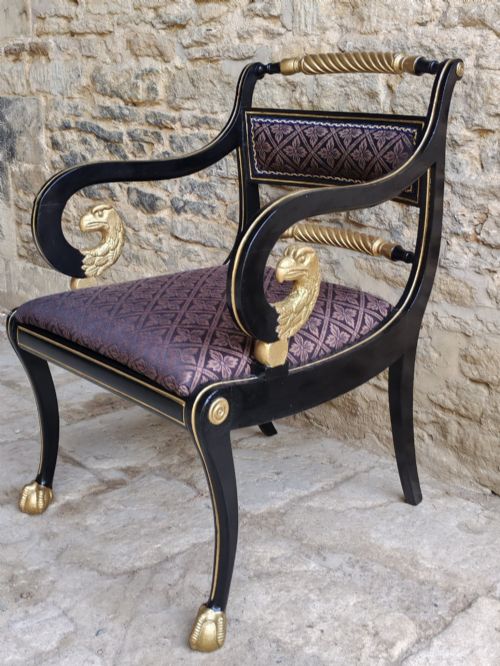
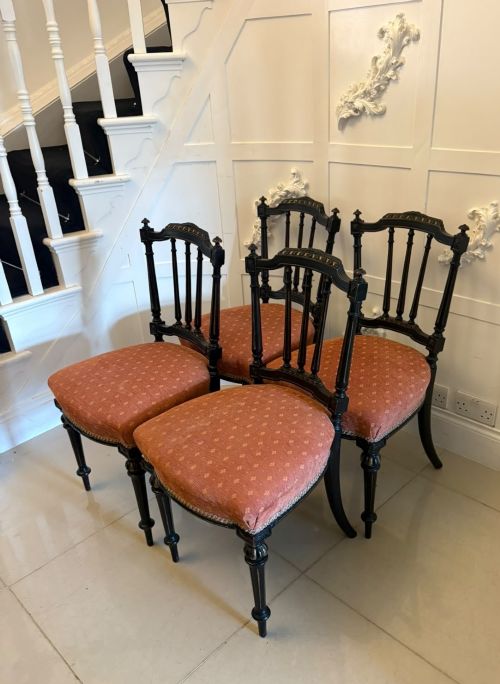
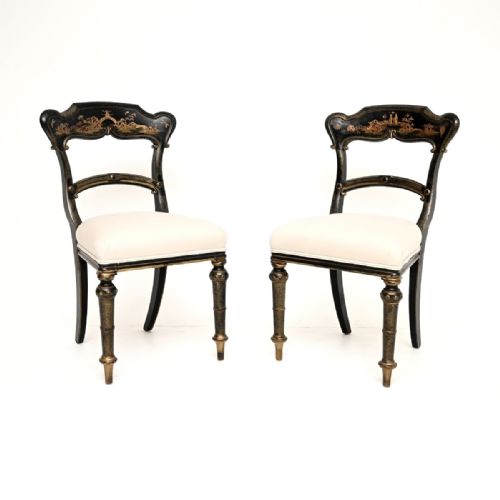
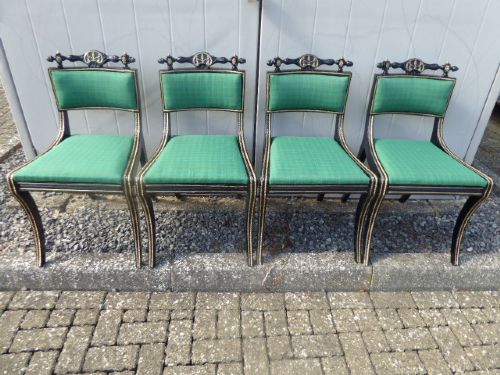
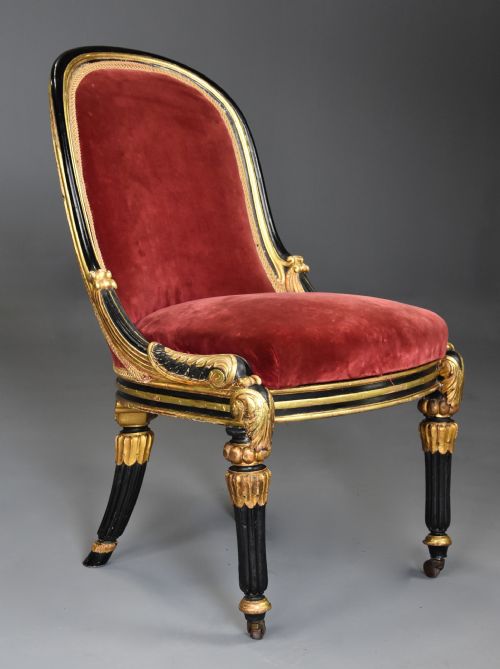
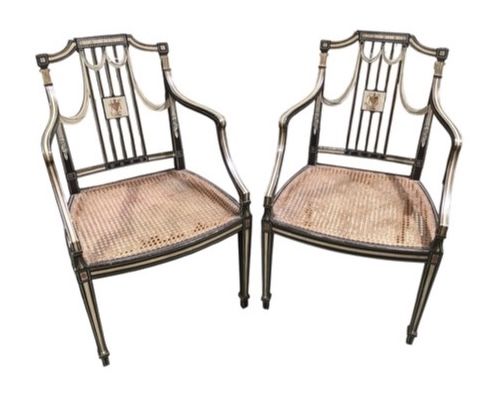
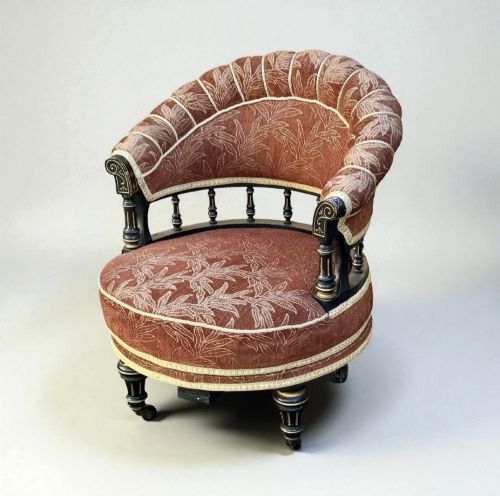
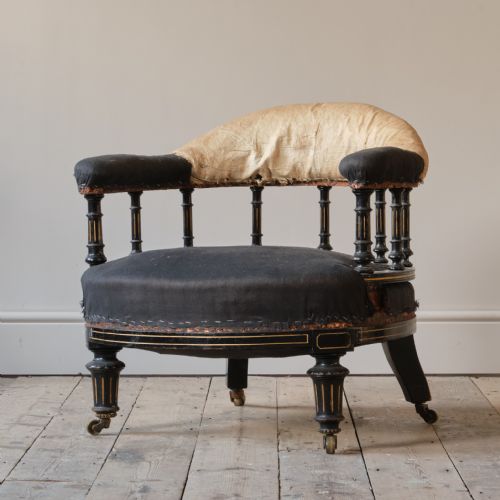
When you search for ebonised and gilt chairs, you encounter seating finished to imitate ebony wood with applied metallic highlights. The selection on this page ranges from formal dining sets and library armchairs to delicate bedroom and nursing chairs.
Most examples hail from the nineteenth century, encompassing genuine Regency and Victorian periods alongside later revivals. Common forms include side chairs, armchairs, and occasional seating intended for drawing rooms and parlours.
Materials and construction
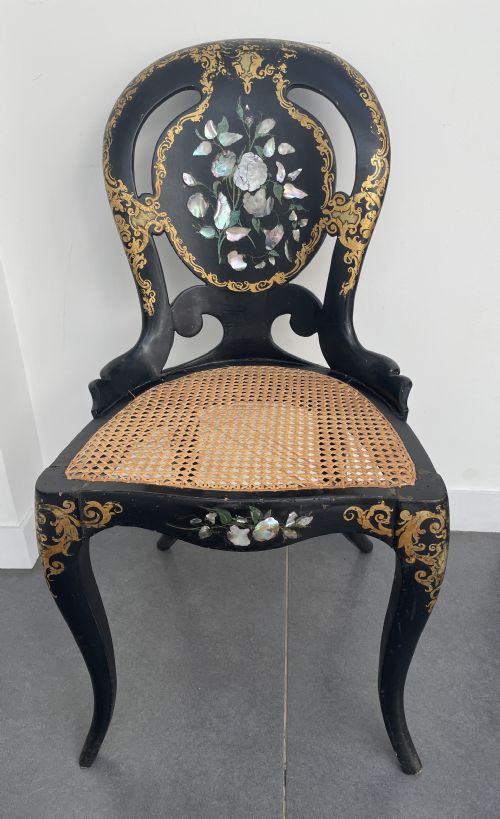
Carpenters typically used timber stained or painted black to achieve the ebonised finish, paired with parcel gilt details to catch the light. Decoration often involved hand painting, lacquer, or inlay work such as mother of pearl.
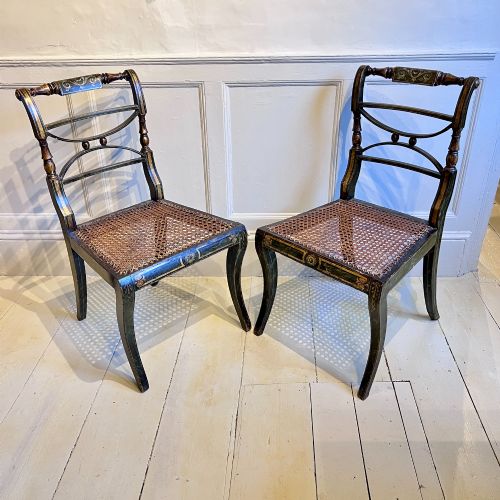
Seating surfaces vary from cane and wood to upholstered pads covered in fabric or velvet. Structural elements occasionally incorporate brass details or papier mache depending on the specific period and form.
Listings feature periods spanning the early nineteenth century through to early twentieth-century revivals, utilising materials like cane, velvet, and brass.
Distinctions in quality
Quality rests upon the crispness of the carving and the precision of the gilt work applied over the dark surface. Finer pieces demonstrate careful attention to proportion and joinery, particularly where structural frames support applied decoration.
The integrity of the ebonised finish and any supplementary ornamentation, such as painted scenes or inlay, dictates the overall character of the piece. Matching sets show greater consistency across individual chairs than assembled groups.
Gillows·Holland and Son
The Ebonised and Gilt Chairs Glossary
- Ebonised wood
- Timber treated with stain, paint, or chemical processes to resemble costly ebony. This dark finish provides a stark background for metallic highlights.
- Aesthetic Movement
- A late nineteenth-century design style emphasising visual beauty over narrative content. Pieces from this era frequently combine ebonised surfaces with eclectic artistic motifs.
- Caning
- Woven rattan material used for seat panels or backrests. It offers a light, resilient surface commonly found on lighter side chairs.
- X-frame
- A structural chair design featuring intersecting diagonal supports shaped like the letter X. This form appears on classical Regency seating.
Ebonised and Gilt Chairs: Frequently Asked Questions
How do I date an ebonised chair?
Dating relies on observing the primary form, turning styles, and construction methods relative to known design periods like Regency or Victorian. Detail characteristics such as leg profiles and upholstery foundations offer further chronological clues.
Comparing individual specimens to documented pieces from makers or pattern books helps narrow the decade of manufacture. Finish wear patterns also provide context regarding the true age of the surface.
Were these chairs used at dining tables?
Dining chairs represent a significant portion of these listings, often found in matched sets of four, six, or more. Formal dining rooms in the nineteenth century frequently utilised dark seating to create dramatic contrast against light walls.
Individual side chairs and armchairs served secondary roles in libraries, bedrooms, and drawing rooms as occasional seating. Their decorative finishes made them suitable for social spaces where visual impact mattered.
How should I care for ebonised surfaces?
Maintenance requires gentle dusting with a soft, dry cloth to prevent particulate accumulation on the dark finish. Avoid using harsh chemical sprays or abrasive polishes that might degrade the underlying stain or paint.
Protecting the gilt highlights from excessive friction preserves the metallic contrast against the black wood. Maintaining stable room humidity prevents timber movement that could stress old joints.
What is the difference between Regency and Victorian styles here?
Regency designs draw direct inspiration from classical antiquity, featuring clean structural lines, sabre legs, and restrained parcel gilt accents. Pieces from this era often display architectural symmetry and understated elegance.
Victorian variations introduce heavier proportions, diverse revival influences, and more elaborate surface decoration like mother of pearl or painted Chinoiserie. These later pieces reflect shifting tastes toward ornate domestic interiors.