




Classical Carved Armchairs
These classical carved armchairs bring serious Regency and neoclassical presence into a room, combining architectural timber frames with crisp historical ornament.
Classical Carved Armchairs
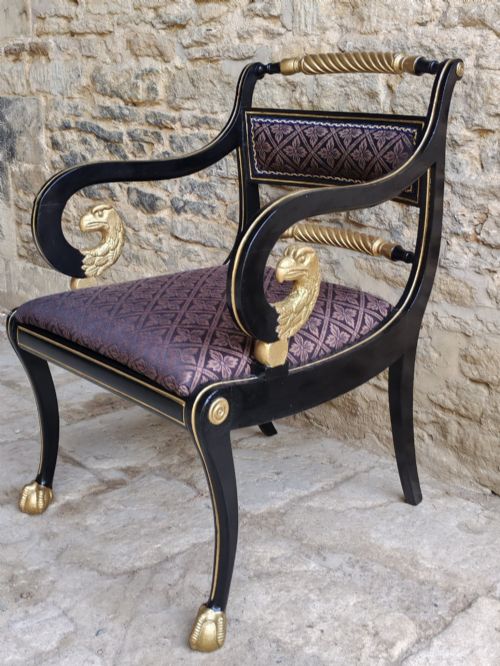
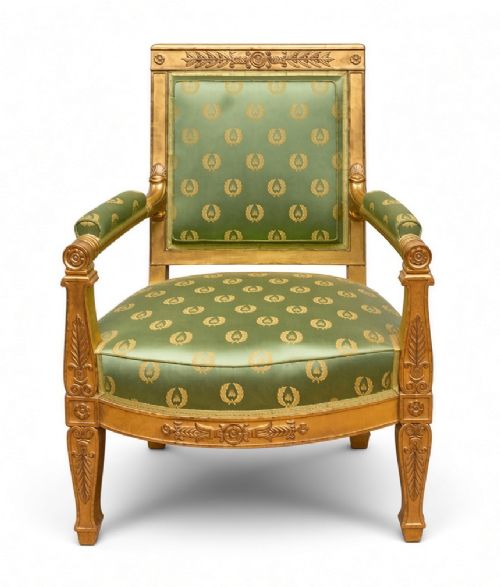
When you search for classical carved armchairs, you encounter grand seating rooted in Regency, Louis XVI, and neoclassical design traditions. These pieces draw heavily on ancient Greek and Roman motifs, featuring architectural lines and sculptural woodwork.
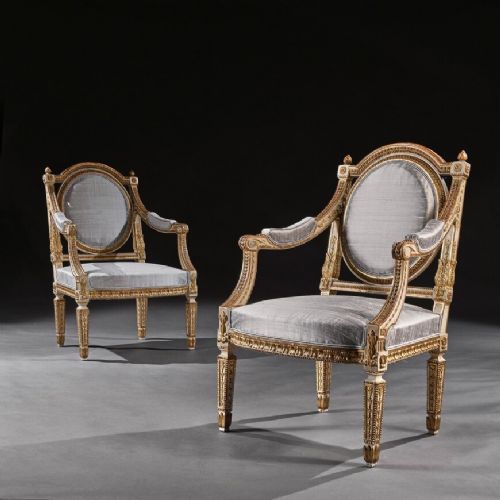
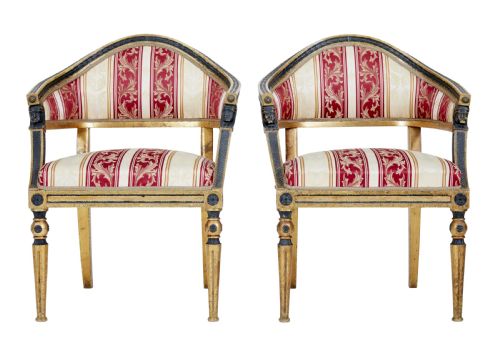
You are most likely to meet mahogany, giltwood, and painted frames spanning the nineteenth and early twentieth centuries. From Swedish birch bergères to Italian parcel-gilt seats, these armchairs command attention in a formal interior.
How they were made
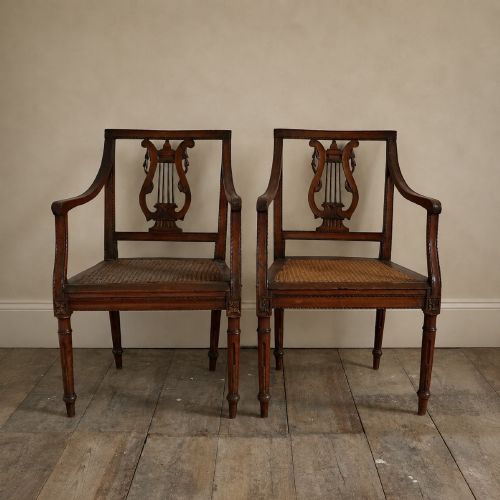
Cabinetmakers shaped these robust frames from hardwoods like mahogany, oak, and beech, often applying elaborate gilding or painted finishes. Skilled carvers rendered acanthus leaves, lyre backs, and monopodia directly into the timber.
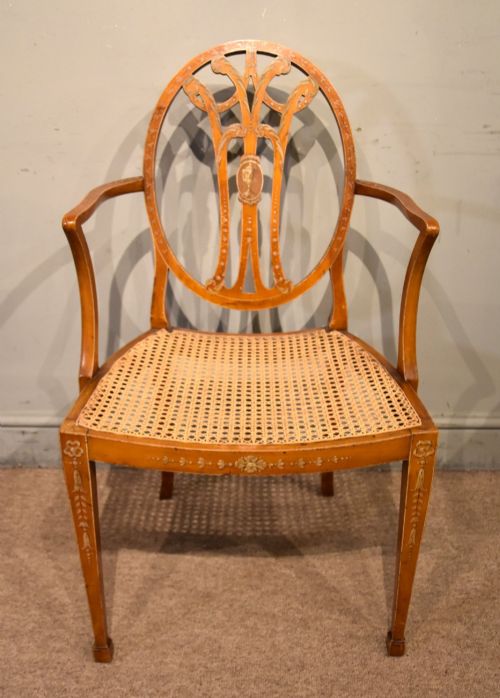
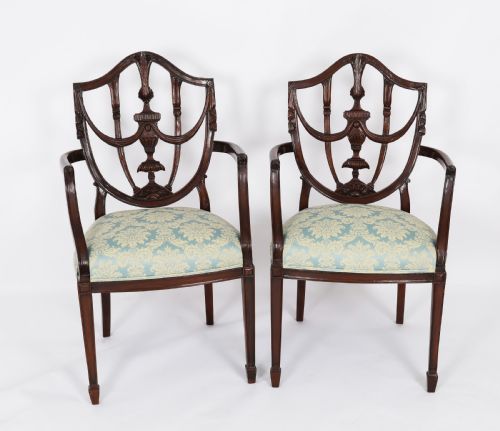
Upholstery methods varied from traditional cane seating to sprung cushions covered in damask fabric or silk. The joinery relied on traditional mortise and tenon construction to support the substantial carved frames.
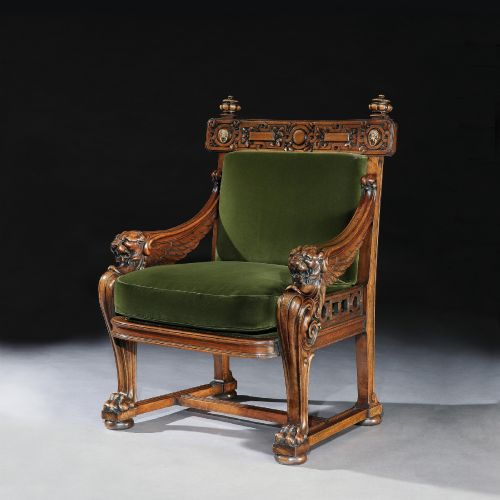
Several chairs feature fierce lion paws ready to pounce across your parlour floor.
What varies in quality
The crispness of the hand-carved ornament dictates the visual success of the piece. Sharp, deeply undercut foliate carving and well-defined classical motifs separate superior frames from softer, mechanical work.
The integrity of the structural timber and the authenticity of the surface finish determine the standing of the chair. Original giltwood surfaces and soundly joined hardwood frames hold greater historical weight than heavily restored alternatives.
Jacob Desmalter·Thomas Hope
The Classical Carved Armchairs Glossary
- Giltwood
- Timber coated with a thin layer of gold leaf over a prepared gesso ground. This technique provides a luminous, reflective surface on formal neoclassical frames.
- Monopodia
- Furniture supports shaped as a single lion's leg and paw, drawn from ancient Roman archaeological finds. They feature prominently in Regency and neoclassical designs.
- Fauteuil
- An open-armed French armchair with upholstered back and seat, exposing carved wooden armrests and legs. These chairs define formal European seating from the eighteenth and nineteenth centuries.
- Neoclassical
- A style reviving classical antiquity in architecture and decorative arts from the mid-eighteenth through the nineteenth century. It emphasises symmetry, proportion, and ancient motifs.
Classical Carved Armchairs: Frequently Asked Questions
Where should I place these armchairs?
These imposing seats suit formal reception rooms, libraries, or parlours where their architectural presence can be appreciated. They work well as accent pieces rather than casual lounging chairs.
Pair them with complementary antique tables or position them to anchor an empty corner of a grand room.
How do I care for giltwood frames?
Giltwood requires delicate handling because the gold leaf and underlying gesso are sensitive to moisture and friction. Dust them only with a soft, dry ostrich feather duster.
Keep them away from direct sunlight and fluctuating humidity to prevent the wood from shifting and the gold leaf from flaking.
Are cane seats durable?
Cane seating is surprisingly resilient if treated with care, though it requires occasional humidity to keep the plant fibres from becoming brittle. Avoid kneeling on the cane or placing excessive localized weight upon it.
Historic cane often survives remarkably well when kept clean and conditioned with damp cloths.
How do I identify a Regency style chair?
Regency pieces often draw on Greek and Roman archaeology, showing sabre legs, brass inlay, and carved details like lyres or lion monopodia. The timber choice leans heavily towards dark mahogany.
Look for restrained classical geometry rather than the heavy curves found in later Victorian revival pieces.