

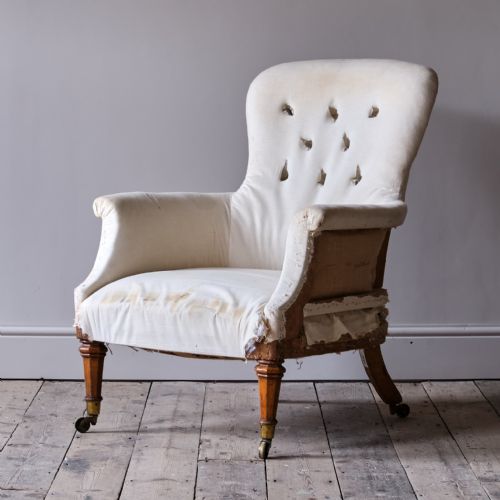
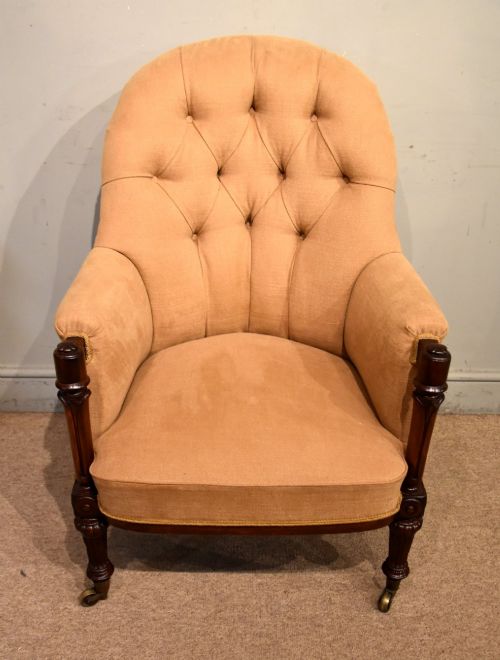

Regency Mahogany Library Chair
A regency mahogany library chair offers sturdy seating built for study, bringing together dark timber and deep leather or cane.
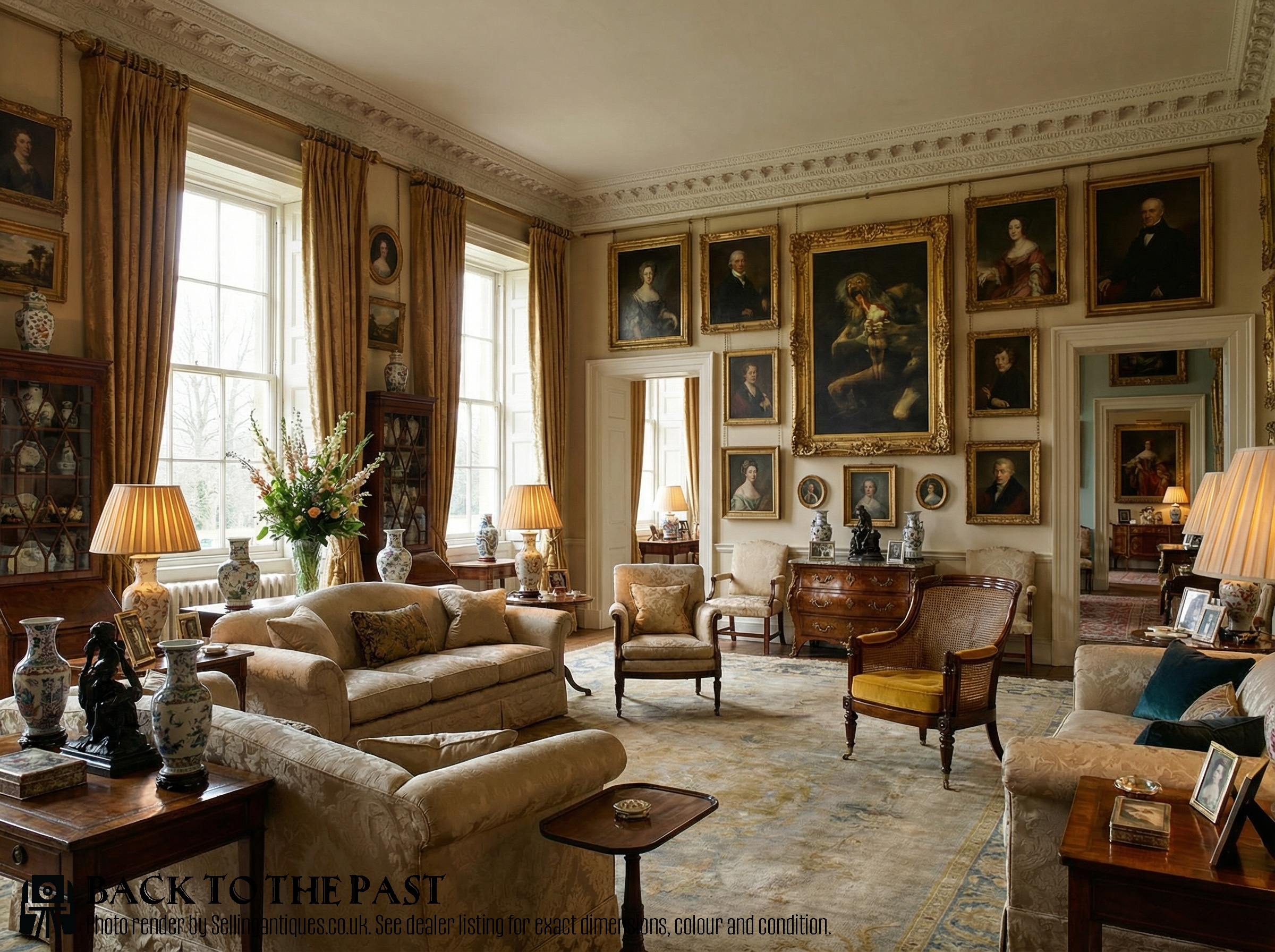
The Form of the Regency Mahogany Library Chair
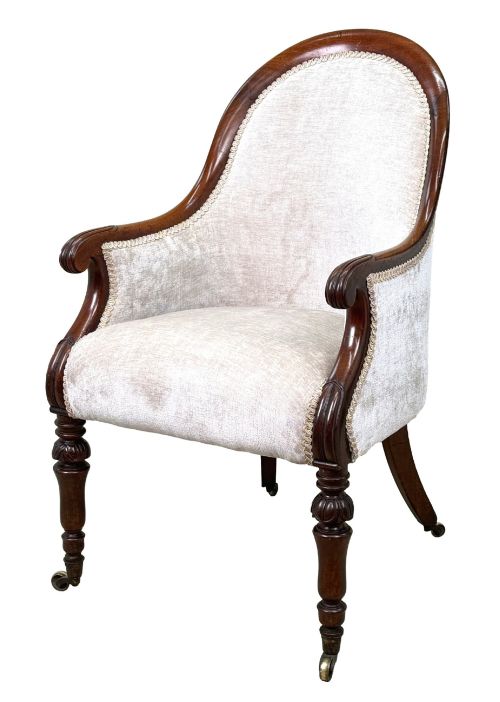
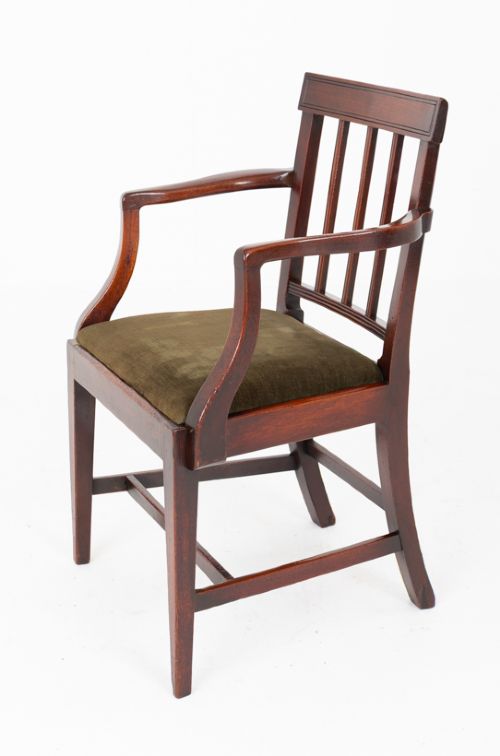
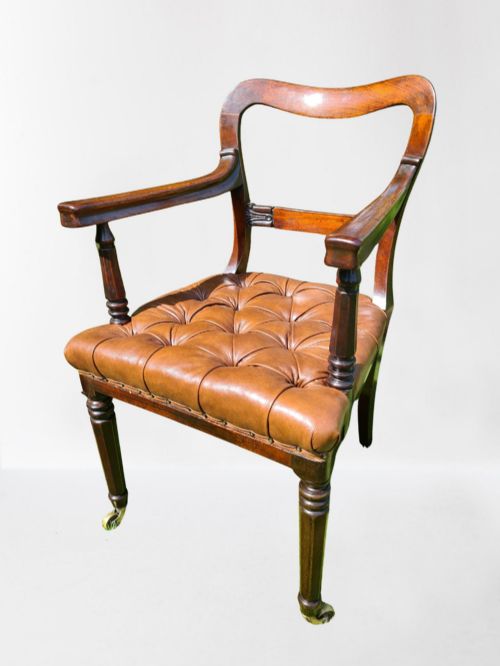
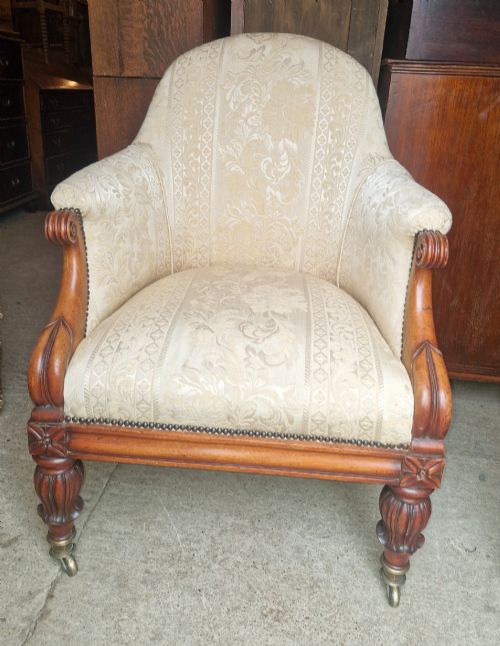
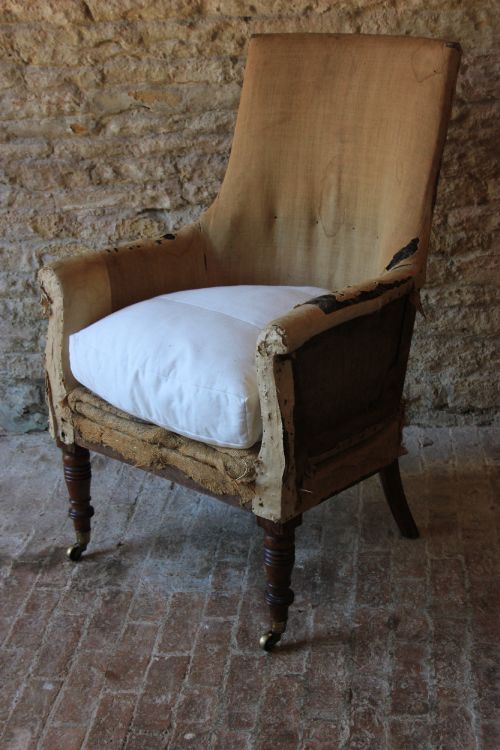
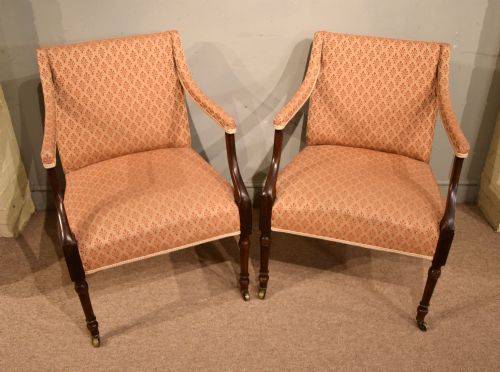
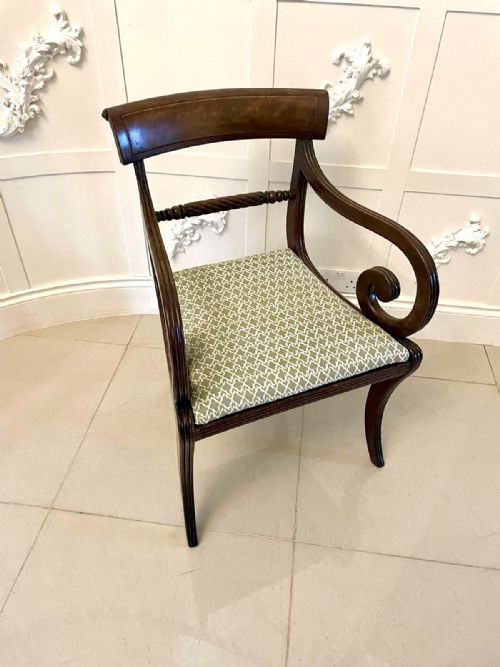
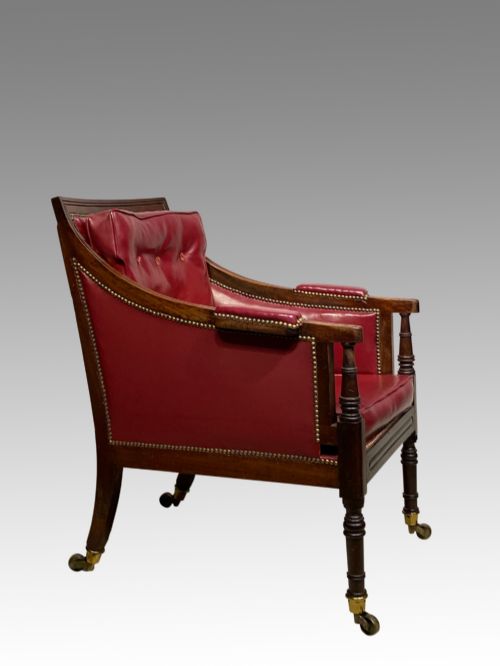
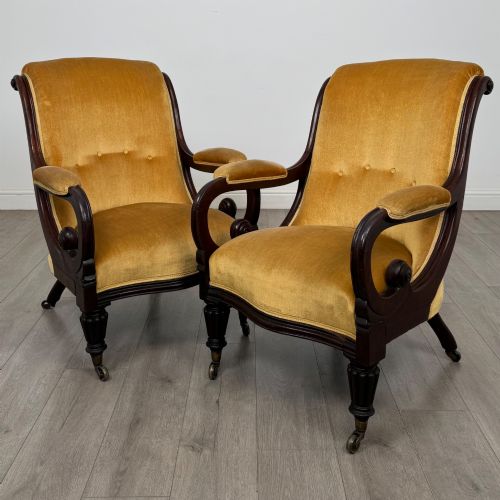
A regency mahogany library chair is typically an armchair designed for study, reading or desk work, appearing across the Regency, Georgian and William IV periods. These pieces include bergère forms with cane panels, upholstered armchairs, reading chairs and occasional metamorphic designs.
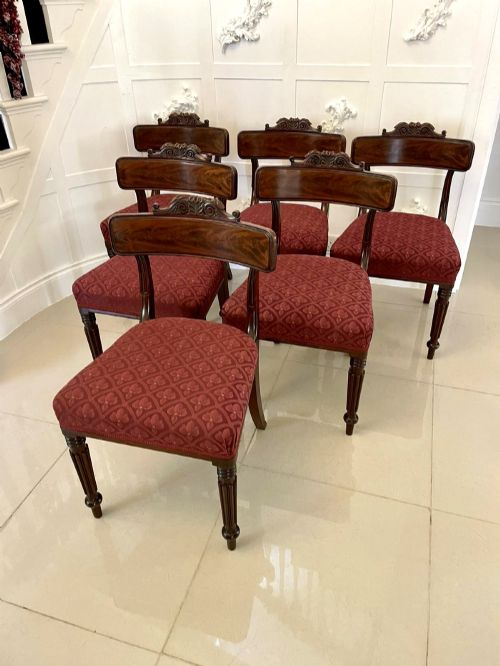
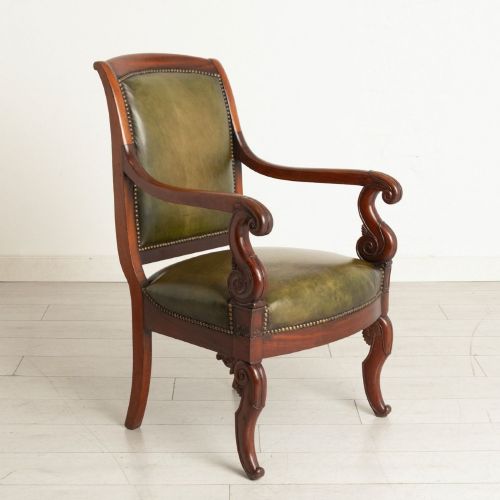
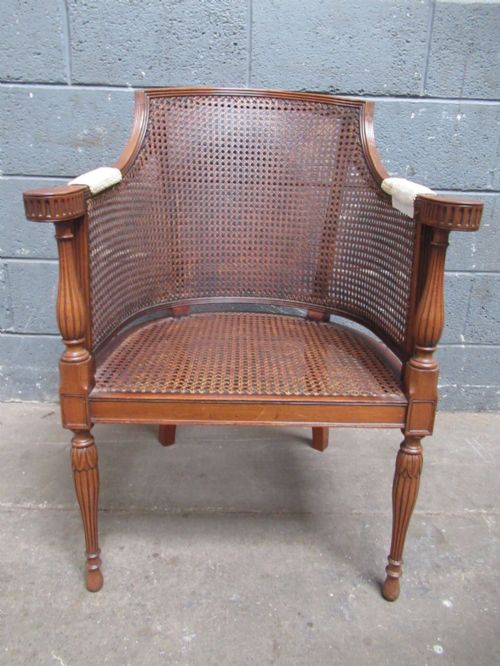
The version most commonly met on this page is the Regency mahogany bergere library armchair, often featuring cane sides and a loose cushion seat. Larger country house examples, pairs and sets of chairs also recur alongside variants with leather upholstery.
Makers such as Gillows and followers of George Bullock shaped the output, producing robust armchairs that combine functional seating with classical restraint. The form accommodates both upright reading and relaxed lounging through varied back shapes and arm designs.
Distinctions in Quality
Quality separates through the crispness of carved wooden details, the balance of proportions and the selection of timber figures. Pieces attributed to workshops like Gillows show finer execution in their joinery and scroll arms.
The integration of secondary materials like brass inlay or quality cane work marks the distinction between standard room seating and finer library armchairs. A heavier scale and robust construction also elevate the standing of a piece.
Retail Price Guide 2026
Typical UK retail prices for regency mahogany library chair, calculated from the Sellingantiques database of over a million retail prices indexed since 2003. This retail price guide relies exclusively on Sellingantiques data; no external sources or auction records are used, so the figures do not describe the wider market.
Some library chairs transform into steps, proving that 19th-century scholars appreciated a multi-tasking seat.
Gillows·George Bullock
The Regency Mahogany Library Chair Glossary
- Bergere
- An enclosed upholstered armchair with a wooden frame where the sides are frequently filled with cane work. This style offers a lighter appearance while maintaining structural support.
- Metamorphic
- Describing furniture designed to transform into another object, such as a library chair that converts into steps. These pieces combine utility with mechanical ingenuity.
- Curricle
- A chair design featuring a low, sweeping backrest that curves continuously into the arms, echoing the shape of a two-wheeled carriage. It provides a distinct profile within Regency seating.
- Rope back
- A chair back incorporating carved wooden ornament shaped to resemble twisted rope. This detail reflects classical nautical motifs popular during the period.
- Cock fighting chair
- A specialised low armchair featuring a padded rest on the top rail, originally intended for spectators leaning forward to watch events. They remain collectable forms of 19th-century seating.
Frequently Asked Questions
What is a bergere library chair?
A bergere library chair is an armchair featuring a wooden frame with cane panels set into the sides and back. These seats often include loose cushions upholstered in leather or fabric.
The style provides a lighter silhouette than fully padded armchairs while remaining sturdy enough for regular study use.
How do I spot a Gillows chair?
A chair attributed to Gillows typically exhibits exceptional timber selection and refined carving, alongside precise joinery. Stamped signatures sometimes appear on the wood frame.
Such pieces often match documented archive forms from the Regency period, showing superior weight and proportion.
Where were these chairs used?
These armchairs served in domestic libraries, studies, drawing rooms and offices for reading and desk work. Their solid construction suited spaces dedicated to study and conversation.
They also appeared in country house interiors alongside larger suites of matching library furniture.
How do I care for leather and mahogany?
Mahogany benefits from occasional waxing to maintain the grain and finish of the timber. Leather upholstery requires conditioning to prevent drying and cracking over time.
Keeping the chairs away from direct heat sources protects both the wood and the natural materials from warping.