

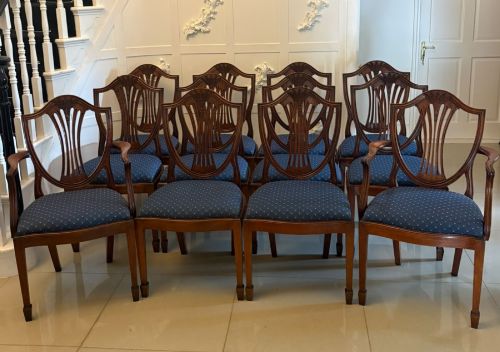
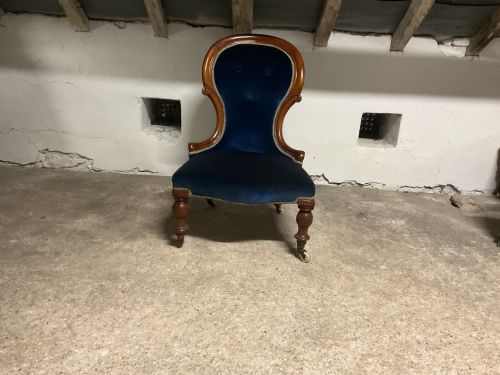
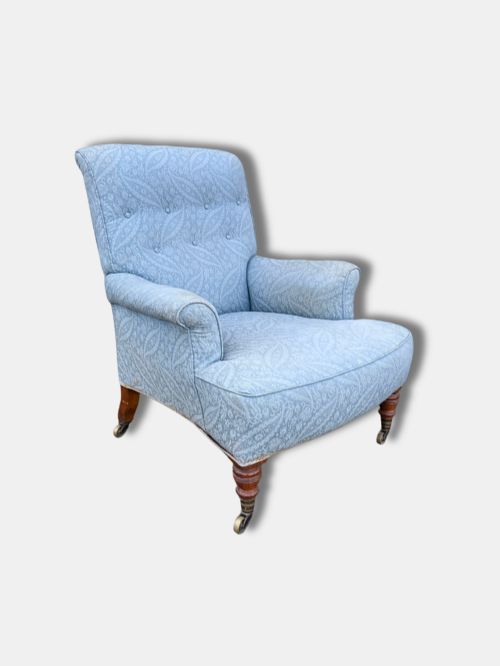
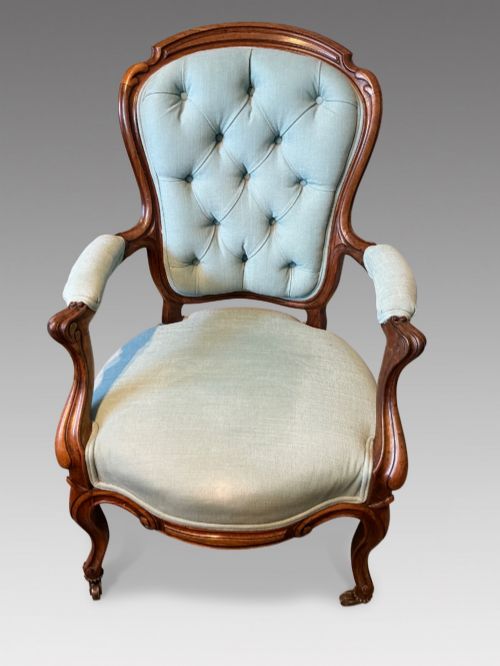
Blue Upholstered Armchairs
Blue upholstered armchairs offer enduring comfort, bringing rich period character and tactile colour into a room.
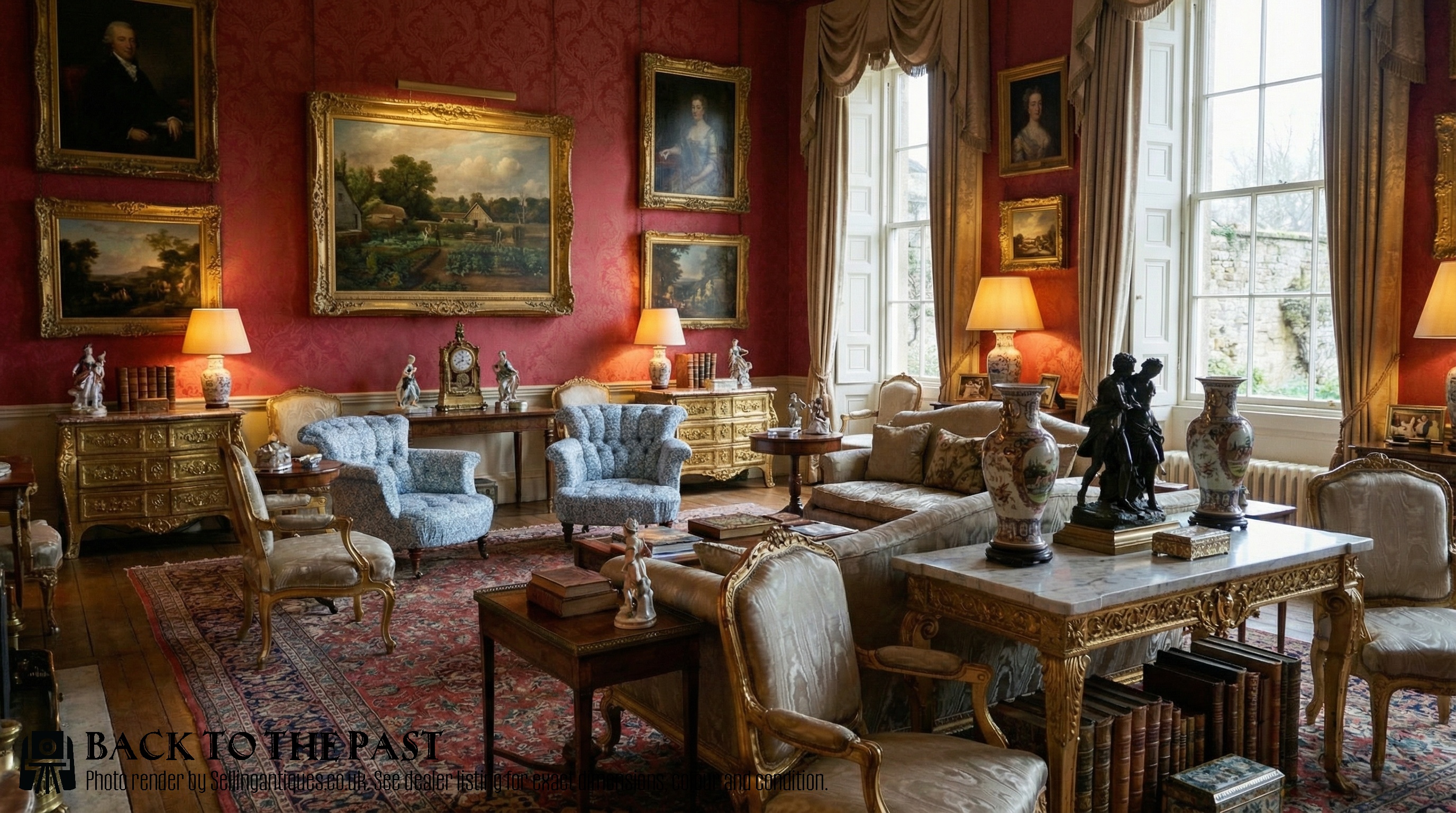
Blue Upholstered Armchairs
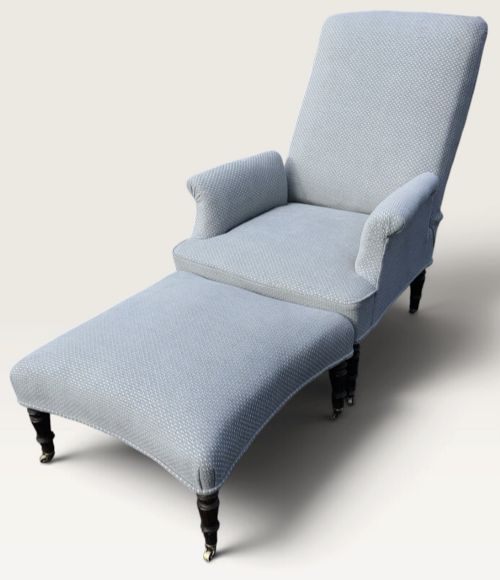
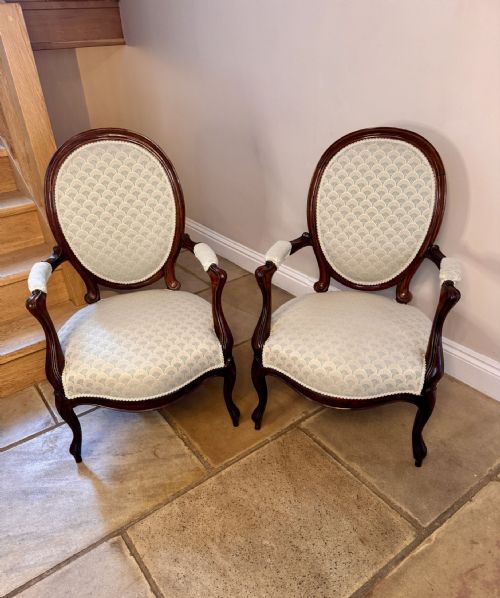
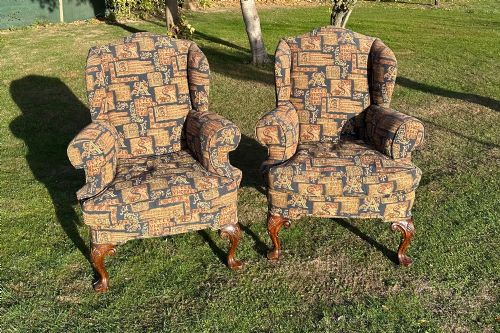
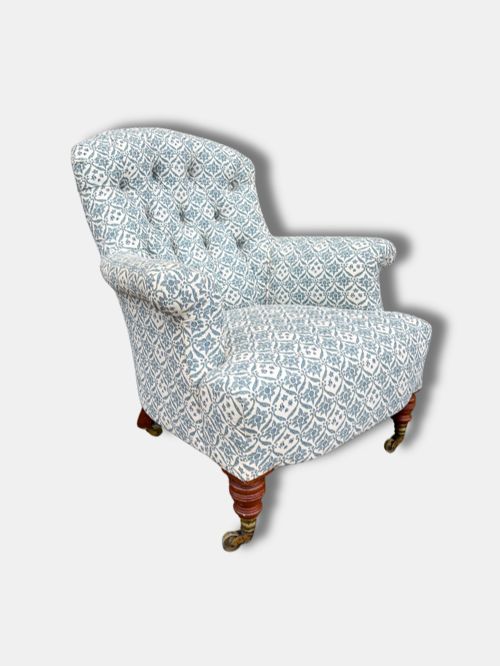
Blue upholstered armchairs encompass a wide variety of seating forms spanning the eighteenth century through to the early twentieth century. When searching for blue upholstered armchairs, a buyer encounters everything from deep-seated Victorian examples to refined Edwardian tub armchairs and substantial wing armchairs.
The selection ranges across distinct historical periods including Georgian, Victorian, Edwardian, and Art Deco eras. Pieces take diverse structural forms, including library chairs, fireside seats, and low nursing chairs.
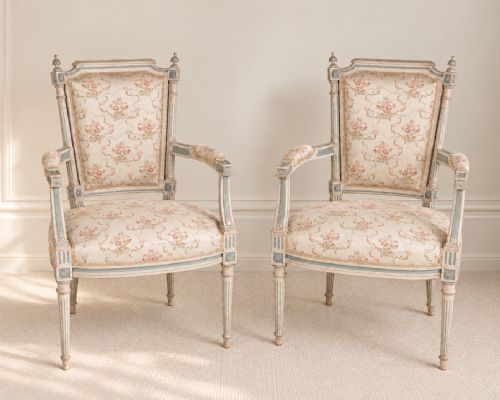
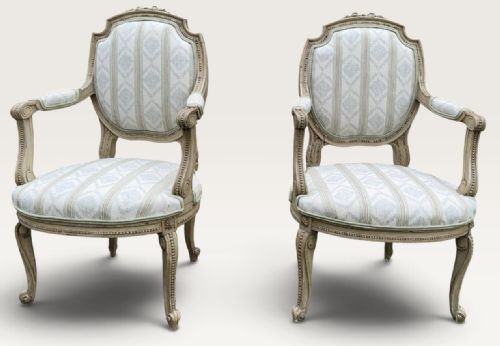
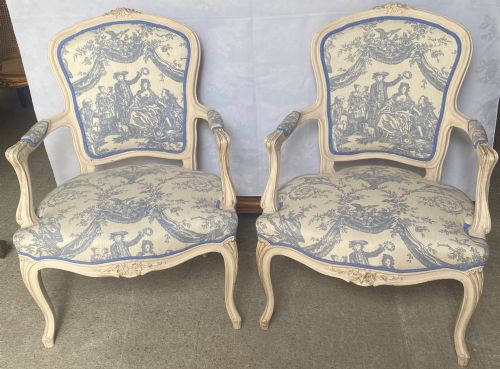
Origin and maker attribution shape the character of each piece, with works by renowned makers such as Howard and Sons appearing alongside French painted frames and Scottish designs. Walnut and mahogany woods provide the structural framework for these diverse textile coverings.
Materials and Construction
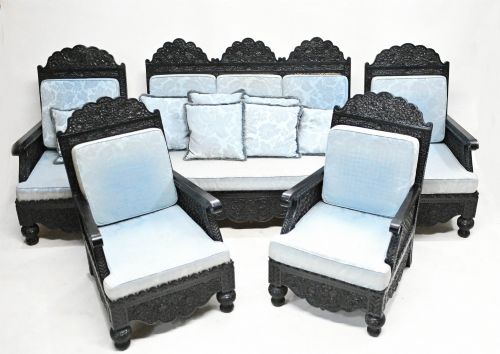
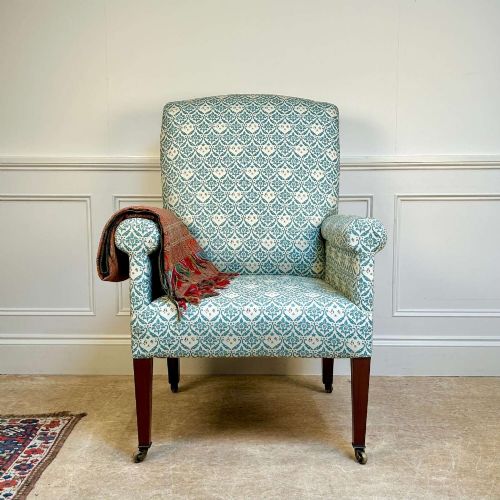
Cabinetmakers utilised sturdy hardwoods such as mahogany, walnut, and rosewood to construct the structural frames of these seats. Brass castors and detailed wood carving frequently accent the lower frame and legs.
Traditional upholstery methods rely upon durable textile fabrics, velvet, and tapestry upholstery applied over supportive interior stuffing. Original paint finishes and parcel gilt details occasionally survive on the wooden frameworks.
Blue Upholstered Armchairs Retail Price Guide 2026
Typical asking prices for blue upholstered armchairs among the pieces listed under this phrase on Sellingantiques today, from the lower quarter to the upper quarter. They describe what is for sale here now, not the wider market.
The listings show armchairs spanning from the eighteenth century to the 1930s, utilising mahogany, walnut, brass, and diverse textile upholstery.
Markers of Distinction
The sophistication of the timber framing and the integrity of the underlying woodwork distinguish finer pieces from simpler counterparts. Master carvers imparted subtle refinement to cabriole legs, arm supports, and shield backs.
The quality of the surviving textile covering and the adherence to period-appropriate upholstery techniques determine the visual impact of the chair. Maker stamps and original structural components elevate the significance of a piece within any collection.
Howard and Sons·Morison and Co·Whytock and Reid
The Blue Upholstered Armchairs Glossary
- Carver armchair
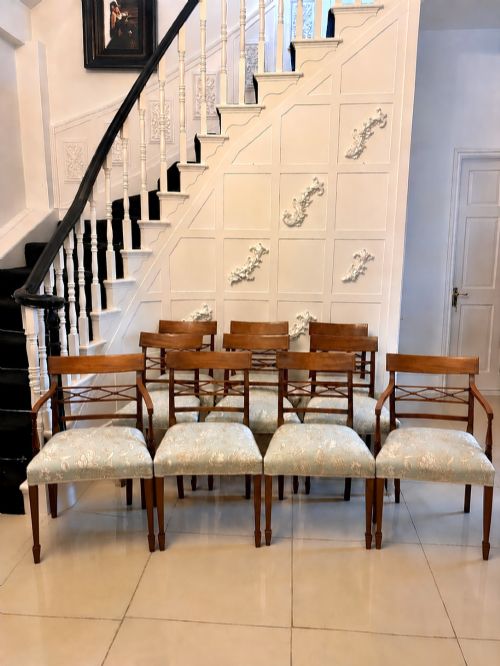
- A sturdy dining chair with arms, typically placed at the head of a dining table. These pieces match larger sets of side chairs.
- Wing armchair
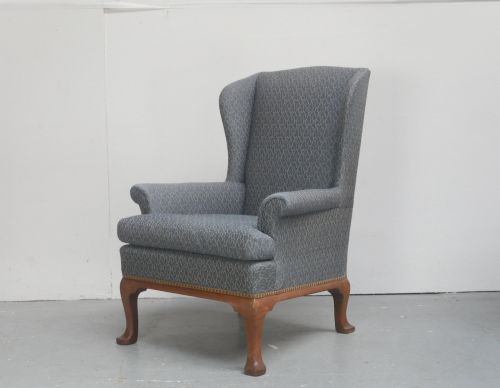
- A high-backed seat featuring protective side panels designed to shield the occupant from drafts. These forms date primarily from the Georgian and Victorian periods.
- Tub armchair
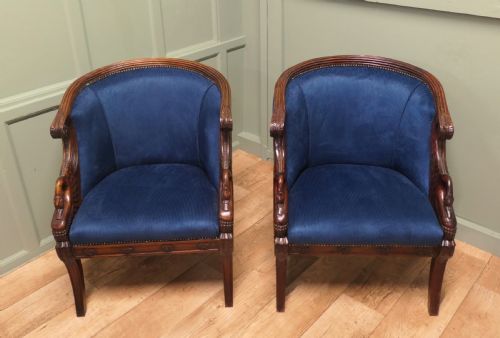
- A comfortable seat featuring a continuous curved back and arms that form a single enveloping enclosure. Edwardian makers frequently utilised this compact shape.
- Parcel gilt
- A decorative technique where specific carved details on a wooden frame receive a thin application of gold leaf. This ornamentation contrasts against painted or polished timber surfaces.
Blue Upholstered Armchairs: Frequently Asked Questions
How do I identify a Howard and Sons armchair?
Look for stamped maker marks on the wooden frame or brass castors, alongside robust traditional upholstery.
These pieces often feature distinctive low proportions and deep, sprung comfort designed for country house interiors.
Where should I place a wing armchair?
Wing armchairs suit fireside settings or reading corners where their high backs create a private enclosure.
Their substantial presence anchors a room, particularly when paired with a matching footstool.
What is the difference between an Edwardian and a Victorian armchair?
Victorian armchairs tend to feature heavier rosewood or mahogany frames with button-backed velvet upholstery and elaborate carving.
Edwardian designs often display lighter walnut or mahogany frames with simpler lines and softer tub or deep-seated proportions.
How do I care for antique upholstery fabric?
Protect antique textiles from direct sunlight to prevent fading of the blue tones over time.
Gentle surface vacuuming using a soft brush attachment helps remove dust without disturbing the underlying fibres.