

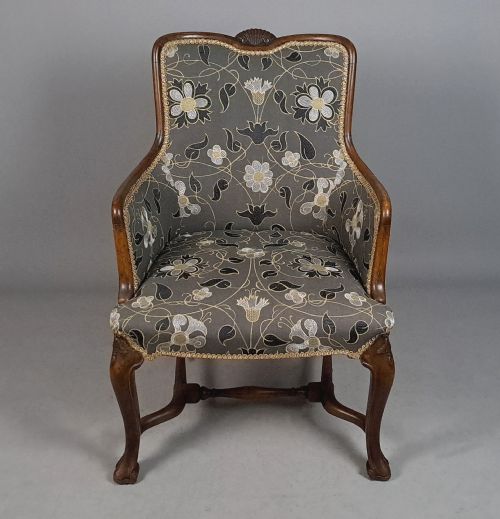
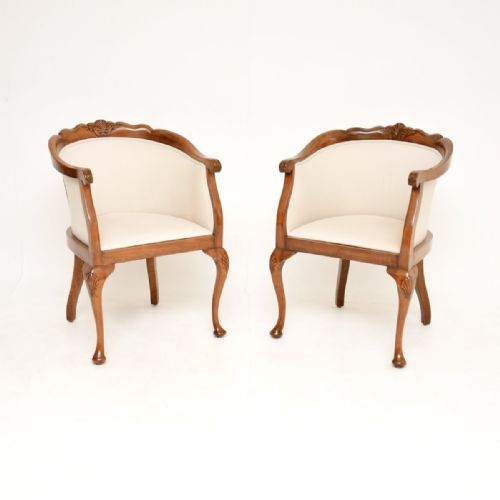


Queen Anne Style Armchairs
Queen anne style armchairs bring graceful proportions and scrolled arms into a room, offering both traditional character and comfortable seating.
Identifying Queen Anne Style Armchairs
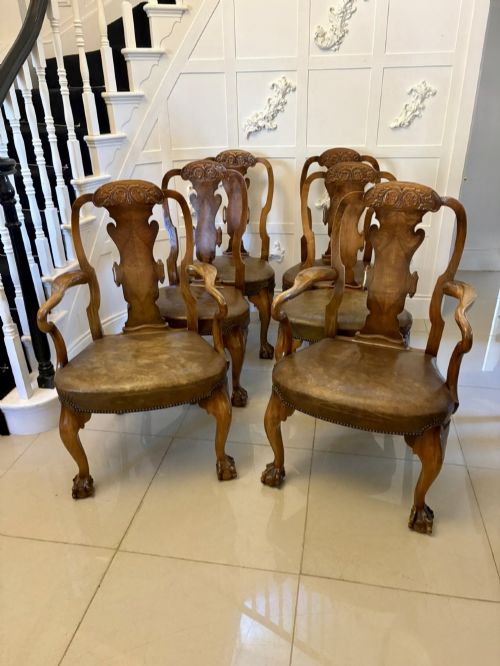
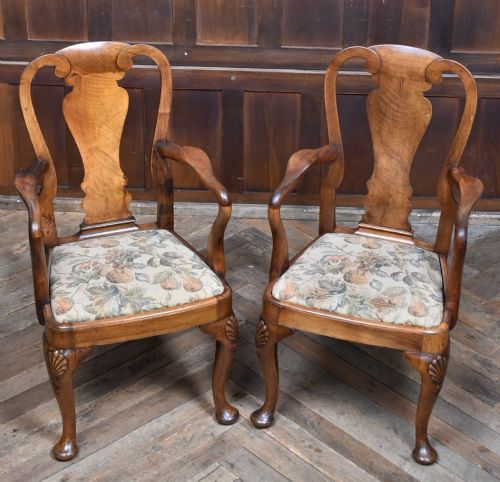
These pieces encompass walnut, oak, and mahogany frames designed for fireside, desk, and library use. When exploring queen anne style armchairs, buyers frequently encounter matched pairs originating from the nineteenth and early twentieth centuries.
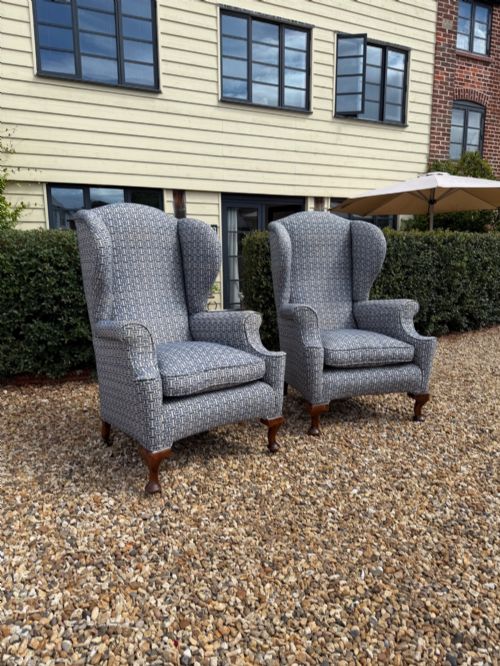
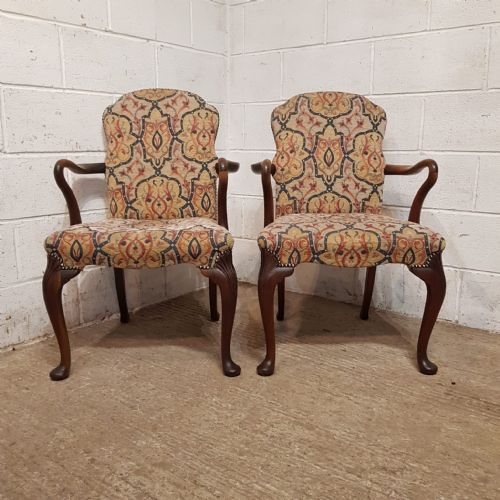
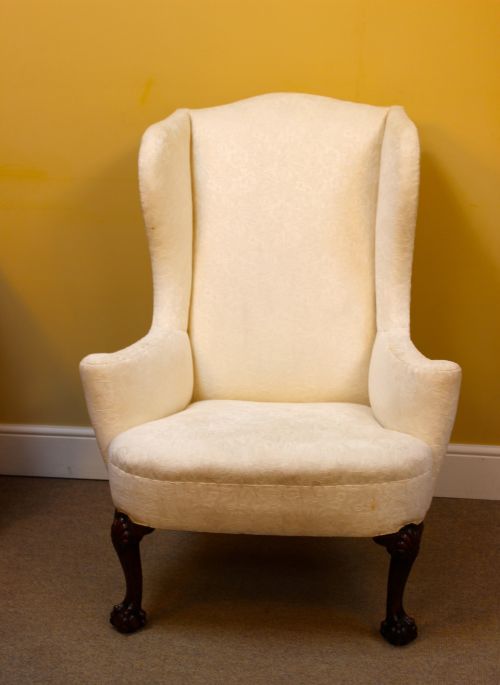
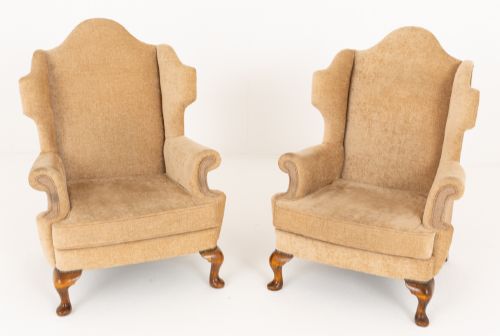
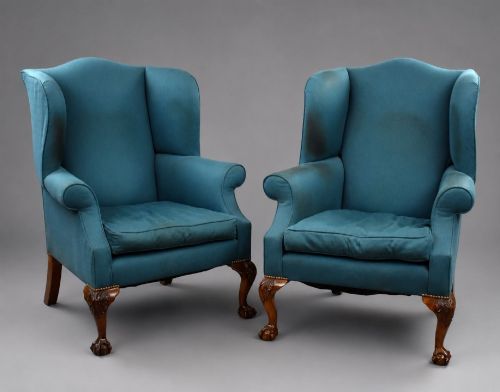
The inventory ranges from compact nursery seats and open arm versions to substantial wing back and camel back models. Most examples on this page reflect revival movements spanning the Victorian era through the nineteen-thirties.
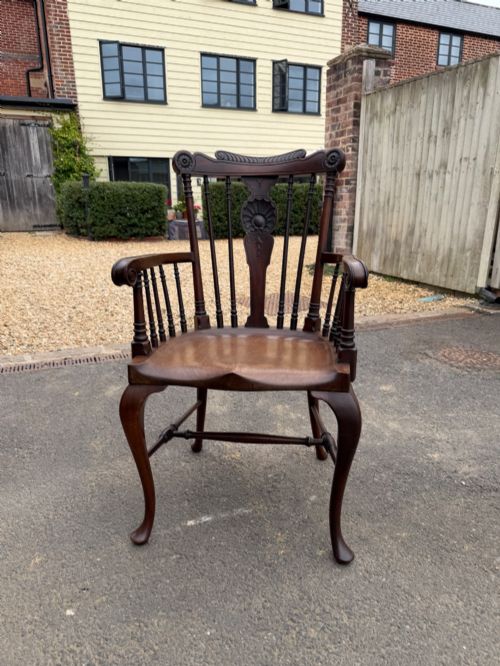
Carver chairs, tub chairs, and library desk chairs appear regularly alongside upholstered fireside seating. The selection relies heavily on traditional timber frames paired with various textile coverings.
Construction and Materials
Frames are constructed from hardwoods including walnut, burr walnut, oak, and mahogany. Cabinet makers utilised these durable timbers to support the characteristic curved lines and supportive arm structures.
Upholstery techniques involve traditional textile coverings such as velvet, leather, and woven fabric. These materials are secured to padded seats, backs, and armrests designed for everyday use.
Retail Price Guide 2026
Typical UK retail prices for queen anne style armchairs, calculated from the Sellingantiques database of over a million retail prices indexed since 2003. This retail price guide relies exclusively on Sellingantiques data; no external sources or auction records are used, so the figures do not describe the wider market.
Listings feature items spanning the nineteenth century through the nineteen-thirties, utilising walnut, oak, mahogany, and diverse textile upholstery.
Judging Quality and Execution
The distinction between tiers rests upon timber selection and the crispness of carved wooden details. Superior specimens display well-figured burr walnut or rich mahogany alongside balanced proportions in the arm and leg assemblies.
Upholstery finish and structural integrity define the overall execution of each piece. Better examples maintain firm, supportive frames paired with cleanly fitted textile coverings that respect the original design vocabulary.
The Queen Anne Style Armchairs Glossary
- Carver chair
- An armchair featuring wooden armrests, frequently designed to match a set of dining or desk chairs. These pieces provide sturdy support while maintaining a slender profile.
- Wing back armchair
- A fireside seat featuring protective side panels designed to shield the occupant from drafts. The upholstered wings extend from the upper back down to the armrests.
- Burr walnut
- A highly prized timber veneer showing intricate swirling grain patterns formed at the tree root. Cabinet makers utilise this material to create decorative surfaces on prominent chair parts.
- Camel back
- A gently curved upper backrest profile resembling the humps of a camel. This upholstered shape distributes support evenly across the top of the seat.
Frequently Asked Questions
How do I clean the fabric upholstery?
Vacuum textile surfaces gently with a soft brush attachment to remove dust and loose debris.
For marked areas, consult a professional specialist who understands antique textile preservation.
Are these chairs suitable for daily use?
Solid hardwood frames and sturdy joints allow these seats to handle regular daily sitting.
Ensure the internal padding and webbing remain secure before placing them in high-traffic areas.
How do I distinguish revival periods from older work?
Nineteenth and twentieth century revival pieces often show machine tooling marks alongside traditional joinery methods.
Examine the timber finish and hardware fixings to determine the likely period of manufacture.
Where should I place a wing back chair?
Wing back models work well beside fireplaces, reading corners, or quiet library spaces.
Their high backs and side panels create a cosy, enclosed seating environment.