
Vintage Upholstered Carver
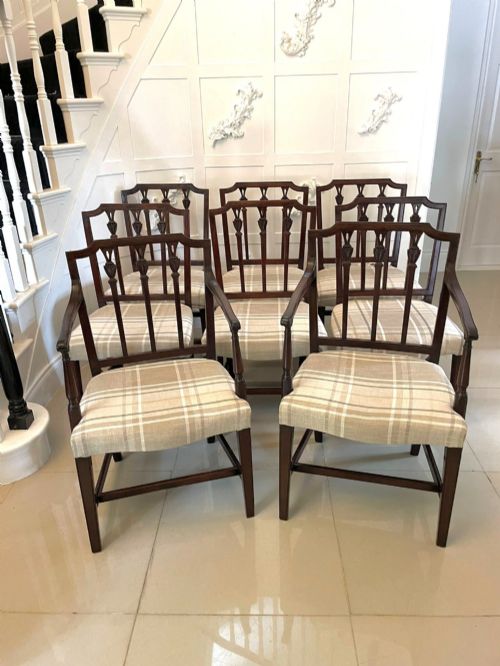
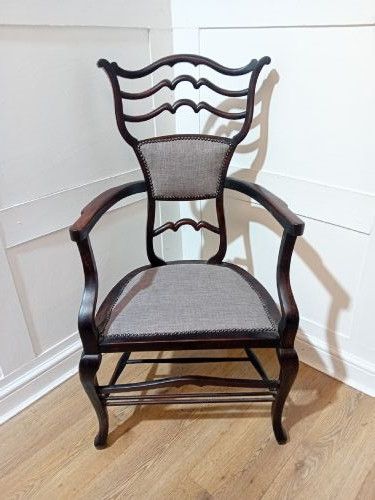
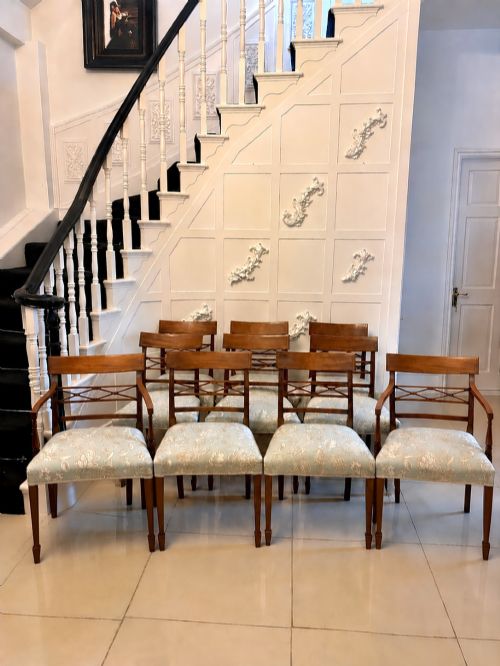
A vintage upholstered carver provides sturdy arm support at the head of a dining table, drawn from periods spanning the eighteenth century to the nineteen-thirties.
Vintage Upholstered Carver
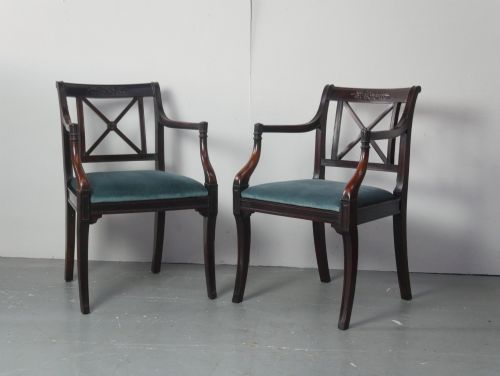
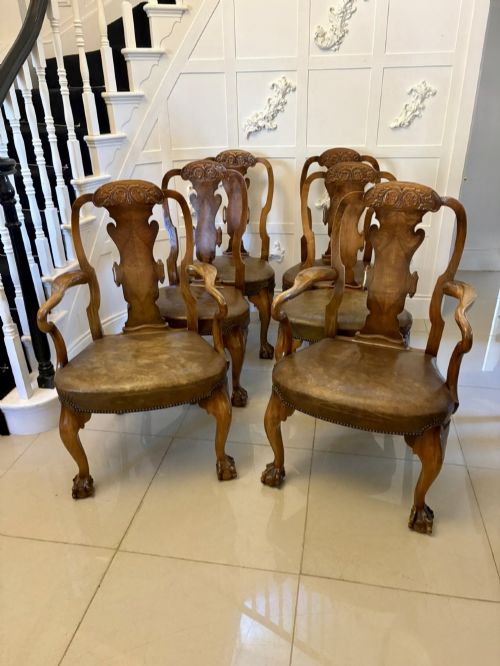
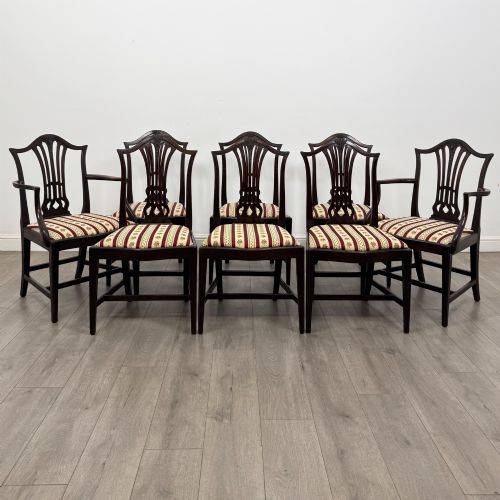
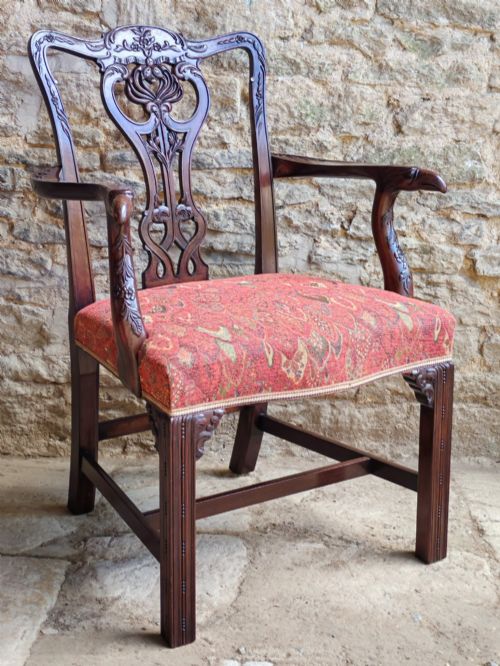
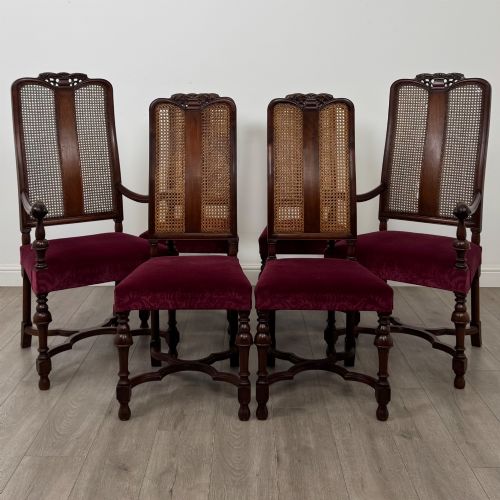
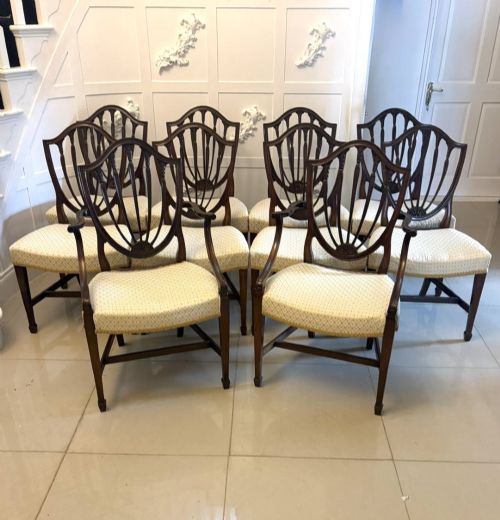
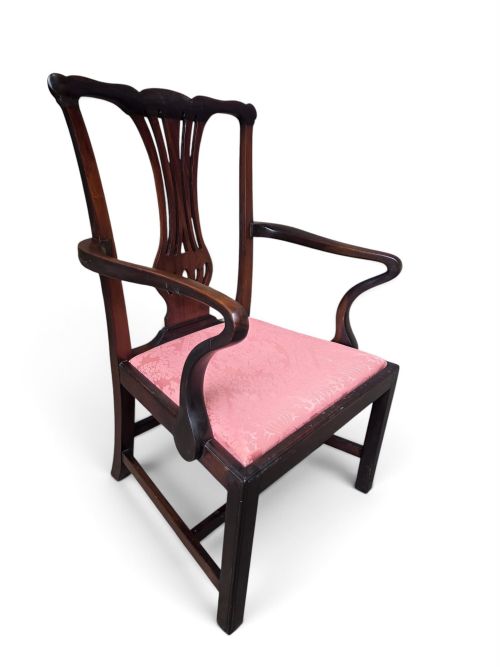
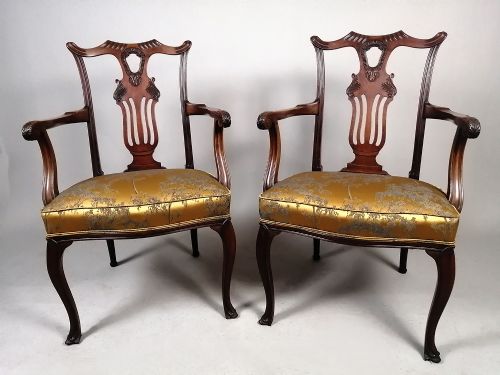
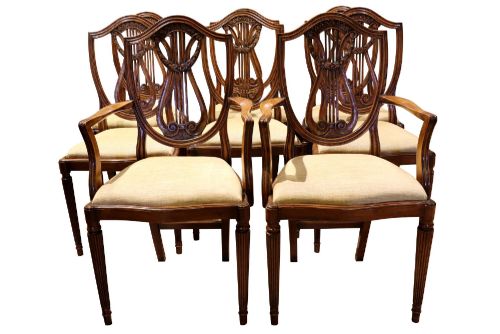
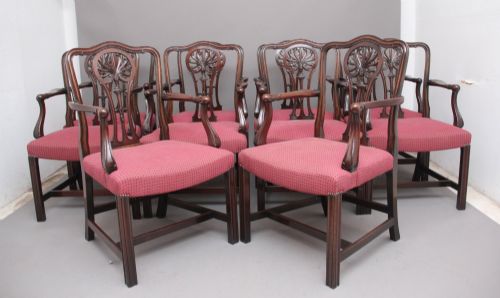
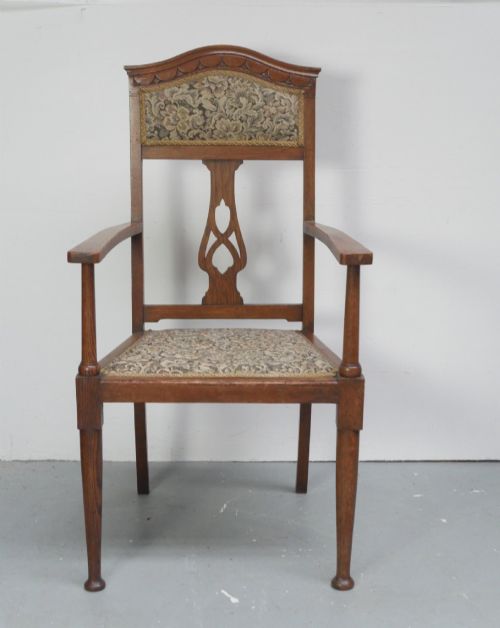
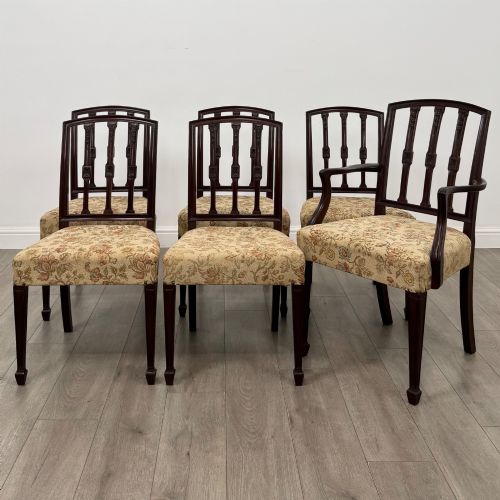
A vintage upholstered carver sits at the dining table head or functions as an occasional seat, providing enclosed arms alongside a padded seat pad and backrest. These chairs appear across multiple historical periods, including Victorian, Edwardian, and Regency eras, as well as revival styles like Chippendale, Hepplewhite, and George III.
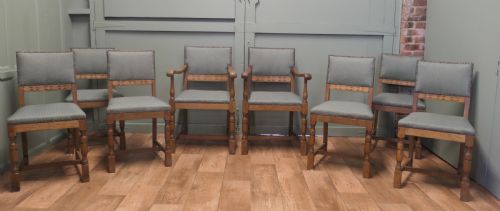
Most pieces on this page are constructed from mahogany or walnut, alongside oak, elm, and maple, paired with various upholstery fabrics, leather, velvet, and brass details. Forms range from single armchairs and pairs to complete dining sets with matching carvers.
Design vocabulary stretches from shield backs and lyre backs to plain frames and carved walnut structures. Pieces originate from English workshops as well as French, Swedish, and Irish makers.
Woods and joinery in construction
Makers shaped these frames primarily from dense hardwoods like mahogany and walnut, alongside golden oak, maple, and solid elm. These timbers provided the structural integrity needed to support curved armrests and open back designs.
Upholstered elements relied on traditional stuffing materials secured over webbed bases, enclosed by fabrics such as velvet, leather, and standard upholstery cloth. Metal components like brass often appeared as castors or structural accents on the legs.
Some armchairs spent decades quietly observing dinner table conversations in Swedish country houses before arriving here.
Markers of distinction in design and build
Quality rests in the crispness of the timber carving and the architectural balance of the arms and backrest. Superior examples display deeply moulded rails, well-defined splats, and harmonious proportions between the elbow supports and the seat.
The integrity of the frame construction and the fidelity of revival styles separate standard workshop pieces from finer outputs. Timbers selected for rich grain patterns and stable joinery elevate the overall presence of the chair.
Howard and Sons·Alfred Allen of Birmingham·Maple and Co·Wheelers of Arncroach
The Vintage Upholstered Carver Glossary
- Carver
- An armchair designed with upholstered or open elbows, traditionally placed at the ends of a dining table. The term distinguishes arm-equipped chairs from standard side chairs in a set.
- Lyre Back
- A chair back design incorporating a central wooden splat shaped like an ancient Greek lyre instrument. This motif frequently appears in Regency and nineteenth-century seating.
- Elbow Chair
- An alternative name for an armchair, referencing the supportive rests positioned for the user's arms. These pieces match larger dining chair sets.
- Splats
- The vertical central strip of wood within a chair back connecting the seat to the top rail. Carvers display plain, pierced, or intricately carved splats depending on the stylistic period.
Vintage Upholstered Carver: Frequently Asked Questions
What is a carver chair?
A carver chair is an armchair built with integrated armrests designed to match a set of dining chairs. They sat traditionally at the head and foot of the dining table for the host.
Today, these chairs function equally well as standalone occasional seats in a living room, hallway, or bedroom.
Can I mix carvers with other chairs?
Mixing carvers with different dining chairs works well when the timber species and general era share a common visual language. Mahogany and walnut frames blend easily across similar traditional styles.
Pairing an antique carver with a contemporary table creates a deliberate contrast within a modern dining space.
How do I care for upholstered carvers?
Maintenance involves gentle dusting of the wooden frame and regular vacuuming of the fabric or leather upholstery using a soft brush attachment. Keeping the timber away from direct heat sources prevents the wood from drying out.
Leather surfaces benefit from occasional conditioning to maintain suppleness across the arms and backrest.