
French Style Fauteuil
These French style fauteuil armchairs bring continental elegance and open-armed seating to a room, offering historic character alongside practical comfort.
Identifying French style fauteuils
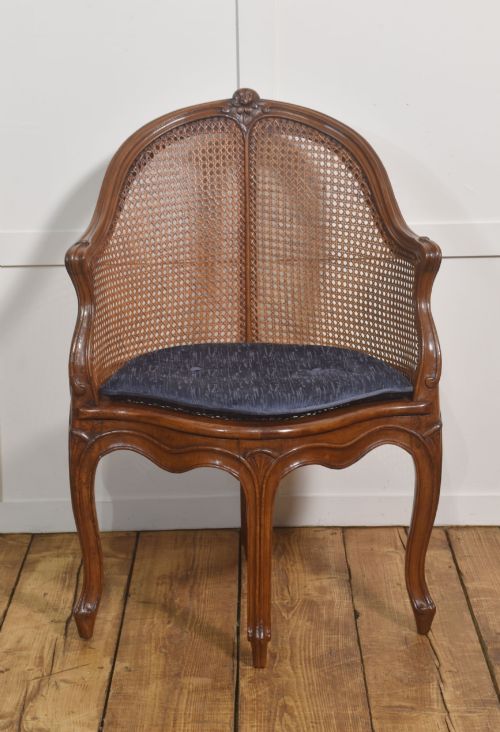
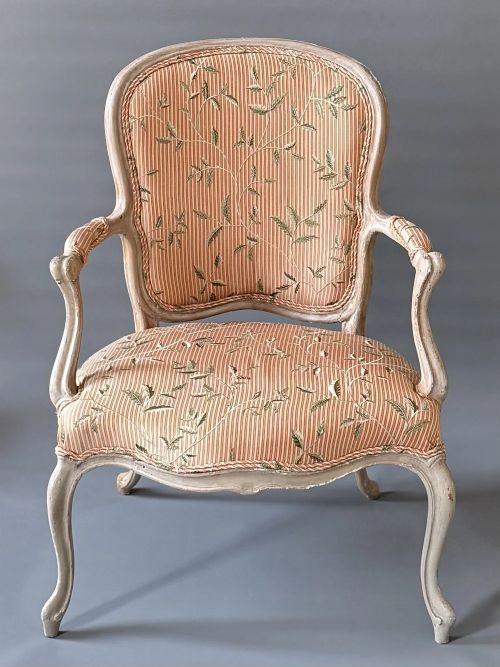
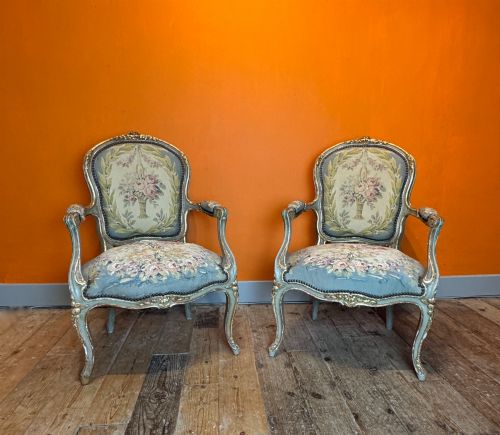
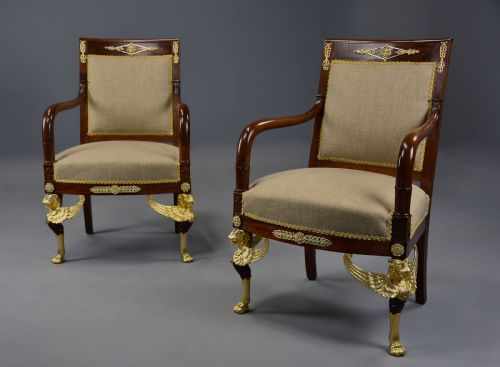
A french style fauteuil is an open-armed occasional chair rooted in continental seating traditions, frequently appearing in revival iterations across the nineteenth century. These open armchairs serve as decorative yet functional seating in salons, libraries and drawing rooms.
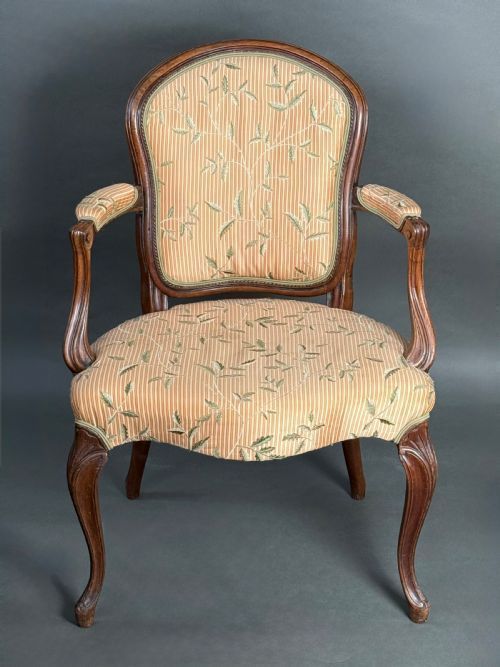
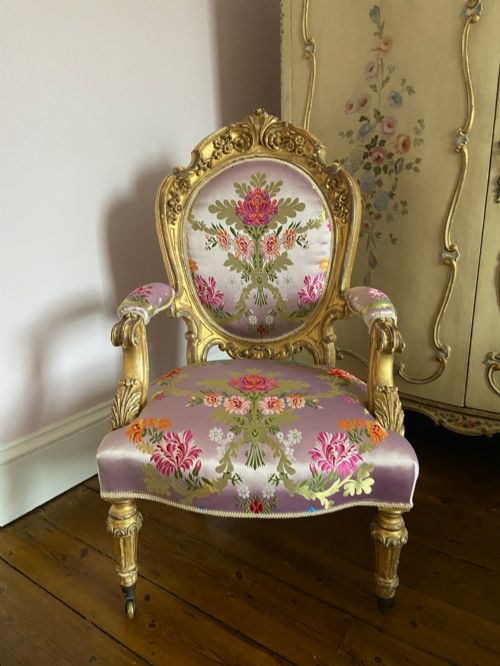
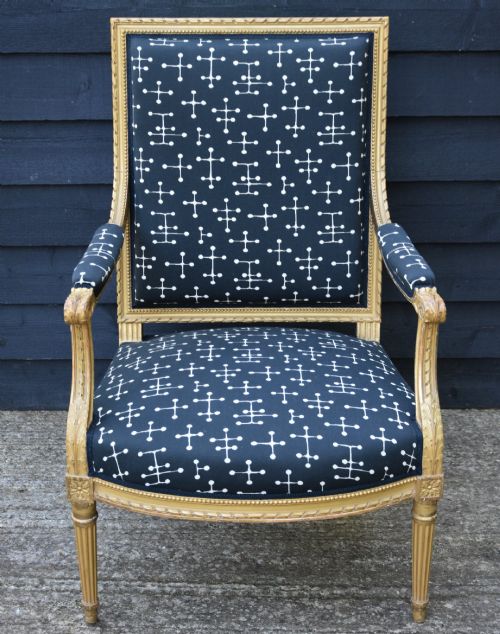
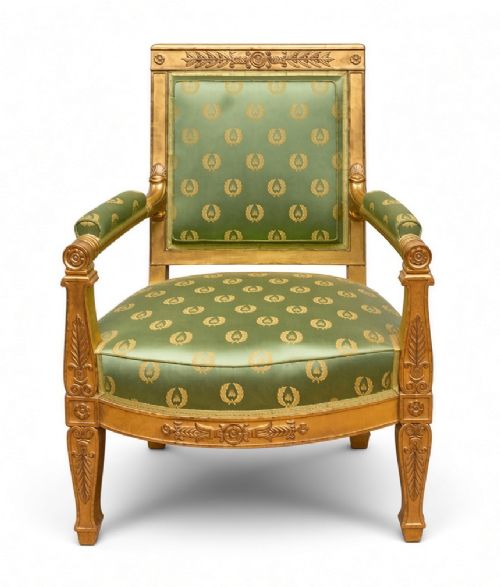
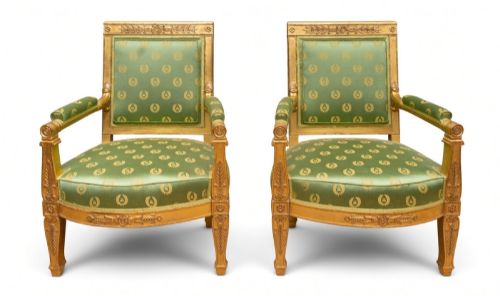
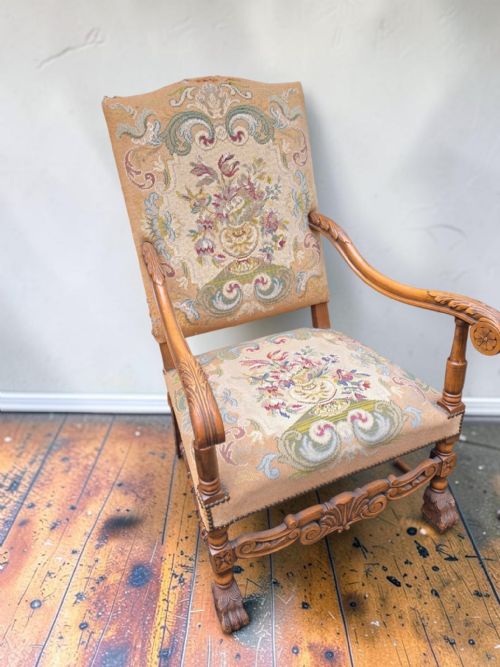
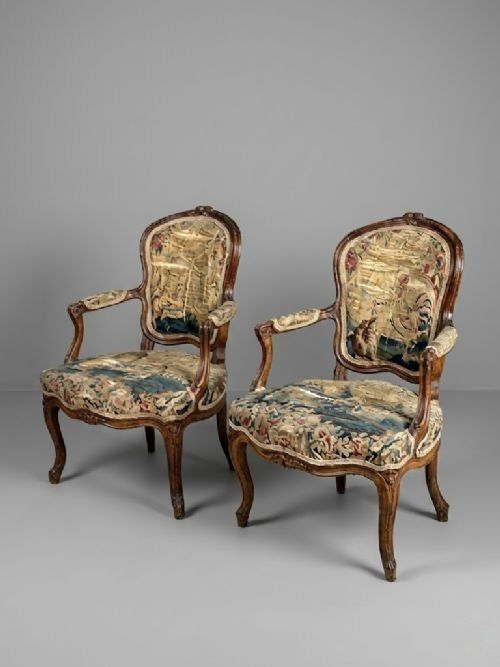
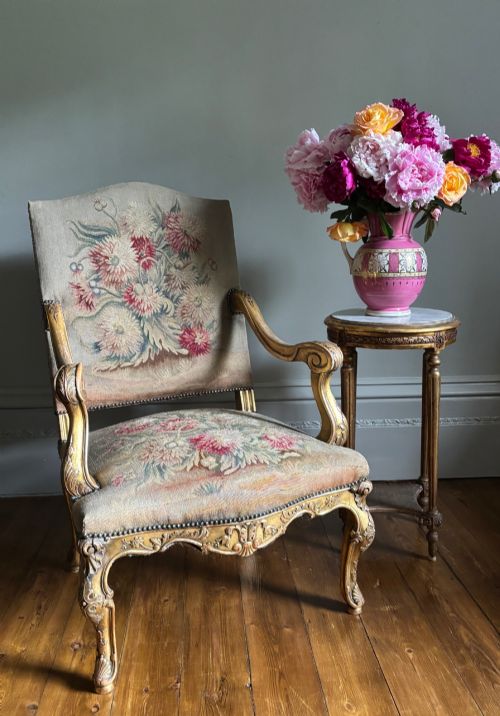
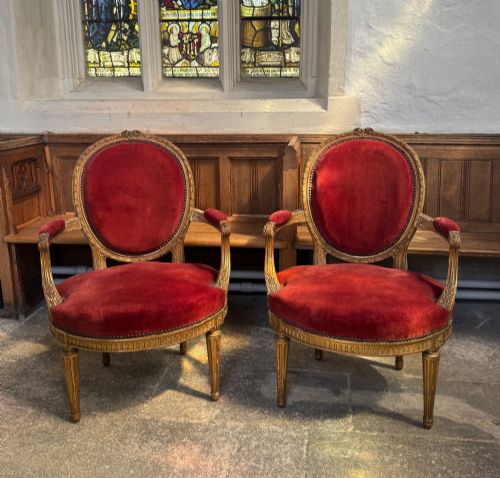
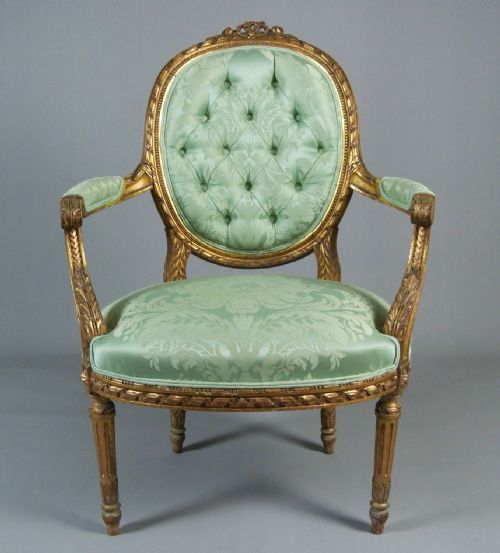
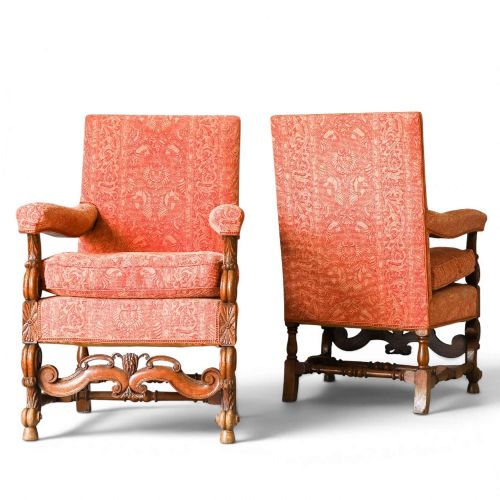
The selections span distinct historical revivals, featuring Louis XV style frames with characteristic flowing curves alongside Louis XVI style examples defined by straighter structural lines. Makers and workshops also adapted these continental forms into Victorian Rococo Revival and English Country House contexts.
Distinctions in quality
Quality rests upon the depth and crispness of the carved wood detail across the frame, distinguishing finely sculpted ornamentation from simpler production. The integrity of original paint or gilt surfaces further elevates an individual piece.
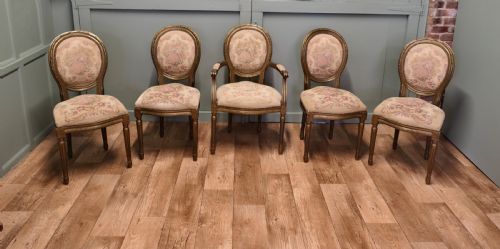
The choice and execution of period upholstery, whether needlework, tapestry or velvet, contributes significantly to the overall distinction of the armchair. Harmony between the carved wooden structure and its textile covering defines the upper tier of examples.
Retail Price Guide 2026
Typical UK retail prices for french style fauteuil, calculated from the Sellingantiques database of over a million retail prices indexed since 2003. This retail price guide relies exclusively on Sellingantiques data; no external sources or auction records are used, so the figures do not describe the wider market.
Some chairs retain their original painted surfaces beneath layers of dust, whispering tales of dusty French châteaux.
The French Style Fauteuil Glossary
- Fauteuil
- An open-armed upholstered armchair originating in France, traditionally featuring exposed wooden framework. These seats are designed for parlours and salons.
- Giltwood
- Timber treated with a thin layer of gold leaf or gilt. This finish provides a luminous decorative surface to nineteenth-century frames.
- Tapestry
- A heavy hand-woven or needleworked fabric depicting pictorial scenes or patterns. It frequently covers the seats and backs of period armchairs.
- Louis XV style
- A design aesthetic characterised by asymmetric curves, cabriole legs and organic rococo motifs. It remains a dominant influence in nineteenth-century seating.
- Louis XVI style
- A neoclassical aesthetic marked by straight tapered legs, rectilinear frames and classical symmetry. This style offers a more restrained contrast to earlier curves.
Frequently Asked Questions
What is a French style fauteuil?
A french style fauteuil is an open-armed upholstered armchair designed for formal reception rooms. These seats combine decorative woodwork with comfortable upholstered components.
Originating in continental court circles, the form was later interpreted by nineteenth-century makers working in various revival styles.
How do I tell Louis XV and Louis XVI styles apart?
Louis XV style chairs feature flowing organic curves, cabriole legs and cartouche-shaped backs. These elements create a dynamic and decorative silhouette.
In contrast, Louis XVI style chairs present straight tapered legs, geometric framing and neoclassical proportions for a more structured appearance.
Where should I place a fauteuil?
These armchairs suit drawing rooms, bedrooms and libraries where occasional seating is required. Their open arms allow them to sit comfortably in conversation groups without blocking light.
They function well as standalone statement pieces or paired symmetrically beside a fireplace or console table.
What materials were used for the frames?
Frames are constructed from hardwoods such as walnut, mahogany, beech and carved wood. Many examples feature gilded surfaces or preserved original paint finishes.
Upholstery materials typically include velvet, tapestry, needlework, wool and patterned fabrics secured directly to the wooden structure.