



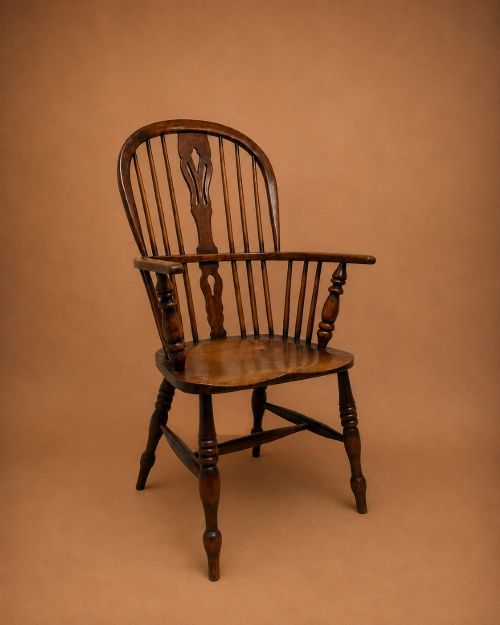
Pierced Back Armchair
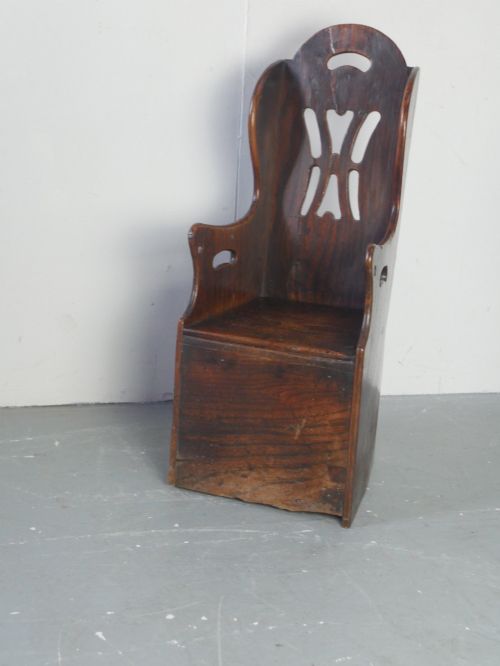
A pierced back armchair offers robust timber construction and traditional regional craftsmanship, making it a functional centrepiece for any country interior.
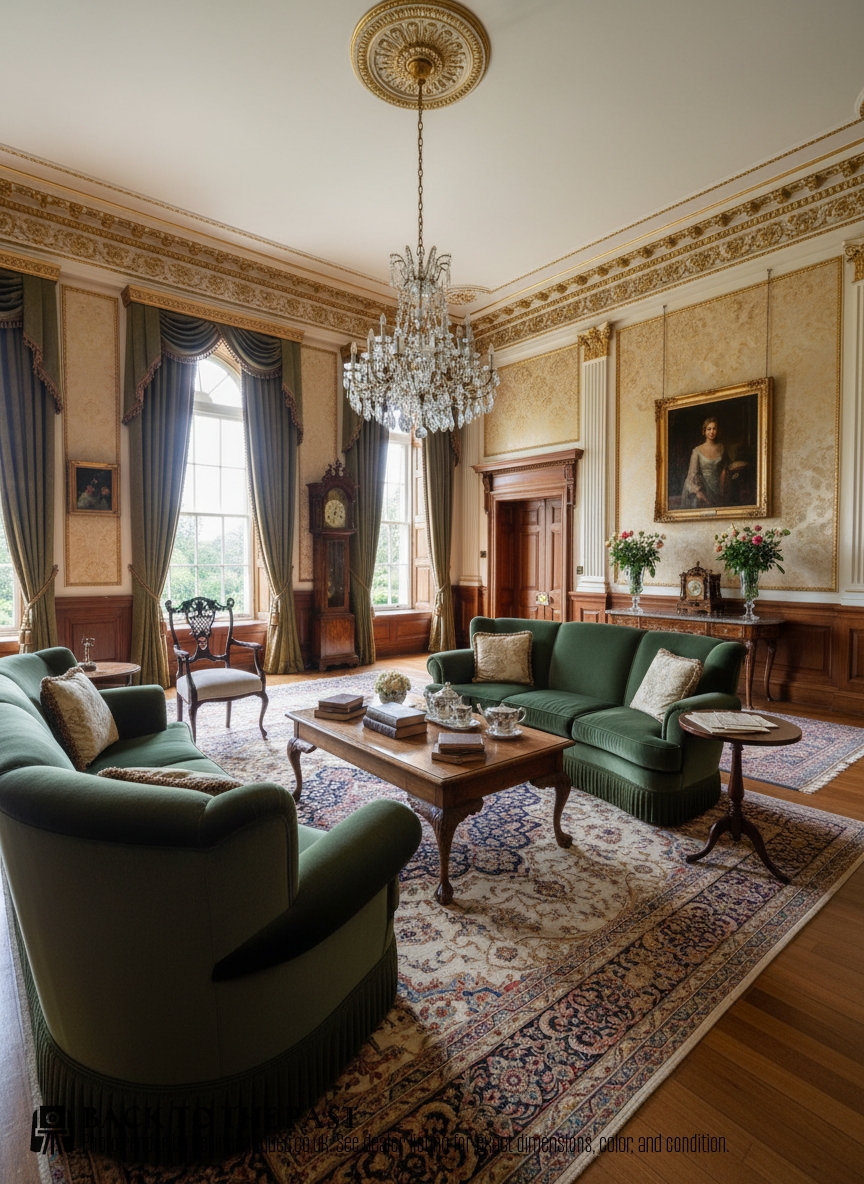
Pierced Back Armchair
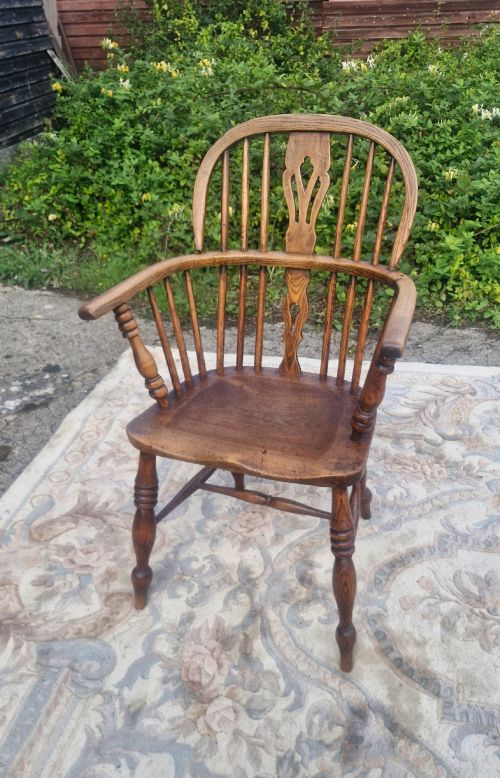
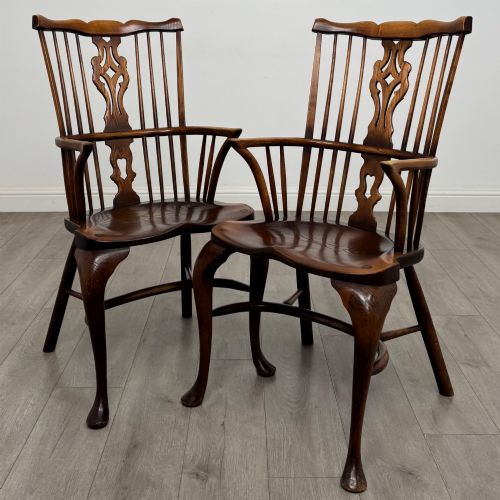
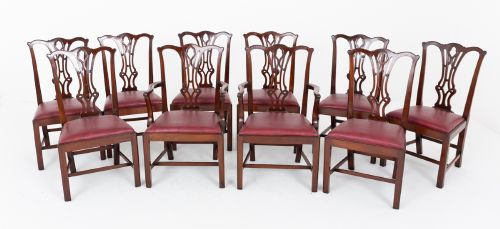
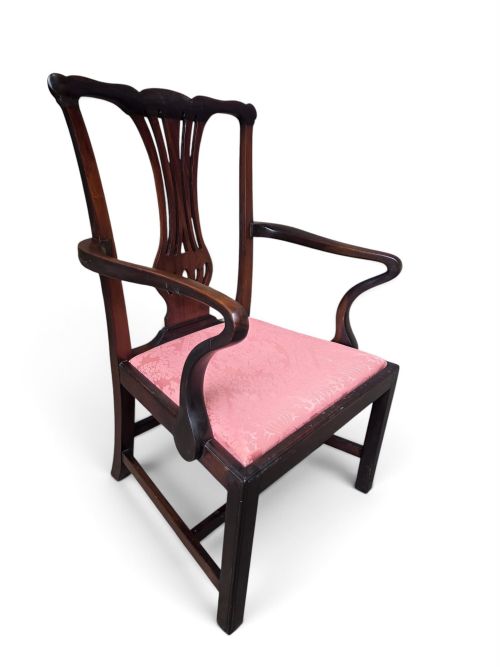
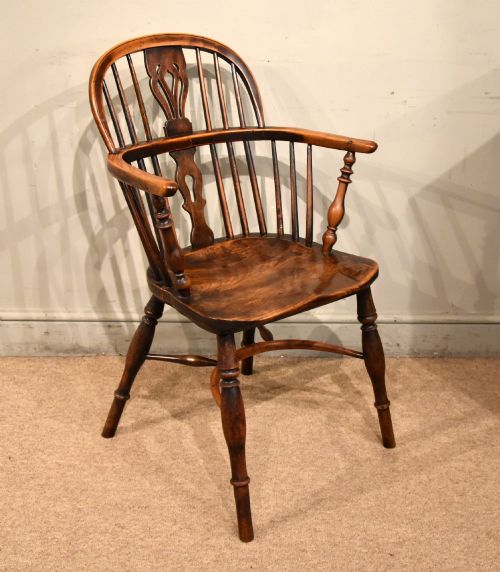
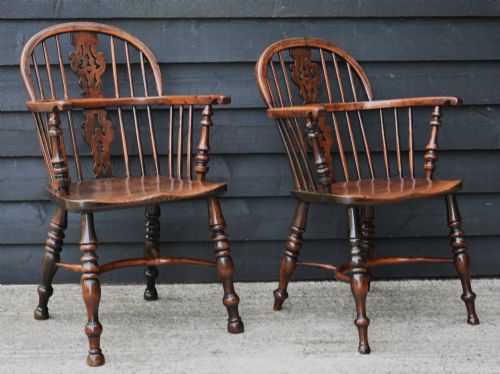
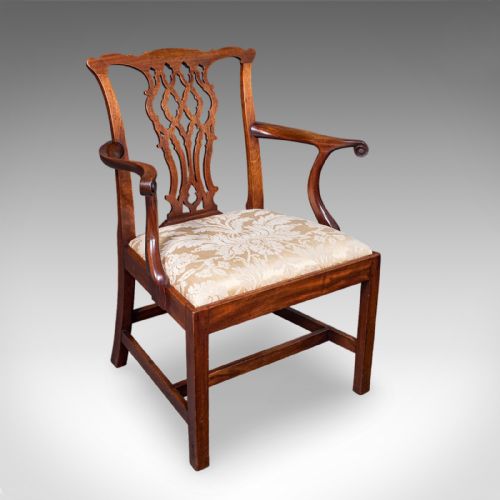
A pierced back armchair groups together sturdy wooden seating from the eighteenth and nineteenth centuries, including vernacular country chairs and formal dining seats. When you search for a pierced back armchair, you encounter regional Windsor chairs alongside formal mahogany designs inspired by Chippendale.
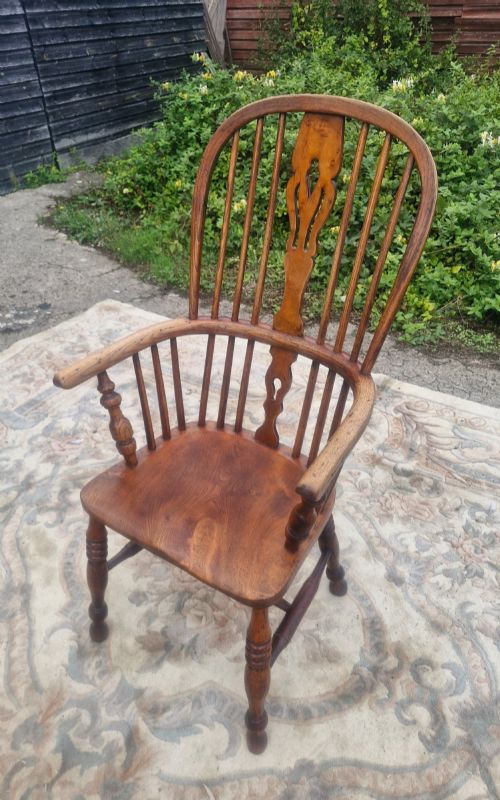
The selection ranges from Georgian comb-back and hoop-back armchairs to Victorian low-back and high-back examples, plus occasional child-sized seats and hall chairs. Elm, yew, and ash predominate in country pieces, while mahogany shapes the formal styles.
Materials and construction
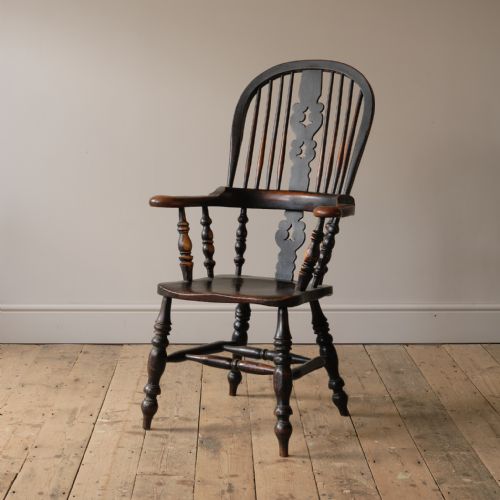
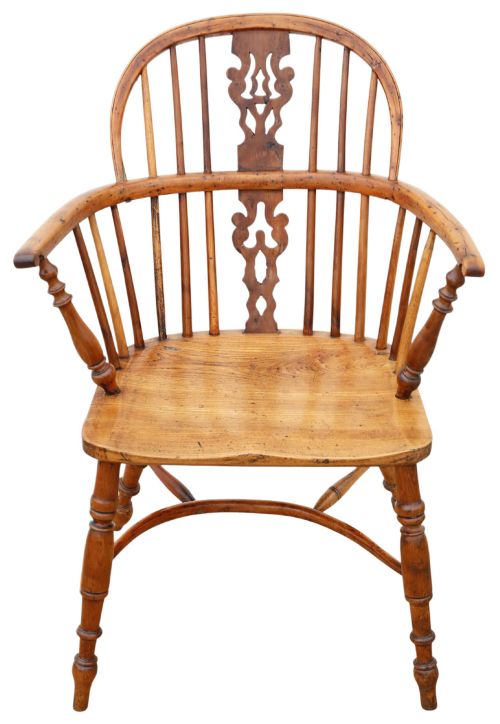
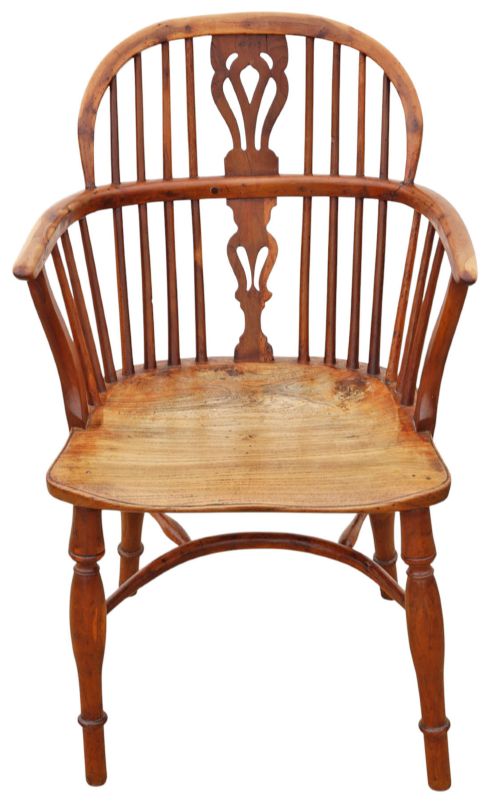
Country chairs utilise a combination of native timbers, frequently pairing elm seats with yew or ash for spindles, arms, and bentwood hoops. Turners shaped the legs and stretchers on lathes, while steam-bending secured the distinctive arched backs.
Formal dining and open armchairs rely on solid mahogany, shaped with pierced splats in the backrest and joined with mortise and tenon construction.
Several armchairs are recorded with the endearing old name crinoline chair, named for the wide hooped skirts they were built to accommodate.
Judging quality
The distinction between ordinary and superior examples lies in timber selection and timber figuring, particularly the rich grain visible in yew wood seats and backs. Crisply carved splats and well-proportioned arm supports separate better workshop output from standard production.
Original surface patination, minimal timber replacement, and balanced proportions across the legs and crest rail define a more desirable specimen.
Gabbitass Worksop
The Pierced Back Armchair Glossary
- Windsor chair
- A wooden chair built with a thick solid seat into which the legs and back spindles are separately bored and wedged. This vernacular form developed regional variations across rural England.
- Comb back
- A Windsor chair design where the vertical spindles extend upward to support a horizontal top rail resembling a traditional hair comb. It represents an early development in country seating.
- Hoop back
- A continuous steam-bent piece of ash or yew that forms the arm rail and the arched back in a single curved line. Additional vertical spindles fill the space below the hoop.
- Elbow chair
- An alternative term for an armchair, often used to describe seats with open wooden arms designed for use at a desk or dining table.
- Chippendale style
- A refined eighteenth-century cabinet-making aesthetic characterised by intricate pierced splats, carved cabriole legs, and precise joinery executed in mahogany.
Pierced Back Armchair: Frequently Asked Questions
What is a pierced back armchair?
A pierced back armchair is a wooden seat featuring an openwork splat or a ventilated backrest design, commonly found in Georgian mahogany dining chairs and country vernacular seating.
These chairs serve as functional seating around a dining table or as standalone decorative pieces in a hallway or parlour.
How do I care for antique wooden armchairs?
Maintain these chairs by keeping them away from direct heat sources and sudden temperature shifts that can dry out historic timber.
Apply a microcrystalline wax occasionally to nourish the surface polish without building up a heavy, sticky residue.
How can I tell a country Windsor from a formal chair?
Country Windsor chairs feature a solid wooden saddle seat with turned underframes and steam-bent components, often utilising mixed timbers like elm and yew. Formal chairs rely on uniform hardwoods such as mahogany with mortise and tenon joinery.
Country pieces reflect regional vernacular traditions, whereas formal armchairs follow urban cabinet-making patterns.
Were these chairs used at dining tables?
Armchairs were traditionally placed at the heads of dining tables or utilised as individual accent seats in reception rooms.
Their robust construction allowed them to withstand daily domestic use in country houses and farmhouses alike.