




Floral Inlay Armchair
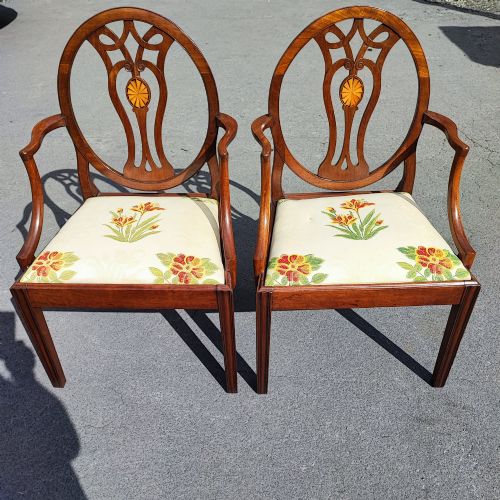
A floral inlay armchair brings historic woodcraft and botanical decoration into daily seating, ranging from Edwardian mahogany frames to Dutch baroque marquetry.
Floral Inlay Armchair
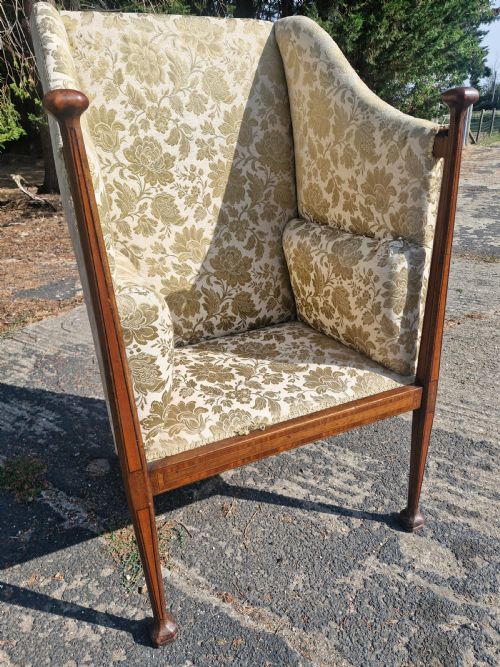
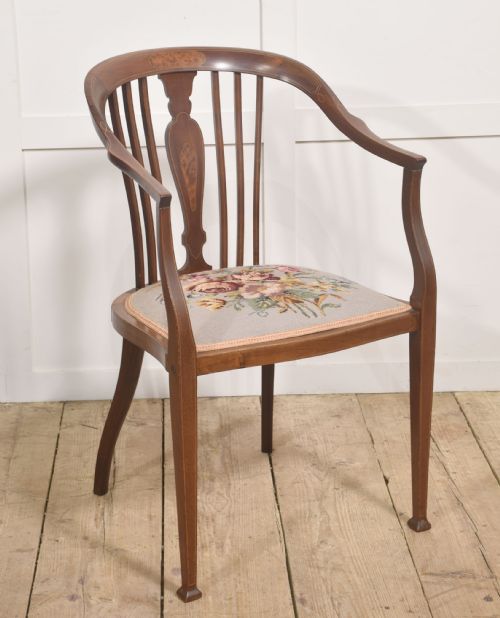
A floral inlay armchair spans several centuries of seating design, appearing most frequently in Edwardian mahogany and satinwood forms alongside earlier 19th-century styles. Buyers searching for a floral inlay armchair encounter various seating types, including occasional chairs, elbow carvers, and occasional pairs.
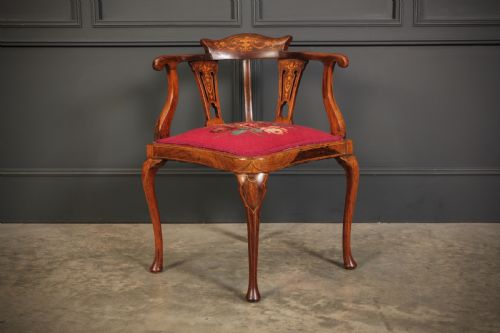
The historical spread runs from 18th-century Dutch marquetry walnut pieces up to 1900s salon armchairs and Art Nouveau creations. These chairs serve functional seating roles while displaying intricate botanical and floral motifs across the timber frames.
How they were made
Cabinetmakers constructed these frames primarily from mahogany, walnut, and rosewood, incorporating satinwood and fruitwood inlay to build up floral patterns. Wood inlay techniques combine contrasting timber veneers fitted precisely into the primary surface.
Upholstery forms an integral part of the construction, utilising damask and general fabric coverings that often require replacement or period-appropriate restoration. Brass details occasionally appear on structural or decorative elements of the chair.
Listings feature pieces spanning the 18th century through the Edwardian period, utilising mahogany, satinwood, walnut, and fruitwood inlay.
What varies in quality
The precision of the wood inlay separates standard production from finer examples, particularly where fruitwood and satinwood create detailed floral motifs. Crispness in the marquetry cutting and the integration of veneers into the mahogany or walnut ground dictate the visual merit.
Structural integrity and the retention of original timber tones across the arms and high backs influence the standing of each piece. Chairs retaining their period proportion and balanced form sit at the upper end of the range.
The Floral Inlay Armchair Glossary
- Marquetry
- Decorative veneer work forming pictures and patterns, such as floral designs, applied to furniture surfaces. This technique requires precise hand-cutting of diverse wood types.
- Sheraton
- A late 18th-century neoclassical furniture style characterised by slender proportions and refined inlay. Pieces in this tradition often feature tapered legs and balanced geometric arrangements.
- Occasional chair
- A light, movable chair designed for occasional use in a drawing room or salon rather than primary seating. These examples frequently showcase decorative wood inlay.
- Damask
- A reversible figured fabric traditionally used for upholstery on historic seating. This material adds textural contrast to polished wood frames.
Floral Inlay Armchair: Frequently Asked Questions
How do I date a floral inlay armchair?
Dating relies on timber selection, structural framing techniques, and stylistic markers such as Edwardian proportions or 18th-century marquetry patterns. Comparing the secondary woods and the style of the floral motifs helps establish the period of manufacture.
Changes in upholstery methods and hardware also offer clues to the age of the chair. Examining the underside and joinery reveals hand-crafting methods consistent with specific centuries.
Are these chairs suitable for daily use?
Most antique armchairs function well for everyday seating provided the frame joints remain solid and secure. Lighter occasional chairs suit low-traffic spots rather than heavy family lounging.
Upholstery condition dictates how soon you might need professional restoration. Checking the stability of the arms and legs ensures safe daily placement.
What is the difference between marquetry and inlay?
Inlay generally involves inserting pieces of wood into a recessed solid wood cavity. Marquetry covers the entire surface with assembled veneer pieces to form a pictorial design.
Floral patterns on these chairs typically employ marquetry techniques to achieve detailed botanical shading. Both methods enhance the visual appeal of the mahogany or walnut base.
How should I care for antique wood inlay?
Protect the timber and delicate veneers by keeping the chair away from direct sunlight and sudden temperature shifts. Regular dusting with a dry cloth maintains the polished surface without moisture damage.
Applying occasional appropriate wax preserves the sheen of the mahogany or satinwood. Avoid harsh chemical cleaners that can lift historic veneers.