


Antique Corner Elbow Chair
An antique corner elbow chair provides a clever seating solution for awkward spaces, combining traditional craftsmanship with distinct historical character.
Antique Corner Elbow Chair
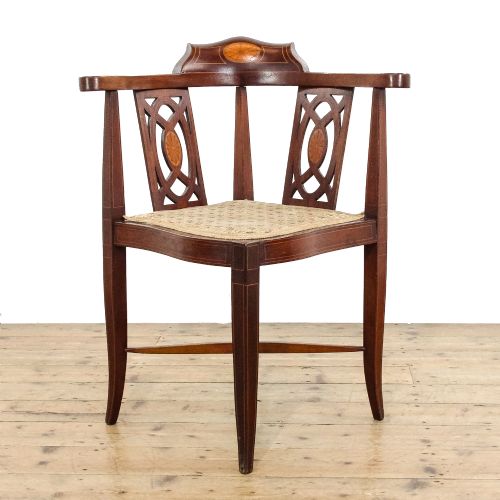
An antique corner elbow chair is designed to fit neatly into room angles, utilising space that standard seating often leaves empty. These pieces typically feature a curved backrest supported by turned pillars, offering a comfortable seat with distinctive angular placement.
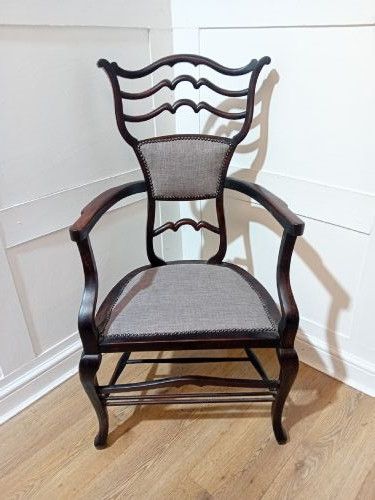
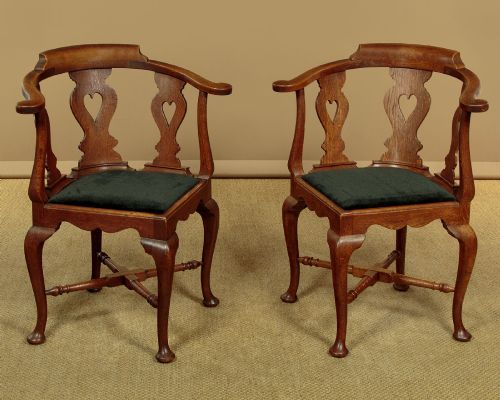
The selections available range widely across periods, encompassing Georgian proportions, Victorian revivals, and Edwardian lighter forms. Oak and mahogany serve as the primary woods, often accompanied by rush seats or upholstered pads.
Makers adapted these forms across different eras, leading to styles that span from simple English country seating to intricate Art Nouveau inlaid models. Buyers frequently encounter versions from the nineteenth and early twentieth centuries alongside earlier Georgian examples.
How They Were Made
Cabinetmakers constructed these frames using solid hardwoods like mahogany and oak, employing traditional joinery to ensure stability under lateral pressure. Turned spindles and curved elbow rests required specialist lathe work and steam bending to achieve the characteristic rounded top rail.
Surface decoration frequently involved wood inlay, boxwood stringing, and marquetry, particularly on later Edwardian and Victorian pieces. Seat construction varied between woven rush, drop-in fabric upholstery secured with studs, and solid wooden panels.
Listings include mahogany, oak, beech, and rosewood, paired with rush seats, upholstery studs, and intricate wood inlay.
What Varies in Quality
The calibre of timber selection and depth of carving set superior examples apart from standard workshop production. Dense mahogany and well-figured oak display a rich grain that elevates the visual weight of the furniture.
Structural integrity depends on the tightness of the original joints and the restraint shown in any subsequent repairs. Finer specimens retain crisp moulding details and precise inlay work without excessive replacement of components.
The Antique Corner Elbow Chair Glossary
- Corner chair
- A seating form designed specifically to fit into the corner of a room, featuring a diagonal orientation. It usually has a semicircular backrest supported by turned columns.
- Elbow chair
- An armchair with supports for the arms, often integrated into the back rail structure. These provide a more enclosed seating position than standard side chairs.
- Turner's chair
- A heavy wooden chair constructed entirely from turned posts and spindles, sometimes called a Saxon chair. These rely on geometric woodwork rather than flat panels.
- Marquetry
- The art of applying pieces of veneer to a structure to form decorative patterns. Craftsmen use various coloured woods to create pictorial designs on the back rails.
- Rush seat
- A seating surface woven from dried marsh grasses. This traditional method provides a resilient and slightly yielding texture.
Antique Corner Elbow Chair: Frequently Asked Questions
Where do you put a corner elbow chair?
These chairs find natural placement in unused room angles, hallways, or beside desks where floor space is limited. Their diagonal design allows them to tuck tightly into corners without obstructing pathways.
They also function well as accent seating in bedrooms or drawing rooms, offering a distinct silhouette that draws the eye toward architectural details.
How do I date an antique corner chair?
Dating relies on examining the timber species, construction methods, and decorative styles present in the frame. Georgian pieces generally display heavier proportions and simpler lines, while Victorian examples often incorporate revival motifs and deeper carving.
Edwardian versions tend to feature lighter frames with satinwood inlay or boxwood stringing. Tool marks and fastener types also provide clues to the period of manufacture.
Were corner chairs used for writing?
Many examples from the Georgian period were specifically designed as desk chairs, allowing the user to sit comfortably while accessing writing drawers. The wraparound elbow rest provided stable support during correspondence.
Later Victorian and Edwardian variations served more frequently as occasional seating or decorative accent pieces within domestic interiors.
What is a turner's chair?
A turner's chair is a heavy structural form built primarily from turned wooden spindles and triangular seats. These pieces reference early medieval designs and are typically constructed from oak or beech.
Their sturdy frame relies entirely on interlocking turned components rather than upholstered surfaces or flat wooden panels.