





Carved Shell Back Chair
A carved shell back chair brings classical motifs to seating, offering sculpted timber work that turns a simple hall or dining seat into a statement piece.
Carved Shell Back Chair
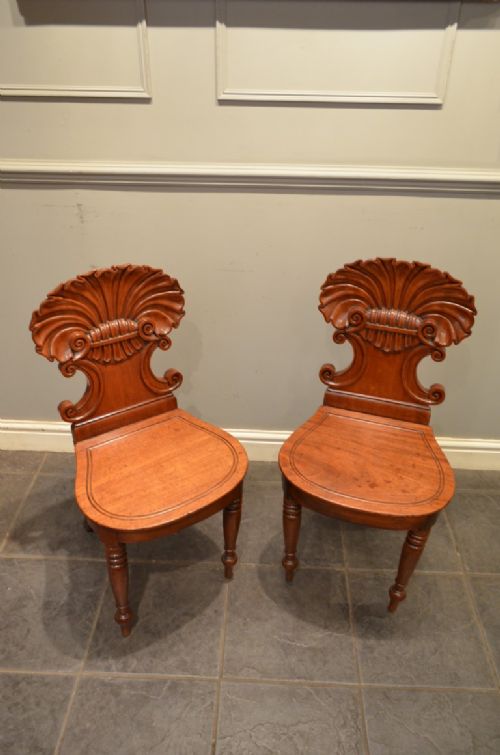
A carved shell back chair is most frequently encountered on this page as a Victorian or Regency hall chair shaped from solid mahogany or walnut. These pieces balance robust construction with ornamental backrests modelled on natural scallop shells.
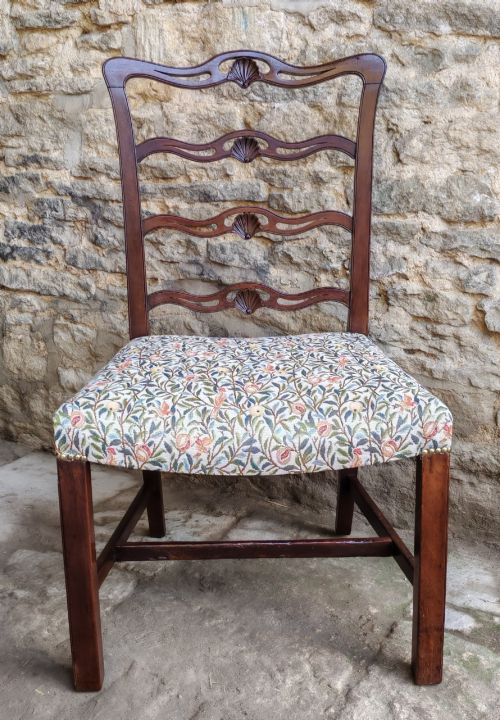
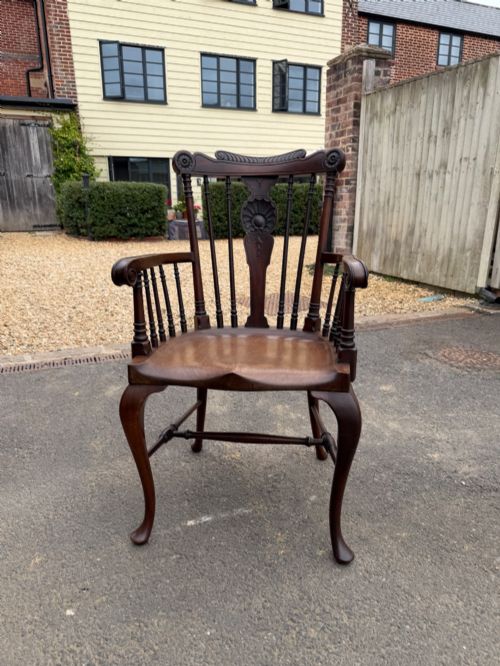
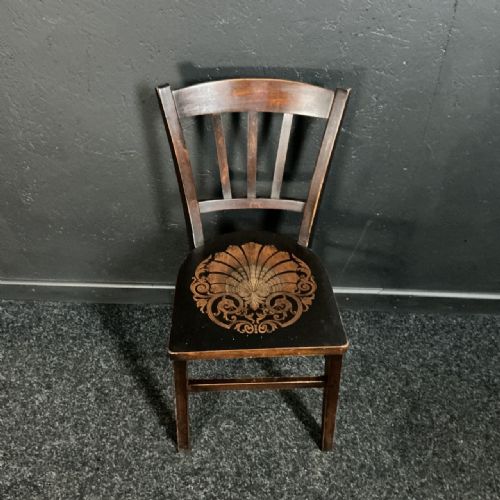
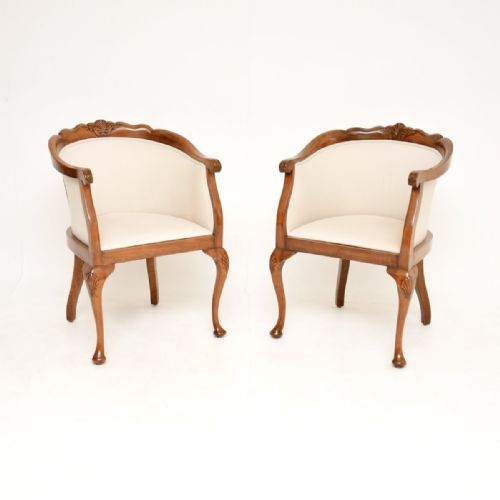
The selection ranges from pairs of hall chairs to sets of dining chairs, alongside occasional music stools and armchairs. They appear across Georgian, Regency, Victorian, and Edwardian periods, displaying distinct stylistic revivals including Queen Anne and Chippendale influences.
How they were made
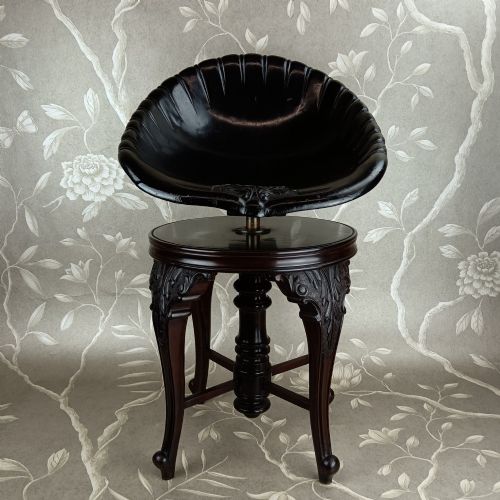
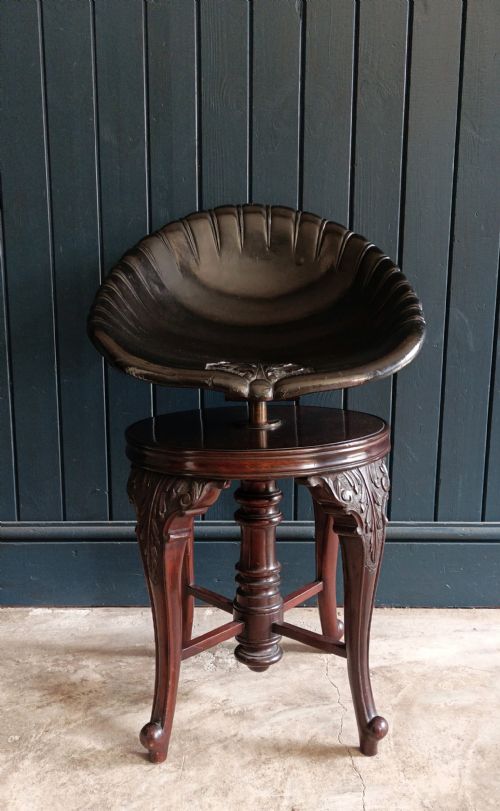
Cabinet makers utilised dense hardwoods such as mahogany and walnut, which held crisp hand-carved fluting and shell motifs without splitting. Beech and oak appeared in structural frames, while papier-mâché provided a smooth moulded foundation for specialised music stools.
Joinery relied on traditional mortise and tenon construction to withstand daily use. Surfaces were finished with wax or polish to reveal the natural grain of the timber, occasionally paired with brass fittings or textile upholstery.
Revolving harpist music stools let Victorian musicians spin effortlessly while keeping their shell-carved backs firmly in place.
What varies in quality
Quality rests in the depth and crispness of the carved shell motif on the backrest, where sharper relief denotes a more skilled hand at the bench. Subtleties in timber selection, such as figured mahogany grain and substantial stock thickness, separate standard examples from finer commissions.
The integrity of the frame construction and the proportion of the turning or legs dictate overall durability. Maker attribution, through stamps or documented provenance, also distinguishes standard production pieces from workshop outputs.
Jennens and Bettridge·Gillows
The Carved Shell Back Chair Glossary
- Hall chair
- A rigid wooden seat intended for an entrance hall, typically featuring a solid carved timber seat and an elaborate backrest. These pieces prioritize visual impact over prolonged lounging.
- Regency
- A British design period spanning the early nineteenth century, characterised by classical revival motifs and clean architectural lines. Pieces from this era often incorporate bold mahogany timbers and restrained brass details.
- Papier-mâché
- A composite material made from paper pulp or layers of paper bound with glue, pressed into moulds and hardened. It received heavy lacquer and inlay to create durable surfaces for decorative furniture.
- Tub armchair
- A fully upholstered seating form with a continuous curved back and arms that wrap around the sitter. This style provides a deeper, more enclosed seat than standard open armchairs.
- Chippendale style
- A mid-eighteenth-century aesthetic revival featuring intricate carved details, ribbon backs, and cabriole legs. These designs draw upon pattern books published by Thomas Chippendale.
Carved Shell Back Chair: Frequently Asked Questions
Where were hall chairs used?
These seats sat in grand entrance halls and vestibules, serving as temporary seating for visitors waiting to be announced.
Because they were meant for brief use, designers focused heavily on the visual impact of the carved back rather than cushioning.
How do I care for mahogany?
Keep wooden surfaces away from direct sunlight and steady heat sources to prevent the timber from drying out and cracking.
Apply a natural beeswax polish occasionally and buff gently with a soft cloth to maintain the finish.
Can I use these for dining?
Dining sets from the Victorian and Regency periods provide sturdy seating for daily meals around a traditional table.
Ensure seat heights and leg clearances match your table dimensions before arranging them into a set.
How do I date a chair?
Examine the timber species, tool marks left on hidden underside surfaces, and the specific stylistic revival elements present.
Comparing the turning style and joinery methods against documented periods helps narrow down the decade of production.