


Carved Timber Side Chairs
These carved timber side chairs bring solid mahogany, oak and walnut seating into a room with distinct period character.
Carved Timber Side Chairs
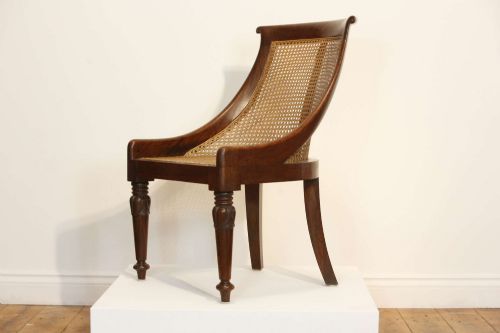
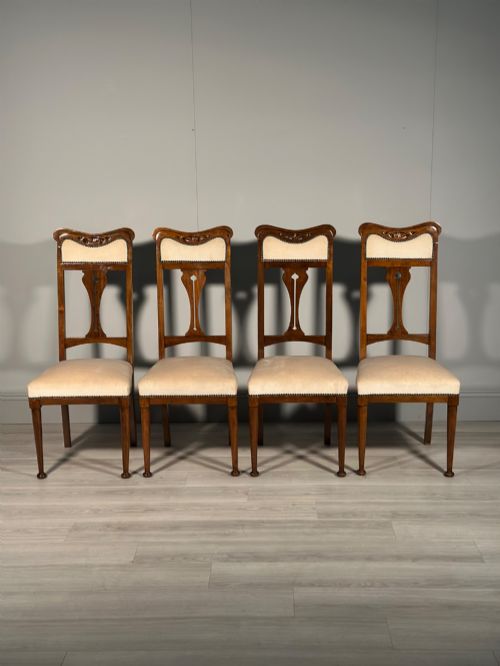
Carved timber side chairs encompass an array of seating forms built for halls, dining rooms and parlours across the nineteenth century. Buyers searching for carved timber side chairs encounter numerous hall chairs alongside dining chairs, salon chairs and bedroom seats shaped by Regency, Victorian and William IV tastes.
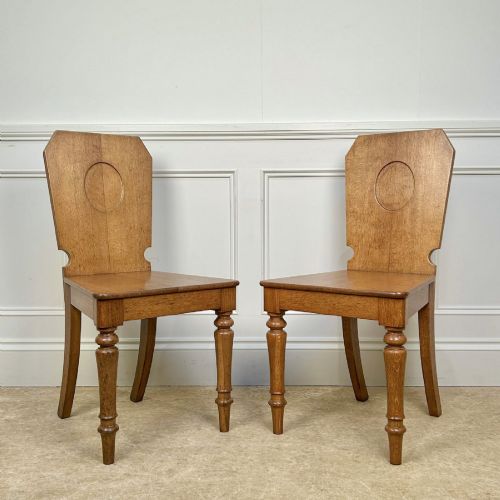
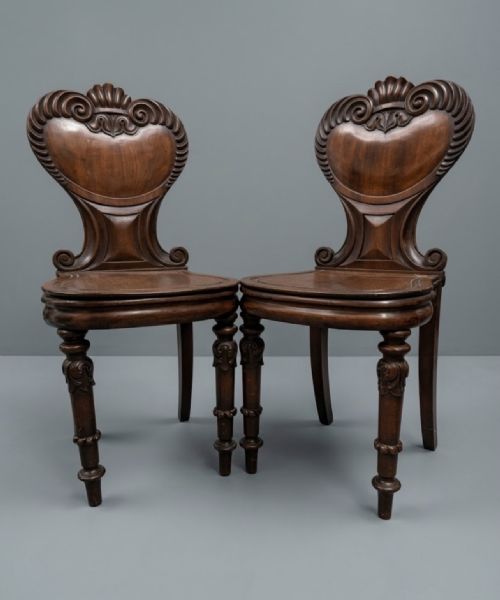
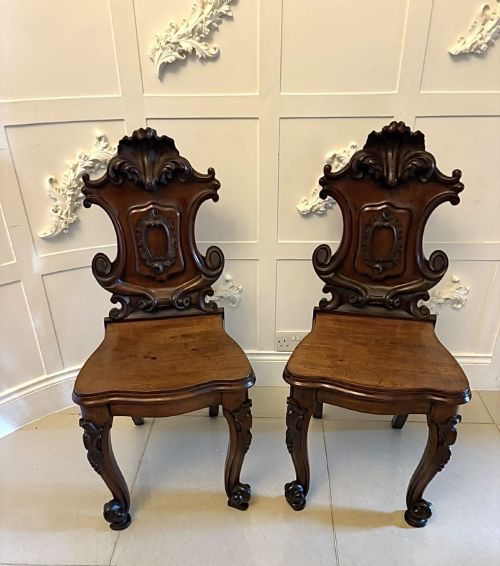
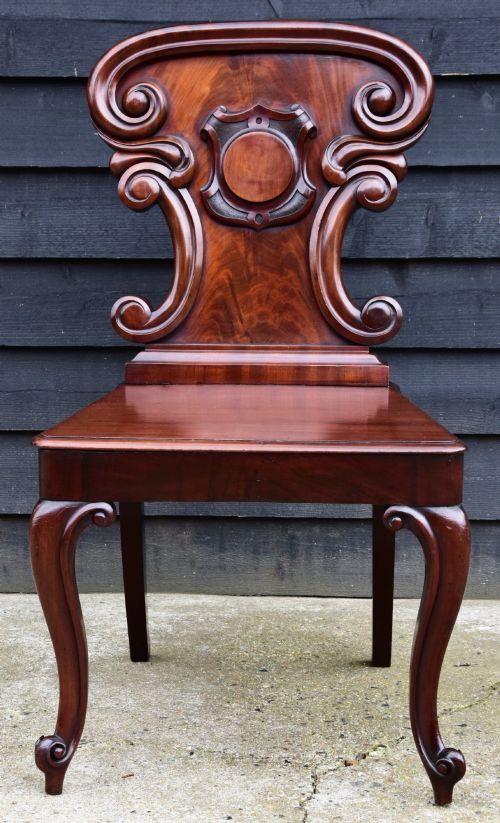
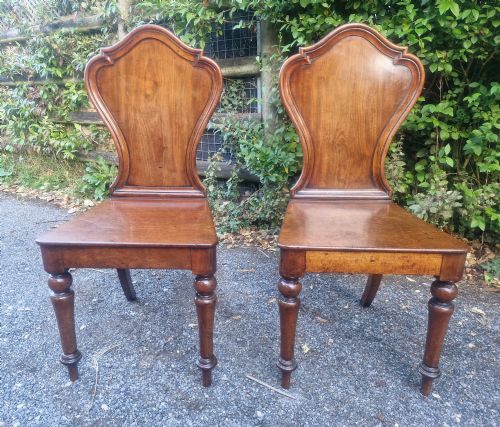
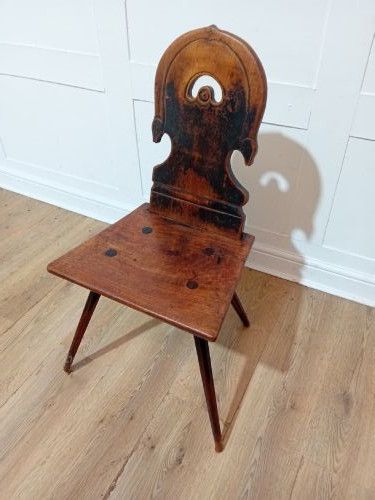
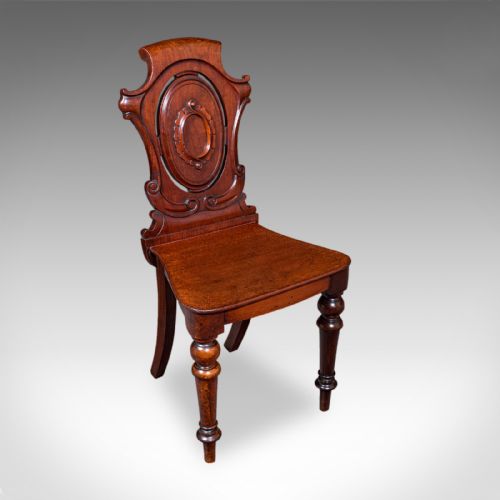
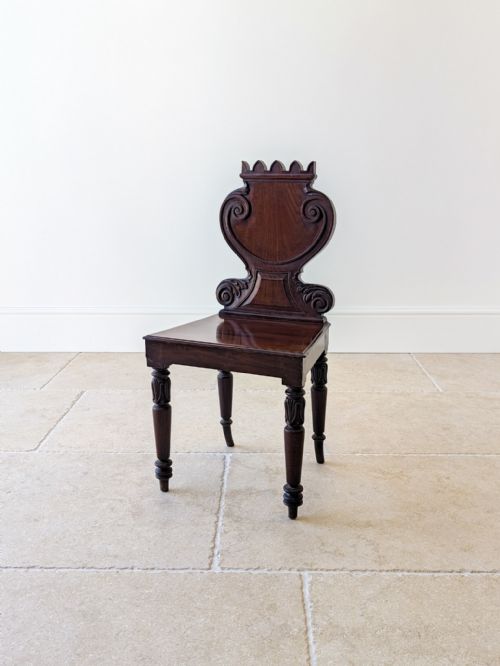
The most prevalent examples on this page are mahogany and oak hall chairs featuring solid carved timber seats and ornamental backs. These pieces span George III origins through to late Victorian revivals, offering robust timber construction suited to both formal and casual spaces.
How they were made
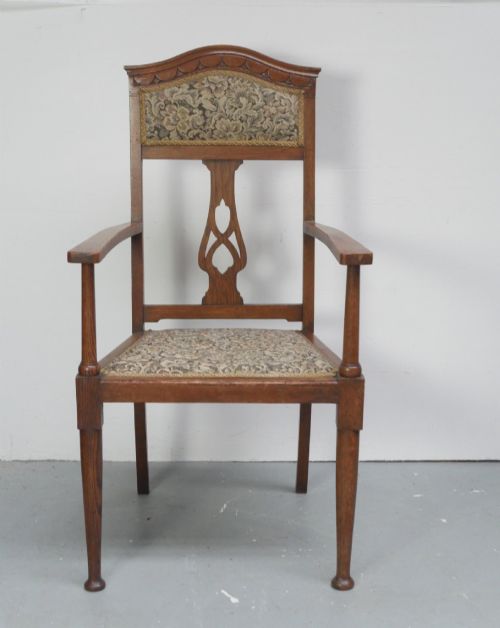
Cabinet makers constructed these chairs primarily from dense hardwoods like mahogany, oak, walnut and rosewood, often shaping solid timber seats and backs with hand-carved details. Selected pieces incorporate painted surfaces, fabric upholstery, velvet or textile pads secured to the frame.
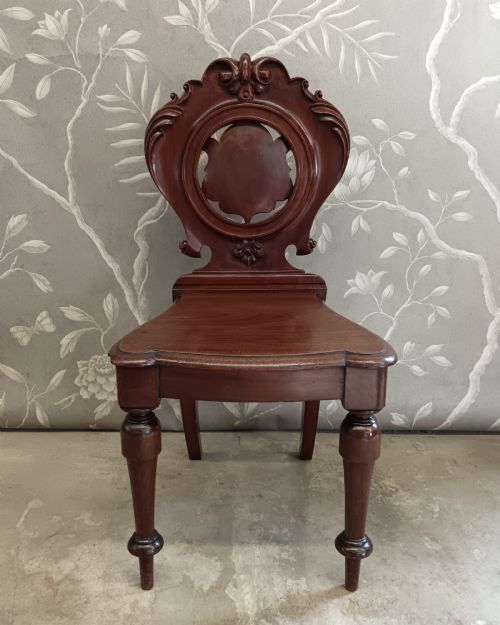
Joining techniques relied on traditional mortise and tenon joints to withstand daily use in domestic and institutional settings. Carvers utilised chisels and gouges to render heraldic shields, trefoil motifs and scrolling foliage directly into the structural wood.
Carved Timber Side Chairs Retail Price Guide 2026
Typical asking prices for carved timber side chairs among the pieces listed under this phrase on Sellingantiques today, from the lower quarter to the upper quarter. They describe what is for sale here now, not the wider market.
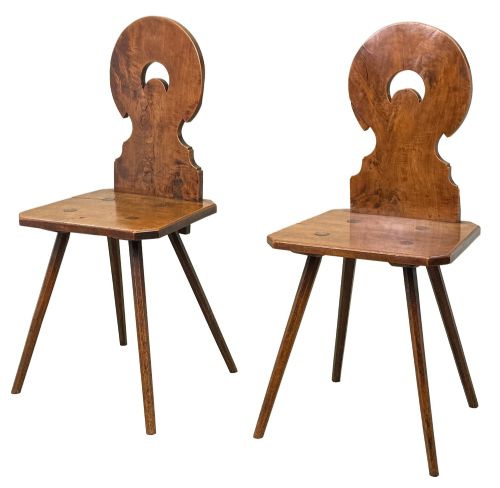
Listings span the nineteenth century, featuring oak, mahogany, walnut and rosewood across Regency and Victorian periods.
What varies in quality
Quality in these chairs rests upon the crispness of the timber carving and the density of the chosen wood. Superior pieces display deep, sharply defined relief work on the shield backs and rails, executed in well-figured mahogany or quarter-sawn oak.
Construction integrity also separates standard utility seating from finer examples, visible in the snugness of the joinery and the balanced proportions of the turned or sabre legs. The weight and selection of the timber dictate the longevity and overall presence of each chair.
The Carved Timber Side Chairs Glossary
- Hall chair
- A rigid wooden seat traditionally placed in an entrance hall, often featuring a solid carved back with an armorial crest or shield.
- Side chair
- An upright chair without arms, designed to sit against a wall or around a dining table when not in use.
- Shield back
- A chair back shaped like a heraldic shield, frequently carved with crests, foliage or geometric strapwork.
- Gothic Revival
- A nineteenth-century style drawing inspiration from medieval architecture, notable in chairs through pointed arches and trefoil details.
- Padouk
- A heavy, durable tropical hardwood with a reddish hue, utilised for export furniture and occasional seating.
Carved Timber Side Chairs: Frequently Asked Questions
Where were carved timber side chairs used?
These chairs served multiple domestic functions, appearing primarily in entrance halls for brief seating or lining the walls of formal dining rooms. They also furnished bedrooms and reception spaces as occasional seating.
Their robust timber construction allowed them to withstand heavy daily traffic in busy household corridors without requiring delicate upholstery.
How do I identify a Victorian hall chair?
Victorian hall chairs typically feature solid wooden seats with heavily carved shield or cartouche backs, often displaying Gothic or Jacobean revival influences. They rely on dark hardwoods like mahogany, oak and walnut.
Unlike upholstered salon chairs, these pieces dispense with padding entirely, showcasing the carved timber grain and structural joinery.
Can I use these chairs for everyday dining?
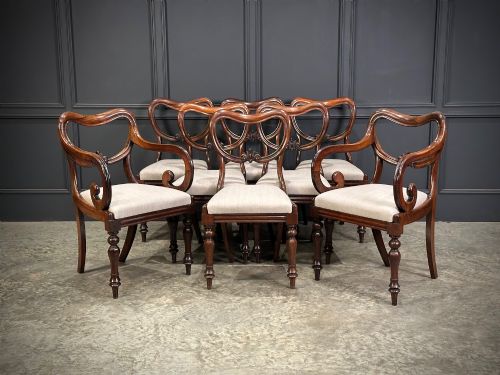
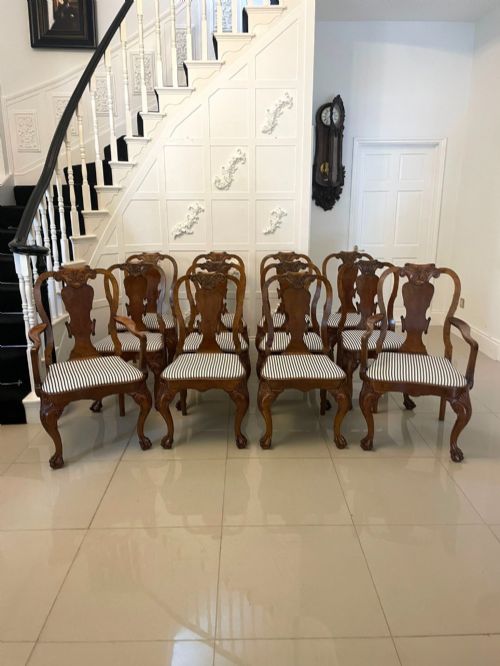
Many of these pieces, particularly nineteenth-century mahogany and oak dining chairs, function well for daily seating around a sturdy table. Their solid wooden frames provide reliable support.
Buyers should check the seat height and leg clearance against modern table dimensions to ensure comfortable daily usage.
What is the difference between a side chair and an armchair?
Side chairs are built without armrests, allowing them to tuck neatly beneath tables or sit flat against hallway walls. Armchairs incorporate structural arm supports for increased comfort.
Both forms utilise similar carved timber techniques and period stylistic motifs depending on their intended room.