
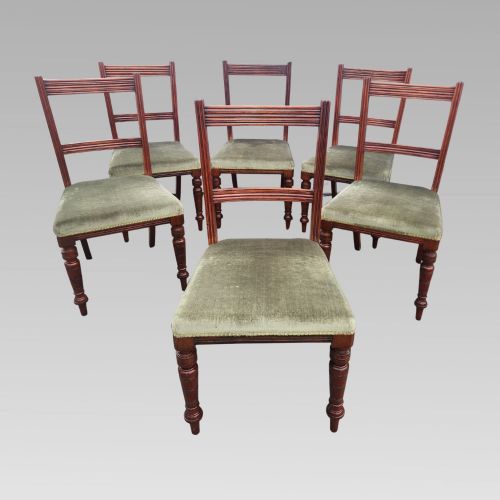
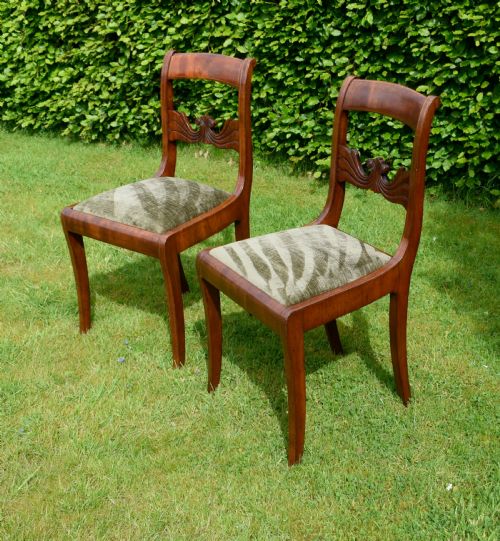


Green Velvet Side Chairs
Green velvet side chairs bring tactile warmth to a room, offering rich upholstery paired with sturdy wooden frames.
Understanding green velvet side chairs
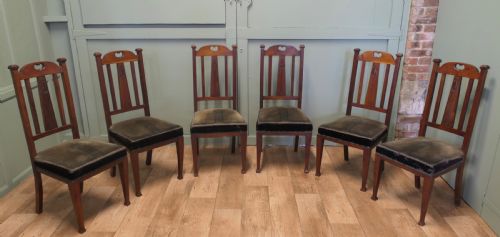
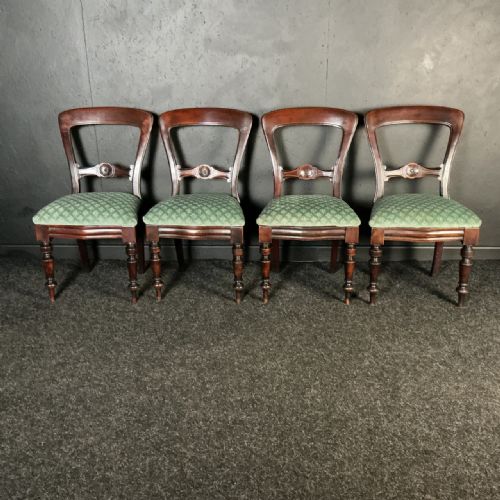
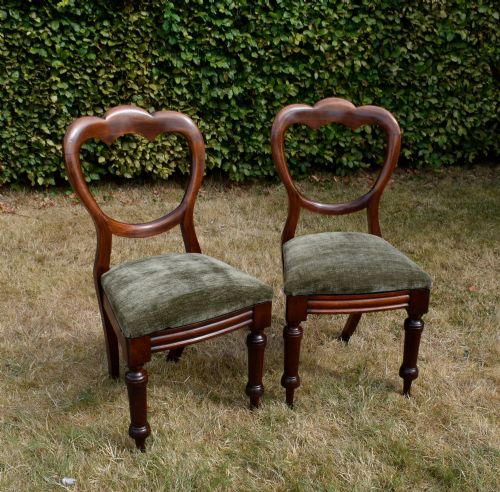
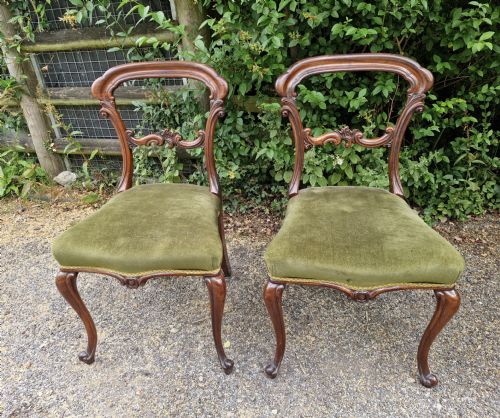
Green velvet side chairs encompass seating dating from the eighteenth century through to the nineteen thirties. These pieces frequently appear in Victorian and Edwardian configurations, including balloon back and bedroom chair designs.
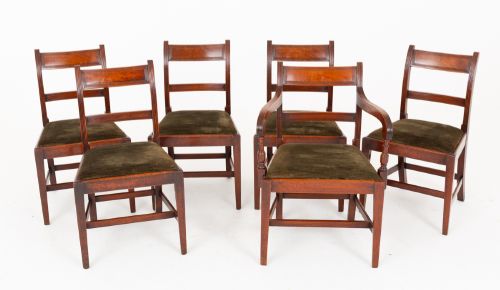
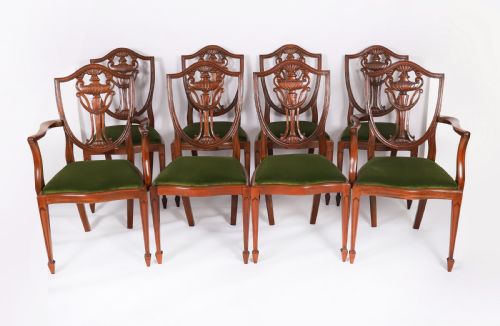
Buyers encounter various formats here, ranging from singular pairs to larger sets suitable for dining or occasional use. The selection spans Georgian country walnut models up to later revival styles.
Origins stretch across multiple decades, showing diverse regional cabinet-making traditions. Rosewood, mahogany, and walnut dominate the structural elements supporting the textile coverings.
Materials and construction
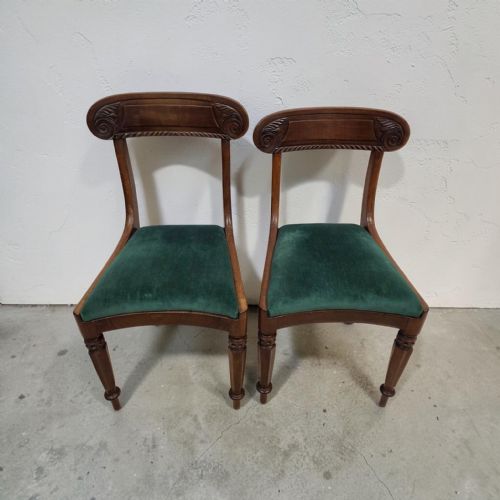
Framing timbers include solid mahogany, rosewood, walnut, and satinwood, occasionally enhanced with wood inlay and brass details. Artisans shaped these hard timbers into curved balloon backs and carved structural supports.
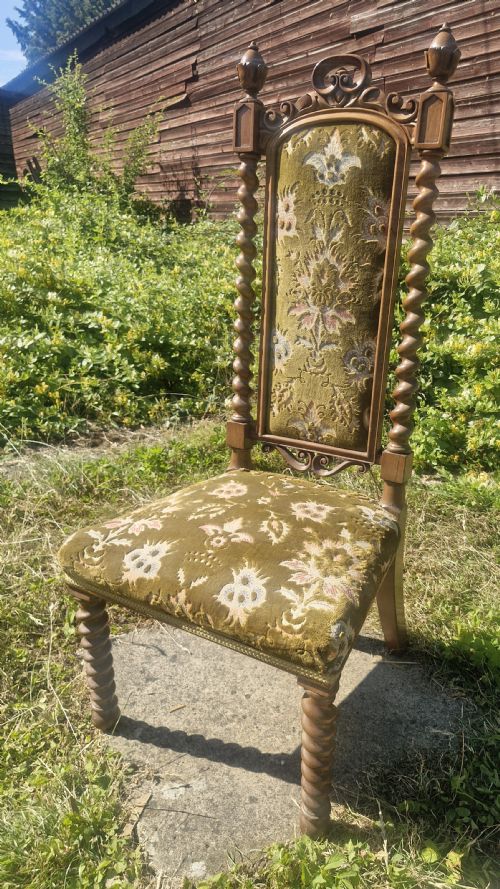
Upholstery relies on traditional textile applications featuring plush velvet or satin finishes. Seats were constructed to provide firm support while displaying the soft texture of the pile.
Retail Price Guide 2026
Typical UK retail prices for green velvet side chairs, calculated from the Sellingantiques database of over a million retail prices indexed since 2003. This retail price guide relies exclusively on Sellingantiques data; no external sources or auction records are used, so the figures do not describe the wider market.
Object forms span dining chairs, bedroom chairs, and balloon back side chairs.
Distinguishing quality
Superior examples demonstrate meticulous cabinet-making through finely carved woodwork, balanced proportions, and precise wood inlay. Lesser pieces show simpler turning and less ambitious decorative carving.
The integration of the textile upholstery with the wooden frame dictates the visual harmony of each chair. Higher-grade items preserve intact structural timber joints and rich grain patterns beneath the finish.
Hewetson and Milner
The Green Velvet Side Chairs Glossary
- Balloon back
- A rounded, oval-shaped chair back design popular during the Victorian period. This profile resembles the silhouette of a hot air balloon.
- Rosewood
- A dense, heavily figured timber valued for its deep reddish-brown colour and dark grain. Cabinet-makers utilised it for high-end Victorian seating.
- Satinwood
- A pale, lustrous hardwood often used for decorative inlays and detailed contrasting borders. It adds a luminous quality to nineteenth-century furniture.
- Chippendale revival
- A later stylistic movement reproducing or adapting eighteenth-century designs. Pieces often feature characteristic carved motifs and sturdy proportions.
Frequently Asked Questions
Are these chairs suitable for daily dining use?
Many of these pieces were originally constructed as dining chairs or robust side seating. Their wooden frames provide the stability required for regular seating arrangements.
Buyers should examine the internal joinery and upholstery firmness to ensure the chairs meet modern functional requirements for daily use around a table.
How do I identify a Victorian balloon back?
The defining characteristic is the continuous curved wooden loop forming the backrest, often resembling an oval or a balloon. This form gained immense popularity across the mid nineteenth century.
Cabinet-makers frequently combined this silhouette with rosewood or mahogany frames, sometimes adding subtle carved details along the crest rail.
What woods were commonly used for these frames?
Timbers vary from rich dark rosewood and mahogany to figured walnut and pale satinwood. Georgian country examples typically utilise walnut, while later Victorian pieces favour rosewood.
Each wood brings a distinct grain pattern and weight to the furniture, influencing both the visual appearance and the overall durability of the chair.
How should I care for velvet upholstery?
Velvet requires gentle brushing to maintain the direction of the pile and prevent flattening. Professional cleaning helps preserve the depth of the green colour over time.
Keep these chairs away from direct sunlight to prevent fading of the textile and protect the polished wooden frame from excessive moisture.