
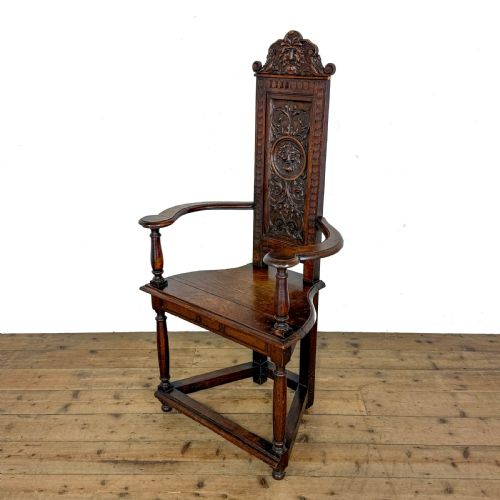
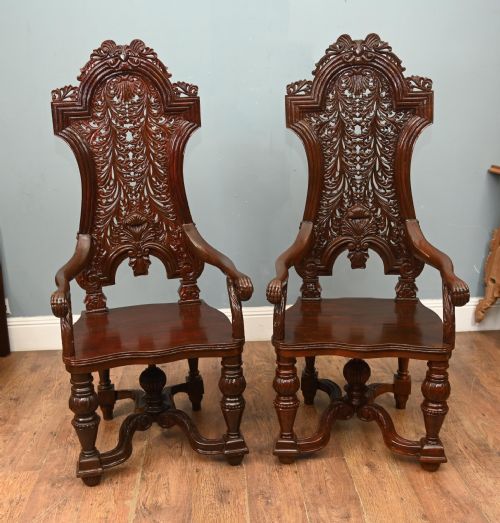


Gothic Carved Arm Chair
A gothic carved arm chair brings dramatic architectural timberwork and deep historical revival styles straight into a domestic interior.
Gothic Carved Arm Chair
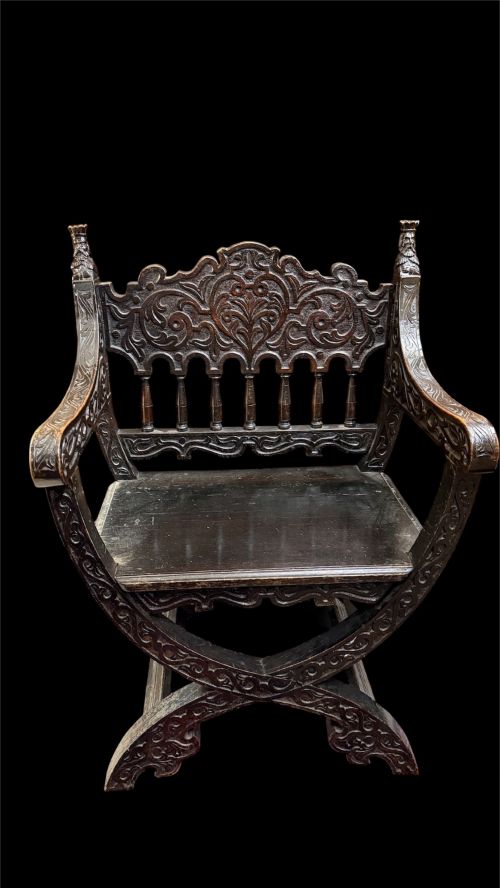
A gothic carved arm chair draws upon medieval ecclesiastical and architectural motifs, emerging most frequently here through nineteenth-century revivals. Buyers seeking this phrase encounter robust seating forms built primarily to make a strong visual statement in a hall, library or study.
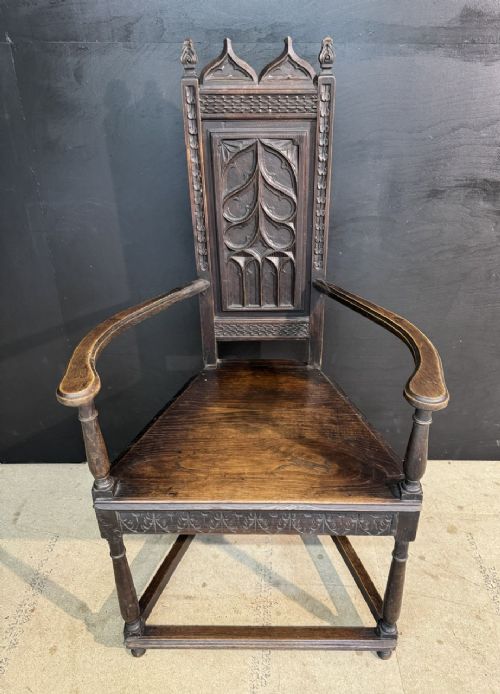
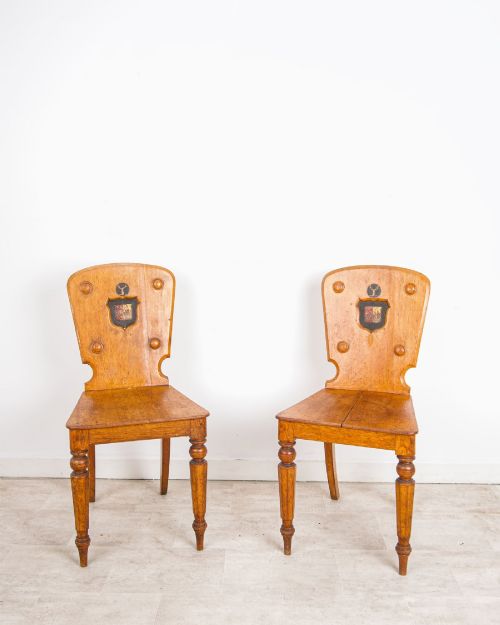
The selection ranges from sturdy oak wainscot armchairs and heavy throne chairs to specialised library seating and heraldic hall chairs with arms. Pieces frequently display revival influences such as Jacobean, Renaissance, and Arts and Crafts alongside core gothic details like pointed arches and tracery.
Most examples date from the Victorian era and the later nineteenth century, though earlier eighteenth-century walnut and oak antecedents occasionally appear. These seats combine heavy structural timbers with elaborate surface decoration, making them central focal points in traditional rooms.
Materials and construction methods
Solid oak serves as the primary structural medium for the vast majority of these pieces, complemented by occasional walnut, rosewood, and pitch pine. Workshops utilised traditional mortise and tenon joinery to support the heavy weight of deeply carved components and high panelled backs.
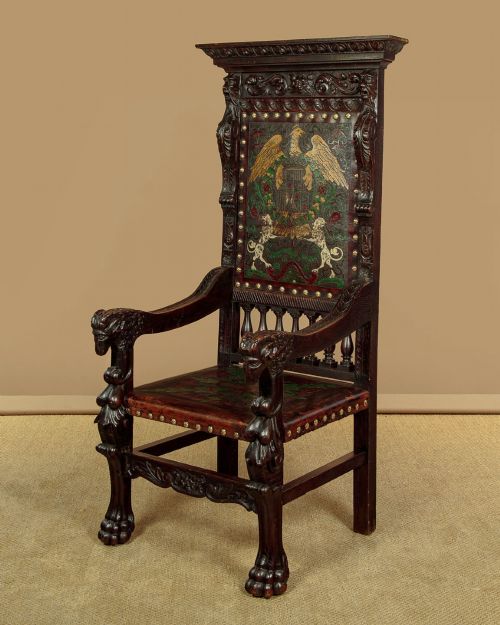
Carving forms the decorative core of each piece, executed by hand directly into the dense timbers to create relief panels, heraldic shields, and architectural tracery. Secondary materials like painted leather, damask fabric, and brass studs provide contrast and upholstery on specific armchair and throne variants.
Listings span multiple revival movements, predominantly pairing Victorian Gothic architecture with Jacobean and Renaissance stylistic influences on solid oak frames.
Assessing quality and execution
Depth and crispness of the hand carving separate standard commercial production from exceptional exhibition pieces. Superior examples exhibit intricate detailing in figurative elements like hounds or heraldic shields, whereas lesser pieces rely on shallow, repetitive mechanical stamping.
Timber selection and structural integrity dictate longevity, with tight-grained quarter-sawn oak holding crisp carved edges far better than softer secondary woods. The integration of original upholstery elements, such as embossed leather or heavy textiles, further distinguishes notable workshop output from ordinary variants.
S&H Jewell·Charles Bevan
The Gothic Carved Arm Chair Glossary
- Wainscot chair
- A heavy wooden armchair with a solid panelled back, popular in the seventeenth century and heavily copied during later gothic revivals. These sturdy seats provide high backs and enclosed lower frames.
- Tracery
- Architectural stone window patterns translated into wooden fretwork and carved panels on chair backs. This ornamental stonework style defines much of the gothic aesthetic.
- Heraldic shield
- A decorative armorial crest carved into the wooden backrest or cresting rail of hall chairs. These emblems often reference family lineages or civic institutions.
- Throne chair
- An oversized, high-backed armchair designed with architectural proportions to dominate a room. They often feature elevated seats and elaborate canopies or finials.
- Jacobean revival
- A decorative style mimicking seventeenth-century English furnishings through heavy turning, geometric panels, and dark finishes. It frequently blends with gothic motifs on Victorian seating.
Gothic Carved Arm Chair: Frequently Asked Questions
Where should I place a gothic carved arm chair?
These imposing seats suit entrance halls, libraries, or studies where their architectural proportions and dark timber tones can anchor the room. They function well as standalone statement pieces rather than casual lounging seats.
Because of their heavy frames and high panelled backs, they require sufficient surrounding space to display the carved detail properly without overcrowding other furnishings.
How do I care for the timber and leather?
Maintain the solid oak or walnut frames by applying a microcrystalline wax periodically to nourish the wood and protect the carved surfaces from drying out. Avoid placing the chair near direct heat sources that could cause timber to split.
For upholstered leather or fabric elements, gentle dusting and professional cleaning preserve the material without disturbing antique tacks or structural stuffing.
Are these chairs comfortable for daily use?
Most antique examples prioritise architectural presence and upright posture over ergonomic cushioning, often featuring rigid wooden backs and firm seats. Upholstered library variants and throne chairs offer more padding but remain heavy upright seating.
Buyers intending to sit for long periods often add a custom squab cushion that matches the period aesthetic without altering the original timber structure.
How do I distinguish Victorian revivals from earlier pieces?
Examine the tool marks, timber preparation, and construction methods visible underneath and inside the frame. Nineteenth-century revival pieces often display machine-sawn components hidden beneath hand-finished carved surfaces.
Earlier seventeenth or eighteenth-century examples exhibit irregular hand-riven timber grain, pegged joints, and wear patterns consistent with centuries of continuous domestic use.