
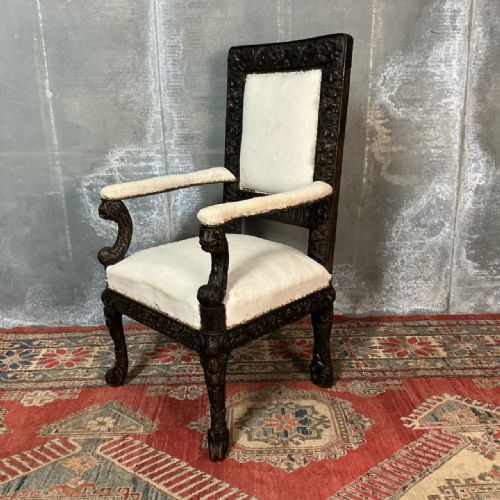
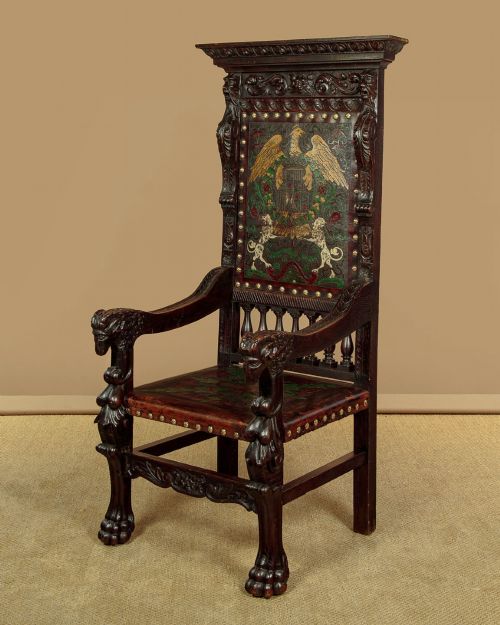


Heavy Carved Oak Throne
A heavy carved oak throne stands as a commanding seat of authority, offering collectors robust timber joinery and dramatic historical revival styles.
Heavy Carved Oak Throne
A heavy carved oak throne brings substantial presence to a room, drawing on centuries of historical design to create an imposing armchair. These seating forms emerge primarily from the nineteenth century, spanning Victorian Gothic and Renaissance revival movements alongside Arts and Crafts iterations.
Buyers encounter grand armchairs featuring elaborate ornamentation, high backs, and sturdy wooden frames. The selection includes wainscot chairs, hall chairs, and library armchairs that utilise dense timber and deep relief carving.
Originating largely from the nineteenth and early twentieth centuries, these heavy carved oak throne examples showcase diverse revival aesthetics. Pieces range from Victorian Gothic hunting chairs decorated with hound motifs to Baroque and Jacobean styles.
Construction and materials
Makers built these substantial seats using solid oak, chosen for its strength and capacity to hold deep, crisp chisel work. Frameworks rely on traditional joinery methods to support the sheer weight of the timber and heavy ornamentation.
Upholstery elements incorporate leather, velvet, fabric, and textiles secured with brass detailing. Painted finishes sometimes highlight the intricate carving, contrasting against the natural grain of the dark wood.
Current listings demonstrate a strong nineteenth-century presence, featuring oak combined with leather, velvet, and brass.
Assessing quality
Depth and sharpness of the hand carving separate standard production from exceptional pieces. The finest examples display intricate sculptural relief, such as figural hound motifs or heraldic details, executed with precision and anatomical accuracy.
Integration of scale and structural integrity defines the upper tier of these chairs. Imposing proportions require balanced joinery to ensure the high back and arms remain completely rigid and supportive over decades of use.
The Heavy Carved Oak Throne Glossary
- Wainscot chair
- An early form of wooden armchair constructed with panelled backboards and solid timber seats. These pieces typically display restrained rectangular proportions compared to later revival thrones.
- Gothic Revival
- An architectural and decorative style that reappeared during the nineteenth century, drawing on medieval ecclesiastical motifs. Pieces feature pointed arches, tracery, and heavy structural form.
- Renaissance Revival
- A nineteenth-century design movement inspired by sixteenth-century European art and architecture. These items incorporate symmetrical classical details, cartouches, and bold relief carving.
- Arts and Crafts
- A design movement prioritising traditional craftsmanship and visible construction over industrial methods. Chairs from this period exhibit simpler structural lines while maintaining sturdy oak framing.
- Baroque Revival
- A theatrical design style characterised by exuberant ornamentation, curving lines, and dramatic presence. Such pieces utilise scrollwork and deep mouldings to create a sense of grand movement.
Heavy Carved Oak Throne: Frequently Asked Questions
Where were these chairs placed historically?
These imposing armchairs typically occupied principal rooms such as libraries, morning rooms, and grand hallways. Their substantial scale and decorative carvings signalled authority and status within a domestic interior.
In contemporary settings, they serve a similar purpose as focal point seating. They anchor large spaces, pairing well with traditional studies or high-ceilinged entrance halls.
How do I care for antique oak furniture?
Maintaining antique oak involves protecting the timber from extreme fluctuations in temperature and humidity. Direct sunlight can dry out the wood and fade leather or fabric upholstery over time.
Occasional application of appropriate wax polish feeds the grain without building up a sticky residue. Gentle dusting with a soft cloth preserves the crisp edges of the hand carving.
How do I distinguish Victorian Gothic from Renaissance revival?
Victorian Gothic pieces display architectural elements inspired by medieval churches, including pointed arches, quatrefoils, and occasionally figurative animal carvings like hounds. The overall silhouette feels vertical and austere.
Renaissance revival items favour classical symmetry, cartouches, and heavier scrollwork derived from sixteenth-century continental models. The decorative vocabulary leans towards bold moulding and sculptural relief rather than pointed tracery.