





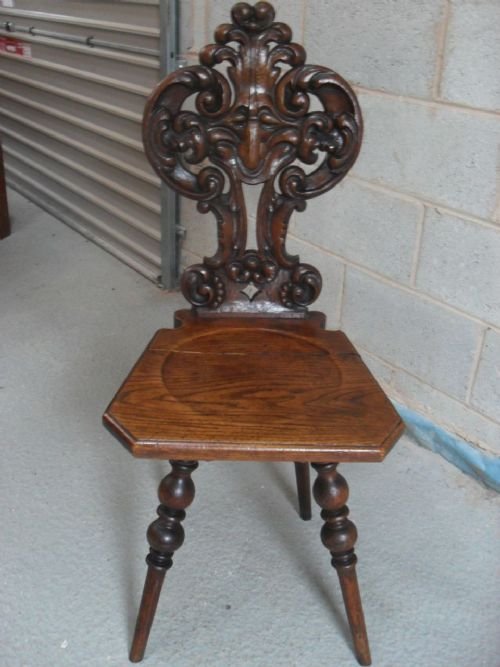
Ornate Carved Oak Chair
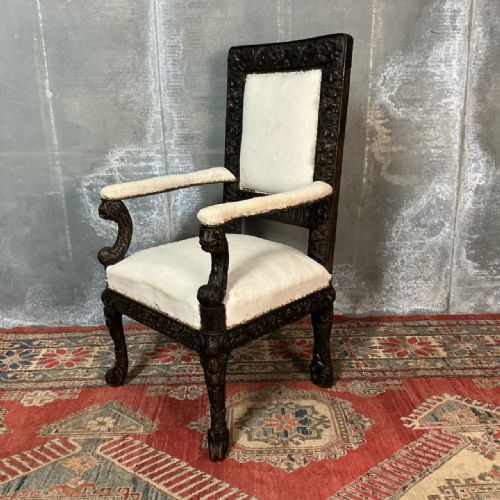
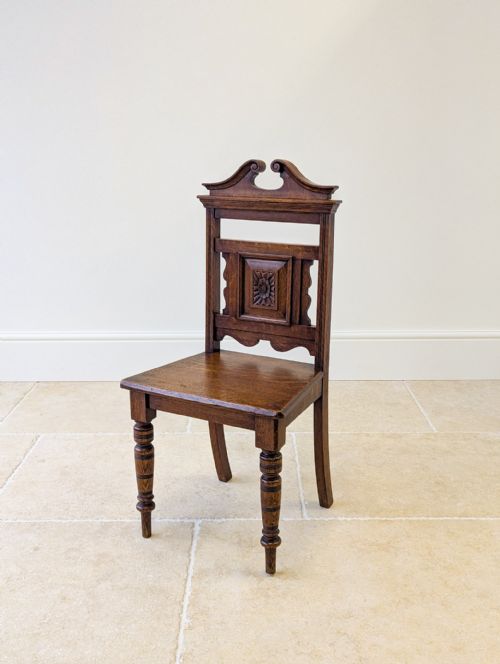
An ornate carved oak chair brings dense nineteenth-century relief work and heavy timber straight into a room.
Ornate Carved Oak Chair
An ornate carved oak chair is a sturdy seat defined by deep chisel work, scrolling foliage, and solid timber framing. When browsing this selection, hall chairs, armchairs, and high-back side chairs dominate the inventory from nineteenth-century makers.
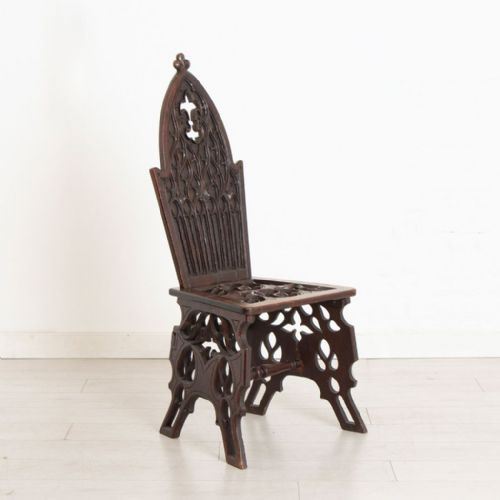
Most examples originate in the Victorian era, spanning specific revival movements like the Gothic, Italian Renaissance, and Carolean styles. Buyers encounter everything from single throne chairs to sets of dining chairs and pairs built for grand hallways.
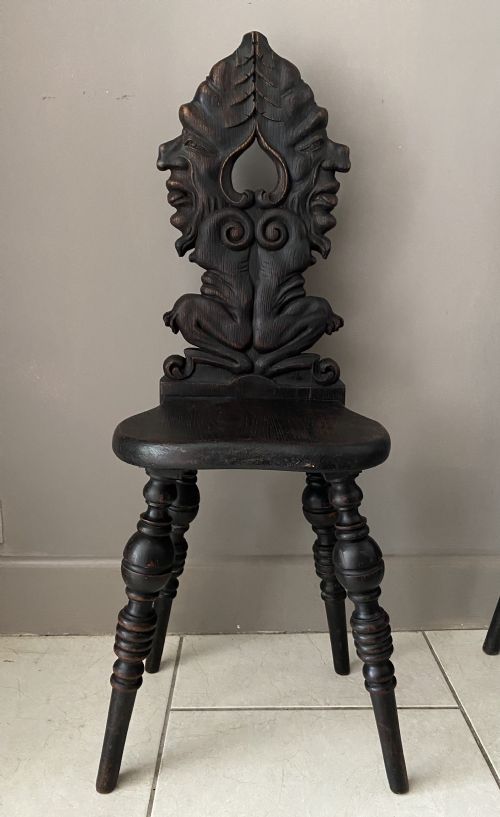
Makers often drew inspiration from French, Italian, and Black Forest traditions, resulting in pieces adorned with figures, animals, or geometric strapwork. The sheer variety of forms reflects the eclectic tastes of nineteenth-century patrons who favoured heavy, expressive furniture.
Materials and construction
Carpenters built these chairs primarily from solid oak, occasionally bleaching the timber or pairing it with contrasting elements like walnut, brass fittings, and carved wood details. The heavy frames demand robust joinery to support the dense weight of the wood.
Upholstered variants incorporate textiles such as velvet, leather, and woven fabric fastened across seats and backs. Artisans executed the elaborate relief decoration entirely by hand, cutting deep into the grain to create dramatic shadow and texture across the wood.
Periods represented span the nineteenth century, including specific dates from 1870 and 1900 alongside general Victorian eras.
Judging craftsmanship and design
Quality rests entirely on the depth, sharpness, and ambition of the carving. Superior examples display crisp undercut details in the foliage, figures, or animal motifs rather than shallow, mechanical stamping.
The architectural integrity of the frame separates standard production from exhibition-grade work. Heavier timber gauges, balanced proportions, and integrated structural elements elevate a chair from a simple utility seat to a sculptural centrepiece.
The Ornate Carved Oak Chair Glossary
- Carolean Style
- A late seventeenth-century aesthetic revived during the Victorian period, characterised by scrolling crest rails, turned legs, and cane or upholstered panels.
- Gothic Revival
- An architectural and decorative style drawing on medieval forms, featuring pointed arches, tracery, and dark timber.
- Sgabello
- A Renaissance chair type featuring a solid carved back and two panel supports instead of traditional legs, often placed in hallways.
- Black Forest Manner
- A nineteenth-century carving style originating in Switzerland and Germany, noted for naturalistic depictions of animals and foliage.
- Relief
- A sculptural technique where figures or patterns project from a flat background of the same material, standard in nineteenth-century oak carving.
Ornate Carved Oak Chair: Frequently Asked Questions
Where should I put an ornate carved oak chair?
These imposing seats suit entrance halls, libraries, or corners where their heavy timber framing can anchor the space.
Avoid placing them in narrow walkways where the projecting armrests or high backs might obstruct movement.
How do I date a Victorian carved chair?
Examine the colour and grain of the oak alongside the style of the relief work, which often mirrors specific revival movements.
Exhibition pieces sometimes bear dated inscriptions or exhibition stamps that narrow down their exact year of manufacture.
Can I use these chairs at a dining table?
Sets of dining chairs and high-back side chairs appear frequently in nineteenth-century oak furniture.
Ensure the seat height and arm clearance match your table dimensions before arranging them for daily use.
What maintenance does solid oak require?
Keep the timber away from direct heat sources and sudden humidity shifts to prevent the wood from splitting.
Apply a microcrystalline wax occasionally to nourish the grain and protect the carved surface from dust.