




Scottish Mahogany Armchair
A Scottish mahogany armchair brings solid timber work and regional design straight into a room, offering both history and sturdy daily seating.
Scottish Mahogany Armchair
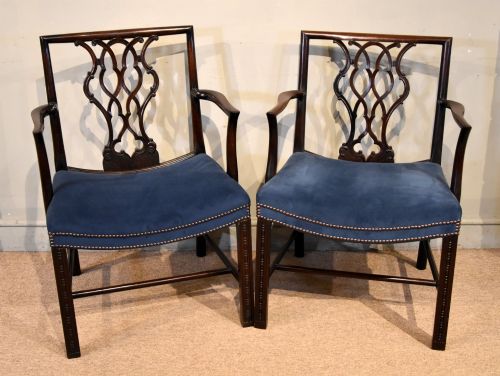
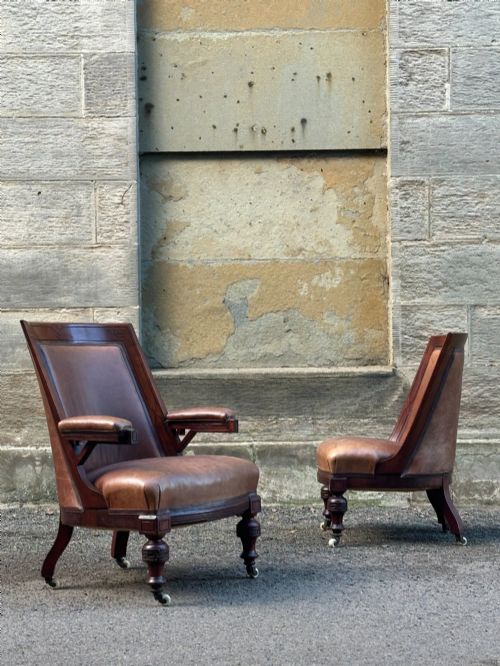
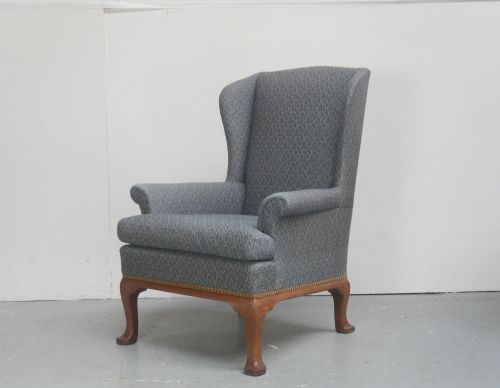
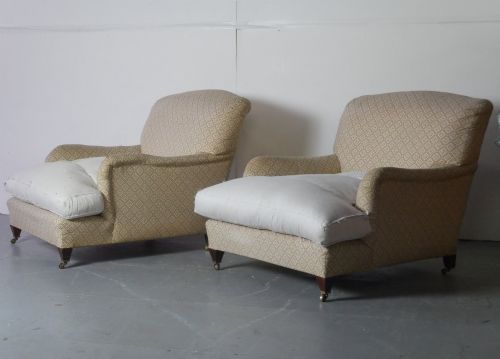
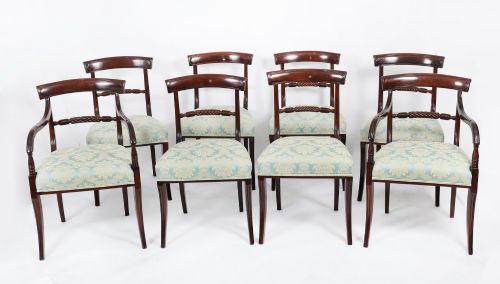
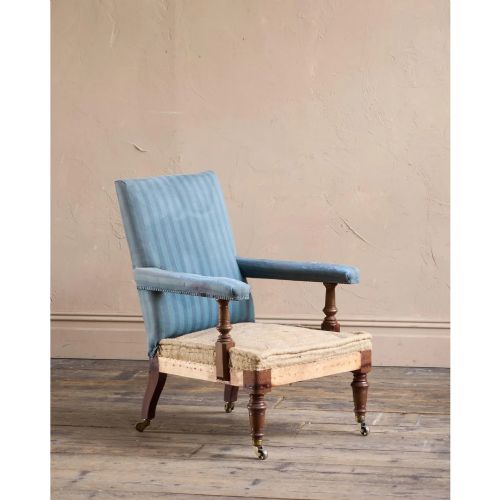
A Scottish mahogany armchair is a substantial seat found across periods from the eighteenth century to the twentieth century. These pieces encompass forms ranging from open armchairs and Cockpen designs to pairs of dining chairs and large library seats.
Most examples appearing on this page date from the nineteenth century and the Edwardian era, with earlier eighteenth century George III pieces and later twentieth century workshop items also present. Makers such as Whytock and Reid and Morison and Co feature among the regional output.
How they were made
Cabinetmakers constructed these frames using solid mahogany timber, often pairing the dark wood with brass fittings on campaign styles or incorporating secondary timbers like walnut. Frames rely on traditional joinery to support the weight of the structure.
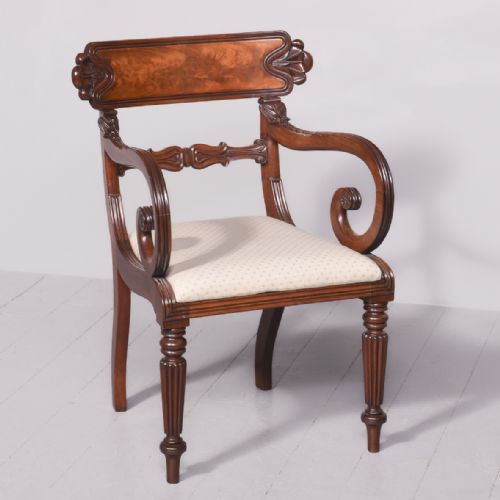
Upholstery methods utilise traditional stuffing materials beneath covers of fabric, upholstery fabric, leather, feather down, and hessian. Exposed woodwork shows polished mahogany surfaces shaped according to Regency, Victorian, Greek Revival, or traditional Scottish styles.
Scottish Mahogany Armchair Retail Price Guide 2026
Typical asking prices for scottish mahogany armchair among the pieces listed under this phrase on Sellingantiques today, from the lower quarter to the upper quarter. They describe what is for sale here now, not the wider market.
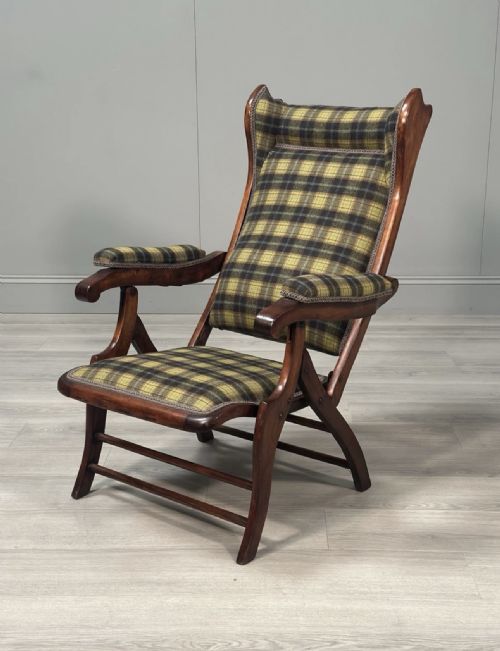
Some folding campaign chairs were built to follow their owners across oceans before finally retiring to a quiet corner.
What varies in quality
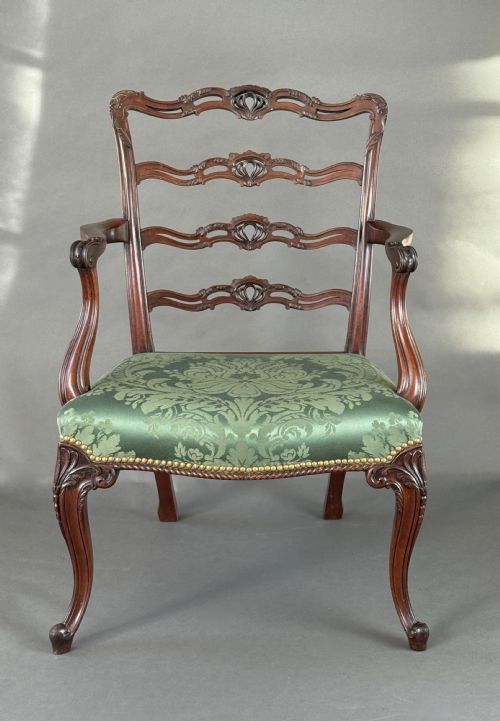
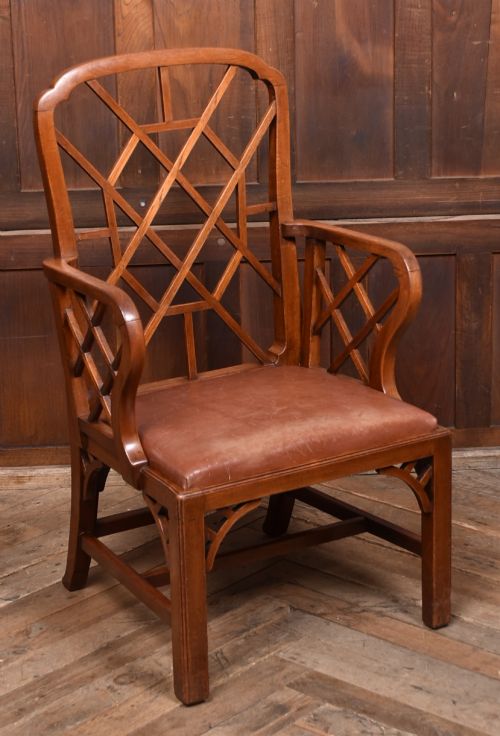
The distinction between standard output and finer work lies in the crispness of the timber carving and the architectural proportion of the frame. Regional details, such as the specific interpretation of a Greek Revival motif or the lattice work on a Cockpen chair, dictate the visual strength of the piece.
The integrity of the original mahogany structure and the quality of the underlying upholstery materials determine the lasting character of the armchair. Pieces carrying documented workshop provenance tend to display superior joinery and more refined finishing.
Whytock and Reid·Morison and Co·Wheelers of Arncroach·E. A Taylor
The Scottish Mahogany Armchair Glossary
- Cockpen chair
- A type of armchair featuring an open lattice framework derived from Chinese Chippendale designs, frequently associated with Scottish making traditions.
- Campaign armchair
- A portable seating form fitted with folding mechanisms and brass hardware intended for travel and military use.
- Greek Revival
- An architectural and decorative style drawing heavily on classical Hellenic forms, seen on nineteenth century chairs designed by figures such as Alexander Greek Thomson.
- Hessian
- A coarse woven fabric traditionally used as a foundational layer in the upholstery stuffing process to support horsehair or down.
Scottish Mahogany Armchair: Frequently Asked Questions
How do I identify a Scottish mahogany armchair?
Look for specific regional design characteristics within the woodwork and construction methods, alongside any workshop labels or stamps on the frame. The proportions and timber selection often reflect the distinct output of Scottish cabinetmakers across different centuries.
Comparing the style, such as a traditional Scottish or Greek Revival form, with documented pieces from makers like Whytock and Reid helps confirm the origin.
Are these armchairs comfortable for daily use?
Many examples are designed with generous proportions and upholstered seats filled with feather down or traditional stuffing materials to provide practical support. Open armchairs and larger library seats offer substantial seating space for a living room or study.
Maintenance of the upholstery and internal webbing ensures the chair remains supportive while retaining its historic character.
What is a Cockpen armchair?
A Cockpen armchair is a distinctive seating form characterised by a square back and arms filled with an open geometric lattice woodwork. This style draws on Chinese Chippendale influences and became particularly popular in Scottish cabinetmaking.
The open fretwork creates a lighter visual appearance while maintaining a rigid timber frame.
How should I care for mahogany woodwork?
Keep the timber away from direct heat sources and strong sunlight to prevent the mahogany surface from drying out or fading over time. Regular dusting with a soft, dry cloth preserves the polished finish without building up heavy wax residues.
Checking the stability of the joints periodically ensures the frame remains secure during everyday use.