
Antique Upholstered Fauteuils
Antique upholstered fauteuils are open-framed wooden seating pieces offering padded comfort, prized for bringing period elegance and historical craftsmanship into a room.
Antique Upholstered Fauteuils
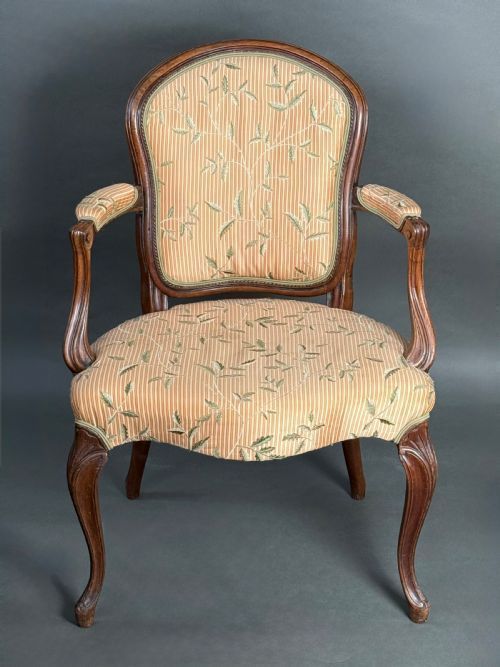
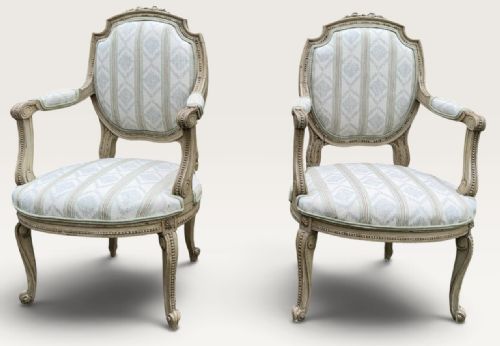
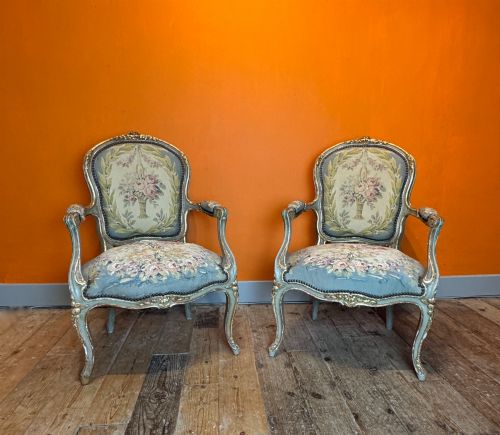
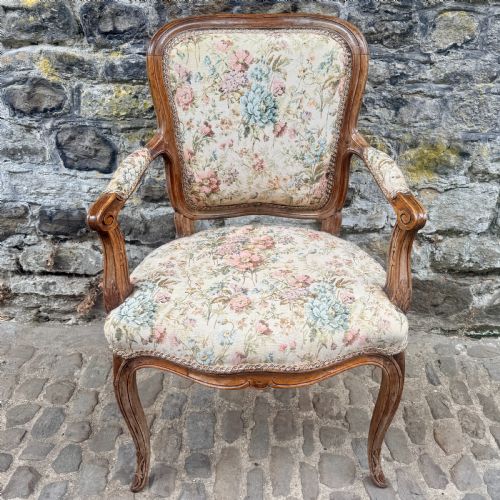
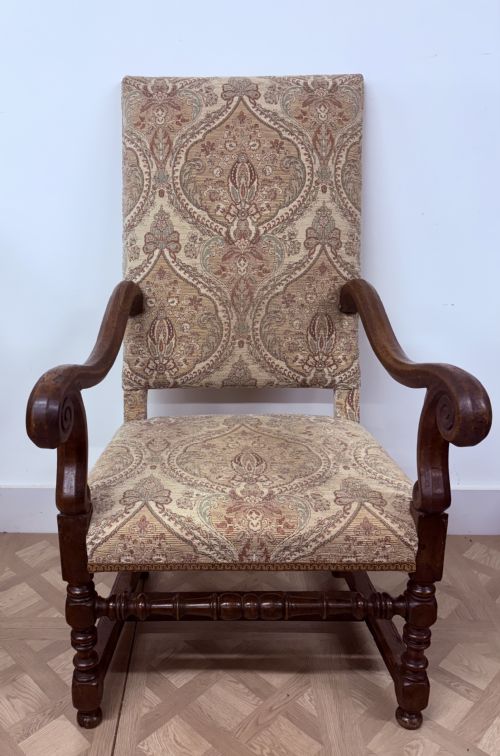
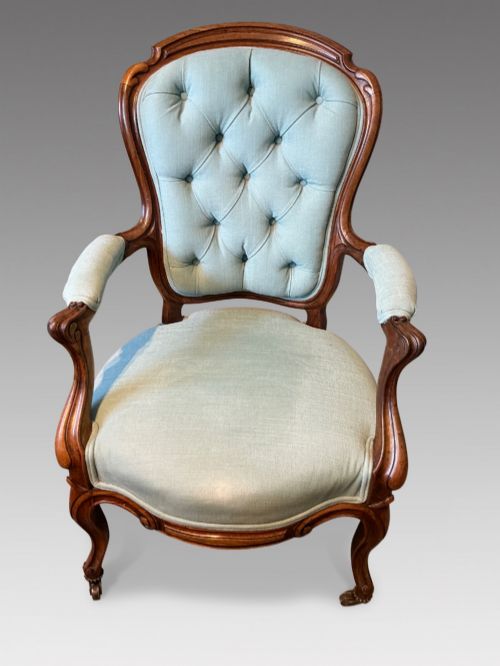
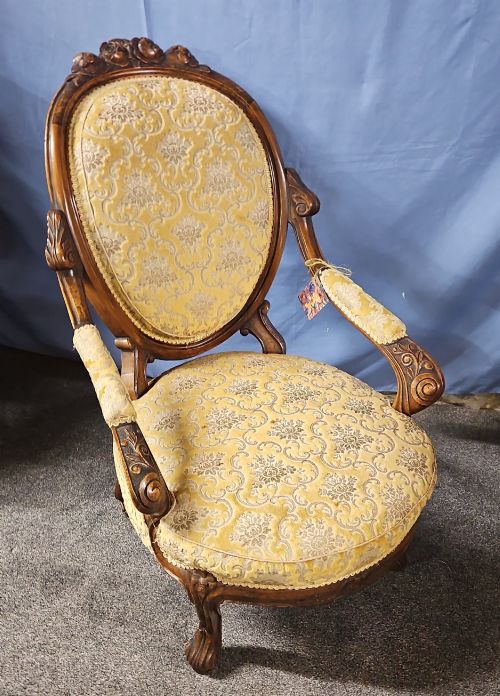
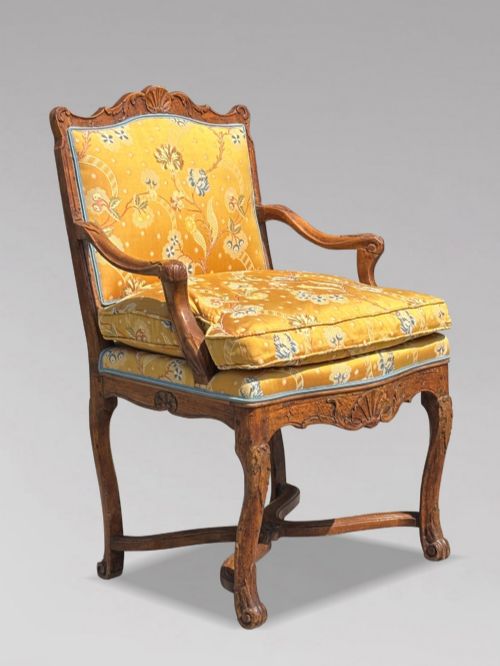
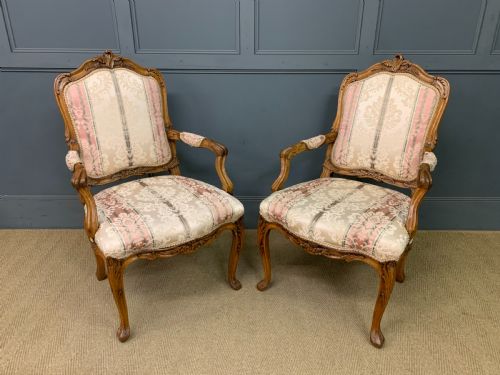
Antique upholstered fauteuils are open armchairs originating primarily from French and English traditions, spanning from the seventeenth century through to the early twentieth century. When exploring this selection, buyers encounter diverse forms reflecting distinct historical periods, including Louis XV, Louis XVI, Regence, and various revival styles.
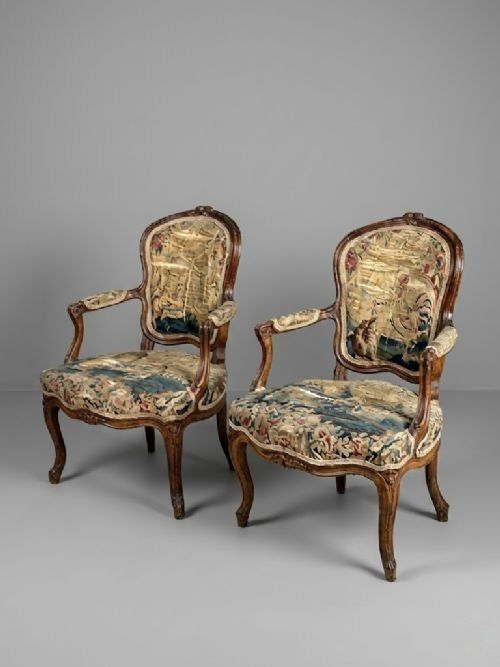
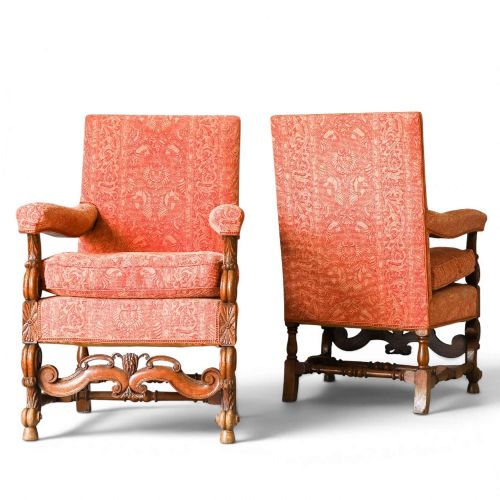
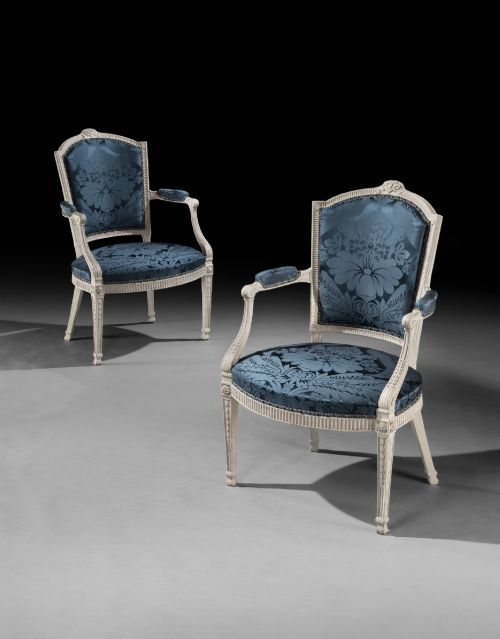
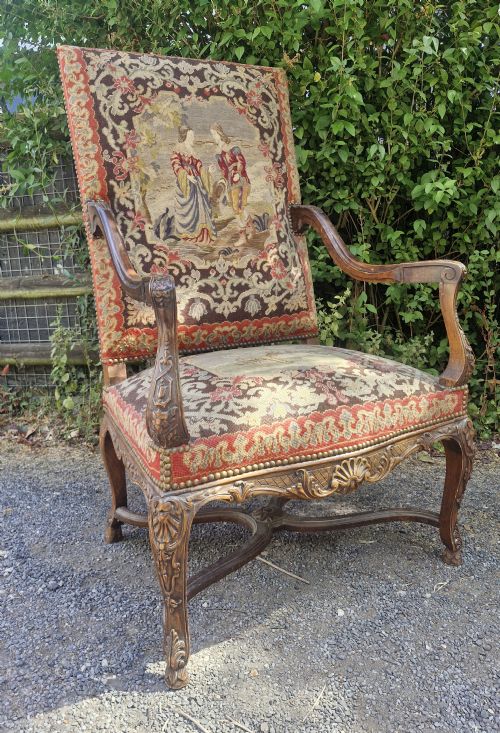
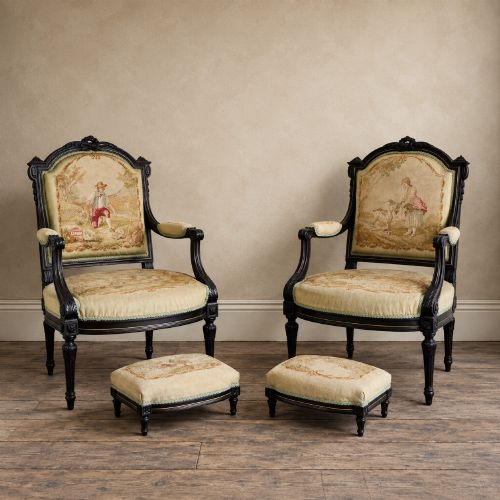
The inventory on this page leans heavily toward French models, alongside English interpretations in walnut, mahogany, and painted finishes. Chairs frequently appear in pairs or as part of larger salon suites, often retaining textile coverings such as silk, tapestry, or needlework.
Makers and designers from past centuries established distinct structural lines, ranging from curved Rococo profiles to the straighter, neoclassical geometries of the late eighteenth century. These seating pieces combine exposed wooden frames with padded armrests and seats designed for formal reception rooms.
How they were made
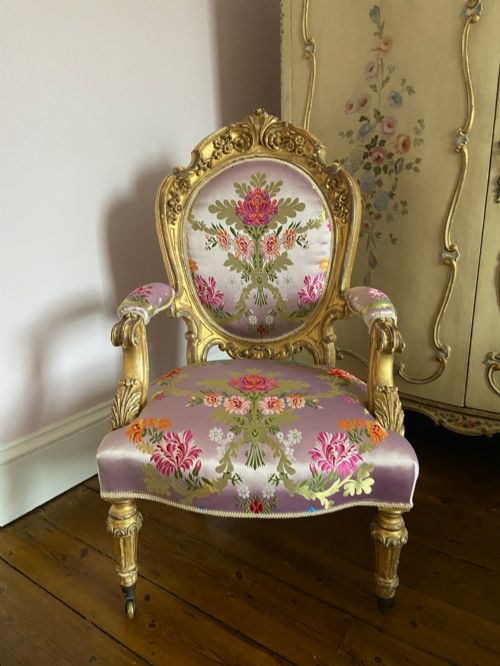
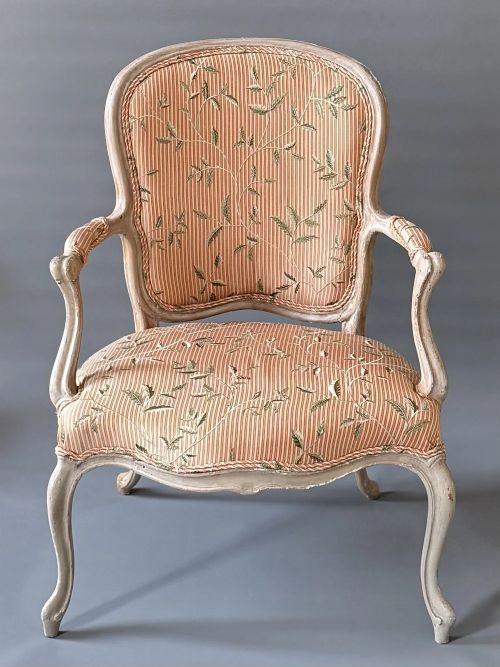
Frames are constructed from solid timbers such as walnut, oak, beech, and mahogany, frequently shaped by hand carving and joinery. Artisans applied finishes including giltwood, original paint, parcel gilding, and ebonising to enhance the exposed wooden surfaces.
Upholstery techniques involve traditional stuffing materials secured within frames and finished with textiles like silk, needlework, tapestry, and modern or period silk fabrics. Brass details and gilt bronze mounts occasionally accent the primary wood structures.
Antique Upholstered Fauteuils Retail Price Guide 2026
Typical asking prices for upholstered fauteuils among the pieces listed under this phrase on Sellingantiques today, from the lower quarter to the upper quarter. They describe what is for sale here now, not the wider market.
Coverings recorded across the inventory include Aubusson tapestry, Colefax and Fowler silk, needlework, and plain textile upholstery.
What varies in quality
The distinction between standard and superior pieces rests in the crispness and depth of the hand carving upon the wooden frame. Skilled artisans produced fluid cabriole legs, detailed floral motifs, and balanced proportions that elevate the presence of the furniture.
Material selection and the integrity of the original finish dictate the standing of an individual chair. Pieces retaining their original gilding or early painted surfaces command greater attention than those subjected to heavy structural alterations over the centuries.
Henri Jacob·Blaise Maucuy
The Antique Upholstered Fauteuils Glossary
- Fauteuil
- An open-framed upholstered armchair originating in France, characterised by exposed wooden arms and padded elbow rests. These chairs developed through various royal and provincial design phases.
- Giltwood
- Timber coated with a thin layer of gold leaf applied over a prepared gesso ground. This finish appears frequently on formal salon seating from the eighteenth and nineteenth centuries.
- Cabriole leg
- A furniture leg that curves outward in a convex arc and tapers inward to a concave foot, mimicking animal limbs. The form gained widespread popularity during the Rococo period.
- Aubusson
- A style of tapestry woven in the French town of the same name, frequently utilised for upholstering period seats and fauteuils. These textiles depict floral, pastoral, or figurative scenes.
- Parcel gilt
- A decorative treatment where only specific portions of a wooden or metal surface are highlighted with gold leaf. This technique accentuates carved details against a painted or dark wood ground.
Antique Upholstered Fauteuils: Frequently Asked Questions
What distinguishes a fauteuil from a standard armchair?
A fauteuil specifically denotes an open-framed wooden armchair with upholstered armrests and seat, originating from French seating traditions.
The exposed wooden structure separates them from fully upholstered armchair styles common in later periods.
How do I identify a Louis XV style chair?
Louis XV style chairs feature curved lines, cabriole legs, and asymmetrical Rococo carving motifs across the frame.
The overall silhouette is organic and flowing, avoiding straight architectural lines.
Are these chairs suitable for daily seating?
These seating pieces were built for formal reception rooms and parlours rather than heavy daily lounging.
Buyers should consider the structural integrity of the frame and the condition of the internal webbing and padding.
What is the difference between original and replaced upholstery?
Original upholstery comprises period textiles such as needlework, tapestry, or early silks that match the age of the wooden frame.
Replaced upholstery utilises newer fabric coverings, which may range from vintage restorations to contemporary silks.