





Louis XVI Revival Chairs
Louis xvi revival chairs bring classical French symmetry and carved elegance into a room.
Louis XVI Revival Chairs
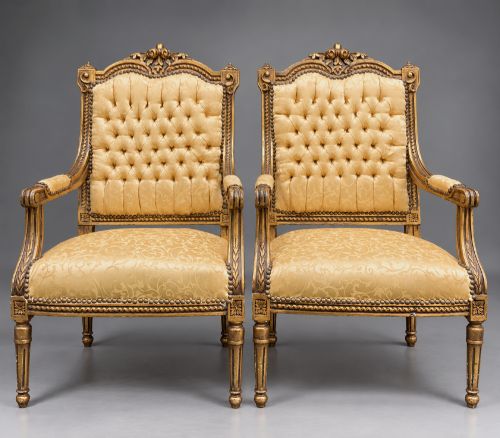
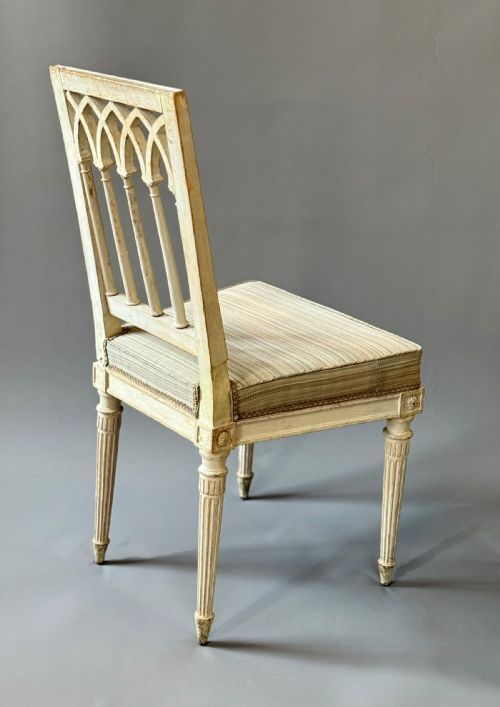
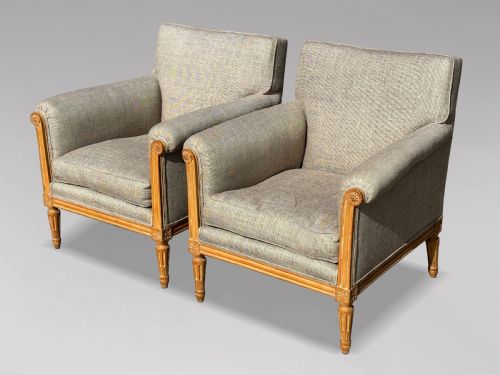
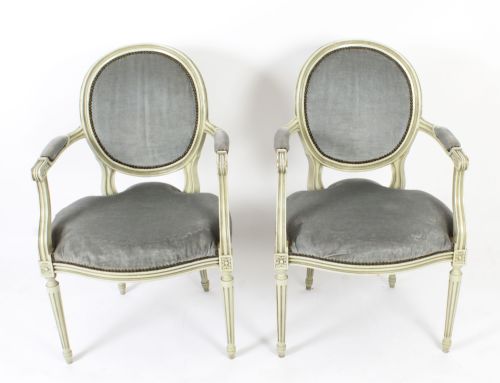
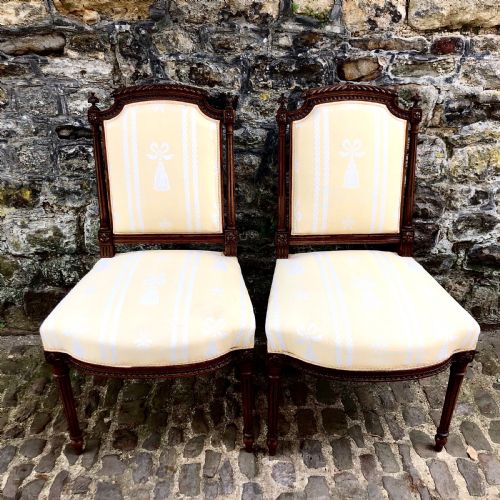
These pieces replicate the restrained geometry and neoclassical lines of eighteenth-century French seating, designed to project formality and balance. When searching for louis xvi revival chairs, you encounter nineteenth-century interpretations alongside early twentieth-century examples, spanning armchairs, salon chairs, and settees.
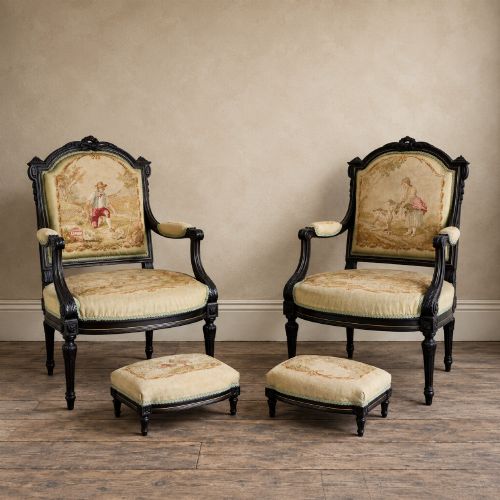
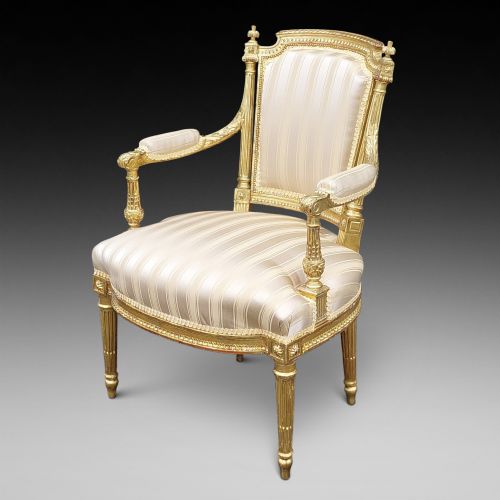
The materials recorded in the archive and current listings show a strong preference for giltwood and painted wood frames, paired with silk, velvet, tapestry fabric, and modern upholstery. Walnut and ebonised beech appear frequently as structural woods, often shaped into open armchairs and side chairs.
Nineteenth-century examples dominate the selection, though Edwardian and early twentieth-century interpretations also surface. Forms range from single fauteuils to matched pairs and larger parlour suites, reflecting the enduring nineteenth-century appetite for French chateau aesthetics.
How they were made
Frames are constructed from hardwoods such as walnut and beech, carved by hand with classical motifs including fluted legs, rosettes, and laurel wreaths. These wooden structures are then finished in gold leaf, paint, or ebonisation to mimic original eighteenth-century surfaces.
Upholstery relies on traditional stuffing techniques enclosed by decorative textiles. Silk damask, velvet, and tapestry fabric are secured to the frames using decorative nailing or gimp braid, completing the formal French aesthetic.
Louis XVI Revival Chairs Retail Price Guide 2026
Typical asking prices for louis xvi revival chairs among the pieces listed under this phrase on Sellingantiques today, from the lower quarter to the upper quarter. They describe what is for sale here now, not the wider market.
What varies in quality
Quality rests upon the crispness of the wood carving and the depth of the finish. Sharply chiselled leaf motifs and meticulously applied giltwood or painted surfaces distinguish finer examples from simpler production pieces.
The integrity of the frame construction and the choice of covering fabric dictate the overall standard. Robust joinery in walnut or beech combined with high-grade silk or velvet upholstery separates superior workshop output from standard commercial seating.
The Louis XVI Revival Chairs Glossary
- Fauteuil
- An open-armed upholstered armchair with exposed wooden framing. This form became a staple of French interior design during the neoclassical period.
- Giltwood
- Timber coated with a thin layer of gold leaf. This surface treatment was widely utilised on formal nineteenth-century revival seating to project luxury.
- Ebonised
- Wood treated to resemble ebony through staining or painting. The dark finish provides a striking contrast against gilded highlights or pale upholstery.
- Caned
- Woven rattan panel work used for seat bases or backs. This technique introduces lighter textural contrast to heavy wooden chair frames.
- Damask
- A reversible figured fabric traditionally woven with silk. It frequently appears on nineteenth-century salon seating to match historical French interiors.
Louis XVI Revival Chairs: Frequently Asked Questions
How do I date these chairs?
Dating relies on timber characteristics, tool marks, and the style of the carving. Nineteenth-century pieces often display denser hardwoods and specific revival interpretations.
Later twentieth-century reproductions tend to show machine-cut precision rather than hand-chiselled detailing on the frame.
Where were these chairs used?
These pieces belonged in formal drawing rooms, parlours, and salons of nineteenth-century residences. They were designed for reception spaces rather than private daily relaxation.
Pairs and three-piece suites created symmetrical seating arrangements suited to entertaining guests.
Can I use them daily?
Daily use is entirely feasible provided the internal frame and joinery remain sturdy. Antique armchairs function well in living areas when handled with reasonable care.
Periodic checks on the upholstery webbing ensure the seat maintains proper support over time.
What wood is underneath the paint?
Beech and walnut serve as the primary foundational timbers for these painted and gilded frames. Makers selected these woods for their strength and fine grain, which accepted intricate carving.
Ebonised beech and solid walnut appear across both mid-nineteenth and early twentieth-century examples.
How do I match different pairs?
Matching disparate pairs involves comparing wood finishes, upholstery fabrics, and the scale of the frame carvings. Giltwood and painted finishes each carry a distinct visual weight in a room.
Placing similar revival styles together maintains visual harmony without requiring identical historical periods.