


Grey Velvet Armchair
A grey velvet armchair brings tactile luxury and muted tone to a room, uniting period woodwork with soft pile upholstery.
What a grey velvet armchair is
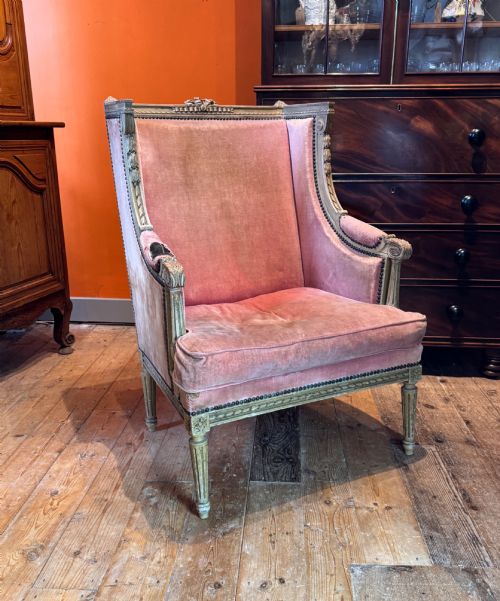
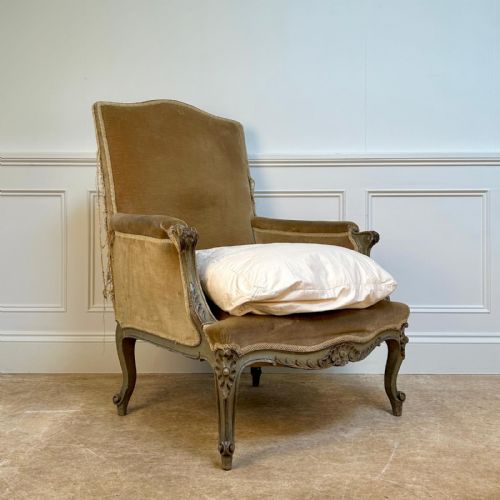
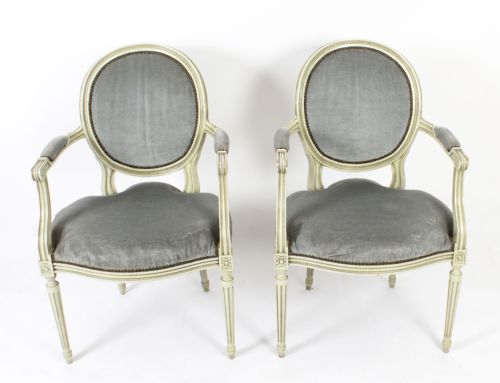
A grey velvet armchair combines traditional seating forms with a plush pile fabric that catches the light in shifting tones. The selection spans nineteenth-century pieces alongside early twentieth-century examples, including wingback chairs, tub chairs, and open armchairs.
The English country and Victorian traditions dominate the offerings, occasionally joined by French Louis XVI revival pieces. Buyers frequently encounter nineteenth-century mahogany frames and early twentieth-century painted wood structures.
The archive records previous items reupholstered in ice blue and grey velvet, showing how historic frames adapt to cooler textile tones. Each grey velvet armchair relies on the contrast between exposed timber and dense fabric.
How they were made
Frames rely on hardwoods such as mahogany, oak, and general timber construction, shaped through traditional joinery. Metal elements like brass appear on fittings and casters, while painted wood finishes provide alternative surface treatments.
Velvet forms the primary textile for upholstery, offering a dense pile that drapes over sprung or padded interiors. Structural elements incorporate cane work in certain open armchair designs alongside loose cushions.
Retail Price Guide 2026
Typical UK retail prices for grey velvet armchair, calculated from the Sellingantiques database of over a million retail prices indexed since 2003. This retail price guide relies exclusively on Sellingantiques data; no external sources or auction records are used, so the figures do not describe the wider market.
Listings feature four distinct timber types: mahogany, oak, painted wood, and general hardwood.
What varies in quality
The standard of timber framing dictates the structural integrity, distinguishing solid mahogany or carved oak from simpler hardwood forms. Heavier frames with substantial proportions and refined joinery represent the upper tier.
Upholstery execution separates standard examples from superior pieces, particularly in the hand-tailoring of velvet across complex curves like wingbacks and tub shapes. The integration of period details, such as brass casters and carved woodwork, elevates the overall finish.
The Grey Velvet Armchair Glossary
- Velvet
- A woven tufted fabric with a dense, short pile that gives a soft texture and distinct sheen. It catches light differently depending on the direction of the nap.
- Wingback
- An upholstered armchair with side panels or wings designed to shield the sitter from draughts. These high-backed seats originate in the Georgian period.
- Tub chair
- A deep-seated armchair where the back and arms form a continuous curved enclosure. This compact form provides a supportive and enveloping seat.
- Cane seat
- A woven mesh seating surface made from rattan strips. It offers a lightweight and flexible alternative to solid wood or upholstered panels.
Frequently Asked Questions
How do I care for a velvet armchair?
Velvet requires gentle brushing with the nap to maintain the pile and prevent flattening over time. Professional cleaning is recommended for deep marks.
Keep the fabric away from direct sunlight to prevent the grey tones from fading. Vacuuming with a soft upholstery attachment removes surface dust without crushing the pile.
What periods do these armchairs come from?
The pieces span the Georgian era through to the early twentieth century, including the nineteenth century. Victorian and Louis XVI revival styles are common.
Construction details and wood types help distinguish between these periods. Earlier examples often feature mahogany or carved oak frames.
Are these chairs suitable for daily use?
Historic frames are built with solid hardwoods like oak and mahogany to withstand regular seating. Many feature supportive cushioning and sturdy arm structures.
Checking the stability of the frame and the density of the upholstery ensures the chair suits everyday living spaces. Professional reupholstery also revitalises older internal webbing.
How do I identify a Howard style armchair?
Howard style chairs typically feature low, rolled arms and deep, sprung seats designed for comfort. They became prominent in the nineteenth century.
Their proportions are generous compared to standard open armchairs. The framing hides beneath deep upholstery and tailored velvet covers.