




French Gilt Occasional Chairs
French gilt occasional chairs bring gilded elegance and decorative flair to sitting rooms, boudoirs and bedrooms.
French Gilt Occasional Chairs
French gilt occasional chairs encompass seating made primarily for display and light use in nineteenth-century salons, boudoirs and bedrooms. When searching for french gilt occasional chairs, buyers encounter forms ranging from side chairs and armchairs to children's salon chairs.
The pieces listed here span periods from the nineteenth century into the twentieth, taking shape as tub chairs, salon chairs and accent seating. Common revivals dictate the design language, linking nineteenth-century production to earlier eighteenth-century French aesthetics.
How they were made
Maker workshops utilised traditional timbers like beech and walnut to build foundational chair frames before applying gesso and surface gilding. Upholstery involved textiles, fabric and velvet fitted to seats and backs for decorative comfort.
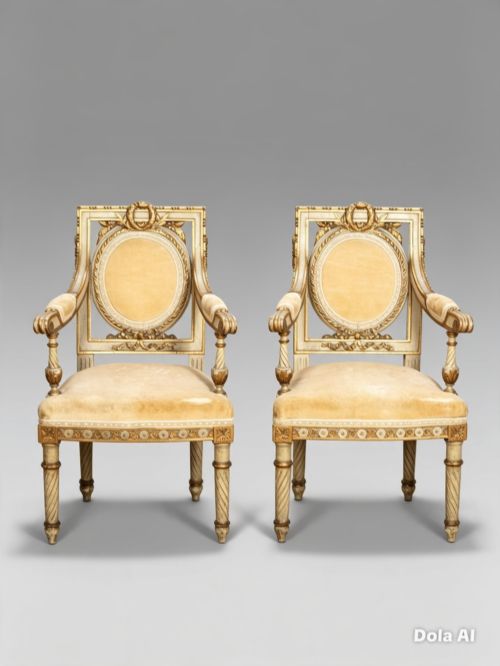
Surface treatment often combined gilding with paint or simulated bamboo details to achieve specific revival styles such as Louis XVI, Rococo and Empire. Brass elements occasionally appeared in structural reinforcement or decorative mounts.
Listings for french gilt occasional chairs span the nineteenth century, Edwardian era, and the nineteen-twenties, using giltwood, gesso, beech and walnut.
What varies in quality
Quality separates through the crispness of carved gesso detail and the depth of the gilding applied to the wooden frame. Frames constructed from solid hardwoods like walnut demonstrate superior underlying craftsmanship compared to simpler secondary timbers.
The integrity of original upholstery textiles and the precision of joinery in scroll arms and legs distinguish finer salon pieces from standard utility seating. Pairs and matched suites command distinct attention due to the difficulty of surviving together in uniform condition.
The French Gilt Occasional Chairs Glossary
- Giltwood
- Wood that has been coated with gold leaf or a metallic substitute. This finish defines the reflective surface characteristic of these salon seats.
- Gesso
- A plaster-like mixture applied to wood frames to provide a smooth base for gilding. Carved details are often modelled directly in this layer.
- Louis XVI Style
- A neoclassical design movement characterised by straight tapered legs, geometric forms and classical ornamentation. It heavily influences nineteenth-century revival seating.
- Rococo Revival
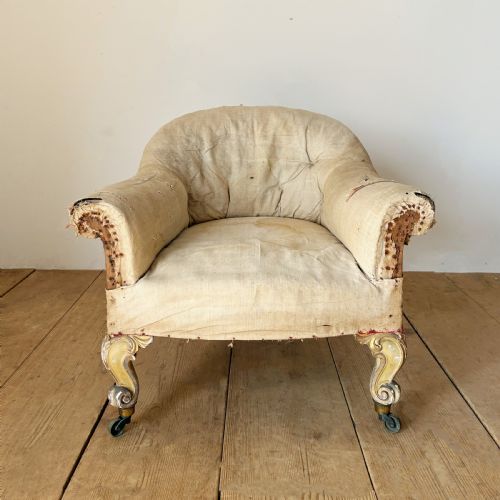
- A nineteenth-century style drawing on eighteenth-century asymmetrical curves, scroll arms and naturalistic floral motifs. Chairs from this movement feature elaborate flowing lines.
- Occasional Chair
- A light, movable chair intended for use on special occasions or to supplement primary seating in a room. These pieces double as decorative accents.
French Gilt Occasional Chairs: Frequently Asked Questions
What is a French gilt occasional chair?
A French gilt occasional chair is a decorative seat finished with gold leaf, designed for light use in formal rooms, boudoirs and parlours.
These pieces often reflect historical French design movements, utilising exposed gilded frames and upholstered seats to balance utility with visual display.
Where were these chairs used historically?
Historically, these chairs populated nineteenth-century drawing rooms, salons and private boudoirs where entertaining and aesthetic display took priority over heavy daily lounging.
Their lightweight frames allowed servants or owners to reposition them easily around a room for conversation or music recitals.
How do I identify a Louis XVI style chair?
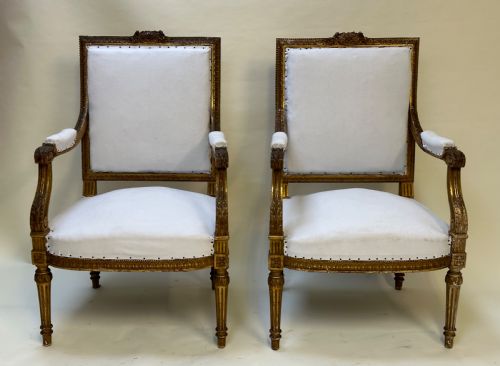
Louis XVI style chairs are distinguished by straight, fluted or tapered legs, rectangular or oval backs, and restrained neoclassical ornamentation.
Unlike the curved asymmetry of Rococo designs, these chairs favour symmetry, architectural straight lines and classical motifs.
Can I use an antique occasional chair daily?
Antique occasional chairs suit light daily sitting, but their delicate nineteenth-century frames and historic joinery demand gentle treatment.
Placing them in low-traffic areas helps preserve the original gilt surface and structural integrity of the wood.
What is the difference between a salon chair and a side chair?
Salon chairs generally feature more elaborate carving, gilding and upholstery suited for formal entertaining spaces, while side chairs offer simpler proportions without arms.
Both types function as movable seating, but salon pieces often showcase higher artistic ambition in their frame design.