

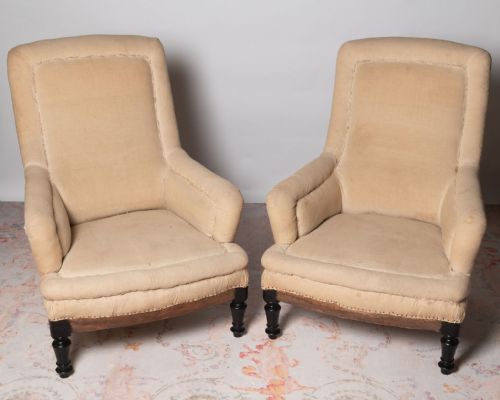
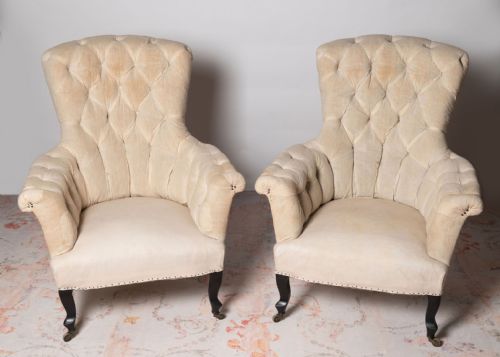
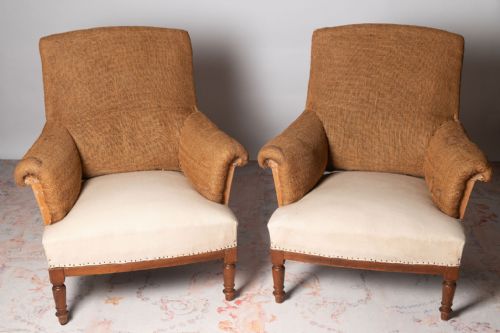
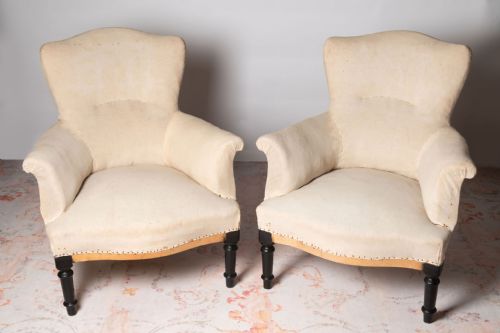
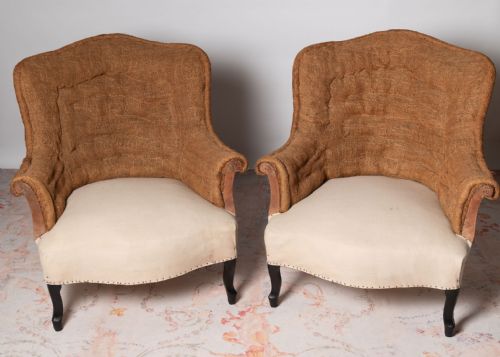
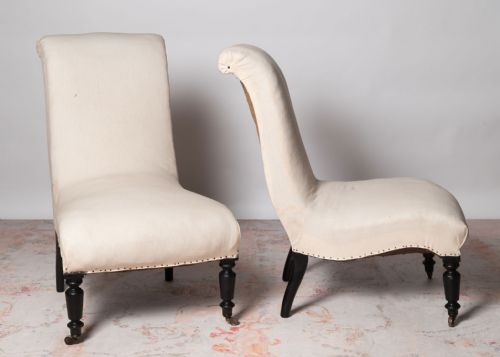
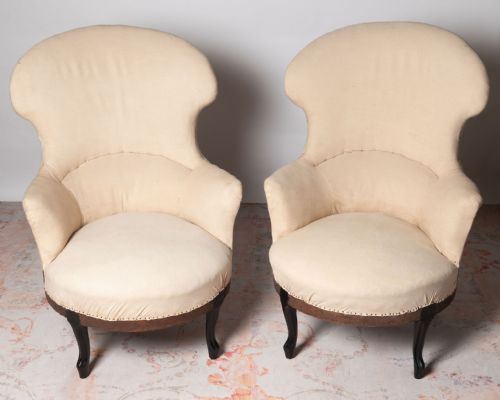
French Bedroom Armchairs
French bedroom armchairs bring classical seating into private spaces through distinctive periods like the nineteenth century and nineteen thirty.
What they are
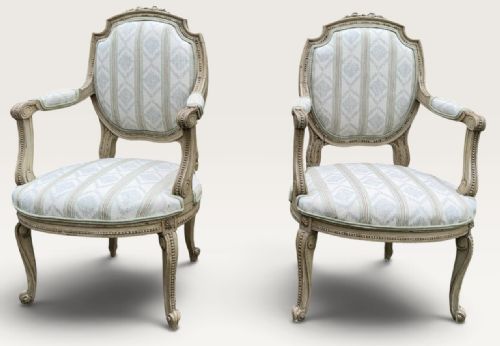
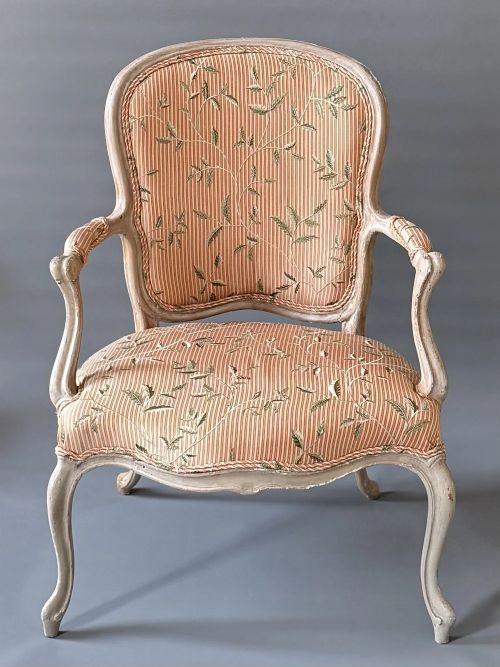
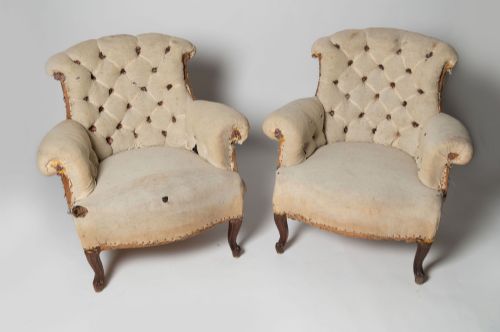
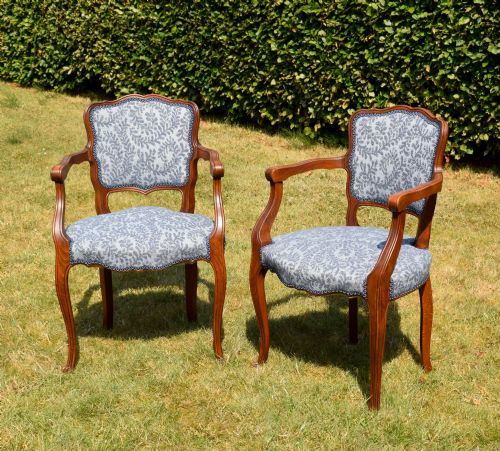
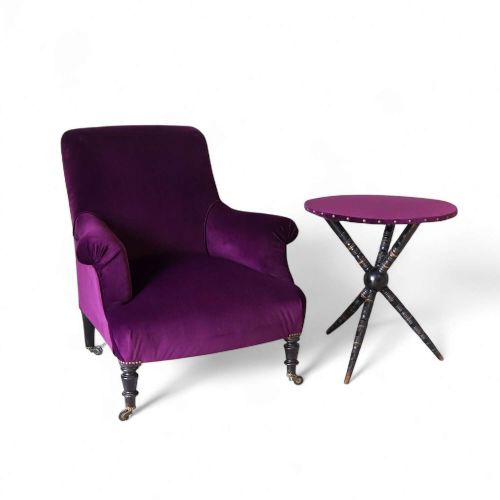
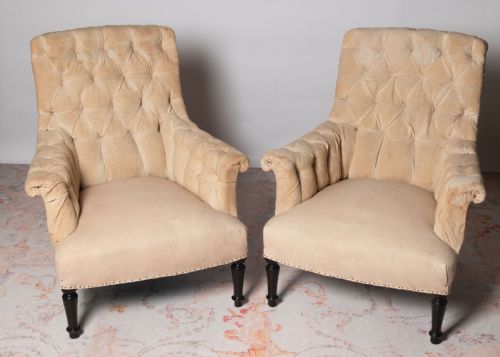
French bedroom armchairs encompass various seating forms including salon armchairs, boudoir chairs, and accent chairs. These pieces originate from distinct eras such as the nineteenth century and nineteen thirty.
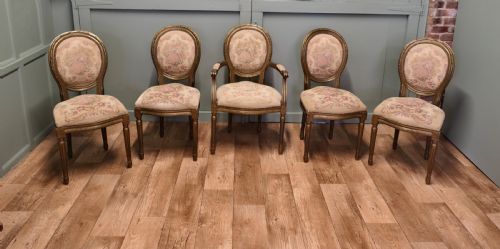
A buyer examining this selection encounters pairs and matched sets alongside individual examples. Styles span from French chateau and French provincial to Napoleon III and Louis XVI revival.
The most common formats reflect traditional seating designed for private chambers and salons. These forms demonstrate historical stylistic revivals rooted in eighteenth-century aesthetics.
How they were made
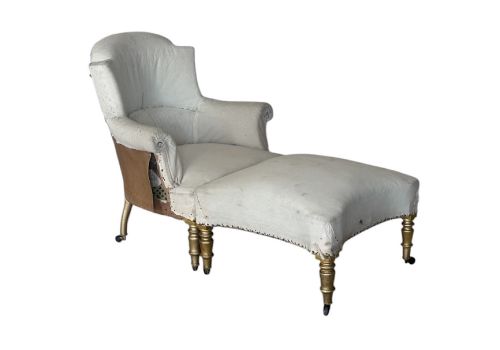
Construction relies upon solid timbers including beech wood and walnut. Frames are shaped to support traditional upholstery methods utilising underlying hessian and calico foundations.
Visible woodwork frequently receives surface treatments such as gilt. Final finishing incorporates outer layers of linen, fabric, and upholstered fabric to complete the seating.
Retail Price Guide 2026
Typical UK retail prices for french bedroom armchairs, calculated from the Sellingantiques database of over a million retail prices indexed since 2003. This retail price guide relies exclusively on Sellingantiques data; no external sources or auction records are used, so the figures do not describe the wider market.
Current listings feature pieces spanning the nineteenth century and nineteen thirty, utilising beech wood, walnut, linen, and calico.
What varies in quality
Distinctions in quality arise from the execution of the wooden frame and the precision of the carved details. Superior examples exhibit refined timber framing in beech wood or walnut with careful adherence to classical styles.
The sophistication of the period upholstery work also distinguishes finer pieces. Materials like linen and gilt-wood indicate higher execution compared to simpler variants.
The French Bedroom Armchairs Glossary
- Gilt-wood
- Wood treated with gold leaf or a similar metallic gilding to create a brilliant decorative surface. This finish is frequently observed on nineteenth-century salon seating.
- Boudoir chair
- A smaller armchair traditionally intended for a private dressing room or sitting chamber. These seats combine comfort with compact proportions.
- Hessian
- A coarse woven fabric traditionally utilised as a sturdy foundation layer beneath final upholstery. It provides internal structural support for traditional armchair construction.
- Napoleon III
- A nineteenth-century French design period associated with eclectic revivals and ornate comfort. Pieces from this era often incorporate rich textiles and elaborate framing.
Frequently Asked Questions
Where were french bedroom armchairs used?
These armchairs served primarily in private chambers, dressing rooms, and intimate reception spaces within larger residences. Their scale made them suitable for comfortable seating away from formal public rooms.
They also appeared in private boudoirs and salons, coordinating with other furnishings of the period.
How do I identify louis xvi revival style?
Louis XVI revival pieces typically display straight, fluted legs and rectilinear framing that contrasts with earlier curved rococo designs. Carved neoclassical motifs such as ribbons and beaded channels often appear on the wood.
These characteristics emerged strongly during the nineteenth century as makers looked back to eighteenth-century aesthetics.
What materials make up the frames?
Frames are constructed from solid hardwoods including beech wood and walnut. These timbers provided the necessary structural strength for traditional seating forms.
Some exceptional pieces feature gilt-wood finishes applied directly to the carved wooden frame.
Are these chairs sold as pairs?
Listings frequently feature matching pairs alongside individual chairs. Pairs allow for symmetrical placement within a bedroom or salon setting.
Historical examples often survive together as matched sets from the nineteenth century.
What is the difference between salon and boudoir chairs?
Salon armchairs generally offered formal seating for entertaining guests in reception rooms. Boudoir chairs were typically scaled smaller for private dressing spaces.
Both forms utilise traditional upholstery over internal foundations like hessian and calico.