
French Club Chairs
French club chairs bring deep leather comfort and sculptural silhouette into a room, offering deep seats designed for long hours of relaxation.
French Club Chairs
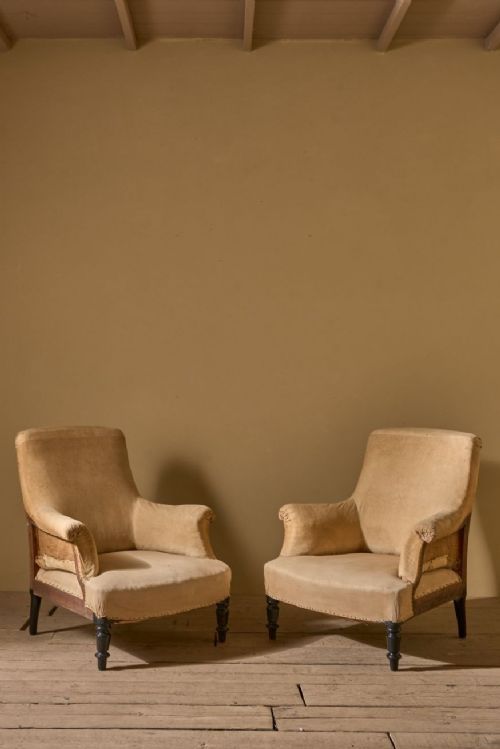
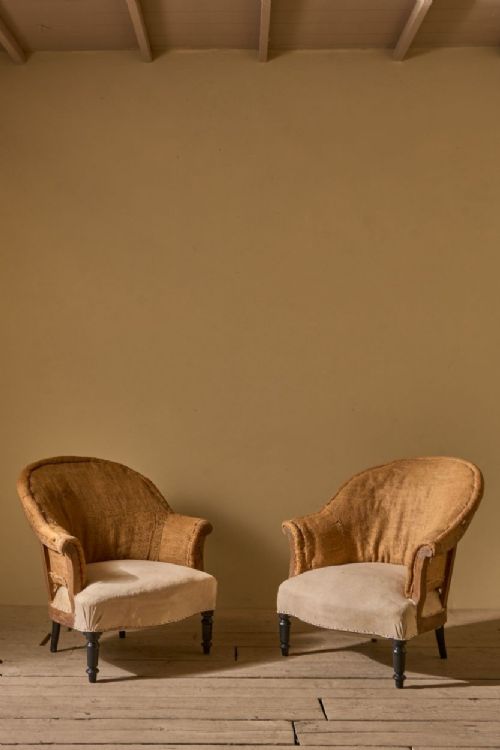
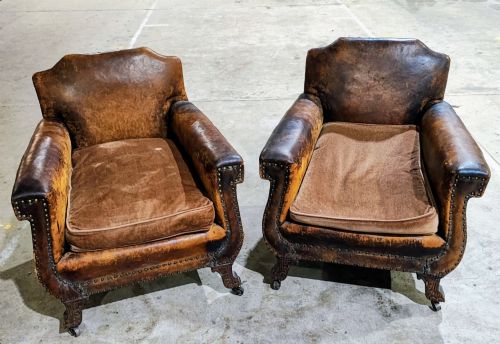
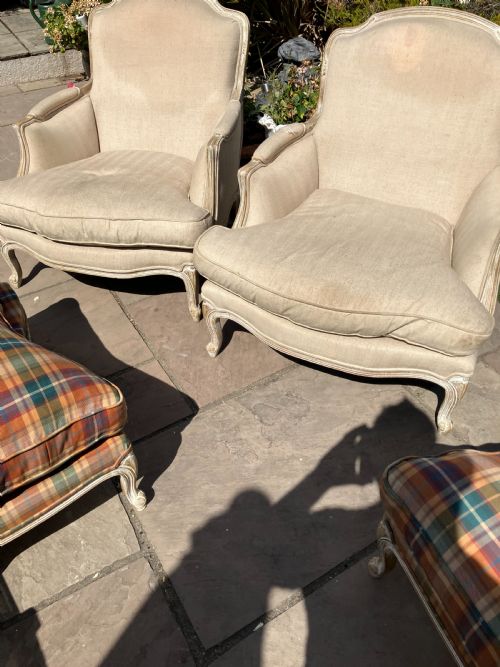
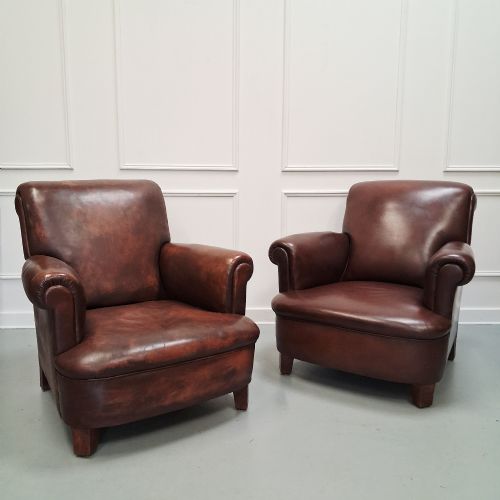
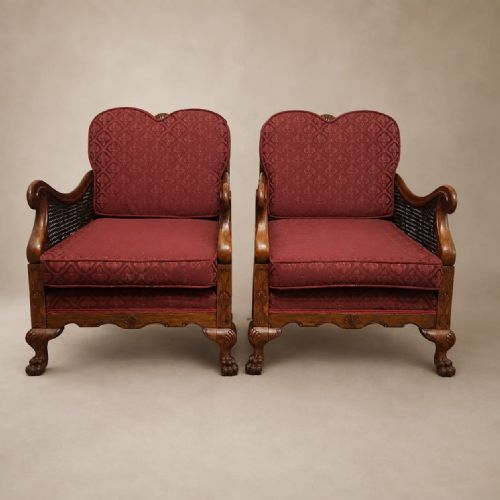
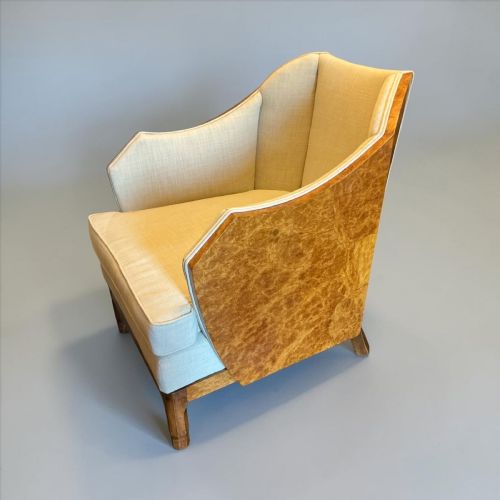
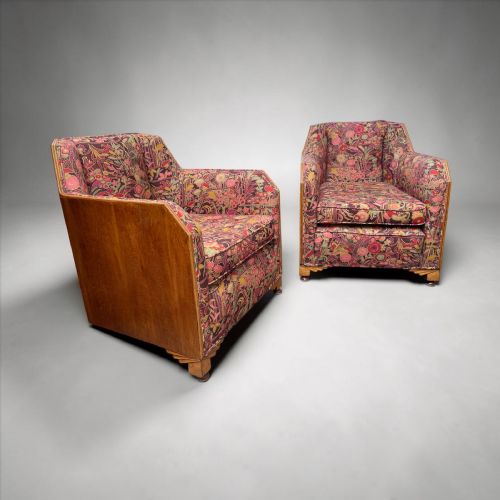
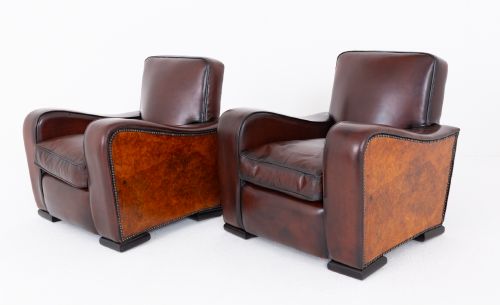
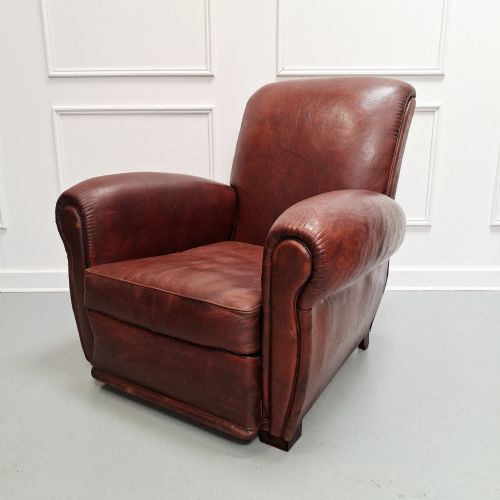
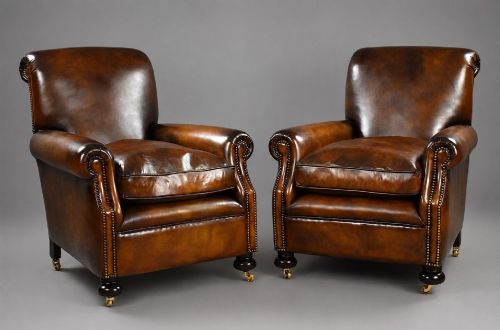
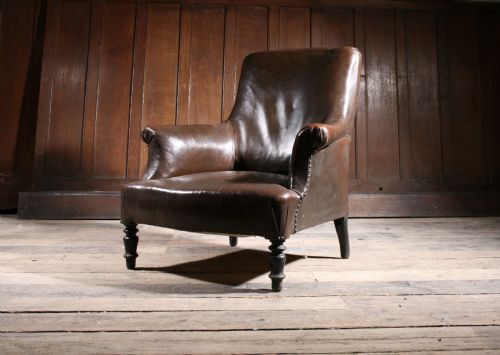
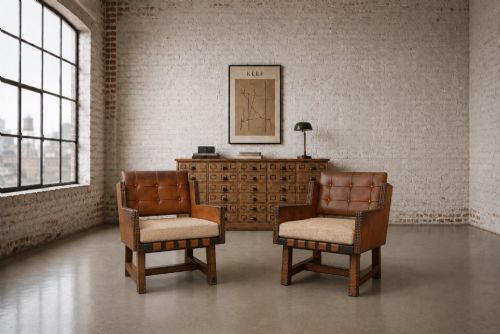
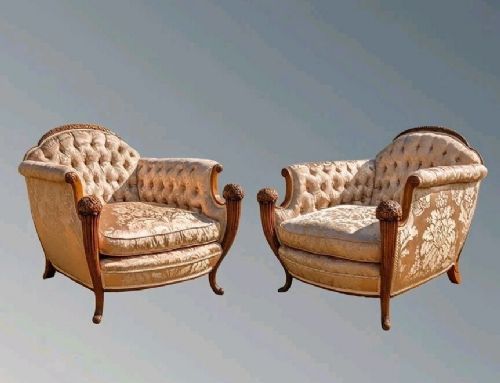
When searching for french club chairs, buyers encounter sturdy upholstered seating designed primarily for comfort, frequently appearing in robust leather or fabric finishes. These forms range from streamlined 1930s Art Deco silhouettes to button-backed 19th Century Napoleon III variants and earlier Victorian examples.
The selections available span multiple decades, incorporating occasional armchairs, matching pairs, and full lounge suites. Pieces originating from the early twentieth century and the interwar period dominate the offerings, showcasing distinct low profiles and supportive armrests.
Materials and construction methods
Construction relies heavily on internal timber frames built from hardwoods like walnut, providing a rigid skeletal structure for the heavy upholstery. Joinery is typically robust to support the substantial weight of the seat and back components.
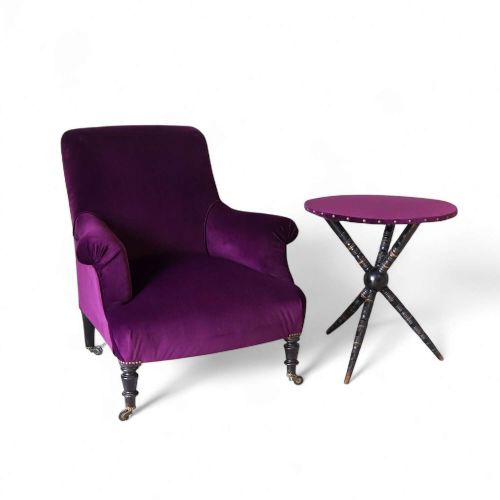
Outer coverings utilise traditional leather, often referred to in historical records as sheep's hide, alongside alternative textile applications such as velvet, calico, and silk. Brass detailing and exposed wooden framing appear frequently as structural and decorative accents.
The inventory records numerous matching pairs alongside individual armchairs, sofa sets, and occasional lounge suites.
Evaluating craftsmanship and condition
Quality separates ordinary examples from finer specimens through the integrity of the internal frame and the suppleness of the original hide. Superior pieces maintain dense inner cushioning and balanced proportions without sagging in the seat base.
The refinement of the woodwork, whether carved walnut or ebonised timber, dictates the overall distinction of the armchairs. Original upholstery materials and patinated leather surfaces command greater attention from collectors than heavily altered examples.
The French Club Chairs Glossary
- Bergere
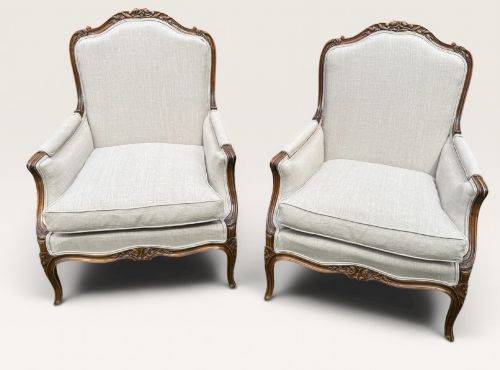
- An enclosed armchair with upholstered sides and a exposed wooden frame, frequently utilising cane work in the construction.
- Art Deco
- A design style prominent in the 1920s and 1930s characterised by streamlined geometric forms and smooth surfaces.
- Napoleon III
- A 19th Century French revival style known for ornate button-tufted upholstery and curved structural lines.
- Tub chair
- An armchair featuring a continuous curved back and arms that form a single low-enclosing barrier around the seat.
- Button-back
- An upholstery technique where indentations are formed in the padding by pulling buttons deep into the fabric or leather.
French Club Chairs: Frequently Asked Questions
What defines a true club chair?
A club chair is characterised by a deep, low seat and thick, upholstered armrests designed to maximise physical comfort and relaxation.
Originating in French and British sitting rooms, these substantial armchairs evolved to provide durable, everyday seating with generous proportions.
How do I date an antique club chair?
Dating relies on observing stylistic markers such as Art Deco geometric lines or Napoleon III button-tufting details.
Materials also help establish age, with specific tanning methods on leather and particular wood types pointing towards definite decades like the 1920s or 1930s.
Are these chairs suitable for daily use?
These sturdy armchairs were built for daily lounging and remain robust enough for regular sitting in modern spaces.
Properly maintained leather and strong wooden frames handle everyday wear well, provided the internal webbing and padding remain supportive.
What is the difference between Art Deco and Napoleon III styles?
Art Deco designs feature clean, streamlined silhouettes and smooth leather surfaces without excessive ornamentation.
Napoleon III pieces tend to display more decorative curves, exposed wooden framing, and detailed button-backed upholstery from the nineteenth century.