
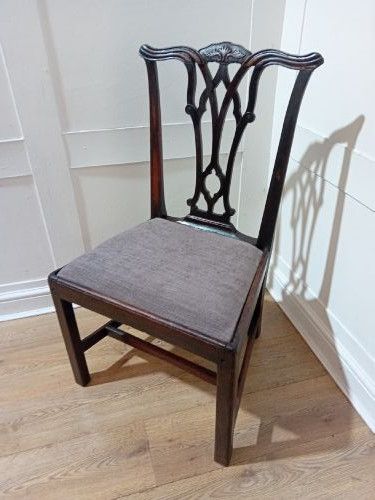
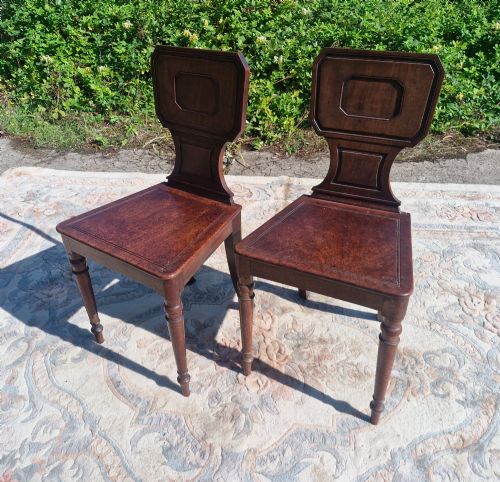
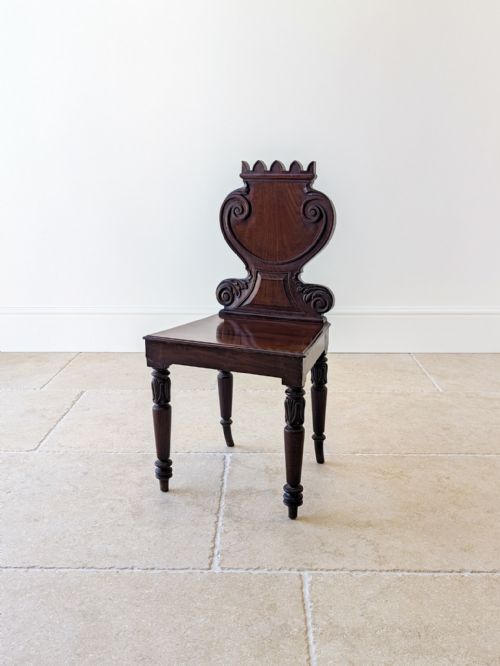
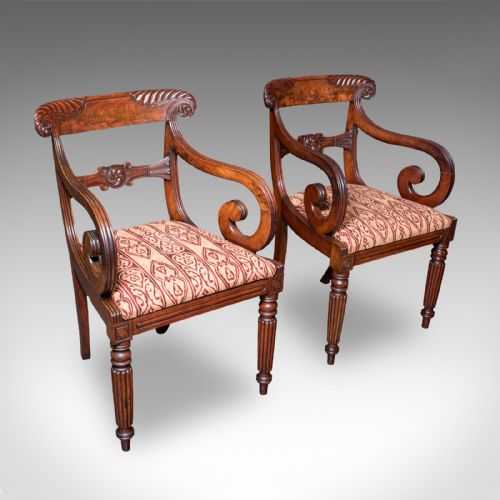
Carved Mahogany Hall Chair
A carved mahogany hall chair brings formal British seating into an interior, offering robust timber construction alongside architectural backplates.
Carved Mahogany Hall Chair
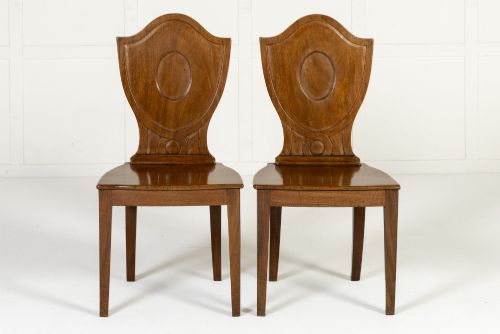
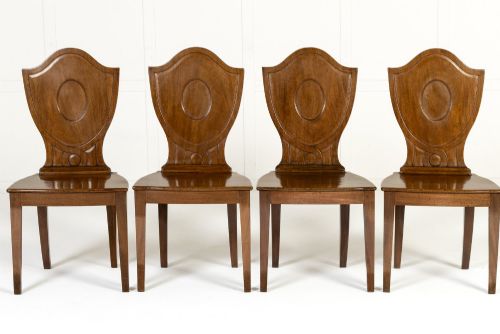
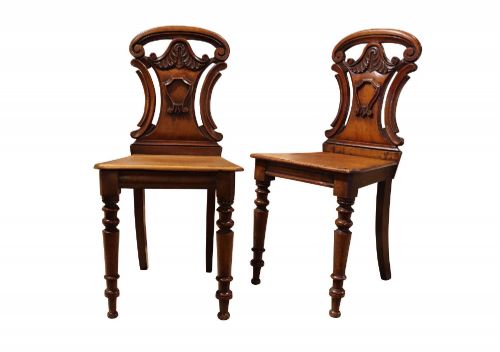
A carved mahogany hall chair serves as a functional reception seat historically placed in the entranceways of grand houses. These pieces are most frequently encountered from the Georgian, Regency, and Victorian periods, often appearing singly or in matched pairs.
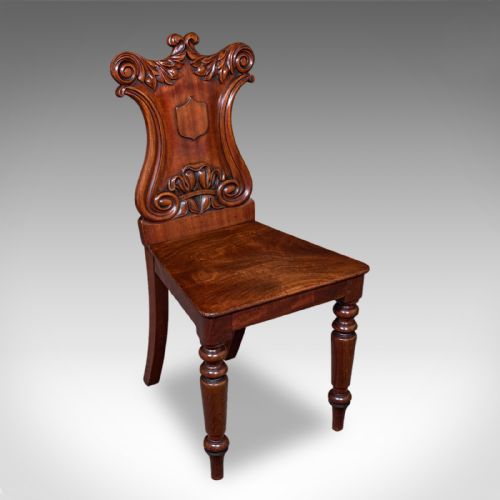
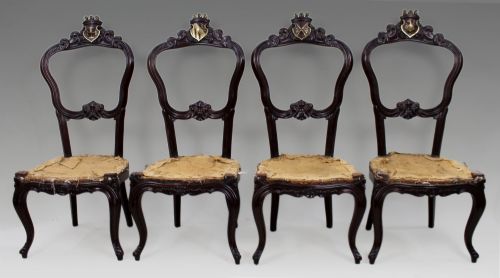
The form typically combines a solid timber seat with a carved backplate, sometimes featuring painted or incised armorial crests. Beyond traditional entrance halls, these seats function effectively as occasional or side seating in modern rooms.
How they were made
Cabinet makers utilised dense tropical hardwoods such as Cuban and solid mahogany, selected for durability and deep natural grain. Timber boards were shaped using hand saws and joined with traditional mortise and tenon techniques.
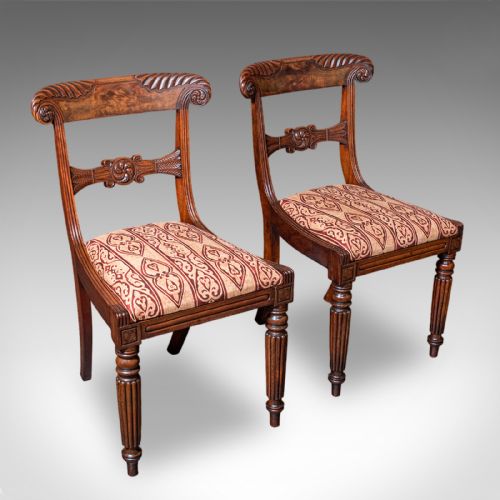
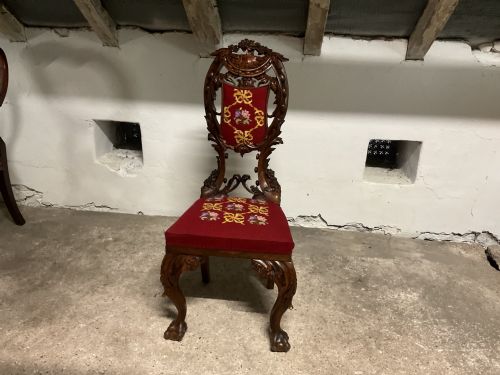
Carving was executed entirely by hand, rendering motifs like pelta shapes, fan patterns, shields, and scrollwork directly into the solid wood backplates.
Carved Mahogany Hall Chair Retail Price Guide 2026
Typical asking prices for carved mahogany hall chair among the pieces listed under this phrase on Sellingantiques today, from the lower quarter to the upper quarter. They describe what is for sale here now, not the wider market.
Some nineteenth-century examples double as hidden bedroom bedside chairs when the hall gets too crowded.
What varies in quality
The distinction between standard examples and superior pieces rests largely on the depth and crispness of the carved ornamentation. Sharply defined armorial crests and sculptural shield backs indicate skilled handwork by notable cabinet makers.
Timber selection also dictates value, with heavily figured mahogany and substantial solid construction marking the upper tier of surviving examples.
Gillows·Thomas Chippendale
The Carved Mahogany Hall Chair Glossary
- Armorial
- Bearing a heraldic coat of arms or family crest. These are frequently carved or painted onto the centre of the backplate.
- Pelta back
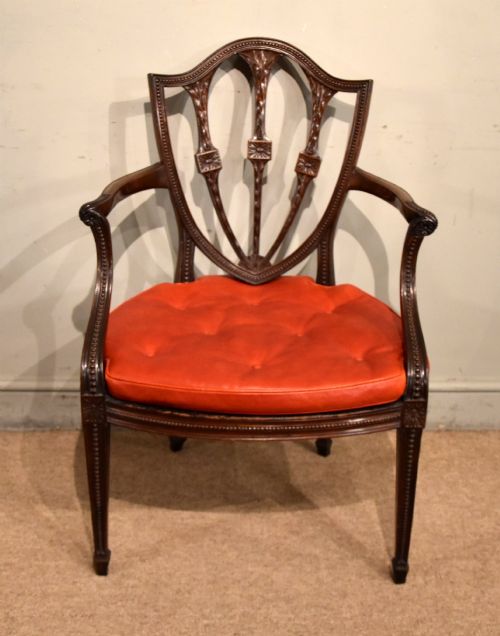
- A shield-shaped backrest resembling a classical Greek shield. This form appears across nineteenth-century examples.
- Cuban mahogany
- A dense, heavy variety of Swietenia mahagoni exported from the Caribbean. Cabinet makers favoured this timber for its rich patina and strength.
- Shield back
- A chair back shaped like a heraldic shield, popularised during the eighteenth and nineteenth centuries. The carved wooden surface often displays intricate scrolling.
Carved Mahogany Hall Chair: Frequently Asked Questions
Where were hall chairs placed originally?
These seats stood near the entrance doors of large country houses and town residences. Visitors waited upon them while servants announced their arrival to the household.
Today, homeowners position them in narrow corridors, hallways, or against feature walls where deep seating is unnecessary.
Are these chairs comfortable for daily seating?
Solid wood construction and upright wooden backs mean these pieces were designed for posture rather than lounging. They provide sturdy support for brief periods rather than long hours of relaxation.
Most owners utilise them primarily as decorative accent furniture or occasional seating in reception rooms.
How do I identify a Regency period piece?
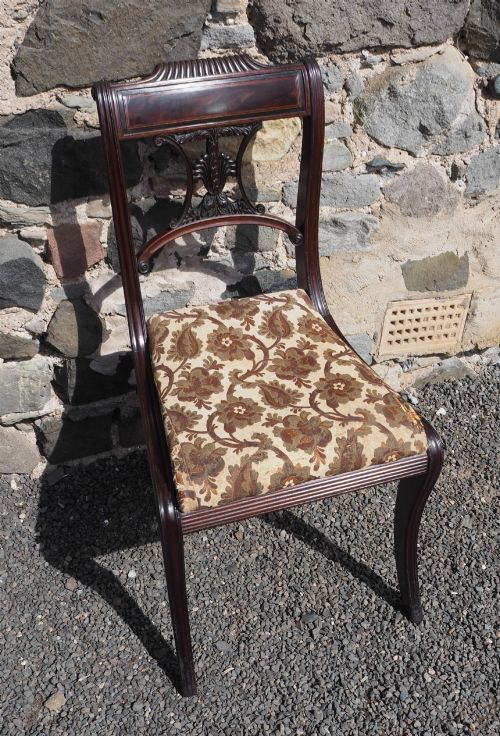
Regency examples often display classical revival motifs influenced by Roman and Greek design. Look for bold carved backplates, sabre legs, and architectural symmetry.
Timber from this era tends to exhibit deep reddish-brown tones with prominent natural grain patterns.
Why do many hall chairs lack upholstery?
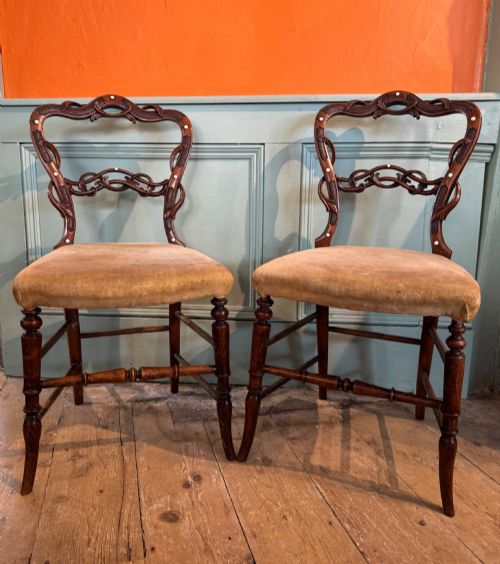
Entrance hall seating was constructed entirely from wood to withstand heavy outer garments and damp weather conditions. Solid timber surfaces proved easier to maintain than upholstered fabric in drafty entryways.
This unpadded design showcases the carved mahogany backplates and turned wooden legs without obstruction.