


Edwardian Hall Seating
Edwardian hall seating brings practical function and robust craftsmanship to an entrance, spanning sturdy oak benches and inlaid mahogany seats.
Edwardian Hall Seating
When you search for edwardian hall seating, you encounter a practical class of entrance furniture designed for domestic utility and architectural presence. These forms serve as places to sit while putting on boots or waiting in a hallway.
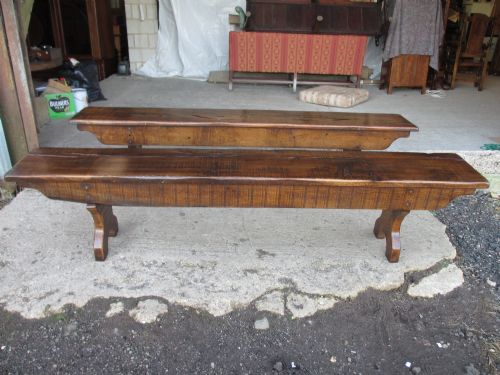
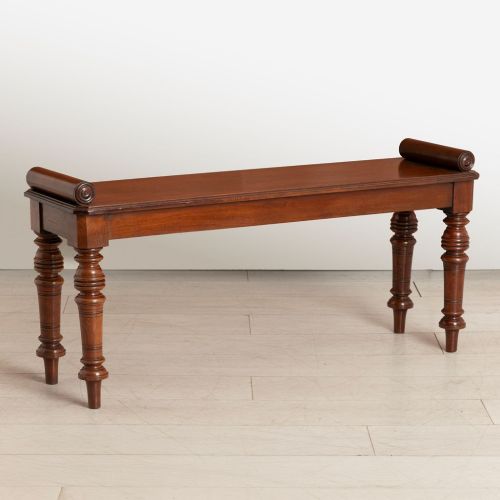
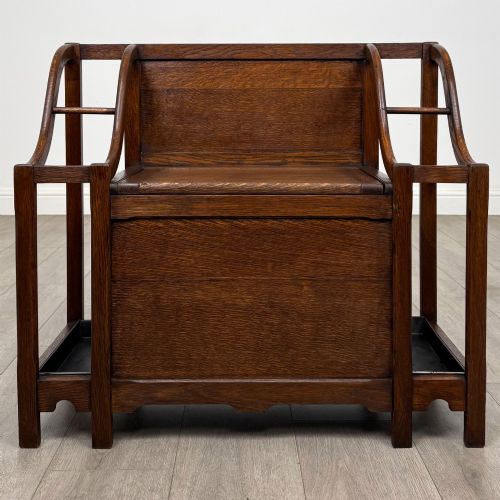
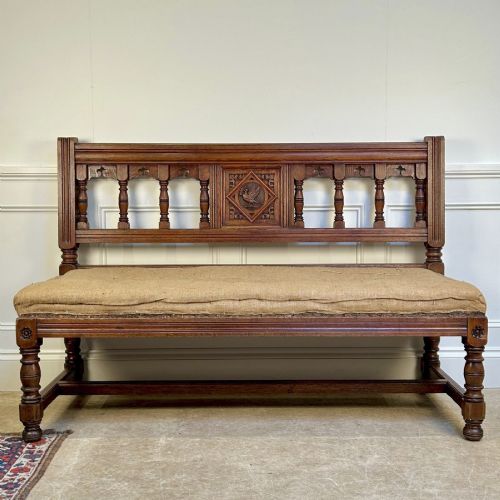
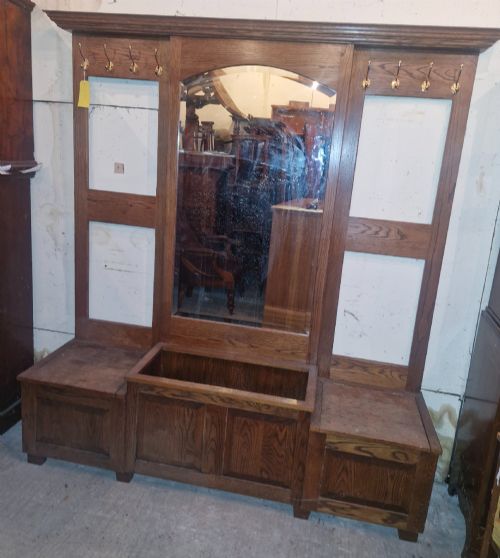
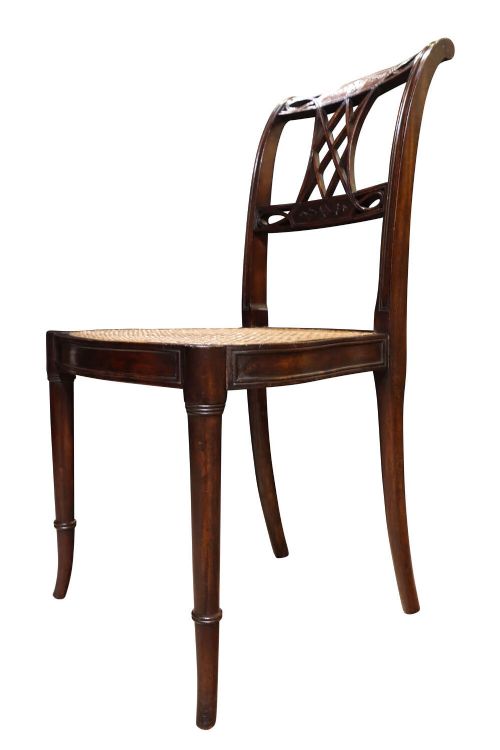
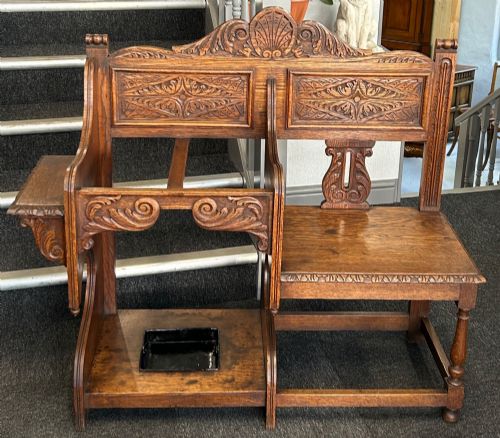
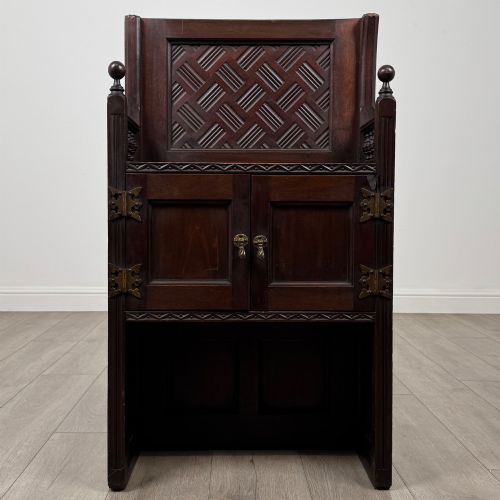
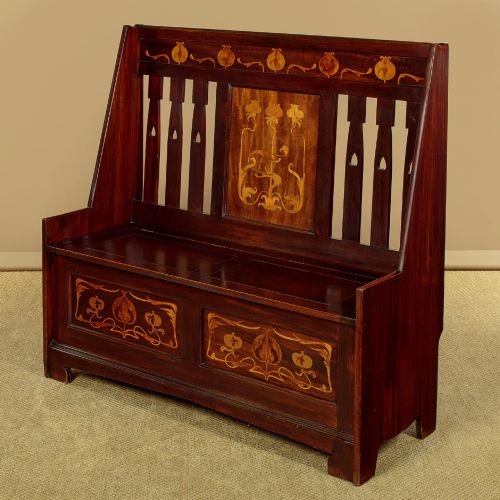
The pieces appear most often in solid or golden oak and mahogany, taking the form of benches, settles, hall chairs, and window seats. Many examples incorporate clever multifunctionality, such as box compartments, stick stands, and combined cabinets.
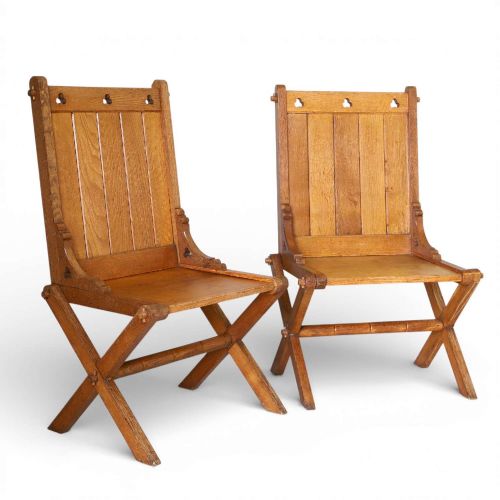
The selection ranges from straightforward Edwardian production to earlier Victorian and Regency survivals, alongside pieces executed in the Arts and Crafts, Gothic Revival, and Jacobean Revival styles.
How They Were Made
Makers relied principally upon timber frames of oak and mahogany, supplemented by beech and satinwood for specific chairs and settee structures. Joinery techniques involved robust mortise and tenon construction to withstand heavy daily use in busy entranceways.
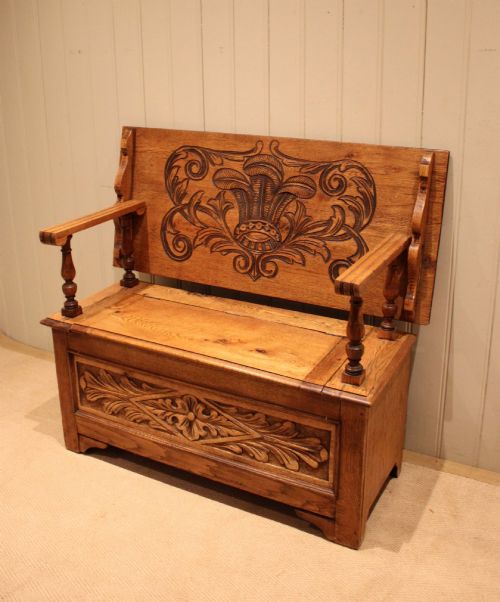
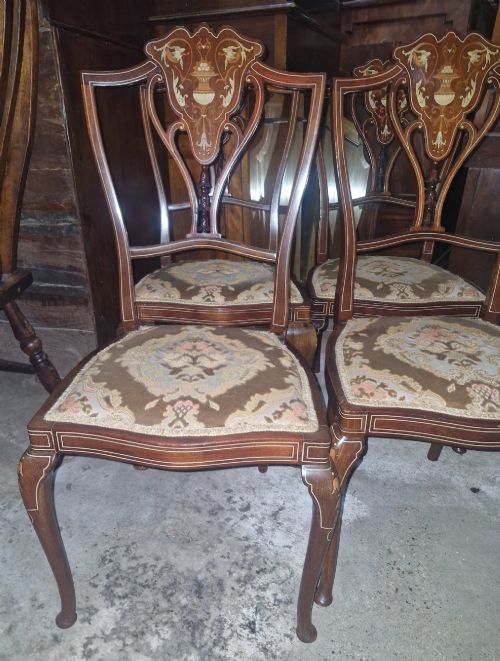
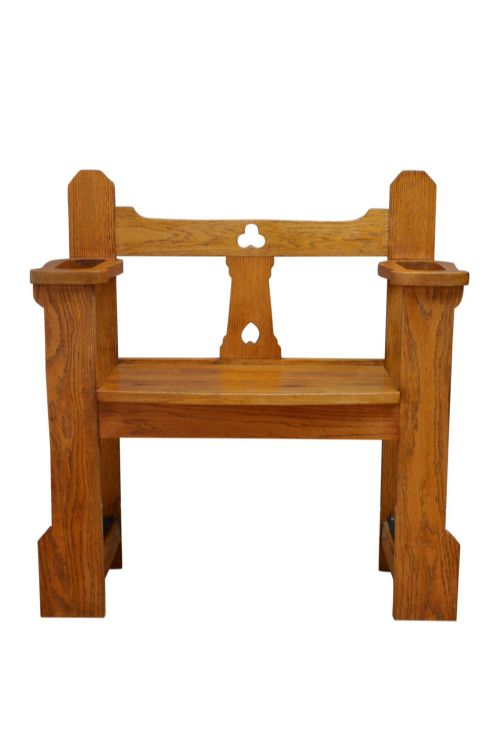
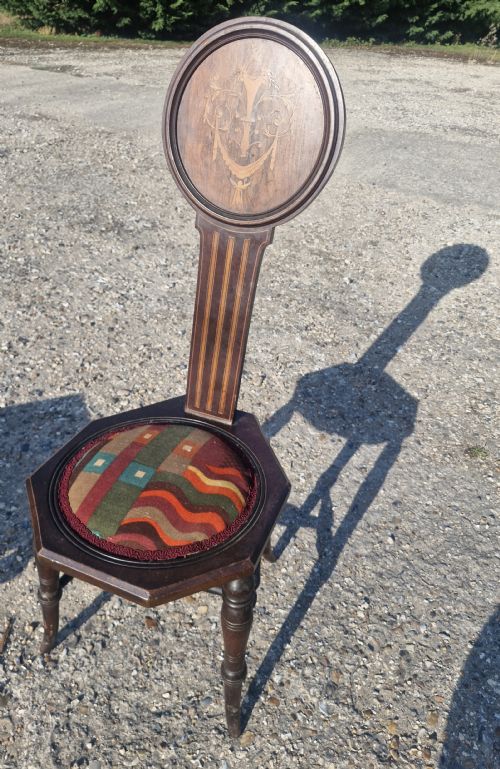
Surface enrichment frequently included carved details, shaped trestle ends, trefoil motifs, and delicate marquetry inlay. Seats were finished with solid wood, woven cane, brass hardware, or upholstered pads in leather and fabric.
Listings feature oak and mahogany predominantly, alongside beech, satinwood, leather, fabric, and brass elements.
What Varies in Quality
The distinction between ordinary utility items and superior examples rests upon the ambition of the design and the integrity of the timber. Pieces bearing attribution to established workshops display more thoughtful carving, refined proportions, and denser hardwoods.
Construction methods also separate standard production from exceptional work, visible in the tightness of the joinery and the retention of original hardware. Secondary materials like cane work, leather upholstery, and brass mounts reveal the original grade of the commission.
Charles Tozer·James Shoolbred and Co·Liberty·Shapland and Petter·Thonet·Gillows
The Edwardian Hall Seating Glossary
- Settle
- A wooden bench with a high back, solid arms, and often a hinged seat revealing storage space beneath. This form provided draught protection in large halls.
- Monks bench
- A convertible piece of furniture functioning as both a table and a seat with a pivoting back. The tabletop tilts downward to form a flat surface.
- Inlay
- The technique of embedding pieces of contrasting timber, such as satinwood or lighter woods, into the primary surface to create decorative patterns. This method defines many Edwardian mahogany items.
- Trestle ends
- Supporting vertical side panels connected by a central stretcher, frequently shaped for architectural effect on heavy benches. This structural support appears widely on oak hall seating.
- Gothic Revival
- An architectural and decorative movement reviving medieval pointed arches, trefoil details, and heavy framing. Pieces from this tradition show strong ecclesiastical influences.
Edwardian Hall Seating: Frequently Asked Questions
What is edwardian hall seating?
Edwardian hall seating encompasses wooden benches, settles, and chairs designed for placement in hallways, vestibules, and entrance spaces.
These objects provided a convenient spot for visitors to wait or change footwear upon entering a home.
How do I identify an edwardian hall bench?
An Edwardian hall bench typically exhibits the materials and stylistic markers of the early twentieth century, combining sturdy oak or mahogany with clean lines.
Many examples incorporate functional additions like umbrella stands or lift-up storage compartments beneath the seat.
Where were hall seats placed?
Hall seats were positioned in the primary entrance hall or vestibule of country houses and town residences alike.
Their placement offered an immediate impression of hospitality while serving the practical needs of arriving guests.
How do I care for antique oak furniture?
Maintaining antique oak involves keeping the timber away from direct heat sources and sudden humidity changes to prevent splitting.
Occasional treatment with appropriate wax preserves the polished finish without building up heavy residues on the carved surfaces.