


Heraldic Crest Chairs
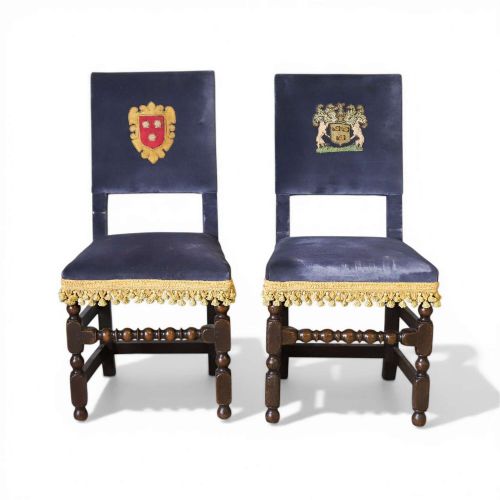
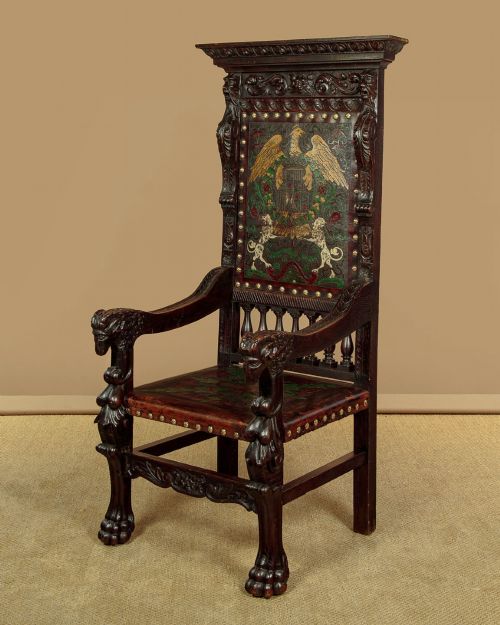
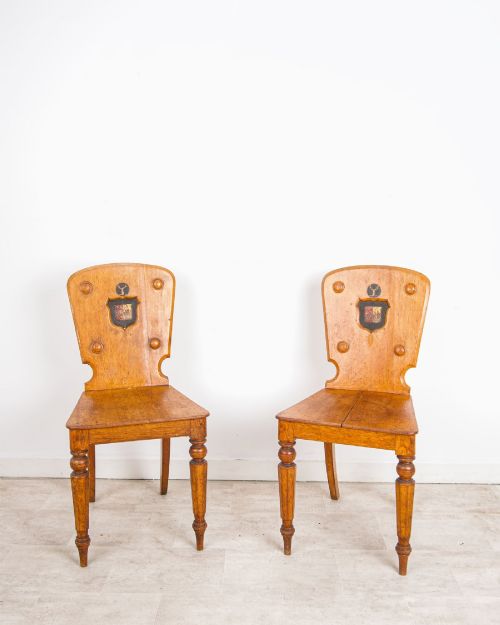
These heraldic crest chairs are statement seating bearing carved, painted, or upholstered armorial bearings, offering distinct historical character.
Heraldic Crest Chairs
When you search for heraldic crest chairs, you encounter seating featuring armorial shields, crests, and family insignia. These pieces range from substantial oak armchairs and throne chairs to sets of mahogany hall chairs designed for grand entrances and reception rooms.
You are most likely to meet Victorian and 19th-century examples on this page, alongside earlier 17th-century Scottish pieces and Regency variations. The forms include hall chairs, side chairs, armchairs, and dining chairs constructed for prominent interiors.
The aesthetic draws on Gothic Revival, Renaissance Revival, and Georgian traditions, uniting functional seating with lineage and heraldic display.
Materials and Construction
Makers utilised dense timbers such as oak, mahogany, walnut, and rosewood to build these chairs, ensuring durability for heavy use in halls and chambers. Oak frequently appears in earlier and Gothic Revival pieces, while mahogany and rosewood dominate the Regency and Victorian selections.
Decoration involves detailed wood carving for heraldic shield backs, complemented by painted leather, velvet, tapestry, and hessian upholstery. Brass fixtures and painted details further highlight the armorial crests embedded within the design.
One chair even carries the precise provenance of an earl, ensuring your hallway comes with proper aristocratic oversight.
Assessing Quality
Quality rests upon the crispness of the armorial carving and the integrity of the timber frame. Pieces with deeply carved wooden shields or well-executed painted crests show superior craftsmanship compared to simpler, plain-backed variants.
The preservation of original upholstery materials, such as period velvet or painted leather, alongside the structural stability of the chair, determines the distinction between standard room furniture and high-status commission pieces.
The Heraldic Crest Chairs Glossary
- Armorial
- Relating to heraldry or armorial bearings. These designs display family crests and coats of arms.
- Hall chair
- A rigid wooden seat traditionally placed in entrance halls. They often feature carved or painted shields rather than padding.
- Gothic Revival
- An architectural and design style inspired by medieval forms. It manifests in pointed arches and heavy carved oak.
- Regency
- A British design period spanning the early nineteenth century. Furniture from this era often incorporates classical lines and dark timbers.
- Hessian
- A coarse woven fabric utilised for upholstery and backing. It provides a durable, textured base for period seating.
Heraldic Crest Chairs: Frequently Asked Questions
Where were heraldic crest chairs placed?
These chairs typically stood in grand entrance halls, reception rooms, and law chambers of country houses and public buildings. Their primary purpose was to display family lineage and status to arriving guests.
In domestic settings, they functioned as occasional seating rather than everyday lounging chairs due to their upright wooden construction.
How do I identify a Victorian heraldic chair?
Victorian examples often combine mahogany or oak construction with heavily carved shield backs and revivalist ornamentation. They frequently appear in matched sets rather than as isolated pieces.
Examining the depth of the wood carving and the style of the armorial bearings helps separate nineteenth-century revivals from older originals.
Can I use these chairs for dining?
Side chairs and specific dining chair variations suit regular dining use if the wooden frames remain structurally sound. Hall chairs, however, tend to offer a rigid sit suited for short periods.
Assessing the height and depth of the seat ensures compatibility with modern dining tables.
What maintenance do antique oak chairs require?
Oak frames benefit from occasional application of quality wax to nourish the timber and prevent drying. Keeping them away from direct heat sources protects the wood and any attached leather or velvet.
Upholstered elements require gentle brushing and protection from direct sunlight to preserve the fabric.